Avaspi
Our verdict
Avaspi occupies a Lakeview address on West Belmont Avenue, placing it within reach of Chicago's broader fine-dining corridor while operating at a remove from the River North concentration. Where peers like Alinea and Smyth anchor the city's most decorated tier, Avaspi represents a quieter register of the same city's appetite for serious, considered cooking. Details on format, pricing, and current kitchen leadership remain limited, making direct contact the most reliable first step for prospective visitors.

Pearl is the En Primeur Club membership app — saves, bookings, and concierge access live there. Same editors, same standards.
- Address
- 1258 W Belmont Ave, Chicago, IL 60657
- Phone
- (773) 720-1297
- Hours
- Mon ClosedTue–Fri 4–10 PMSat 10 AM–10 PMSun 10 AM–9 PM
- Website
- avaspirestaurant.com
- Directions
- Get directions
- Booking
- Book on OpenTable
The menu
What to order
- Mezza Platters
- Lamb Kebabs
- Chicken Shawarma
- Falafel
West Belmont and the Lakeview Dining Register
Chicago's serious restaurant culture has long gravitated toward a handful of well-mapped neighborhoods: the West Loop's density of name-chef projects, River North's volume-driven hospitality, and Lincoln Park's steadier residential trade. Lakeview occupies a different position in that geography. The neighborhood draws a local crowd before a destination one, and restaurants along West Belmont Avenue operate accordingly, building their reputations through repeat visits rather than opening-week press cycles. Avaspi, at 1258 W Belmont Ave, sits within that quieter current, at an address that rewards the kind of deliberate, unhurried diner the city's more trafficked corridors rarely attract.
That positioning matters because it shapes the ritual of arrival. In neighborhoods where restaurants compete for attention against a dense field of comparable options, the physical approach tends to be legible from a distance. On stretches like West Belmont, the address itself filters the room. The diners who find their way here have sought the place out. That self-selection tends to produce a more settled atmosphere, closer in tempo to what you find at Lazy Bear in San Francisco or Blue Hill at Stone Barns in Tarrytown than to the high-turnover pace of a downtown dining room.
The Shape of the Meal
Across Chicago's fine-dining tier, the structure of a serious meal has become increasingly consistent in its broad architecture: a sequence of courses that builds in intensity, a beverage program calibrated to pace rather than volume, and service that reads the table without crowding it. This format is now standard at the city's most recognized addresses. Alinea extends the form toward theatrical experiment. Smyth grounds it in ingredient provenance and seasonal discipline. Oriole keeps the format compact and precise. Kasama brings Filipino culinary logic into conversation with tasting-menu conventions. Each represents a distinct answer to the same structural question: how does a meal unfold when both kitchen and table are paying close attention?
Avaspi belongs to a generation of Chicago restaurants that has inherited this format without being required to justify it. The sequenced meal, the deliberate pacing, the expectation that courses will arrive when the kitchen is ready rather than when a diner signals impatience: these are now legible conventions, understood on both sides of the pass. What distinguishes individual restaurants within that convention is the particular sensibility applied to it. The specific character of Avaspi's approach, including the details of its current menu, kitchen leadership, and beverage program, warrants direct inquiry given the limited publicly available record at this time.
Lakeview in the Broader Chicago Context
Understanding Avaspi's position requires some sense of how Chicago's dining geography distributes prestige and footfall. The city's most awarded restaurants cluster in a relatively small number of districts. Next Restaurant and Grant Achatz's broader operation have anchored the Fulton Market and West Loop narrative for over a decade. The River North corridor handles volume. But Chicago has always maintained a secondary layer of serious restaurants in residential neighborhoods, places that earn their standing through consistency rather than critical spectacle.
That pattern is visible in other American cities. Bacchanalia in Atlanta built its reputation over decades in a city where the fine-dining infrastructure was thinner, demonstrating that serious cooking does not require a downtown address. Providence in Los Angeles operates at a similar remove from the city's most-photographed dining corridors while maintaining a long record of critical recognition. The geographic logic is consistent: neighborhoods that attract diners for reasons beyond novelty tend to retain them.
Lakeview fits that pattern. It is a neighborhood with genuine residential density, a regular local dining population, and enough critical mass of independent restaurants to sustain a food culture that doesn't depend on tourism. West Belmont Avenue, specifically, draws from both the immediate neighborhood and from diners willing to travel across the city for a table worth the crosstown effort.
Reading the Room: Etiquette and Expectation
The dining ritual at any serious restaurant carries implicit expectations that first-time visitors navigate more smoothly when they arrive with some awareness of the format.
Reservations, where required, are typically held for a narrow window. Arriving on time is a practical courtesy in a room operating to a sequenced kitchen schedule, not merely a social nicety. The pace of the meal is set by the kitchen rather than the table; courses arrive when they are ready, and the gaps between them are part of the experience rather than evidence of service lag. Beverage pairings, where offered, are structured to follow the kitchen's arc, and declining individual pours mid-sequence tends to disrupt more than it resolves.
These conventions are not unique to Chicago. They apply equally at Le Bernardin in New York City, at The French Laundry in Napa, at Addison in San Diego, and at The Inn at Little Washington. The shared grammar of the serious tasting meal has become international in scope. Closer to home in comparative terms, Atomix in New York City and 8½ Otto e Mezzo Bombana in Hong Kong both demonstrate how the sequenced-meal format travels across culinary traditions without losing its structural integrity.
What this means practically for a first visit to Avaspi is that the format itself is familiar territory for anyone who has dined at comparable addresses. The specifics, including course count, dietary accommodation, and the particular customs of the room, are details leading confirmed directly with the restaurant before the visit. See our full Chicago restaurants guide for further context on the city's broader fine-dining scene. For reference points at the far end of the American fine-dining spectrum, Single Thread Farm in Healdsburg and Emeril's in New Orleans each illustrate different axes on which ambitious American restaurants have developed their identities over time.
Know Before You Go
- Address: 1258 W Belmont Ave, Chicago, IL 60657
- Neighborhood: Lakeview, Chicago
- Price range: Not confirmed; contact restaurant for current pricing
- Hours: Not confirmed publicly; verify before visiting
- Dietary needs: Discuss requirements directly with the restaurant when booking
- Transport: West Belmont Ave is served by CTA bus routes; the Brown and Red Lines stop at Belmont station approximately three blocks east of the address
Frequently asked questions
Can Avaspi handle vegetarian requests?
Chicago's fine-dining scene has broadly moved toward accommodating dietary requirements at the point of booking rather than at the table. Whether Avaspi offers a dedicated vegetarian sequence or adjusts an existing format depends on kitchen capacity and structure. Given that specific menu and format information isn't publicly confirmed, the most productive approach is to raise dietary requirements when making a reservation, which allows the kitchen to prepare rather than improvise. For general dietary accommodation practices across Chicago's fine-dining tier, the city's other tasting-format restaurants, including Kasama and Smyth, provide useful reference points.
Is Avaspi part of a larger restaurant group, or is it an independent operation?
That independence is a meaningful signal in Chicago's current market, where group-operated restaurants tend to cluster in the West Loop and River North, while Lakeview has retained a higher proportion of standalone addresses. Confirm current ownership and affiliation directly with the venue, as this detail can change without entering the public record.
A Lean Comparison
Comparable venues nearby, for context on price, style, and recognition.
| Venue | Cuisine | Price | Notes |
|---|---|---|---|
| AvaspiThis venue — the venue you are viewing | Anatolian Tapas | Not listed | Not listed |
| Old Jerusalem | Authentic Lebanese | $20–30 | Old Town, Authentic Lebanese |
| Riccardo Trattoria | Authentic Northern Italian Trattoria | $50–100 | Lincoln Park, Authentic Northern Italian Trattoria |
| Masada | Middle Eastern Lebanese-Moroccan | $20–30 | Logan Square, Middle Eastern Lebanese-Moroccan |
| Fora | Contemporary Global | $30–50 | Fulton Market, Contemporary Global |
| Wildfire | Classic American Steakhouse | $30–50 | River North, Classic American Steakhouse |
Details
- Modern
- Elegant
- Intimate
- Cozy
- Date Night
- Special Occasion
- Casual Hangout
- Open Kitchen
- Craft Cocktails
- Small Plates
- Vegetarian Friendly
Current opening hours
- Monday
- Closed
- Tuesday
- 4–10 PM
- Wednesday
- 4–10 PM
- Thursday
- 4–10 PM
- Friday
- 4–10 PM
- Saturday
- 10 AM–10 PM
- Sunday
- 10 AM–9 PM
Hours can change for holidays and private events. Last verified .
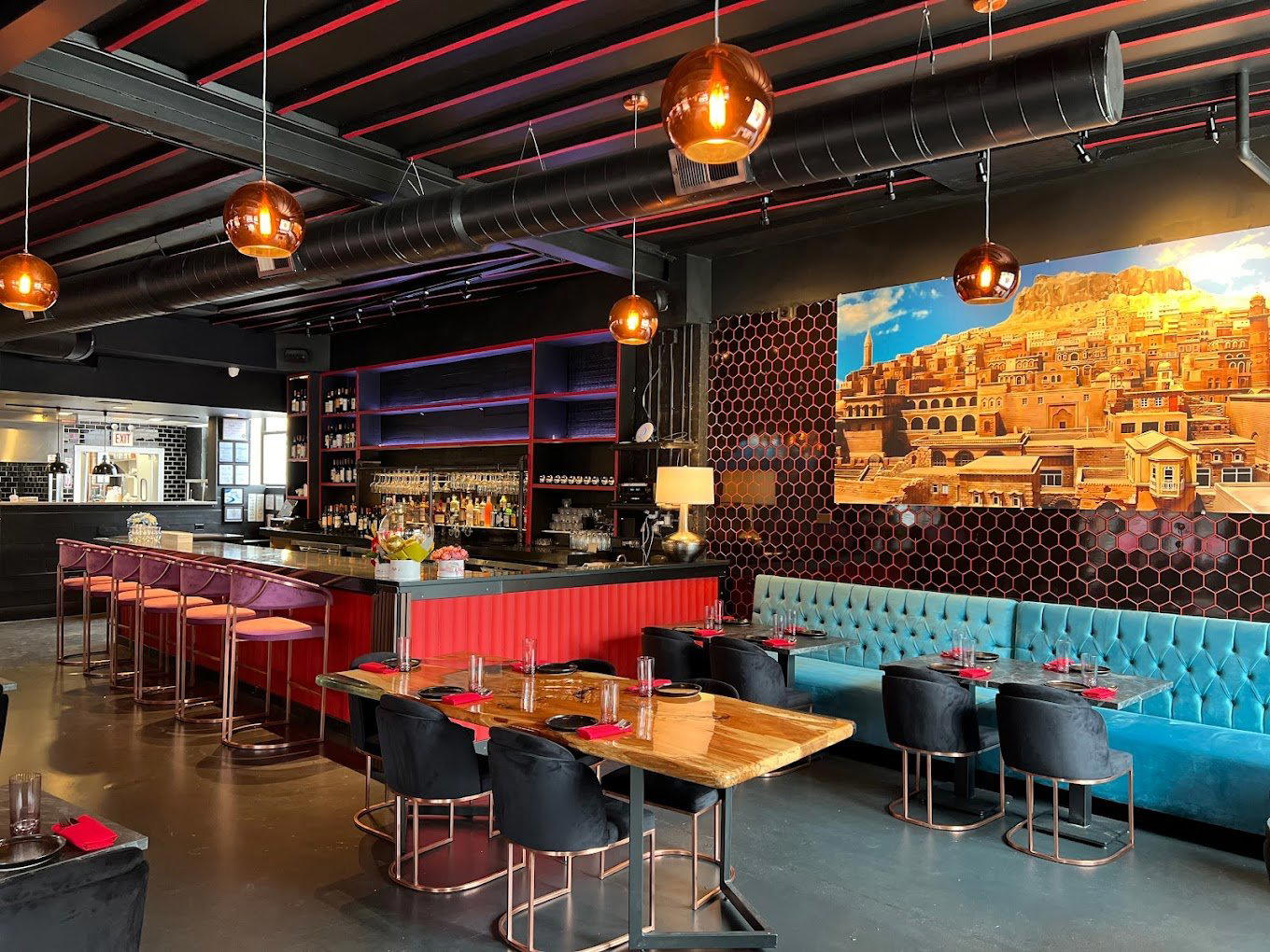
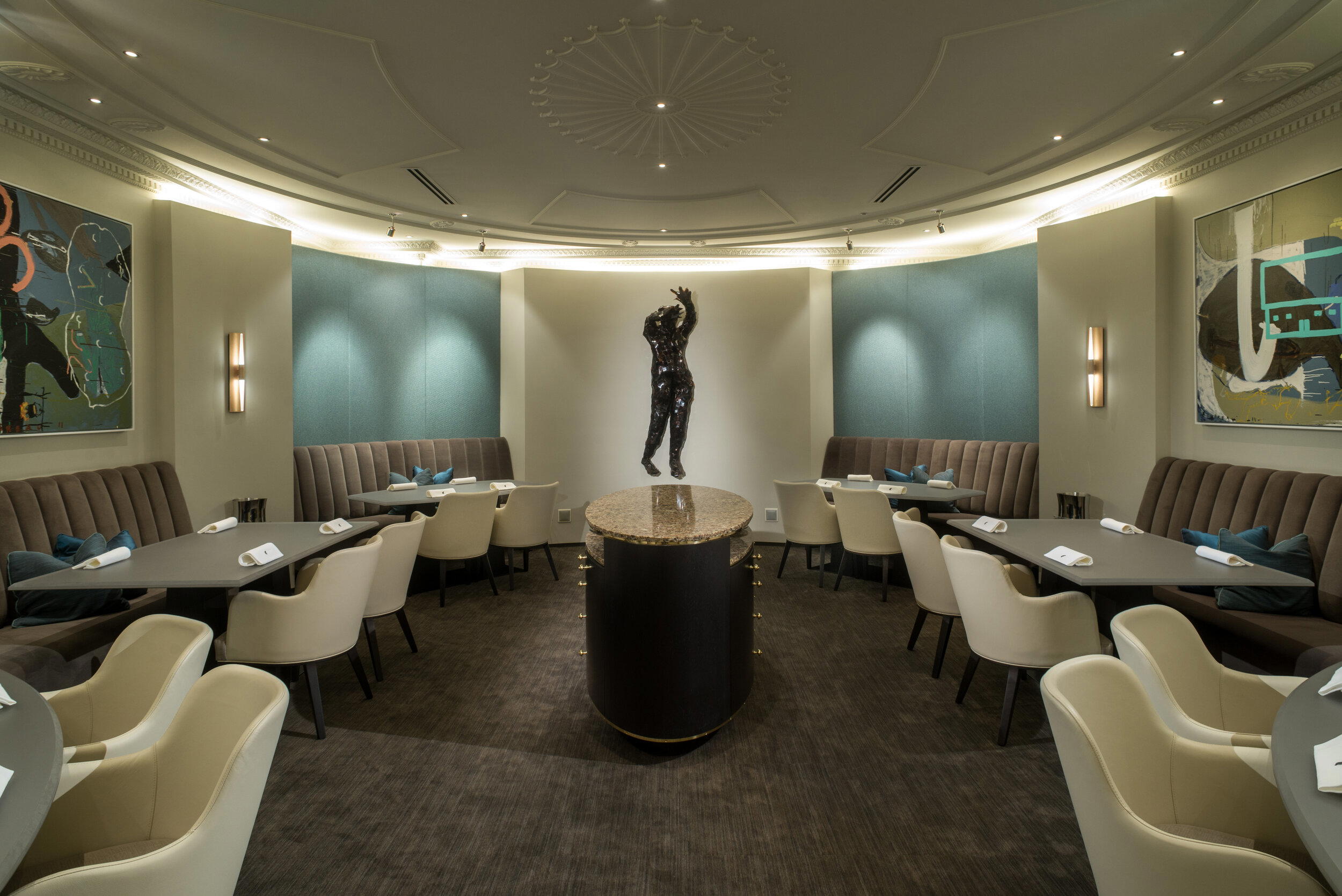
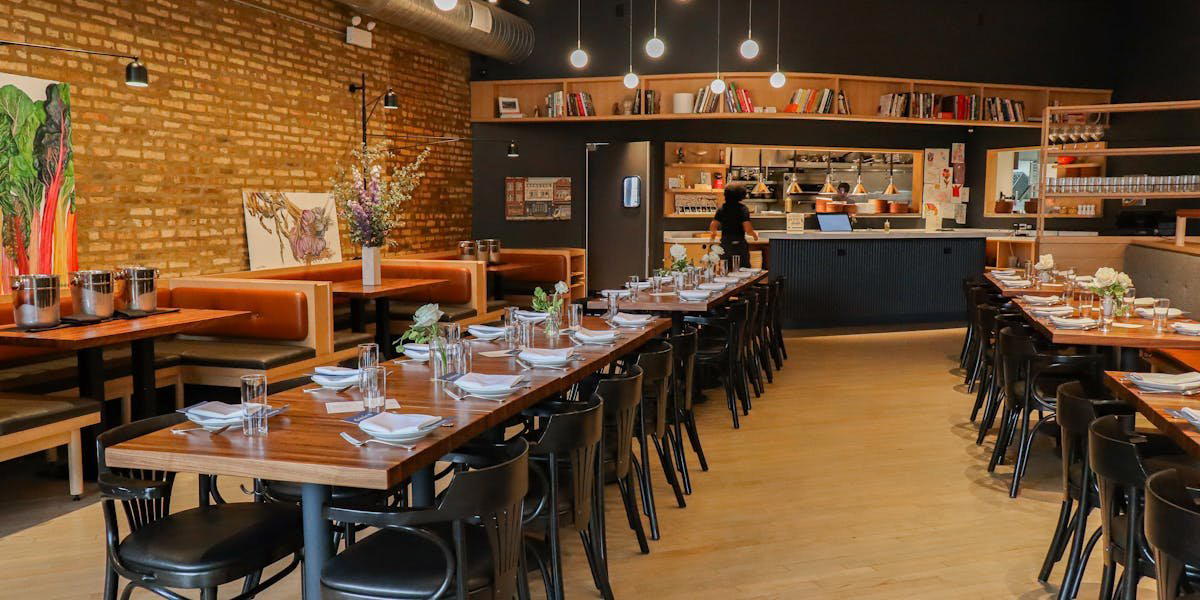
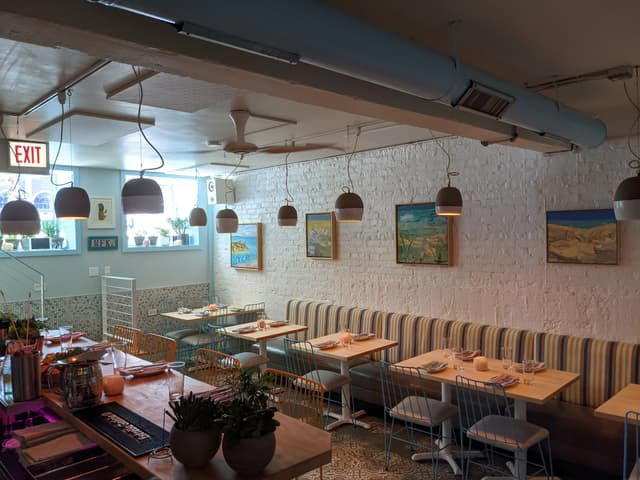
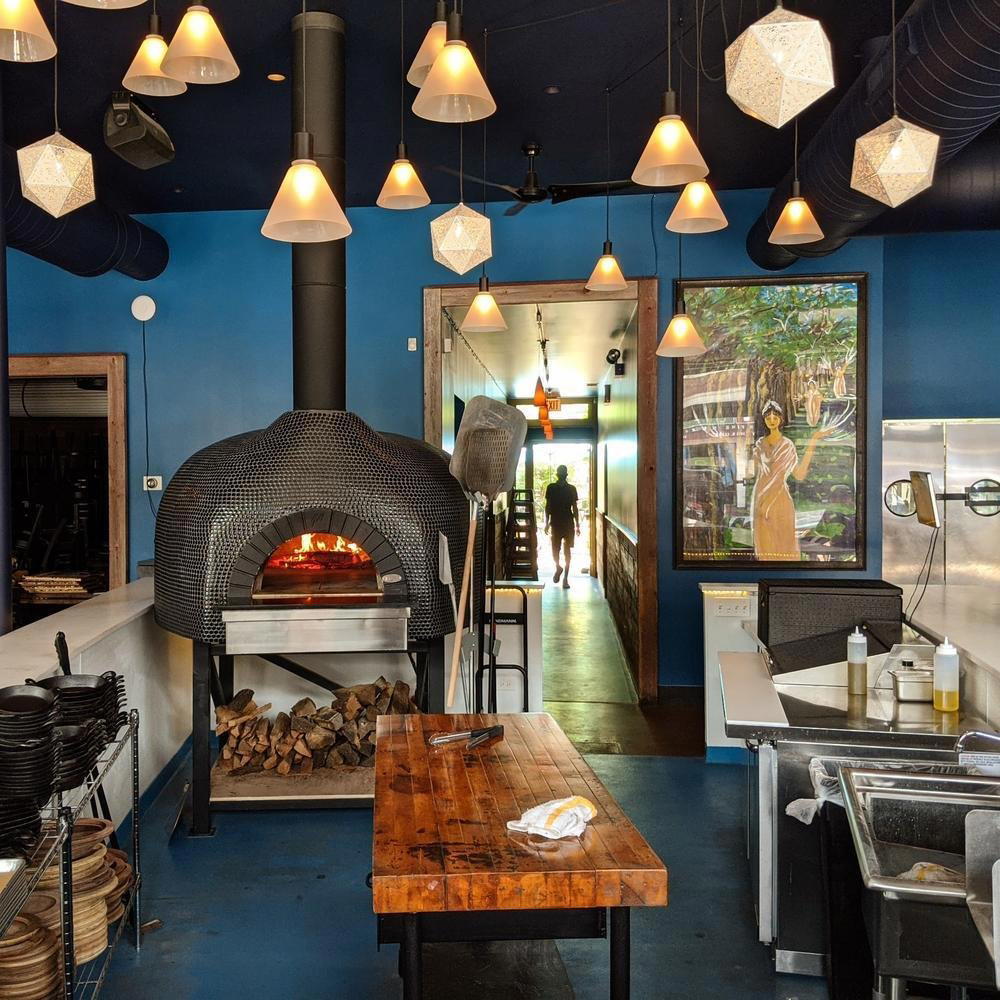
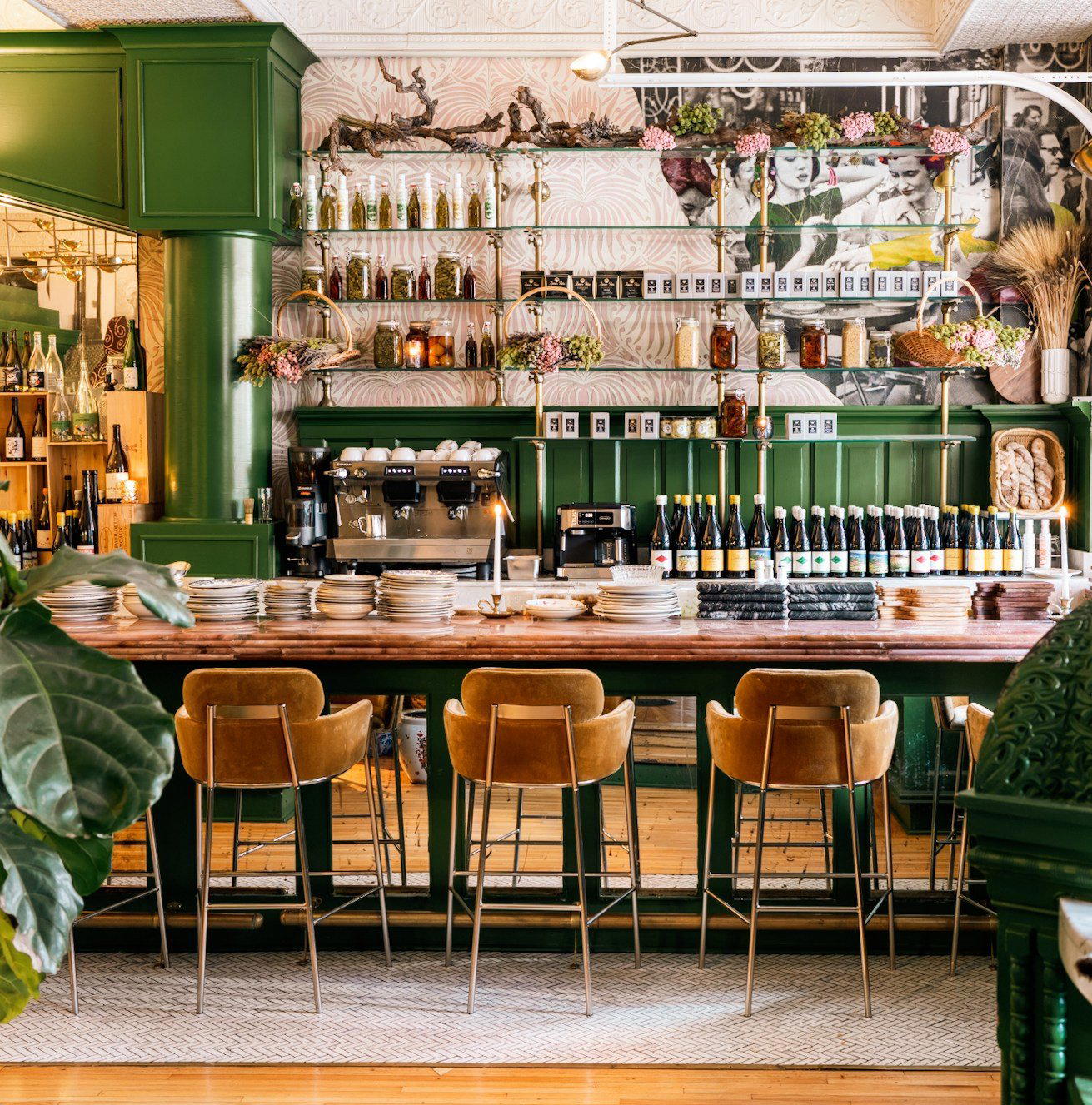
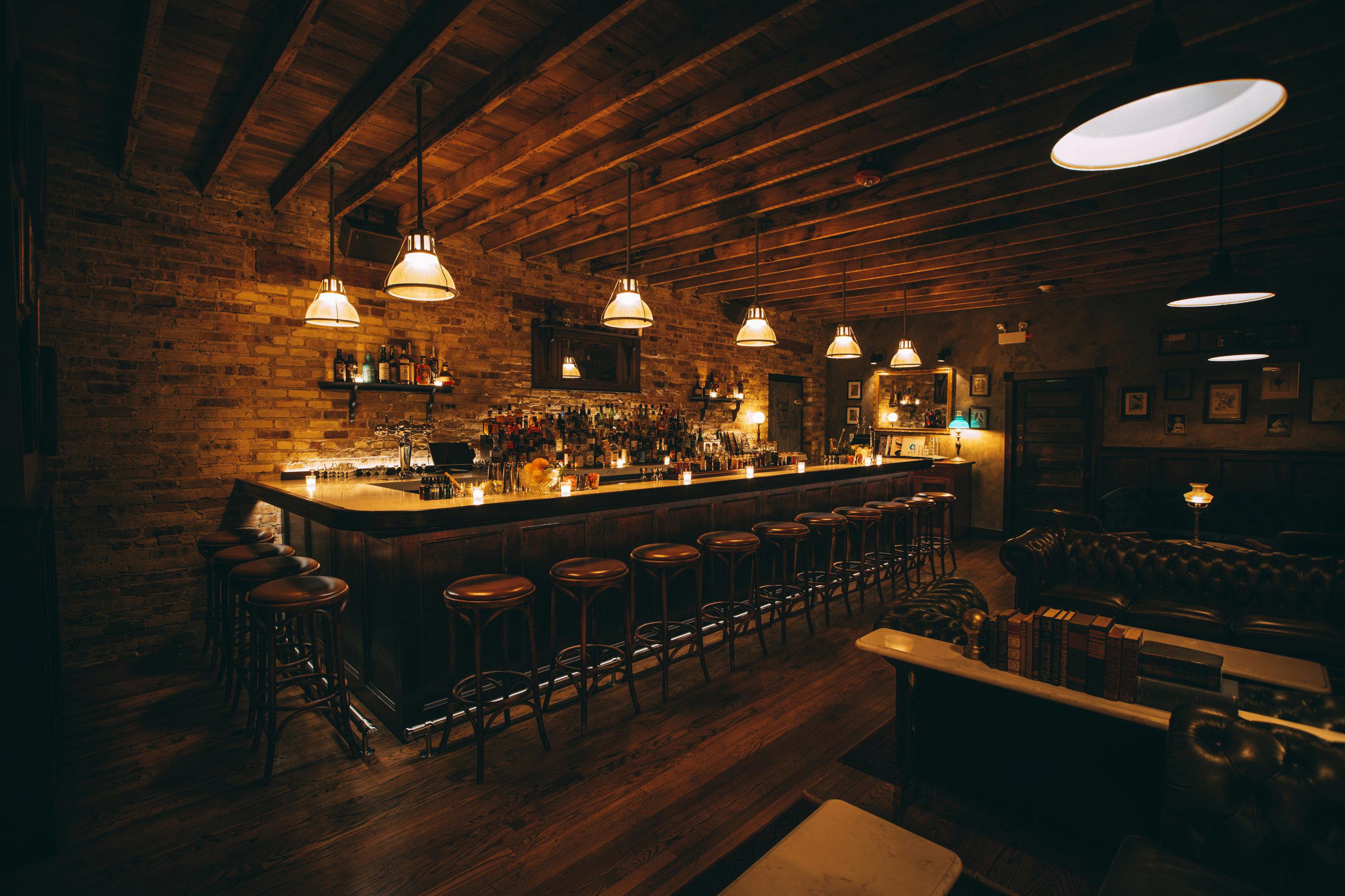
Modern space with black marble tables and velvet seating creating a chic, warm, and inviting atmosphere.