Old Jerusalem
Our verdict
The restaurant draws on the broader Levantine and Eastern Mediterranean tradition, a cuisine that Chicago's more celebrated fine-dining circuit, from Alinea to Kasama, rarely addresses at this register. For a city guide that extends beyond the tasting-menu corridor, it earns a closer look.

Pearl is the En Primeur Club membership app, where members save venues, book tables and use the concierge.
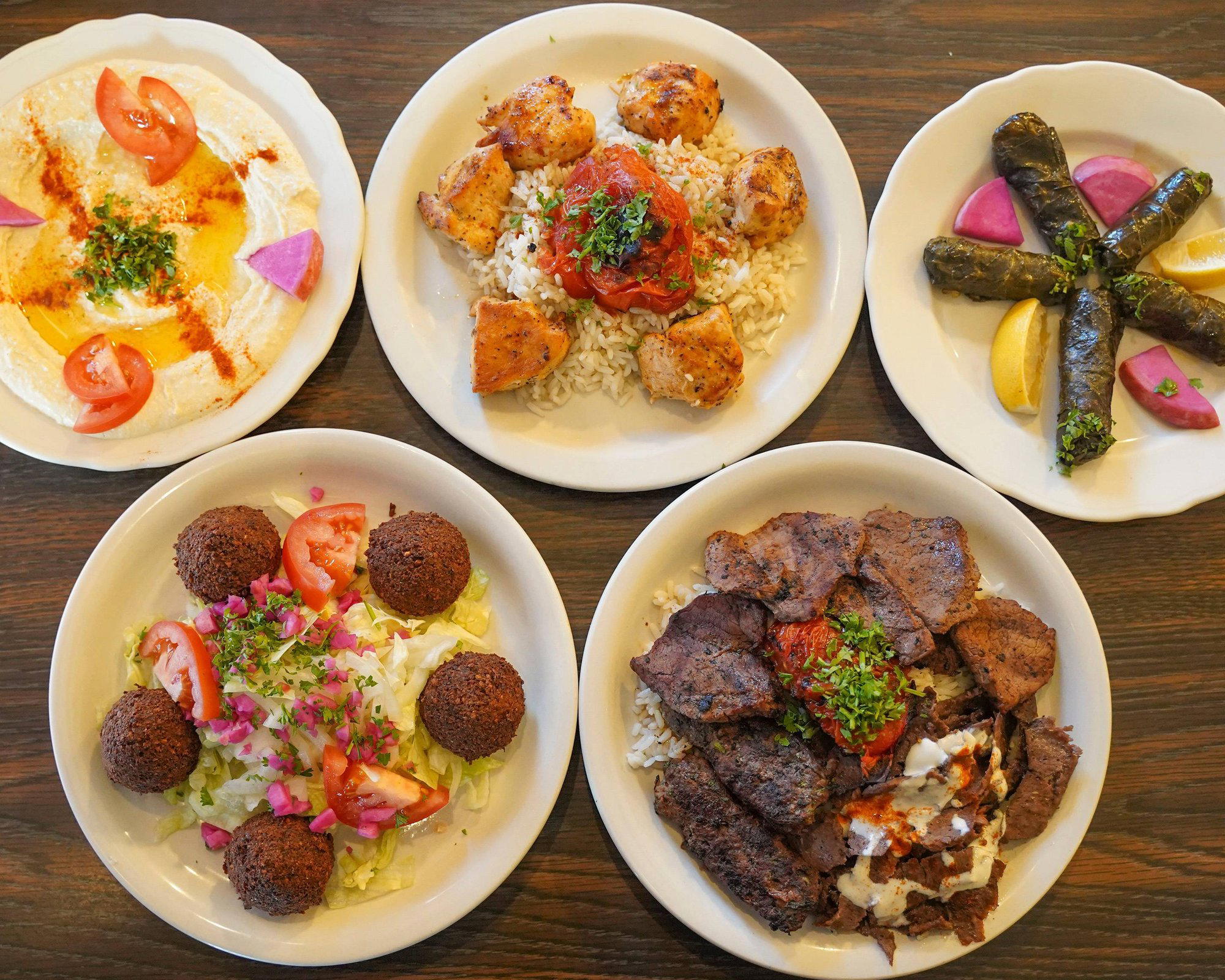
The Levantine and Eastern Mediterranean tradition that Old Jerusalem represents is among the oldest continuous culinary lineages active anywhere in the world. Its core grammar, flatbreads baked in high-heat deck ovens, long-braised legumes, herb-forward salads dressed with olive oil and lemon, rotisserie meats finished with sumac and allspice, descends from trade-route cooking that absorbed Persian, Ottoman, and North African inputs over centuries. In Chicago, this tradition sits largely outside the fine-dining infrastructure that generates Michelin recognition. That absence says less about quality and more about the structural biases of how the city's hospitality press has historically allocated attention. Spots like Kasama have shown that non-European culinary traditions can access the upper tier of Chicago recognition when the format and capital align. Levantine cooking in the city, by contrast, has remained more embedded in neighborhood fabric than in critical conversation.
The Cuisine and What It Carries
Eastern Mediterranean food at the neighborhood-restaurant level is one of the more intellectually coherent cuisines to eat regularly. The dishes are not simplified versions of a fine-dining idiom, they are the source material. Hummus made from dried chickpeas soaked overnight and pureed with tahini, garlic, and lemon represents a technique with as much precision as any emulsion served at Le Bernardin in New York City or The French Laundry in Napa; the margin for error is different, but the commitment to ingredient ratio and temperature is the same. Shawarma, when done correctly, involves marinating and pressing meat for a minimum of twelve hours before it ever contacts heat. These are not casual preparations dressed up in casual formats, they are casual formats that happen to contain serious preparation logic.
Old Jerusalem's address in Old Town places it within walking distance of a mixed residential and tourist corridor, which means its dining room on any given evening spans neighborhood regulars and visitors encountering this cuisine for the first time. That demographic breadth is one of the reasons this category of restaurant resists the single-seating reservation model favored by Next Restaurant or the chef's-counter format that defines much of Chicago's high-end output. The value proposition here is different: frequency, accessibility, and the kind of consistency that only comes from cooking the same dishes across a long operational run.
Where Old Jerusalem Sits in the Chicago Picture
Chicago's restaurant identity in national coverage tends to collapse into two poles: the progressive fine-dining scene that draws comparisons to Lazy Bear in San Francisco, Blue Hill at Stone Barns in Tarrytown, or Addison in San Diego, and the deep-dish-and-Italian-beef shorthand that dominates out-of-town perception. Neither pole captures the city's substantial Middle Eastern and Mediterranean dining infrastructure, which runs through neighborhoods from Old Town south through Bridgeport and west through Albany Park.
The comparison set for a restaurant at this address and in this category is not Providence in Los Angeles or The Inn at Little Washington. It is the cluster of long-running Mediterranean and Middle Eastern tables that have served Chicago without interruption through multiple waves of trend-driven openings. In that cohort, tenure itself becomes a signal. For the kind of editorial calibration EP Club applies to venues like Bacchanalia in Atlanta or Atomix in New York City, Old Jerusalem occupies a different register, not lesser, just differently weighted.
Visitors building a Chicago itinerary around the tasting-menu tier should be aware that the city's dining map extends well beyond that corridor. Our full Chicago restaurants guide covers the range from progressive American counters to neighborhood institutions that have shaped the city's food culture without capturing its awards infrastructure. Old Jerusalem belongs to the latter group. So, in different ways, do the kinds of regional American spots EP Club tracks nationally, from Emeril's in New Orleans to Single Thread Farm in Healdsburg to 8½ Otto e Mezzo Bombana in Hong Kong, each anchored to a specific culinary tradition that outlasts any individual season of critical attention. Given the venue's neighborhood-restaurant model, walk-ins are a plausible option, though calling ahead for larger groups is advisable. The format is casual and the room operates at a pace suited to families and solo diners alike. The price register is considerably below the $$$$ tier occupied by Kasama or the city's tasting-menu houses, making it a practical complement to a Chicago itinerary that already includes higher-spend evenings. Specific hours, current pricing, and booking confirmation should be verified directly with the venue before visiting, as operational details were not available at time of publication.
Frequently asked questions
Where is Old Jerusalem in Chicago?
Old Jerusalem is located at 1411 N Wells St, Chicago, IL 60610, Chicago.
Is Old Jerusalem a good option for Eastern Mediterranean food near Chicago's Brown Line?
Old Jerusalem sits at 1411 N Wells St in Old Town, roughly a ten-minute walk from the Brown or Purple Line Sedgwick stop, making it one of the more accessible Eastern Mediterranean options along the North Side transit corridor. The kitchen covers the core of the cuisine, Levantine staples done at a neighborhood scale, rather than a reinterpreted or modernized version of it. For riders coming off the elevated line looking for a reliable, non-fusion Mediterranean meal, the location and format align well.
What should I eat at Old Jerusalem?
Old Jerusalem centers on Eastern Mediterranean cooking, a cuisine built around dishes that reward repetition: hummus, falafel, grilled meats, and preparations rooted in Levantine tradition. The menu operates at the neighborhood-restaurant register, meaning portions are generous and the cooking is built for regulars rather than occasion dining. Order broadly rather than selectively to get the full range of what the kitchen does consistently.
Do I need a reservation for Old Jerusalem?
Old Jerusalem is a neighborhood counter on Wells Street in Old Town, a stretch that draws consistent foot traffic from locals and visitors alike. Calling ahead is a reasonable precaution on weekend evenings, though the venue operates in a format that has historically absorbed walk-ins during slower periods. Arriving early in the evening gives you the most flexibility.
What's the standout thing about Old Jerusalem?
Longevity on a block like Wells Street, which has seen repeated dining concepts come and go, is itself a form of evidence. Old Jerusalem has maintained a neighborhood-restaurant identity in Old Town, Chicago, without pivoting toward tasting menus or trend-driven repositioning. That consistency in format and cuisine is what separates it from the surrounding churn.
The Short List
Comparable venues nearby, for context on price, style, and recognition.
| Venue | Cuisine | Price | Notes |
|---|---|---|---|
| Old JerusalemThis venue (the venue you are viewing) | Authentic Lebanese | $20–30 | Not listed |
| All Too Well | Gourmet Sandwiches & Deli | $20–30 | Lincoln Park, Gourmet Sandwiches & Deli |
| Harry Caray's 7th Inning Stretch | American Comfort Food | $20–30 | Near North Side, American Comfort Food |
| Qiao Lin Hotpot - Downtown | Authentic Chongqing Hotpot | $30–50 | Downtown, Authentic Chongqing Hotpot |
| The Silver Palm | American Railroad-Themed Dining | Not listed | River West, American Railroad-Themed Dining |
| Coup de Thai - Chicago | Modern Southern Thai | $30–50 | Lakeview East, Modern Southern Thai |