
Akasaka’s wagashi culture rewards precision over spectacle, and Asada Ya sits in that quiet lane: a take-out specialist for Japanese traditional sweets and daifuku near Tameike-Sanno. Its Tabelog 100 selection for Tokyo wagashi in 2023 places it among a selective citywide group, while the sub-¥999 pricing keeps the format grounded in everyday craft rather than occasion dining.
Pearl is the En Primeur Club membership app — saves, bookings, and concierge access live there. Same editors, same standards.
- Address
- 2 Chome-10-4 Akasaka, Minato City, Tokyo 107-0052, Japan
- Phone
- +81 3-3583-3445
- Website
- visit-minato-city.tokyo
 Saves & bookings on Pearl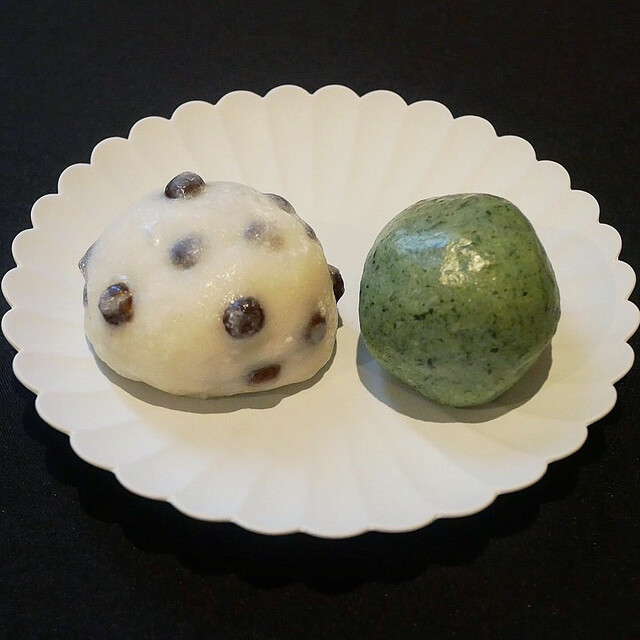
Akasaka in the morning has its own rhythm: office workers moving between ministry buildings, hotel lobbies emptying into side streets, and small food counters trading hard before lunch. Here, wagashi belongs less to the restaurant circuit than to Tokyo’s daily gift economy, where a paper-wrapped box can carry as much social meaning as a counter reservation. Asada Ya fits that older pattern: take-out Japanese traditional sweets, daifuku at the center, and craft that travels well rather than a room designed to hold attention.
Tokyo sweet shops are judged by different signals than sushi or kaiseki. The purchase is quick, but standards are exacting: rice texture, bean paste balance, freshness, wrapping, and timing all matter. Strong wagashi addresses usually work in narrow specialisms, not sprawling dessert menus. A daifuku shop is not competing with hotel patisserie or café sweets; it sits in a lineage of rice, bean, fruit, and seasonality where small textural shifts define the experience.
Daifuku in Akasaka: everyday pricing, specialist expectations
Daifuku is humble enough for a weekday purchase but unforgiving because there is nowhere to hide. The rice cake shell must be supple without collapsing, the filling must read clearly, and sweetness needs restraint if the sweet is to work with tea rather than overwhelm it. Asada Ya’s sub-¥999 average price places it in the practical end of Tokyo’s wagashi market, not the ceremonial tier. Value comes from repetition and narrow focus, not tasting-menu theatrics.
In wagashi, ingredient quality is rarely loud. It is expressed through rice, beans, sugar, and seasonal fruit when used, with technique doing the visible work. Better Tokyo sweet shops signal seriousness through constraint: fewer categories, compact service, and a buying process closer to a provisioner than a café. Asada Ya’s take-out-only structure reinforces that reading. There are no seats, private rooms, or restaurant-style service ritual. The sweet must justify itself after it leaves the counter.
Recognition gives the small format broader context. Selection for Tabelog’s Tokyo Japanese traditional sweets and Japanese sweets café 100 list in 2023 places the restaurant inside a category visitors often underestimate. Tabelog’s wagashi selections separate sweet shops from more internationally familiar restaurant hierarchies. A 3.73 Tabelog score, paired with the 2023 selection, is not a substitute for personal taste, but it marks the shop as part of Tokyo’s closely watched wagashi conversation.
Why the format matters more than the room
Akasaka’s dining map can mislead. The district holds expense-account restaurants, hotel dining rooms, and polished counters, but daily food culture also depends on quick specialist stops near transit. Compared with nearby higher-spend rooms such as Lawry's The Prime Rib, Akasaka Akasaka ten, or the more technique-forward language attached to NiNi’s Provençal and Japanese fusion cooking, wagashi uses a smaller unit of judgment: brief transaction, low price, exacting standard.
That contrast helps when planning a Tokyo day. A serious sweet shop need not replace lunch or dinner; it sits between them. Treat wagashi as part of the city’s edible infrastructure, alongside curry shops, yakitori counters, cafés, and station-adjacent take-out specialists. The restaurant speaks to a side of Tokyo luxury itineraries often miss: skilled food sold without ceremony, for the office worker, family visit, or person carrying a small gift across town.
The practical constraints matter. Reservations are unavailable, payment is cash-oriented because credit cards, electronic money, and QR code payments are not accepted, and the shop is non-smoking. There is no parking, so transit is sensible. The nearest station is Tameike-Sanno, with the address in Akasaka, Minato City. For travelers used to long online booking flows, this is direct, but it rewards timing: weekday daytime hours and weekend closure make it a planned stop, not an after-dinner fallback.
How to place it in a Tokyo food itinerary
The restaurant works well as a precision stop within a broader Tokyo itinerary, not the day’s main event. Pair it with other single-purpose formats: a grill-focused meal, curry counter, coffee-and-sweets detour, or late drink elsewhere. The point is not to inflate wagashi into restaurant drama, but to recognise that Tokyo’s food culture is built from many small, disciplined formats, some revealing precisely because they require no seat.
For nearby and citywide context, compare the rhythm of this stop with Tokyo listings such as . 鮪と炭火焼き うお炭 秋葉原店, 12/10 Shinjuku ten, 124. KAGURAZAKA (Yakitori), 2D Cafe, and 3 Chome no Curry Ya San. The broader city files help map the rest of the trip: Our full Tokyo restaurants guide, Our full Tokyo hotels guide, Our full Tokyo bars guide, Our full Tokyo wineries guide, and Our full Tokyo experiences guide.
Japan’s regional and overseas Japanese-food references widen the comparison. A wagashi stop in Akasaka has little operationally in common with -Grilled beef Sukiyaki- KAMAKURA TANUKIAN 鎌倉 たぬき庵 in Kamakura.cafe in Osaka.know in Kumamoto, (Shoku) Vietnam in Kawasaki, [Curry Senmon Ten] Maruyama Kyoju. in Sapporo, or [ki:] in Kyoto, which is the point: Japanese dining culture is a network of formats, not one ladder of formality. Abroad, Jōdo Saké Bar in Los Angeles and Onigiri Time in Pasadena show how narrow formats carry cultural weight when basics are handled with discipline.
The critical case for the restaurant is not spectacle. It rests on category fit: wagashi, daifuku, take-out service, weekday utility, low spend, and a 2023 Tabelog 100 selection in a city where sweet shops are judged by craft rather than décor. For travelers who understand Tokyo through counters and tasting menus alone, Akasaka’s small sweet-shop circuit offers a sharper lesson: some of the city’s serious food is bought in minutes and eaten somewhere else.
The Essentials
Comparable venues side-by-side for orientation.
| Venue | Cuisine | Price | Notes |
|---|---|---|---|
| Asada YaThis venue — the venue you are viewing | Not listed | $ | Not listed |
| Ginza Kanra Ginza honten | Chūō, Japanese wagashi & daifuku shop | $ | Not listed |
| Nanba Sennichimae Kamatake Udon Yaesu kitaguchi ten | Not listed | $ | Chiyoda, Osaka-style Sanuki udon & curry udon |
| CHANTOYA COCONUT CURRY | Chiyoda, Coconut-focused Japanese curry | $ | Not listed |
| Rodin | Chūō, European-style Japanese Curry | $ | Not listed |
| Tokyo Rakkyo Brothers | Not listed | $ | Shinjuku, Hokkaido-style soup curry & Japanese curry |
Recognition history
Dated appearances from independent guides and award organizations, with the underlying list record or original source where available.
Tabelog 100 #75 · No. 75
Tabelog · Tabelog 100 - Japanese traditional sweets / Japanese sweets cafe - TOKYO - 2023







At a Glance
- Classic
- Cozy
- Solo
- Family
- After Work
- Casual Hangout
- Standalone
- Historic Building
Current opening hours
- Monday
- 9 AM–6 PM
- Tuesday
- 9 AM–6 PM
- Wednesday
- 9 AM–6 PM
- Thursday
- 9 AM–6 PM
- Friday
- 9 AM–6 PM
- Saturday
- Closed
- Sunday
- Closed
Hours can change for holidays and private events. Last verified .
Unadorned, traditional Japanese sweets shop with a simple storefront and takeaway-only service, focused on homely, nostalgic wagashi rather than design or decor.