
Inside Tokyo Station’s Yaesu side, Nanba Sennichimae Kamatake Udon Yaesu kitaguchi ten brings Osaka-style udon into a station-dining setting with serious credentials. Its Tabelog 100 Udon EAST 2024 selection, counter seating, and no-reservations format place it in the practical, repeat-use tier of Tokyo eating: fast, focused, and built around noodles rather than ceremony.
Pearl is the En Primeur Club membership app — saves, bookings, and concierge access live there. Same editors, same standards.
- Address
- Japan, 〒100-0005 Tokyo, Chiyoda City, Marunouchi, 1 Chome−9−1 JR Tokyo Station, Yaesu North Exit, 外 グランスタ八重北1階
- Phone
- +81 3-3212-9056
- Website
- kamatake.com
 Saves & bookings on Pearl
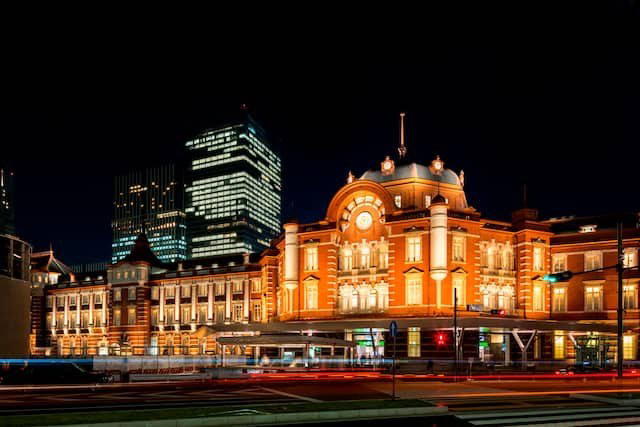
The Yaesu side of Tokyo Station has its own rhythm: rolling suitcases, office workers cutting through concourses, families scanning food floors before the next train. In that setting, udon has a different job from sushi counters in Ginza or kaiseki rooms in Akasaka. It has to be immediate, legible, and satisfying without asking the diner to surrender an evening. Nanba Sennichimae Kamatake Udon Yaesu kitaguchi ten fits that station logic, but with enough noodle credibility to pull it out of the anonymous transit-meal category.
Tokyo has many quick meals, from curry shops to fruit parlours to standing soba counters, but a serious udon room inside a major rail hub speaks to a particular Japanese dining habit: regulars return not because the format is grand, but because the variables are controlled. The wheat matters, the boil matters, the dashi matters, and the order has to work at lunch, after work, or between trains. This is where the regular’s perspective is useful. The decision is not about occasion dining. It is about knowing where a bowl will land reliably in a city that can make even simple meals feel overproduced.
Osaka udon discipline inside a Tokyo Station food floor
Udon in Tokyo often competes with soba for the quick-noodle slot, while Osaka’s udon culture gives more weight to springy wheat noodles, gentle broth, and toppings that make a bowl feel complete rather than decorative. The Yaesu branch carries that Kansai association into Marunouchi’s station economy. The category is udon and curry udon, with Chiku-Tama Ten Bukkake identified as the house signature: a bukkake-style udon built around chikuwa tempura and egg, the kind of order that explains why regulars do not need a long menu consultation.
The kitchen’s noodle-making details are unusually relevant here because they clarify the difference between a commuter bowl and a specialist bowl. The udon is made with domestically sourced wheat in a house blend; the dashi is additive-free; the thick noodles are boiled for more than 20 minutes, producing the chewy, fluffy texture associated with this style. Those are not luxury signals. They are process signals, and in udon they count for more than plating language or chef mythology.
Recognition matters in this category because the price point and format can otherwise flatten distinctions. Selection for Tabelog 100 Udon EAST 2024 places the restaurant within a curated field of udon specialists rather than general station dining. Earlier Tabelog 100 selections in 2017, 2018, and 2020 strengthen the pattern: this is not a single-year spike in attention, but a shop that has remained visible within Japan’s crowded noodle rankings. Its Tabelog score of 3.72 also sits in a range where repeat local use and category-specific approval carry more weight than international name recognition.
What regulars understand before they sit down
The unwritten order is to treat the place as a noodle specialist first and a convenient station stop second. That means bukkake udon for texture and temperature contrast, curry udon for a fuller meal, and sake or shochu when the visit drifts from lunch utility into an after-work stop. The evening izakaya function, including oden, changes the register without turning the room into a destination bar. Tokyo has sharper cocktail programs elsewhere, and broader dining-room theatre across the city; here the appeal is narrower and more durable.
The room’s 50-seat setup, including counter seating, also explains the clientele mix. Counter seats make sense for solo diners and commuters; tables make sense for friends and families; the children-welcome policy and stroller acceptance keep it from becoming an office-worker-only address. That breadth is part of the station-food equation. The stronger versions of this genre can absorb different diners without diluting the reason they came: a direct bowl of noodles, served in a format that does not punish spontaneity.
For travellers mapping Tokyo through food, the comparison is less with formal Japanese dining than with other low-friction city meals. Curry specialists such as 3 Chome no Curry Ya San, compact cafés such as 2D Cafe, and station-adjacent fruit-parlour formats like Kajitsuen Liber Tokyo ten all sit in the same practical universe: meals that can be folded into a day rather than built around one. The difference is that udon, at this level, rewards repetition. A regular learns whether the day calls for a cold, sauce-led bowl or a warming curry version, then stops thinking about it.
How it fits into a Tokyo eating itinerary
The restaurant works cleanly as a Tokyo Station anchor rather than a cross-city pilgrimage. It is particularly useful when a day’s eating plan includes heavier or more formal meals elsewhere: yakitori at 124. KAGURAZAKA (Yakitori), seafood and charcoal cooking at . 鮪と炭火焼き うお炭 秋葉原店, or a sharper late meal around Shinjuku at 12/10 Shinjuku ten. In that company, udon is not filler. It is the meal that keeps the day calibrated.
There is also a useful distinction between Tokyo’s polished destination dining and its high-function everyday rooms. La Rochelle Minami Aoyama belongs to a different French dining bracket; DEPOT and CARA AURELIA Daimaru toukyou ten serve other station-area needs; Takajo Kotobuki occupies another culinary lane altogether. Nanba Sennichimae Kamatake Udon Yaesu kitaguchi ten is stronger when judged inside its own category: a no-reservations udon counter-and-table format with repeat Tabelog 100 recognition, domestic-wheat noodles, and enough range to cover lunch, family dining, and an informal evening stop.
Readers building a broader Tokyo plan can use Our full Tokyo restaurants guide alongside Our full Tokyo hotels guide, Our full Tokyo bars guide, Our full Tokyo wineries guide, and Our full Tokyo experiences guide. For a wider Japan and Japanese-food comparison set, see -Grilled beef Sukiyaki- KAMAKURA TANUKIAN 鎌倉 たぬき庵 in Kamakura.cafe in Osaka.know in Kumamoto, (Shoku) Vietnam in Kawasaki, [Curry Senmon Ten] Maruyama Kyoju. in Sapporo, [ki:] in Kyoto, Jōdo Saké Bar in Los Angeles, and Onigiri Time in Pasadena.
A Credentials Check
Comparable venues to calibrate price, style, and recognition.
| Venue | Cuisine | Price | Notes |
|---|---|---|---|
| Nanba Sennichimae Kamatake Udon Yaesu kitaguchi tenThis venue — the venue you are viewing | Osaka-style Sanuki udon & curry udon | $ | Not listed |
| Torimeshi Torito Bunten | Traditional Japanese Oyakodon & Chicken Rice Bowls | $ | Chūō |
| Taniya | Sanuki udon noodle shop | $ | Chūō |
| Tenchaya Nanakura | Inaniwa udon & creative lunch sets | $ | Minato |
| Rice Curry Manten | Japanese Curry House | $ | Chiyoda |
| MENSHO | Modern Japanese ramen | $ | Bunkyō |
Recognition history
Dated appearances from independent guides and award organizations, with the underlying list record or original source where available.
Tabelog 100 #96 · No. 96
Tabelog · Tabelog 100 - Udon - EAST - 2024








At a Glance
- Casual
- Lively
- Solo
- Casual Hangout
- After Work
- Family
- Group Dining
- Standalone
Current opening hours
- Monday
- 11 AM–11 PM
- Tuesday
- 11 AM–11 PM
- Wednesday
- 11 AM–11 PM
- Thursday
- 11 AM–11 PM
- Friday
- 11 AM–11 PM
- Saturday
- 11 AM–11 PM
- Sunday
- 11 AM–11 PM
Hours can change for holidays and private events. Last verified .
Bright, functional station-front udon-ya with counter and table seating, quick turnover, and a bustling atmosphere typical of Tokyo Station food streets rather than a quiet sit-down restaurant.