Tabelog 100
Our verdict
ARABIYA places Osaka’s kissaten culture in a compact, affordable frame: coffee-shop service, cafe food, and sandwich options near Namba rather than a long tasting-menu commitment. Its Tabelog Kissaten 100 selection in 2021 and 2022 gives it credible standing in a category where age, regulars, and daytime rhythm matter as much as polish.

Pearl is the En Primeur Club membership app — saves, bookings, and concierge access live there. Same editors, same standards.
The menu
What to order
- House‑roasted coffee
- Arabiya Sandwich (アラビヤサンド)
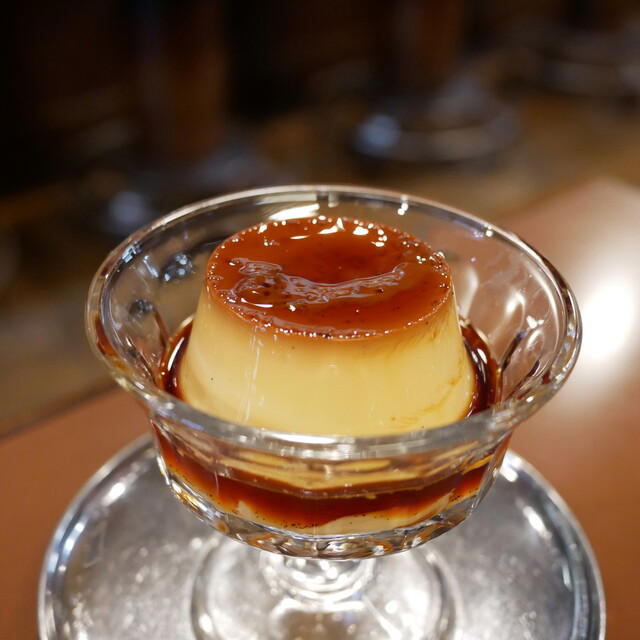
- Coffee jelly
- Homemade pudding
Approaching the Namba coffee-shop circuit, the mood changes quickly from department-store speed to the slower cadence of the kissaten. This is not the specialty-coffee bar as laboratory, nor the hotel lounge as expense-account refuge. The appeal is tighter and more local: counter seats, table seats, smoke-free service, and the kind of daytime format that lets Osaka’s shopping and theatre district pause without turning refreshment into ceremony.
ARABIYA belongs to that older Japanese cafe tradition, where coffee, sandwiches, and the room itself carry equal weight. In a city better known internationally for takoyaki, okonomiyaki, and high-energy drinking streets, the kissaten offers a different reading of Osaka: unhurried, inexpensive, and built around repeat use. The value proposition is not excess. It is access to a recognised local genre without the cost or time commitment attached to kaiseki, omakase, or hotel afternoon tea.
Namba's coffee-shop culture rewards regularity over spectacle
Osaka dining is often framed through appetite and noise, but Namba also supports a quieter daytime economy: bakeries, coffee shops, counters, quick meals, and small rooms where solo diners can sit without theatre. That makes a kissaten selection more useful than it may look on paper. Tabelog’s Kissaten 100 recognition in 2021 and 2022 places ARABIYA inside a national coffee-shop canon, not a novelty cafe category. For readers comparing formats, that recognition matters because kissaten culture is judged less by innovation than by durability, reliability, and the ability to hold a room across decades.
The opening date, 1951, gives the room a different authority from Osaka’s newer cafe wave. Postwar kissaten helped define urban leisure in Japan: coffee as a pause, sandwiches as a practical meal, and service that did not require the rituals of formal dining. That history still shapes the category. A polished modern cafe can look sharper, but a long-running kissaten carries social memory, especially in a district where rent pressure and redevelopment tend to erase small-format food businesses.
Within the local comparison set, the economics are clear. Alcyon Houzenji honten, Havana, and Creperie Alcyon sit in a higher cafe-adjacent spend bracket, while Honkogetsu belongs to the kaiseki conversation entirely. ARABIYA’s appeal is the opposite: a low-commitment stop with award recognition in its own category. That distinction is useful in Namba, where visitors can overpay for convenience or under-plan and end up with a forgettable chain coffee. The better move is to understand the district by format. For broader mapping, Our full Osaka restaurants guide helps place kissaten, bakeries, casual counters, and formal restaurants in the same city grid.
What the format gives you for the spend
The menu category is deliberately narrow: kissa, cafe, and sandwich. That tells experienced Japan travellers almost everything they need to know. This is daytime refreshment and light food rather than chef-led dining. The return on spend comes from a seated room, a recognised coffee-shop format, and Namba convenience, not from rare ingredients or a long progression of courses. In EP Club terms, this is a smart low-cost anchor between larger meals, especially when Osaka itineraries lean heavily toward evening reservations.
The 50-seat layout, split between counter and table seating, also explains why the venue works for different uses. Counter seating suits solo dining, a common strength of Japanese urban restaurants and cafes; tables make it easier to use the room as a brief reset with friends. The absence of private rooms reinforces the point. This is public, everyday Osaka hospitality, not a cloistered special-occasion space.
There is also a practical hierarchy within the neighbourhood. Nearby and adjacent categories fill different needs: 52CHO-ME BAKERY covers the bakery lane, 551 Horai (551蓬莱) answers the city’s quick-service comfort-food brief, 99 Pizza Napoletana Gourmet points to Osaka’s Italian appetite, and a canto (Italian) sits in a more restaurant-driven register. Read against those options, the kissaten is not competing on novelty. It is competing on timing, price discipline, and the ability to make a short stop feel culturally specific.
For travellers building a full Osaka day, the better strategy is to treat coffee shops as structure rather than filler. Pair a Namba kissaten stop with a later bar plan from Our full Osaka bars guide, a hotel base from Our full Osaka hotels guide, or a non-dining slot from Our full Osaka experiences guide. Wine-focused readers can use Our full Osaka wineries guide for the broader cellar and bottle-shop context, though Osaka’s strongest everyday drinking identity remains bar- and restaurant-led rather than vineyard-led.
How to read ARABIYA against Osaka's wider casual dining map
Japan’s casual dining range is broad enough that a coffee shop should not be judged by restaurant metrics alone. A curry specialist such as [Curry Senmon Ten] Maruyama Kyoju. in Sapporo, a sake-led room such as Jōdo Saké Bar in Los Angeles, and an onigiri counter such as Onigiri Time in Pasadena all prove the same point from different angles: narrow formats can be more useful than broad menus when they know their role. The same logic applies here. Coffee, cafe food, and sandwiches are not a limitation; they are the operating system.
That is also why cross-category comparisons need restraint. -Grilled beef Sukiyaki- KAMAKURA TANUKIAN 鎌倉 たぬき庵 in Kamakura. 鮪と炭火焼き うお炭 秋葉原店 in Tokyo.know in Kumamoto, (Shoku) Vietnam in Kawasaki, and [ki:] in Kyoto belong to different culinary decisions. The useful comparison is not cuisine to cuisine, but purpose to purpose: where does a venue sit in the day, what does it cost in time and money, and how much local specificity does it return?
On that measure, ARABIYA has a clear role. It is for the traveller who wants Namba to feel less transactional, for the solo diner who wants a seated pause, and for the Osaka regular who understands that a recognised kissaten can say as much about the city as a louder dinner reservation. For a nearby cafe contrast.cafe gives another casual reference point, but the older coffee-shop grammar here is the stronger editorial reason to pay attention.
Frequently asked questions
What's the pricing like at ARABIYA?
Pricing at ARABIYA is listed as - JPY 999 - JPY 999.
What are the operating hours at ARABIYA?
Hours at ARABIYA: Mon: 12–6 PM; Tue: 12–6 PM; Wed: 12–6 PM; Thu: 12–6 PM; Fri: 12–6 PM; Sat: 10 AM–7 PM; Sun: 10 AM–7 PM.
Where exactly is ARABIYA?
ARABIYA is located in Osaka.
What's the signature at ARABIYA?
No single signature item is named in the public record. ARABIYA is defined by its kissa, cafe, and sandwich format in Namba, with 50 seats and a Tabelog 100 Kissaten 2022 selection. Check the venue's official channels for the latest details.
City Peers
Comparable venues for context, by category and price tier.
| Venue | Cuisine | Price | Awards | Notes |
|---|---|---|---|---|
| ARABIYAThis venue (the venue you are viewing) | Traditional Japanese kissaten & coffee shop | $10–20 | Tabelog 100 | Not listed |
| Kizuna | Edo-style Omakase Sushi | $150–200 | Tabelog Bronze #188 | Not listed |
| Alcyon Houzenji honten | French-style tea salon & patisserie | $10–20 | Tabelog 100 #72 | JPY 2,000 - JPY 2,999 JPY 2,000 - JPY 2,999 |
| Havana | Creative Japanese Izakaya & Stand-Up Bar | $20–30 | Tabelog 100 #62 | JPY 2,000 - JPY 2,999 |
| Creperie Alcyon | Authentic French Crepes & Galettes | $20–30 | Tabelog 100 #97 | JPY 2,000 - JPY 2,999 JPY 1,000 - JPY 1,999 |
| Honkogetsu | Traditional Kaiseki | $500+ | La Liste Top Restaurants · Tabelog Chef's Gold #4 | Kaiseki |
Recognition history
Dated appearances from independent guides and award organizations, with the underlying list record or original source where available.
Tabelog 100
Tabelog · Tabelog 100 - Kissaten - 2026
Full recognition history (2 entries)
Tabelog 100 #16 · No. 16
Tabelog · Tabelog 100 - Kissaten - 2022