
Tabelog 100 #44
Our verdict
A compact Sakai pizzeria with AVPN certification and a place on Tabelog’s Pizza 100 for 2025, 99 Pizza Napoletana Gourmet sits in Osaka’s more serious Neapolitan lane rather than the city’s snack-food mainstream. The draw is cultural fidelity: Naples as a working grammar, translated into an 18-seat Osaka room with family-friendly service and takeout available.

Pearl is the En Primeur Club membership app, where members save venues, book tables and use the concierge.
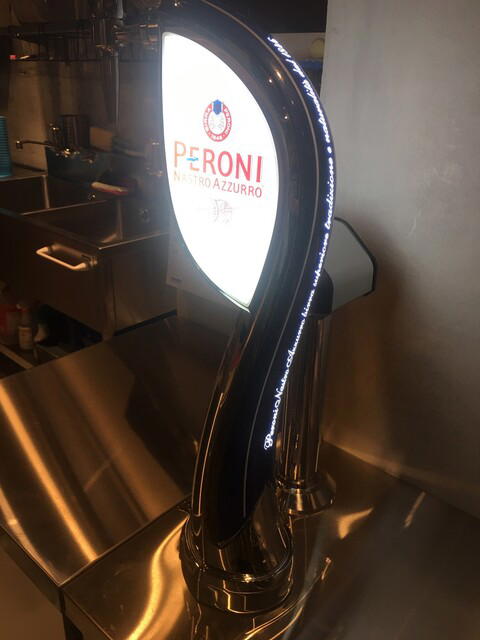
Approaching the Sakaihigashi side of Sakai, Osaka changes register. The city’s appetite is often read through counter ramen, standing bars, takoyaki queues and department-store basements, but pizza has its own serious subculture here: small rooms, tight ovens, Italian certification and diners who judge a Neapolitan pie by structure as much as topping. 99 Pizza Napoletana Gourmet belongs to that narrower Osaka conversation, where the point is discipline, not novelty.
That matters because Neapolitan pizza in Japan is no casual import. Since the late 20th century, Japanese pizzaioli have treated Naples with the technical seriousness applied to sushi rice, soba dough or tempura batter. The format rewards repetition: dough handling, oven management, timing and restraint. In a city associated with louder, sauce-driven comfort food, a pizzeria built around the Associazione Verace Pizza Napoletana standard signals pleasure based on codified tradition rather than local improvisation.
Neapolitan rules, read through an Osaka appetite
The cultural roots are unusually explicit. AVPN certification ties the restaurant to formal Neapolitan pizza tradition, a useful credential in Japan’s Italian market, which ranges from casual pasta shops to highly technical regional kitchens. The distinction is not cosmetic: AVPN recognition points to defined method for dough, bake and format, while inclusion in Tabelog’s Pizza 100 for 2025 places it in a national conversation, not just a neighbourhood one.
Osaka dining has always rewarded specialization: restaurants doing one thing repeatedly and letting customers judge the details. Serious pizza works here because the diner needs no long menu narrative; the room, oven and dough do the arguing. Compared with higher-spend Osaka counters such as Kuku Hanare, in a far more formal price tier, this category is democratic without casual intent. Compared with everyday noodle addresses such as Menza Gin, Men Kui Yamachan or Sakai Udon Chihaya, the pizzeria asks for a slower reading of craft, but not fine-dining ceremony. Yakiniku Katsuragi occupies another Osaka lane, built around meat and table heat. Pizza at this level sits between everyday hunger and technical scrutiny.
The name’s “Gourmet” tag may sound broad, but the editorial point is narrower: this is Naples treated as a standard, not a theme. The restaurant is listed for pizza and Italian, yet its reputation rests on pizza identity, giving it clearer purpose than a general Italian dining room trying to cover antipasti, pasta, grilled mains and dessert with equal force.
The compact-room advantage
Small pizzerias have an advantage large Italian restaurants often lack: guests can sense production rhythm. With 18 seats, the room belongs to specialist dining rather than volume hospitality. That scale suits Neapolitan pizza, where timing is compressed and the gap between correct and tired appears quickly. A compact room also changes the social read: it can work for families, a low-key dinner, or diners treating pizza as the main event rather than a shared starter.
The restaurant opened in 2020, placing it in a newer generation of Japanese pizzerias that arrived after Naples had become a serious reference point for the country’s Italian cooks. Earlier Italian restaurants in Japan often had to explain the cuisine; newer specialists can assume a more informed audience. Tabelog’s 2025 recognition and 3.67 score support that position without overstating it. In Japan’s user-review culture, especially on Tabelog, numbers move cautiously, so a mid-3 score attached to a category award is meaningful for a specialist address.
There is also geography. Sakai is not the shorthand most travellers use for Osaka dining, and distance from the central Namba-Umeda axis changes expectations. Serious city eaters often travel for single-category precision, but visitors need a reason to leave obvious circuits. AVPN certification and national pizza recognition provide it. For a broader read on the city’s dining range, Our full Osaka restaurants guide gives the central map; for trip planning beyond the table, see Our full Osaka hotels guide, Our full Osaka bars guide, Our full Osaka wineries guide, and Our full Osaka experiences guide.
Where it fits in a Japan-wide pizza conversation
Japan’s strongest Italian cooking often succeeds by avoiding imitation as theatre. It takes rules seriously, then lets local precision do the rest. That is the useful lens here: not a fantasy of Naples in Osaka, but a specialist room using a Southern Italian canon inside a Japanese culture of exacting repetition. The wood-fired pizzeria is now part of Japan’s dining vocabulary, and Osaka’s version benefits from the city’s appetite for directness. If the format works, it works quickly; if it misses, there is nowhere to hide.
For wider Kansai or Japan itineraries, the contrast is instructive. Osaka can move from bakery culture at 52CHO-ME BAKERY to pork-bun institution energy at 551 Horai (551蓬莱), from Italian cooking at a canto (Italian) to smaller local listings such as.cafe and Aaaa. Beyond Osaka, the same editorial thread runs through highly specific Japanese and Japanese-adjacent formats: -Grilled beef Sukiyaki- KAMAKURA TANUKIAN 鎌倉 たぬき庵 in Kamakura. 鮪と炭火焼き うお炭 秋葉原店 in Tokyo.know in Kumamoto, (Shoku) Vietnam in Kawasaki, [Curry Senmon Ten] Maruyama Kyoju. in Sapporo, and [ki:] in Kyoto. Even outside Japan, focused formats such as Jōdo Saké Bar in Los Angeles and Onigiri Time in Pasadena show how single-category clarity travels.
The editorial case for 99 Pizza Napoletana Gourmet is not that Osaka lacks pizza, but that this address gives pizza the seriousness the city usually reserves for more familiar crafts. It is a specialist stop for diners who care about Neapolitan standards, read certification and category recognition as meaningful filters, and understand that a modest room can carry more authority than a louder dining room with a longer menu.
Frequently asked questions
Would 99 Pizza Napoletana Gourmet be comfortable with kids?
Yes. The venue is marked family friendly and children welcome, and the 18-seat room keeps the experience intimate rather than formal. Its Tabelog 100 2025 selection also signals a serious kitchen that still accepts family diners.
What is the atmosphere like at 99 Pizza Napoletana Gourmet?
Expect a compact, non-smoking pizzeria with 18 seats and a clear Neapolitan focus. It operates for lunch and dinner in Sakai, and the AVPN certification plus Tabelog 100 2025 selection give it a disciplined, specialist feel rather than a casual slice shop.
Is 99 Pizza Napoletana Gourmet more mid-range or high-end?
Pricing at 99 Pizza Napoletana Gourmet is listed as JPY 4,000 - JPY 4,999 JPY 1,000 - JPY 1,999.
When is 99 Pizza Napoletana Gourmet open?
Hours at 99 Pizza Napoletana Gourmet: Mon: Closed; Tue: 11:30 AM–2:30 PM, 6–9 PM; Wed: 11:30 AM–2:30 PM, 6–9 PM; Thu: 11:30 AM–2:30 PM, 6–9 PM; Fri: 11:30 AM–2:30 PM, 6–9 PM; Sat: 11:30 AM–2:30 PM, 6–9 PM; Sun: 11:30 AM–2:30 PM, 6–9 PM.
Where is 99 Pizza Napoletana Gourmet in Osaka?
99 Pizza Napoletana Gourmet is located in Osaka.
Cost Snapshot
Comparable venues to anchor price and recognition.
| Venue | Cuisine | Price | Awards | Notes |
|---|---|---|---|---|
| 99 Pizza Napoletana GourmetThis venue (the venue you are viewing) | Authentic Neapolitan Pizza | $30–50 | Tabelog 100 #44 | Not listed |
| Porta Nuova | Traditional Neapolitan pizza & Italian | $30–50 | Tabelog 100 #12 | Nishi, Traditional Neapolitan pizza & Italian |
| Raindrop | Modern Italian-Japanese Wine Bar | $20–30 | Star Wine List | Chūō, Modern Italian-Japanese Wine Bar |
| Mashica | Italian Izakaya with Natural Wines | $30–50 | Star Wine List | Nishi, Italian Izakaya with Natural Wines |
| IL GHIOTTONE di piu | Innovative Italian | $30–50 | Tabelog 100 #55 | Kita, Innovative Italian |
| CarneSio158 | Meat-focused Italian Bistro & Steakhouse | $50–100 | Tabelog 100 #9 | Kita, Meat-focused Italian Bistro & Steakhouse |
Recognition history
Dated appearances from independent guides and award organizations, with the underlying list record or original source where available.
Tabelog 100 #44 · No. 44
Tabelog · Tabelog 100 - Pizza - 2025
Continue exploring
More in Osaka
Restaurants in Osaka
All restaurants in Osaka →


Bars in Osaka
All bars in Osaka →

Hotels in Osaka
All hotels in Osaka →



Wineries in Osaka
Browse all →
Details
- Intimate
- Cozy
- Casual Hangout
- Family
- Open Kitchen
- Beer Program
- A La Carte
- Beer
Current opening hours
- Monday
- Closed
- Tuesday
- 11:30 AM–2:30 PM, 6–9 PM
- Wednesday
- 11:30 AM–2:30 PM, 6–9 PM
- Thursday
- 11:30 AM–2:30 PM, 6–9 PM
- Friday
- 11:30 AM–2:30 PM, 6–9 PM
- Saturday
- 11:30 AM–2:30 PM, 6–9 PM
- Sunday
- 11:30 AM–2:30 PM, 6–9 PM
Hours can change for holidays and private events. Hours as of .
Intimate setting with 18 seats, non-smoking, focused on traditional pizza-making in a cozy atmosphere.