Angolo Ristorante
Angolo Ristorante occupies a corner address in Georgetown's M Street corridor, drawing a loyal neighborhood following that returns not for occasion dining but for the kind of reliable Italian cooking that becomes part of a weekly rhythm. In a Washington dining scene that tilts toward tasting menus and global concepts, Angolo holds its own lane with quiet consistency.
Pearl is the En Primeur Club membership app — saves, bookings, and concierge access live there. Same editors, same standards.
- Address
- 2934 M St NW, Washington, DC 20007
- Phone
- +12025255916
- Website
- angolodc.com
- Directions
- Get directions
 Saves & bookings on Pearl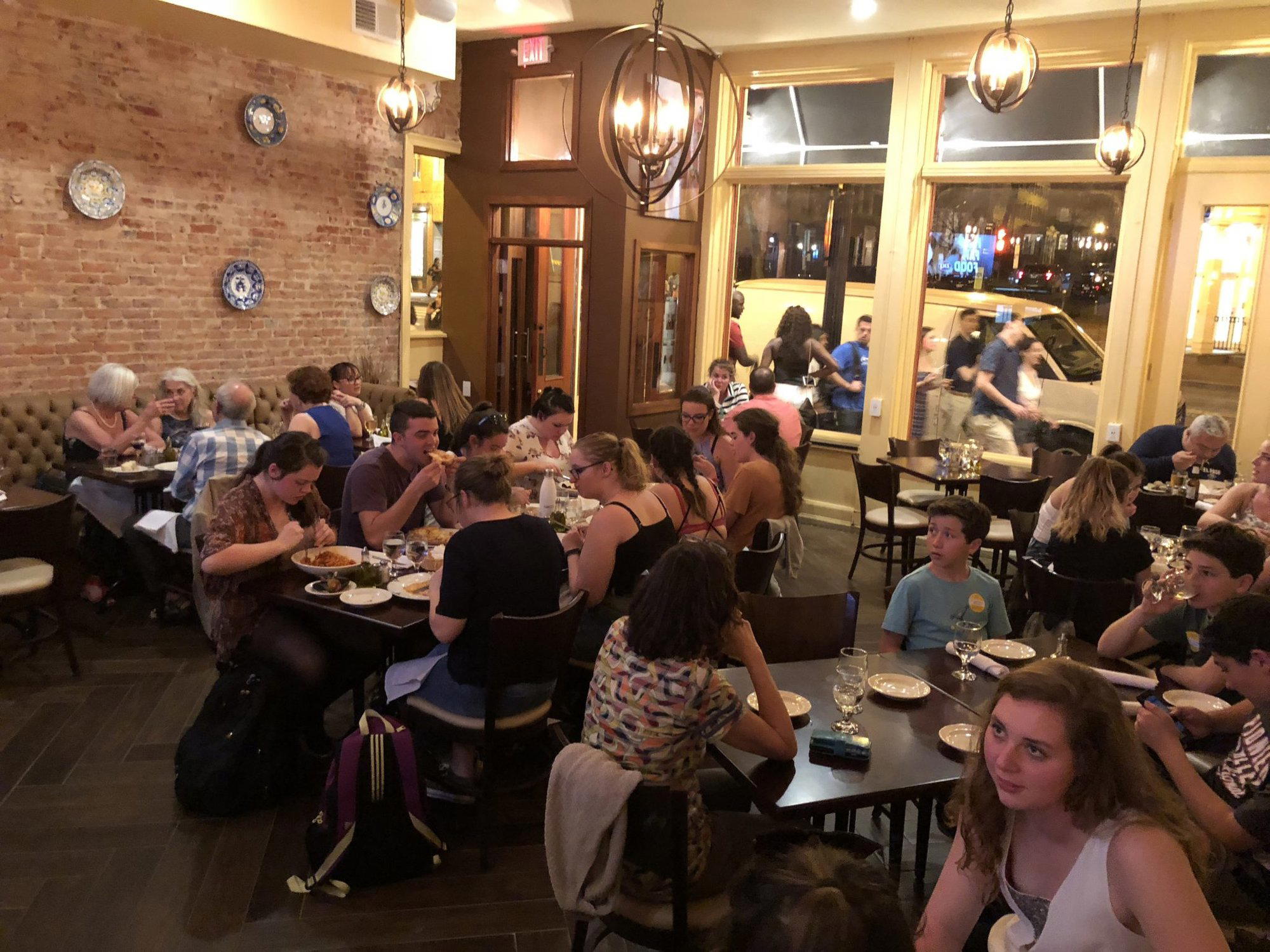
Georgetown's Corner Logic
Angolo Ristorante is a traditional Italian trattoria in Washington, D.C. with. There is a category of restaurant that Washington's dining press tends to overlook in favor of the tasting-menu formats and ambitious debut kitchens that generate column inches. These are the neighborhood anchors: places that fill on a Tuesday, whose regulars book the same table on the same night every week, and whose value is measured not in experiential novelty but in the accumulated trust of a loyal room. Angolo Ristorante, at 2934 M Street NW in Georgetown, occupies exactly that position. The address places it on one of the capital's most trafficked commercial corridors, but the restaurant's gravitational pull is not the foot traffic, it is the repeat clientele who have already decided it works for them.
Georgetown's dining character has always been somewhat distinct from the newer restaurant clusters emerging around Shaw, Navy Yard, and the 14th Street corridor. The neighborhood skews toward an older, more residential dining public: foreign service families, university faculty, and long-established Washington households who treat the area's better restaurants as extensions of their domestic lives rather than destinations to be photographed and filed. Angolo fits that pattern. Italian cooking, in this context, functions as a kind of civic language, familiar enough to be comfortable, with enough technical range to reward attention when the kitchen is working well.
What Keeps the Room Filled
The regulars' perspective on a restaurant like Angolo tends to be defined less by the menu's headline dishes and more by the sum of smaller consistencies: whether the pasta texture holds across a full service, whether the wine list has been maintained without drifting upmarket at the expense of useful mid-range bottles, whether the room acknowledges you on a second or third visit. These are the metrics that drive return visits among Georgetown's dining regulars, and they are harder to sustain than a single spectacular dish.
Washington's Italian restaurant tier is competitive in ways that casual observation might miss. The city has long supported serious Italian cooking, from white-tablecloth formats in upper Northwest to the tighter trattorias that populate Capitol Hill and Dupont Circle. What separates the restaurants that accumulate loyal followings from those that plateau at tourist traffic is usually a question of consistency across the full range of the menu rather than brilliance at one end of it. A table of regulars at a Georgetown Italian restaurant is not ordering the same thing as a first-time visitor: they know the kitchen's strengths, they steer the table toward the dishes where execution is most reliable, and they calibrate their expectations accordingly. That kind of institutional knowledge, accumulated over many visits, is the real product a neighborhood restaurant sells.
For readers building out a picture of Washington's current dining scene, it is worth placing Angolo in context alongside the city's notable restaurants. The counter-format intensity of Jônt or the molecular precision of minibar by José Andrés represent one pole of the capital's ambition. The Middle Eastern cooking at Albi, the Peruvian precision of Causa, and the sustainable sourcing framework at Oyster Oyster represent the city's newer conceptual directions. Angolo occupies a different register entirely, one that is less about culinary argument and more about reliable execution within a well-understood tradition.
Italian Cooking as a Neighborhood Contract
Italian cooking in American cities has undergone a significant stratification over the past two decades. At one end, a tier of serious regional-Italian restaurants has emerged that approaches the cuisine with the same sourcing discipline and technical rigor applied to French or Japanese cooking. At the other, the category still includes a large number of restaurants operating on the logic of comfort and accessibility rather than culinary specificity. The interesting middle ground, restaurants that are clearly cooking with care but are not positioning themselves as destination experiences, is where places like Angolo tend to sit, and where the regulars' relationship with the kitchen tends to be most direct.
Pasta, in this context, is always the diagnostic: a kitchen that maintains consistent pasta texture across a full evening service, manages saucing ratios without drift toward heaviness, and handles the balance between richness and acidity in its red-based preparations is doing something technically serious even if it is not presenting itself as such. The same applies to the treatment of proteins, the composition of antipasti, and the coherence of the wine list relative to the food. These are the elements that Georgetown's repeat diners have formed opinions about, often stronger and more specific opinions than a single-visit critic would hold.
Planning a Visit
Georgetown remains one of Washington's more logistically considered neighborhoods: parking around M Street can be difficult during peak evening hours. For dining in this part of the city, it is generally worth treating the broader M Street corridor as an evening destination rather than a quick stop, given the density of options in either direction from Angolo's address. Reservations are recommended.
For readers whose Washington dining interests run toward fine dining, the full range is covered in our Washington, D.C. restaurants guide. For comparison with how Italian and European-rooted cooking functions at the highest formal tier elsewhere in the United States, The French Laundry in Napa, Le Bernardin in New York City, Smyth in Chicago, and Addison in San Diego each represent the formal end of the spectrum. Regionally, The Inn at Little Washington remains the Washington area's most decorated dining destination for those benchmarking against that tier. For a wider lens on how farm-to-table sourcing has shaped American fine dining, Blue Hill at Stone Barns in Tarrytown, Single Thread Farm in Healdsburg, and Lazy Bear in San Francisco offer useful points of reference, as do Providence in Los Angeles, Emeril's in New Orleans, and Atomix in New York City. For European context, Atelier Moessmer Norbert Niederkofler in Brunico shows what Italian-rooted cooking looks like high on its formal range.
A Quick Peer Check
Comparable venues nearby, for context on price, style, and recognition.
| Venue | Cuisine | Price | Notes |
|---|---|---|---|
| Angolo RistoranteThis venue — the venue you are viewing | Traditional Italian Trattoria | $$ | Not listed |
| Emmy Squared Pizza: Shaw | Detroit-Style Pizza & Burgers | $$ | Cardozo |
| Sette Osteria | Authentic Italian Osteria | $$ | Logan Circle |
| Gordon Ramsay Street Pizza - Washington DC | Modern Italian Street Pizza | $$ | Penn Quarter |
| Ulivo | Neighborhood Italian Trattoria | $$ | Pleasant Plains |
| Lupo Verde | Rustic Italian Osteria | $$ | Cardozo |
Continue exploring
More in Washington DC
Restaurants in Washington DC
Browse all →
Bars in Washington DC
Browse all →
Hotels in Washington DC
Browse all →

At a Glance
- Cozy
- Classic
- Romantic
- Date Night
- Family
- Casual Hangout
- Group Dining
- Terrace
- Standalone
- Beer Program
Current opening hours
- Monday
- 11 AM–12 AM
- Tuesday
- 11 AM–12 AM
- Wednesday
- 11 AM–12 AM
- Thursday
- 11 AM–12 AM
- Friday
- 11 AM–12 AM
- Saturday
- 11 AM–12 AM
- Sunday
- 11 AM–12 AM
Hours can change for holidays and private events. Last verified .
Warm and inviting with a typical Italian restaurant atmosphere; features both indoor seating and a spacious outdoor patio area.