
A kushiage counter in Kyoto's Minami Ward, Ahbon has placed consecutively on Opinionated About Dining's Top Restaurants in Japan list, ranked 370th in 2024 and 419th in 2025. Chef Tsutomu Hasegawa runs a focused program around deep-fried skewers, drawing serious diners to an address well outside Kyoto's tourist circuit.
Pearl is the En Primeur Club membership app — saves, bookings, and concierge access live there. Same editors, same standards.
- Address
- Japan, 〒601-8017 Kyoto, Minami Ward, Higashikujo Kitakarasumacho, 6−6 アルプス9ビル 4F
- Phone
- +81 75-661-0066
- Website
- bakabond.owst.jp
- Directions
- Get directions
 Saves & bookings on Pearl
A Kushiage Counter in the Margins of Kyoto's Dining Map
Ahbon is a Kyoto restaurant in Minami Ward specializing in modern luxury kushiage, priced at about $150 per person. Kyoto's most-discussed restaurants tend to cluster in Higashiyama, Gion, and the canal-lined streets near the Kamo River, addresses where kaiseki rooms like Gion Sasaki and Hyotei have spent decades establishing the city's reputation for precision and ceremony. Minami Ward, by contrast, sits south of Kyoto Station and rarely appears in conversations about where serious diners should eat. Ahbon occupies the fourth floor of a low-key office building on Higashikujo Kitakarasumacho, an address that requires deliberate effort to find and offers nothing in the way of scenic approach. That framing matters, because the disconnect between surroundings and critical recognition is part of what defines the restaurant's position in Kyoto's dining order.
The format is kushiage: ingredients breaded, skewered, and fried in sequence, a discipline that originated in Osaka's working-class eating culture and has since developed its own specialist tier. Where kaiseki operations at the ¥¥¥¥ level, such as Kikunoi Honten and Isshisoden Nakamura, use extreme seasonality and centuries of formal tradition to justify their pricing, kushiage counters earn their critical credibility through a different set of variables: the quality of the oil, the consistency of the batter's thickness and temperature, and above all, the sourcing and handling of what goes on the skewer before it reaches the fryer.
What Goes on the Skewer: The Sourcing Logic of Kushiage
Kushiage's reputation has long been stratified in ways that mirror sushi. At the entry level, it is fast, affordable, and built around commodity ingredients. At the serious end, the skewer becomes an argument about provenance: which producer grew the burdock root, how the seafood was transported, whether the wagyu is sourced from a single farm or blended. The discipline's leading counters across Japan use the frying sequence as a way of showcasing ingredient progression, moving through vegetables, seafood, and meat with the same seasonal attentiveness that kaiseki demands in its own idiom.
Chef Tsutomu Hasegawa's program at Ahbon operates within this tradition. The consecutive OAD rankings in 2024 and 2025 indicate that critics have found the kitchen's approach consistently worth distinguishing.
For context on how kushiage sits within the broader category of Japanese fried cuisine, the format is distinct from kushikatsu, though the terms are often used interchangeably outside Japan. Kushikatsu refers specifically to the Osaka style of deep-fried skewers with a thinner batter and the characteristic no-double-dipping rule for shared sauce. Kushiage tends to denote a broader, often more refined approach, where batter weight, frying oil type, and ingredient pairings receive individual attention per skewer. Ahbon's classification as kushiage places it within the more considered end of this spectrum, a positioning echoed by its critical recognition. For another take on the format in the region, Kitashinchi Kushikatsu Bon in Osaka and Hidden Kitchen in Hong Kong offer useful comparisons across different cities and interpretations.
Where Ahbon Sits in Kyoto's Critical Hierarchy
Opinionated About Dining operates one of the few ranking systems that covers mid-tier and specialist Japanese counters with the same rigour it applies to three-Michelin-star operations. A placement at 370th in 2024 and 419th in 2025, in a country with a density of serious restaurant culture that few cities elsewhere can match, carries weight precisely because the list is long and the competition for any position on it is substantial. The ranking movement between years is worth reading carefully: a slip from 370 to 419 does not necessarily indicate decline, given that the list expands and contracts each year as new entrants are evaluated, but it is a signal that critics are tracking the kitchen actively.
Kyoto's critic-recognised restaurants are heavily dominated by kaiseki at the upper end. Gion Sasaki holds three Michelin stars; Ifuki and Kyokaiseki Kichisen each hold two. The city's Michelin guide has historically been conservative about non-kaiseki formats at the summit of the list, which means a kushiage counter earning sustained OAD recognition in Kyoto occupies an unusual niche. It competes on different terms than the kaiseki rooms but is evaluated alongside them in lists that cut across format and price tier.
Comparable specialist counters earning sustained recognition at the national level include Kushi Tanaka in Kyoto and, further afield, HAJIME in Osaka, Harutaka in Tokyo, akordu in Nara, Goh in Fukuoka, 1000 in Yokohama, and 6 in Okinawa, each representing different regional approaches to format-driven precision cooking.
Ahbon's address in Minami Ward places it outside the walking radius of most Kyoto visitor itineraries. The building is a short distance from Higashikujo Station and accessible from Kyoto Station, which makes logistics manageable, but the location is functional rather than picturesque. The restaurant occupies the fourth floor of an office block, arrive knowing where you are going rather than expecting signage to guide you in.
Booking is essential, and the restaurant is open Tuesday through Sunday from 5 p.m. to 12 a.m. with Monday closed. Given the OAD ranking and the concentrated format of a kushiage counter, seats will be limited and advance reservation is the sensible approach. The phone number and website are not listed here.
Budget and Context
Comparable venues nearby, for context on price, style, and recognition.
| Venue | Cuisine | Price | Notes |
|---|---|---|---|
| AhbonThis venue — the venue you are viewing | Minami, Modern Luxury Kushiage | $$$$ | Not listed |
| Miyama Sou | Sakyō, Tsumikusa Kaiseki | $$$$ | Not listed |
| 鳥さき | Nakagyo Ward, Michelin-Starred Yakitori | $$$$ | Not listed |
| Gion Sushi Tadayasu | Not listed | $$$$ | Higashiyama, Traditional Edomae Omakase Sushi |
| Park Hyatt Kyoto | Higashiyama, French-inspired Teppanyaki | $$$$ | Not listed |
| 天ぷら 京星 | 祇園, Kyoto-Style Tempura | $$$$ | Not listed |
Recognition history
Dated appearances from independent guides and award organizations, with the underlying list record or original source where available.
Opinionated About Dining Top Restaurants in Japan Ranked #419
Opinionated About Dining
Opinionated About Dining Top Restaurants in Japan Ranked #370
Opinionated About Dining
Continue exploring
More in Kyoto
Restaurants in Kyoto
Browse all →
Bars in Kyoto
Browse all →
Hotels in Kyoto
Browse all →
Wineries in Kyoto
Browse all →
At a Glance
- Intimate
- Elegant
- Modern
- Sophisticated
- Special Occasion
- Date Night
- Celebration
- Chefs Counter
- Open Kitchen
- Sake Program
- Extensive Wine List
- Sommelier Led
- Local Sourcing
Current opening hours
- Monday
- Closed
- Tuesday
- 5 p.m.–12 a.m.
- Wednesday
- 5 p.m.–12 a.m.
- Thursday
- 5 p.m.–12 a.m.
- Friday
- 5 p.m.–12 a.m.
- Saturday
- 5 p.m.–12 a.m.
- Sunday
- 5 p.m.–12 a.m.
Hours can change for holidays and private events. Last verified .
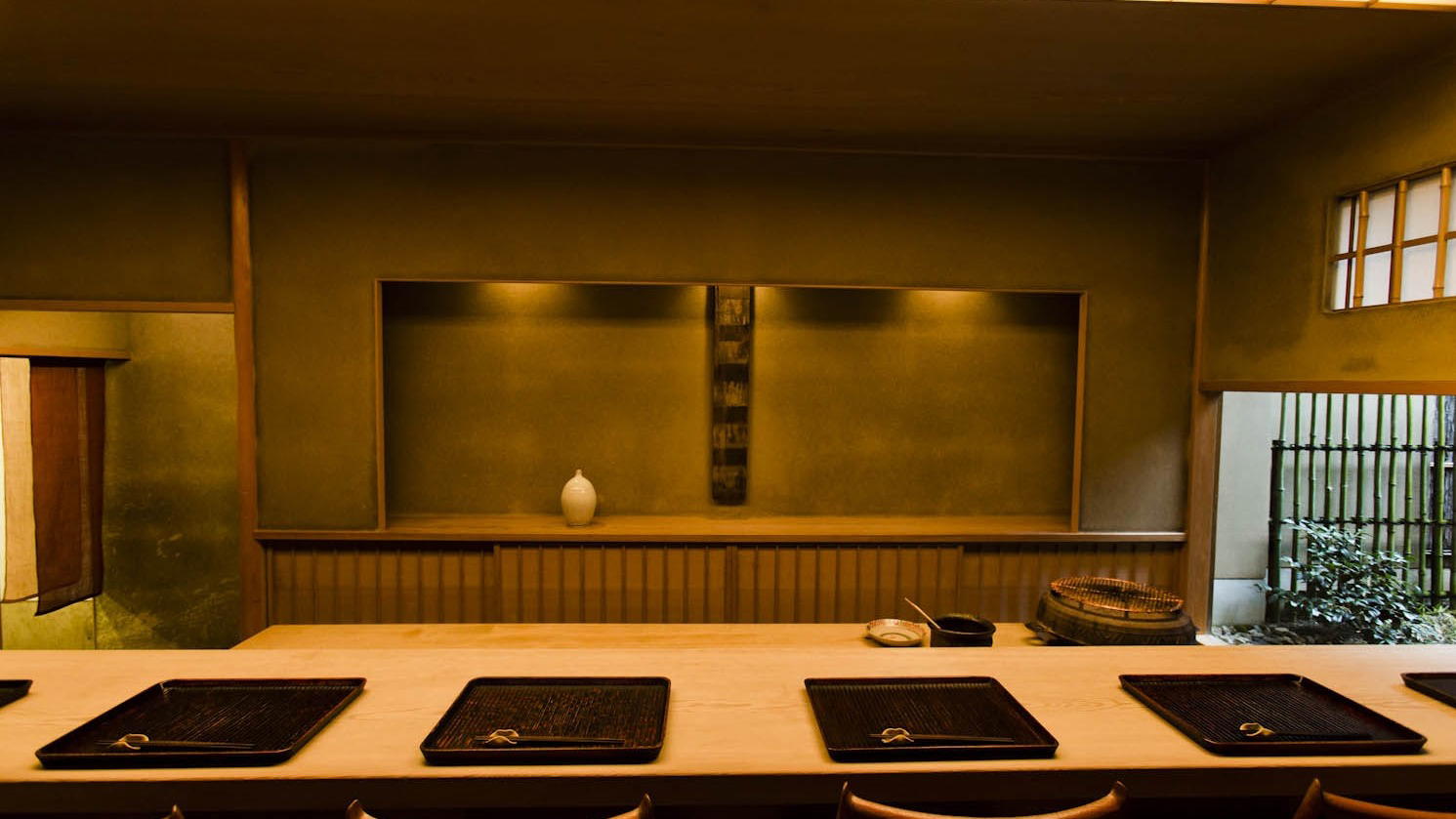
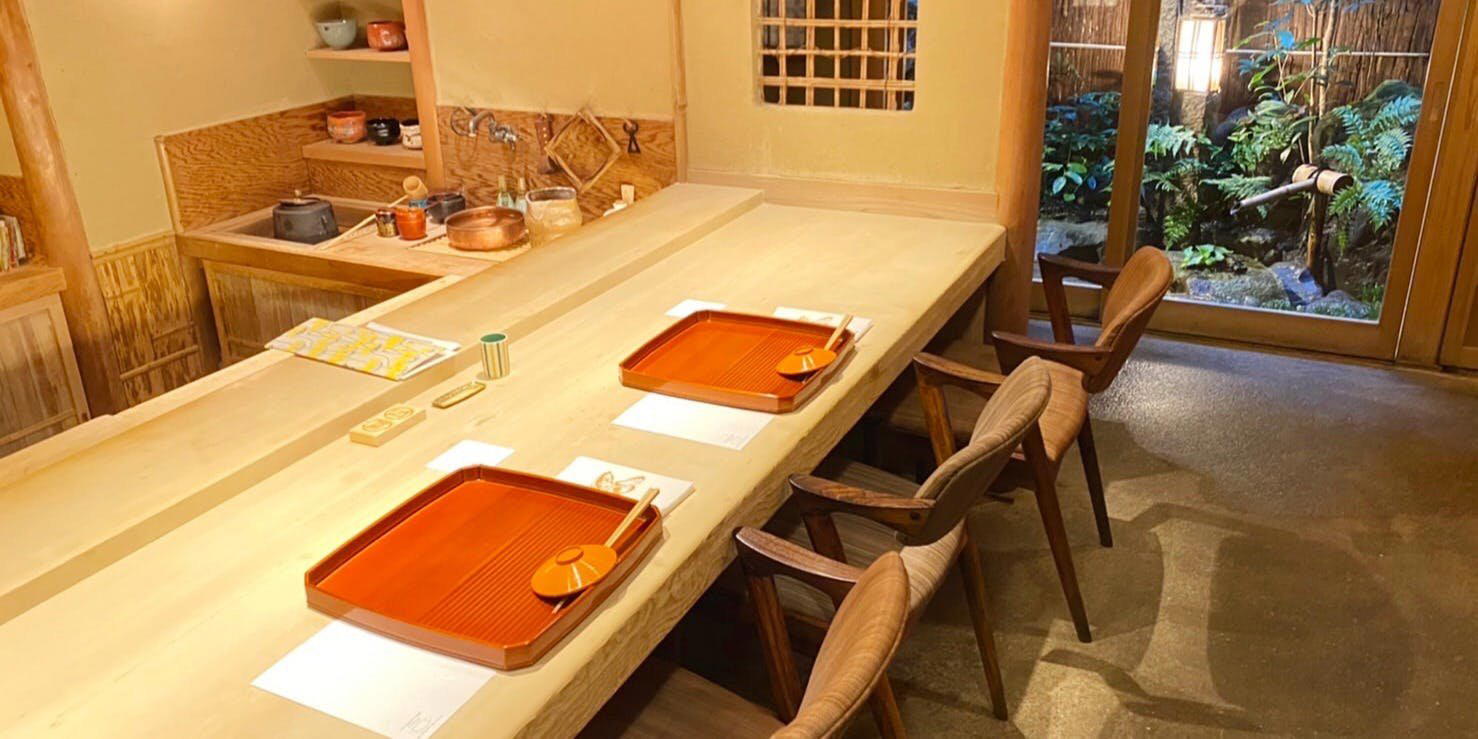
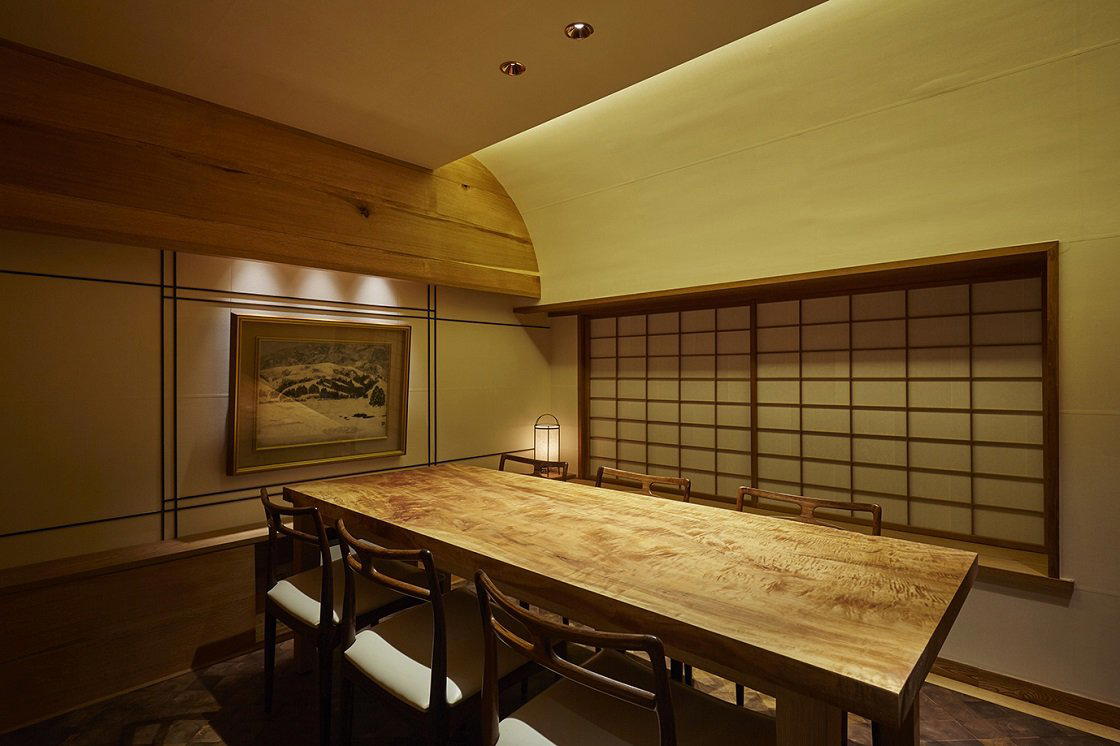
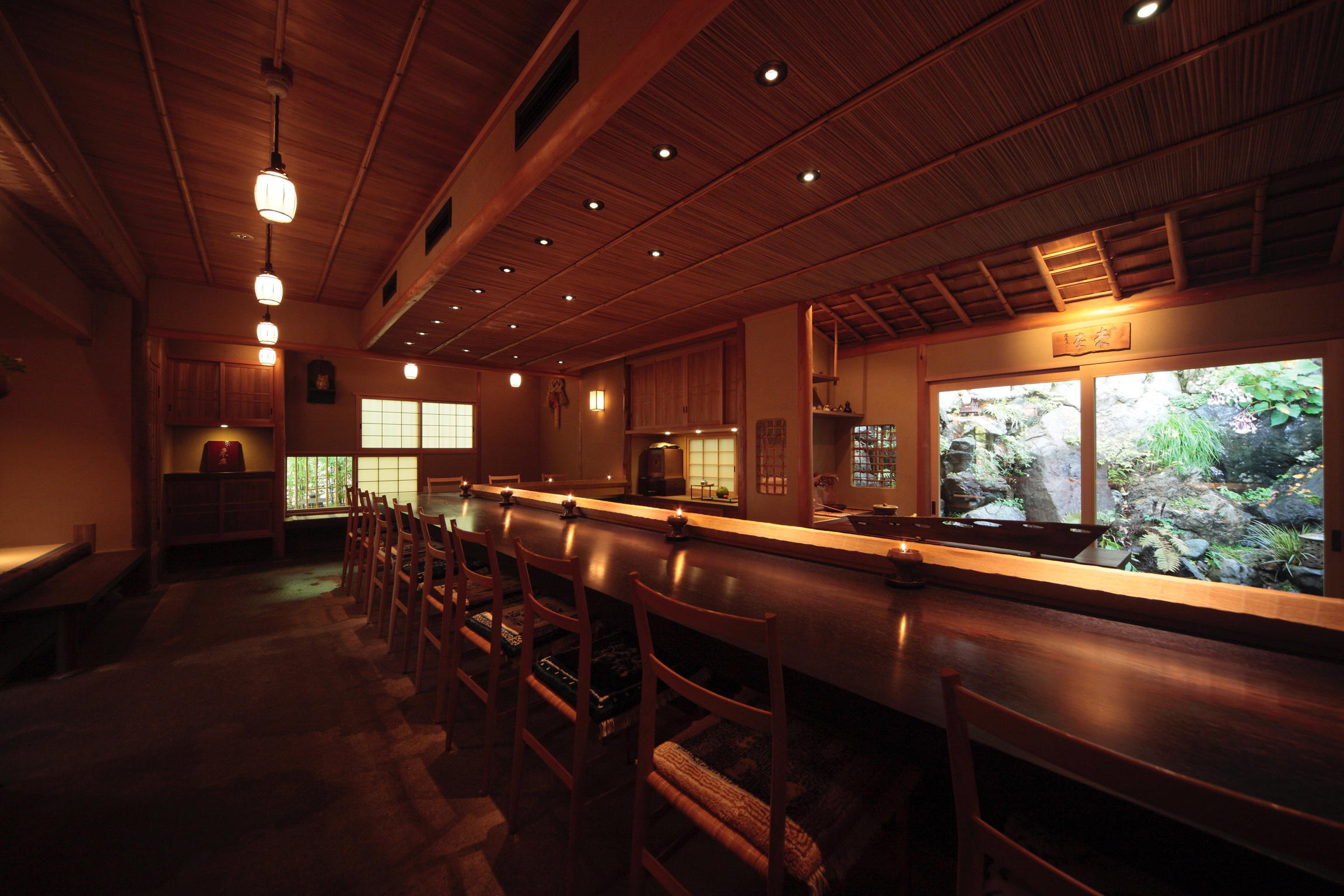
Softly lit, intimate space with restrained design featuring natural woods, muted metals, and soft stone, foreground the theater of frying and plating with hand-thrown ceramic serveware and warm hospitality.