
Hidden Kitchen brings kushiage to Causeway Bay in a form rarely encountered outside Japan. Operating from a third-floor flat on Jardine's Bazaar, the restaurant earned Opinionated About Dining's Highly Recommended recognition in 2023, placing it in a small peer group of specialist Japanese formats that have taken root in Hong Kong's dense dining scene.6 across 97 reviews suggests a loyal, returning audience.
Pearl is the En Primeur Club membership app — saves, bookings, and concierge access live there. Same editors, same standards.
- Address
- Flat D, 3/F, 54 Jardine's Bazaar, Causeway Bay, Hong Kong
- Phone
- +852 2504 1511
- Website
- m.facebook.com
- Directions
- Get directions
 Saves & bookings on Pearl
A Third-Floor Address in Causeway Bay
Hidden Kitchen is a Hong Kong restaurant in Causeway Bay serving Japanese Kushikatsu & Omurice, with a price per person of about US$60. Hidden Kitchen occupies Flat D on the third floor, a placement that filters the casual drop-in crowd almost entirely. This kind of residential-building address has become a recognisable feature of Hong Kong's more serious specialist dining scene, where venues trade on word of mouth and repeat visits rather than street-level footfall. In a city where dining real estate is ferociously expensive, the format also makes commercial sense: lower overheads can translate directly into sourcing budgets and tighter, more considered menus.
Causeway Bay itself sits at the denser, more local end of Hong Kong's dining geography compared to the hotel-anchored fine dining of Central and Wan Chai. The French rooms at Caprice and Amber, along with Italian heavyweight 8 1/2 Otto e Mezzo Bombana, occupy a hotel-dining tier defined by large rooms and full brigade kitchens. Hidden Kitchen is the structural opposite: a small-format specialist tucked into a residential block, closer in spirit to the counter-led Japanese formats scattered through Causeway Bay's side streets.
Kushiage in Hong Kong: Format and Context
Kushiage, skewered ingredients, breaded in panko and deep-fried in sequence, is a discipline that receives considerably less international attention than sushi, ramen, or yakitori, yet it has generated a serious counter culture in Osaka and Kyoto. The format is inherently counter-driven: the cook works directly across from diners, managing a continuous sequence of skewers, adjusting frying times and temperatures to ingredient type. Delicate items such as scallop or prawn arrive at a different moment in the sequence than root vegetables or denser proteins, and the pacing is deliberate rather than rushed.
Within Japan, the category ranges from standing Osaka bars serving kushikatsu at low price points to Kyoto counter restaurants with sourcing programs as considered as any kaiseki kitchen. Ahbon in Kyoto and Kushi Tanaka, also in Kyoto, represent that more considered tier. In Osaka, Kitashinchi Kushikatsu Bon, kushiage 010, and Kushikatsu Gojoya each occupy different points on that spectrum. Kushiage Ryori Kawata in Tokyo and Kushizukushi in Nara extend the format across other Japanese cities, while Kushi Kawa in Seoul represents the category's presence elsewhere in Asia. In Hong Kong, the category is far less established. The restaurant's presence in that gap is the more significant editorial fact: it is among a small number of restaurants in the city treating kushiage as a serious format rather than a passing menu section.
Why Ingredient Sourcing Defines the Format
The argument for kushiage as a vehicle for serious sourcing is direct once you understand the cooking method. Deep-frying in a high-quality neutral oil at precise temperatures does not mask ingredient quality the way heavy saucing might. The panko coating, when applied correctly, creates a shell that traps steam and conducts heat evenly, but it does not contribute flavour of its own. What arrives on the skewer is the ingredient, cooked under pressure and heat, with nothing to hide behind. A mediocre piece of wagyu or a limp vegetable will register immediately. The format rewards kitchens that source carefully.
This is why the more serious kushiage counters in Japan have aligned themselves with specific producers, seasonal markets, and premium protein suppliers in ways that parallel kaiseki kitchens. The Japanese fine-dining relationship with ingredient provenance, built into kaiseki through centuries of seasonal discipline, transfers directly to this format. Hong Kong, as a hub for Japanese food imports, has access to the same supply chains that feed Tokyo and Osaka counters, and the city's concentration of Japanese restaurants has deepened those logistics over decades. A small specialist like Hidden Kitchen can draw on that infrastructure without the overheads of a larger room.
Recognition and Peer Positioning
Opinionated About Dining's Highly Recommended designation in 2023 places the restaurant in a specific tier within that guide's methodology. OAD weights its rankings on votes from experienced diners rather than professional critic panels, which means a Highly Recommended position reflects a genuine diner audience finding value and quality over multiple visits. Within Asia, that list includes a number of small-format Japanese specialists, and the restaurant's placement there positions it alongside venues with similar physical formats: small, counter-focused, not widely publicised.
The review count is modest, which reflects either limited capacity, limited marketing activity, or both. That score maintained across a smaller audience suggests a tight, satisfied regular clientele rather than a high-turnover room chasing volume.
Elsewhere in Hong Kong's broader dining scene, the OAD-recognised tier includes venues operating across different categories. Ta Vie and Forum are among the city's recognised names in Japanese-French innovation and Cantonese respectively. The restaurant sits apart from that tier in both price point and format, the kushiage counter is not competing with tasting-menu rooms, but shares the characteristic of genuine specialist focus.
A Quick Peer Check
Comparable venues nearby, for context on price, style, and recognition.
| Venue | Cuisine | Price | Notes |
|---|---|---|---|
| Hidden KitchenThis venue — the venue you are viewing | Japanese Kushikatsu & Omurice | $$$ | Not listed |
| Tominokoji Yamagishi HK | Kyoto Cha-Kaiseki | $$$$ | Yau Tsim Mong South |
| fukuro | Modern Japanese Izakaya | $$$ | Central |
| Censu | Modern Japanese Izakaya | $$$ | Central |
| Nikutoieba Matsuda | Wagyu-Focused Japanese Kaiseki / Omakase | $$$ | Sheung Wan |
| Tokio Joe | Modern Japanese Sushi and Omakase | $$$ | Central |
Recognition history
Dated appearances from independent guides and award organizations, with the underlying list record or original source where available.
Opinionated About Dining Top Restaurants in Asia Highly Recommended
Opinionated About Dining
Continue exploring
More in Hong Kong
More from Chef Various
Browse all →
Restaurants in Hong Kong
Browse all →
Bars in Hong Kong
Browse all →
At a Glance
- Intimate
- Cozy
- Classic
- Casual Hangout
- After Work
- Open Kitchen
- Chefs Counter
- Beer Program
Current opening hours
- Monday
- Closed
- Tuesday
- 6:30 PM–1 AM
- Wednesday
- 6:30 PM–1 AM
- Thursday
- 6:30 PM–1 AM
- Friday
- 6:30 PM–1 AM
- Saturday
- 6:30 PM–1 AM
- Sunday
- 6:30 PM–1 AM
Hours can change for holidays and private events. Last verified .
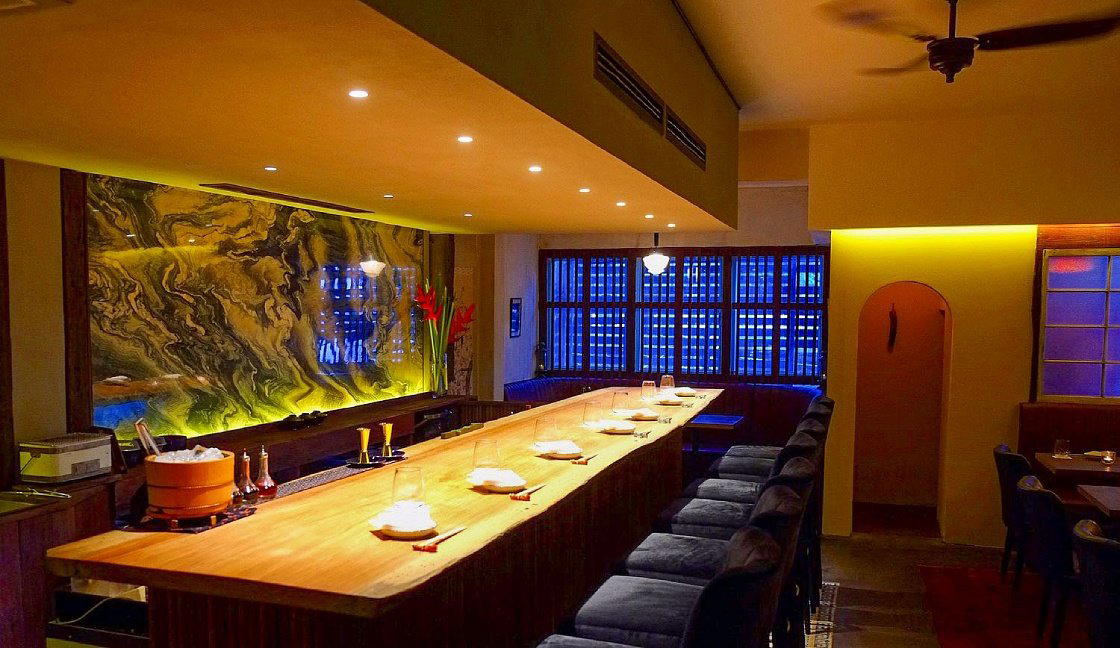
Bright, clean, and airy with old-school décor featuring wooden captain-style pub stools; intimate counter seating with direct view of the open kitchen and owner-chef at work.