
Tabelog 100 #33
Our verdict
Accha Kana puts Tokyo curry into a quieter Futako Tamagawa frame: compact counter, terrace option, yoshoku-adjacent categories, and a Tabelog Curry TOKYO 100 selection in 2023 and 2024. Its value lies in the way a suburban department-store setting can still carry serious curry credentials, with wine and cocktails giving the format a more flexible rhythm than a quick lunch counter alone.

Pearl is the En Primeur Club membership app, where members save venues, book tables and use the concierge.
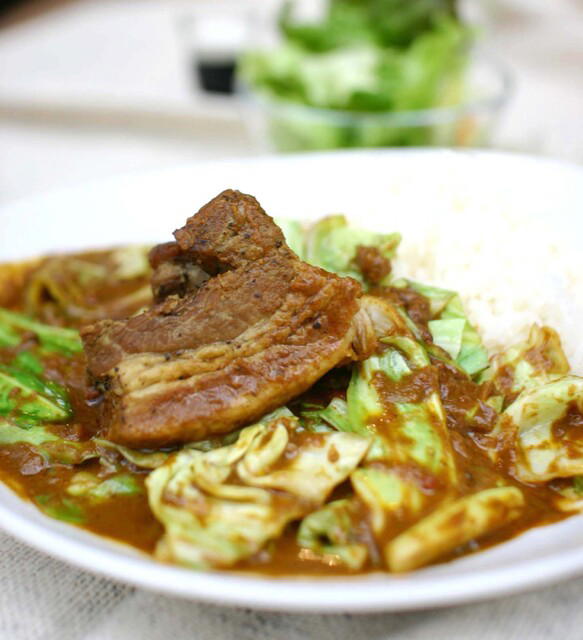
The menu
What to order
- Chicken curry
- Keema curry
- Seasonal ingredient curries
Futako Tamagawa changes the tempo before the first order: polished west-side Tokyo calm, department-store corridors, courtyard seating, and families moving between shopping, coffee, and dinner rather than central curry-district urgency. In this setting, Accha Kana reads as a compact curry specialist, not a destination dining room: seven indoor counter seats, terrace capacity outside, and a menu identity spanning curry, yoshoku, Asian, and ethnic categories.
Tokyo curry is several overlapping traditions: quick station curry for commuters, spice-driven independents borrowing from South Asian grammar, yoshoku roux-and-rice lineage, and newer wellness-coded plates that lighten the genre without making it diet food. Accha Kana sits where curry can be casual yet curated. Its selection for Tabelog Curry TOKYO 100 in 2023 and 2024 places it among venues Japanese diners track seriously, even when the setting feels everyday rather than ceremonial.
West-side curry, with drinks built into the rhythm
The useful lens is not chef mythology; none is needed. The story is format. Many Tokyo curry shops end the beverage decision at water, beer, or lassi. Accha Kana lists wine and cocktails, a small detail that changes the meal’s function. It can stay a quick plate, or become a slower terrace lunch, light dinner, or curry meal that connects naturally to the rest of an evening.
That matters in Futako Tamagawa. The neighbourhood is not Ginza, where comparisons default to omakase pricing and reservation scarcity, or Shinjuku, where density folds a meal into a larger night out. Around Tamagawa Takashimaya, dining must meet mixed needs: a solo counter seat, casual table with friends, pause between errands, or low-pressure dinner before heading back across Setagaya. Wine and cocktails do not make it a bar; they broaden curry’s social range.
On Tokyo’s dining map, the venue is a calibrated neighbourhood specialist rather than a spectacle. Readers tracing the city’s informal end can compare the curry category with 3 Chome no Curry Ya San, while a wider scan of casual Tokyo rooms might include 2D Cafe or the izakaya-and-grill side represented by . 鮪と炭火焼き うお炭 秋葉原店. These are not substitutes; they show how Tokyo’s informal restaurants are increasingly judged by clarity of purpose, not luxury signals.
Why the Tabelog Curry 100 signal matters here
Tabelog’s Hyakumeiten lists are revealing in Japan because they reward category depth. Curry is fiercely crowded, and selection in the Tokyo curry list is meaningful precisely because the genre is so common. A 3.72 score reinforces that this is not an anonymous shopping-center stopover. Its competitive set is not fine dining but the city’s specialist curry tier, where repeatability, identity, and local loyalty matter more than ceremony.
The room tells a clear story. Seven counter seats create a concentrated interior experience, while the terrace expands the footprint without changing the core identity. That split suits curry: the category benefits from speed and focus, yet tolerates conversation better than sushi or tempura counters where timing and silence can define the meal. The private-use option for small groups adds another clue: this is not a grand restaurant, but it has flexibility for several versions of a casual meal.
The menu categories point to Japanese interpretation rather than a purist regional Indian frame. Yoshoku has long been one of Tokyo’s great absorption systems, turning foreign forms into local comfort without apology. Curry rice is central to that history, and modern Tokyo keeps stretching it: some shops chase spice architecture, some pursue nostalgia, some lean toward health-conscious daily eating. Accha Kana’s health-and-wellness menu signal places it in the latter conversation, while Tabelog recognition keeps it from reading as mere lifestyle dining.
For travellers building a Tokyo itinerary, the west-side location contrasts usefully with denser dining zones. Sushi specialists such as 124. KAGURAZAKA (Yakitori) and 12/10 Shinjuku ten serve different categories and neighbourhood rhythms, while the high-control sushi grammar of Sushi Kimura belongs to another tier entirely. Futako Tamagawa’s appeal is lower friction: serious enough to justify the detour for curry followers, relaxed enough not to require a formal dining slot.
How to place it in a Tokyo eating day
The smart use case is a focused curry meal when the day already points west, not a forced cross-city pilgrimage between museum bookings and late-night bars. Futako Tamagawa has its own gravity: riverside walks, retail, residential calm, and a dining scene rewarding people not chasing only central Tokyo names. Accha Kana fits because it offers category credibility without scarcity theater.
For planning, place it inside a Tokyo dining circuit rather than as a standalone trophy. The city’s casual excellence spans curry, cafes, yakitori, seafood grills, and compact counters; Our full Tokyo restaurants guide is the better framework for deciding whether this west-side stop belongs beside central reservations. Travellers pairing food with stays, drinking, or cultural days can cross-reference Our full Tokyo hotels guide, Our full Tokyo bars guide, Our full Tokyo wineries guide, and Our full Tokyo experiences guide.
The national comparison is useful. Japan’s casual specialists often carry as much local meaning as formal restaurants, from [Curry Senmon Ten] Maruyama Kyoju. in Sapporo to [ki:] in Kyoto.cafe in Osaka.know in Kumamoto, (Shoku) Vietnam in Kawasaki, and -Grilled beef Sukiyaki- KAMAKURA TANUKIAN 鎌倉 たぬき庵 in Kamakura. Even outside Japan, small-format Asian dining has parallel energy at Jōdo Saké Bar in Los Angeles and Onigiri Time in Pasadena.
The verdict is practical and category-specific: Accha Kana is for travellers who take curry seriously but do not need every meal to announce itself with ceremony. The Tabelog Curry TOKYO 100 selections give it a credible reason to enter a Tokyo plan; the counter, terrace, take-out service, and drinks availability make it easier to fit than many specialist rooms. In a city where casual dining often carries the sharper lesson, this is west-side curry with enough structure to reward attention.
Frequently asked questions
What's the address for Accha Kana?
Accha Kana is located in Tokyo.
When can I go to Accha Kana?
Hours at Accha Kana: Mon: 11 AM–3:30 PM, 5–9 PM; Tue: 11 AM–3:30 PM, 5–9 PM; Wed: 11 AM–3:30 PM, 5–9 PM; Thu: 11 AM–3:30 PM, 5–9 PM; Fri: 11 AM–3:30 PM, 5–9 PM; Sat: 11 AM–9 PM; Sun: 11 AM–9 PM.
What should I budget for a meal at Accha Kana?
Pricing at Accha Kana is listed as JPY 1,000 - JPY 1,999 JPY 1,000 - JPY 1,999.
What is Accha Kana known for?
Accha Kana is primarily known for its core concept and execution in Tokyo.
Cuisine-First Comparison
Side-by-side context: comparable cuisine and price.
| Venue | Cuisine | Price | Awards | Notes |
|---|---|---|---|---|
| Accha KanaThis venue (the venue you are viewing) | European-style curry house in Futakotamagawa | $10–20 | Tabelog 100 #33 | Not listed |
| Eric South Masala Diner | Modern South Indian diner & curry house | $20–30 | Tabelog 100 #47 | Shibuya |
| Budouya | Indian curry & Izakaya | $30–50 | Tabelog 100 #9 | Chiyoda |
| Andhra Dhaba Katana | Authentic Andhra Indian | $20–30 | Tabelog 100 #42 | Chiyoda |
| PondyBhavan Musashi nitta | Traditional South Indian restaurant | $10–20 | Tabelog 100 #52 | Ōta |
| DELHI Ginza ten | Indian & Pakistani curry house | $10–20 | Tabelog 100 #16 | Chūō |
Recognition history
Dated appearances from independent guides and award organizations, with the underlying list record or original source where available.
Tabelog 100 #33 · No. 33
Tabelog · Tabelog 100 - Curry - TOKYO - 2024
Continue exploring
More in Tokyo
Restaurants in Tokyo
All restaurants in Tokyo →


Bars in Tokyo
All bars in Tokyo →




Details
- Cozy
- Classic
- Solo
- Casual Hangout
- After Work
- Family
- Standalone
- A La Carte
Current opening hours
- Monday
- 11 AM–3:30 PM, 5–9 PM
- Tuesday
- 11 AM–3:30 PM, 5–9 PM
- Wednesday
- 11 AM–3:30 PM, 5–9 PM
- Thursday
- 11 AM–3:30 PM, 5–9 PM
- Friday
- 11 AM–3:30 PM, 5–9 PM
- Saturday
- 11 AM–9 PM
- Sunday
- 11 AM–9 PM
Hours can change for holidays and private events. Hours as of .
Casual, café-like curry shop in a department store setting, with a relaxed neighborhood feel rather than a formal restaurant atmosphere.