


1 Michelin Star · Tabelog 100 #34
Our verdict
Among Tokyo's Michelin-starred French restaurants, abysse takes a distinctly Japanese approach to the French tradition, pairing seafood and mountain vegetables under a 'sea and mountain' framework shaped by Chef Kotaro Meguro's time in Marseilles. Ranked in the Opinionated About Dining Top 100 for Japan three consecutive years, the Ebisu address operates on dinner-only hours most nights, with Saturday and Sunday lunch sittings for those who plan ahead.

Pearl is the En Primeur Club membership app, where members save venues, book tables and use the concierge.
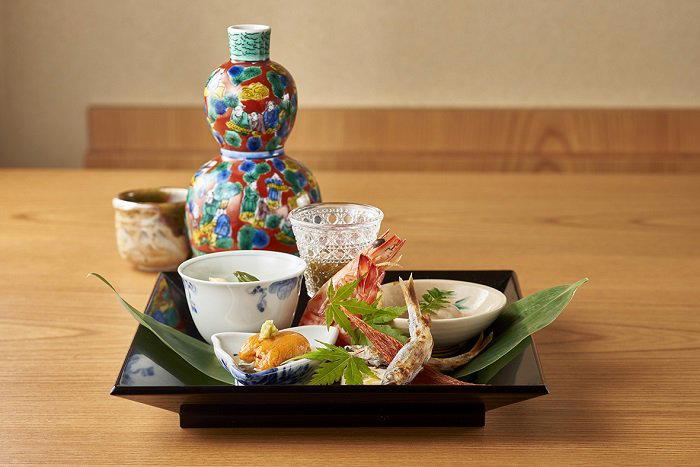
Where Ebisu's French Scene Meets the Ocean Floor
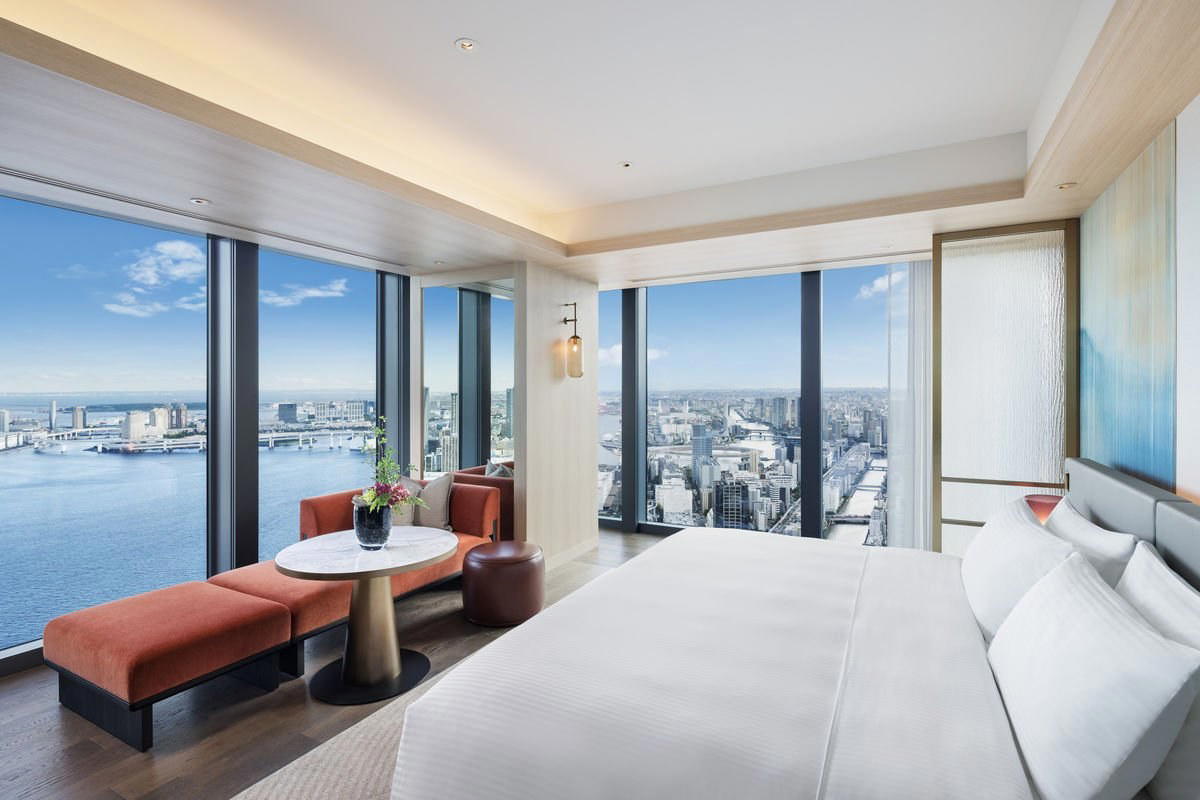
Tokyo's French restaurant tier has bifurcated sharply over the past decade. At one end sit the grand European-format institutions Château Restaurant Joël Robuchon with its full theatrical apparatus, and at the other a quieter generation of chef-led rooms that read as French in technique but Japanese in instinct and ingredient. abysse belongs to that second current. Located on the ground floor of the Ebisu-Hills building in Shibuya's Ebisu-Nishi neighbourhood, the space takes its name from the abyss: a dim, ocean-depth interior that signals the kitchen's primary obsession before a plate has arrived. The design isn't atmospheric window-dressing. It sets the interpretive contract. What follows at the table will be a negotiation between sea and mountain, between French classical form and Japan's seasonal larder.
The Logic of 'Sea and Mountain'
French cuisine has always drawn on the proximity of coastline and upland, Normandy's cream and Channel fish, Provence's littoral herbs and inland olive groves. What abysse does is apply that logic to Japan's own geography, where cold Pacific currents deliver extraordinary seafood and mountain streams feed some of the world's most carefully tended vegetable plots. The pairing isn't a gimmick; it reflects an actual ecological relationship. The same seasonal cycle that fills the mountain rivers with snowmelt eventually replenishes coastal waters. Chef Kotaro Meguro understood the appeal of seafood through a formative period in Marseilles, a city where bouillabaisse culture demands fluency in both the fishing boat and the vegetable market, and that Mediterranean orientation informs the French structure through which Japanese ingredients are framed here.
Across Tokyo's French tier, this kind of ingredient-first methodology is more common than it was fifteen years ago. L'Effervescence, which holds three Michelin stars, has long championed Japanese producers within a French framework. Florilège operates under a two-star recognition and pushes the format in a more explicitly contemporary direction. Sézanne and ESqUISSE occupy adjacent spaces in the premium French bracket. abysse, with its single Michelin star awarded in 2024 and three consecutive appearances in the Opinionated About Dining Top 100 for Japan, ranked 84th in 2023, 73rd in 2024, and 90th in 2025, sits in the tier below the three-star establishments but tracks upward in critical attention. The OAD ranking, which aggregates the opinions of frequent high-level diners rather than anonymous inspectors, is a meaningful signal in this category.
The Choreography of the Room
French service in Tokyo operates under pressures that don't exist in Paris or Lyon. The Japanese dining public has its own rigorous expectations around hospitality, the concept of omotenashi sets a baseline that front-of-house teams must meet or exceed before the food even enters the equation. The leading French rooms in the city have learned to synthesise both traditions: the formality and wine fluency of European service with the attentiveness and timing precision of Japanese hospitality. At the price point abysse occupies (the ¥¥¥¥ tier represents Tokyo's highest bracket, where covers run into five figures in yen), the choreography of the room matters as much as the kitchen's output.
The dim interior that references the ocean floor also creates a service environment where presence and pacing are heightened. In a darker, more intimate room, the moment a sommelier approaches or a plate is set becomes more legible, each movement reads more clearly against the low light. That kind of spatial design is a choice that shapes service choreography, not just atmosphere. It concentrates attention on the table rather than diffusing it across a bright, busy dining room. The rhythm of the meal at this address, dinner running from 6pm to 8:30pm on Monday, Tuesday, Thursday, and Friday, with a lunch sitting added on Saturday and Sunday between noon and 1pm, suggests a format where pacing is controlled and the kitchen drives timing rather than responding to it. Wednesday is a rest day.
Positioning Within Japan's French Circuit
Beyond Tokyo, the French-in-Japan conversation extends to several regional addresses that have developed serious critical followings. HAJIME in Osaka operates at the three-star level with a different philosophical orientation. akordu in Nara and Goh in Fukuoka represent the kind of regional fine dining that has made Japan's provinces more relevant to serious food travellers. Even at the edges of the archipelago, 6 in Okinawa has attracted attention, while 1000 in Yokohama shows how the greater Tokyo metro area extends the city's dining conversation. In Kyoto, Gion Sasaki demonstrates how kaiseki tradition and contemporary precision coexist in that city's particular framework.
Against this national backdrop, abysse's OAD trajectory is worth reading carefully. A move from 84th to 73rd between 2023 and 2024, followed by a slip to 90th in 2025, suggests a kitchen that has earned genuine critical attention but remains in active development. Rankings at this level are volatile and reflect small shifts in frequent-diner opinion, a 17-position movement in either direction does not indicate crisis or breakthrough so much as the normal fluctuation of a restaurant still building its identity. The Michelin star, confirmed in 2024, offers a more stable institutional signal.
For a comparative French reference point outside Japan, the format and ambition of abysse sits in conversation with addresses like Hotel de Ville Crissier in Crissier or Les Amis in Singapore, where French classical form has been adapted to a non-French culinary geography. The through-line is always the same: technique from Europe, materials and seasonal logic from the local environment.
Planning the Visit
abysse operates from the ground floor of the Ebisu-Hills building in Ebisu-Nishi, Shibuya. The address is walkable from Ebisu Station on the JR Yamanote Line and the Tokyo Metro Hibiya Line, which keeps it accessible without requiring a taxi from central Tokyo. Dinner runs four evenings a week plus weekend dinner, with lunch available on Saturday and Sunday. For those exploring the broader Tokyo dining scene, the Ebisu and Daikanyama pocket offers several serious restaurants within a tight radius, making it a neighbourhood worth anchoring a food-focused evening around. EP Club's full Tokyo restaurants guide maps the city's French and contemporary options in detail. The Tokyo hotels guide, bars guide, wineries guide, and experiences guide cover the rest of the city's premium circuit for those building a longer itinerary.
Frequently asked questions
Does abysse have a Michelin star or similar recognition?
abysse has received recognition including: The dim interior suggests the depths of the ocean—the abyss—or the deep green of the forest. Pursuing the theme of ‘sea and mountain’, seafood and vegetables are combined in dishes that convey the bounty of Japan’s seas. The chef first unde….
What should I order at abysse?
The kitchen runs a set menu built around the 'sea and mountain' concept, so the choice of individual dishes isn't yours to make, the course is constructed by chef Kotaro Meguro around seasonal Japanese seafood paired with vegetables from mountain regions. The format rewards visitors who give the menu full latitude rather than arriving with specific ingredient expectations. Ranked #73 in Japan by Opinionated About Dining in 2024 and holding a Michelin star, the tasting course is the only format the room is designed around.
What price level is abysse?
Pricing at abysse is listed as ¥¥¥¥.
Is abysse open every day?
Hours at abysse: Hours: Monday 6–8:30 pm Tuesday 6–8:30 pm Wednesday Closed Thursday 6–8:30 pm Friday 6–8:30 pm Saturday 12–1 pm, 6–8:30 pm Sunday 12–1 pm, 6–8:30 pm.
What's abysse's location?
abysse is located at Japan, 〒150-0021 Tokyo, Shibuya, Ebisunishi, 1 Chome−30−12 EBISU-HILLS 1F, Tokyo.
Compact Comparison
| Venue | Cuisine | Price | Awards | Notes |
|---|---|---|---|---|
| abysseThis venue (the venue you are viewing) | Modern French Seafood | $150–200 | 1 Michelin Star · Tabelog 100 #34 | Not listed |
| Harutaka | Edo-Style Omakase Sushi | $200–300 | 3 Michelin Stars · World's 50 Best #76 | Sushi |
| RyuGin | Modern Kaiseki | $500+ | 3 Michelin Stars · World's 50 Best #41 | Kaiseki, Japanese |
| L'Effervescence | Modern French with Japanese Influences | $200–300 | 3 Michelin Stars · World's 50 Best #69 | French |
| HOMMAGE | Modern French with Japanese Influences | $150–200 | 2 Michelin Stars · World's 50 Best #78 | Innovtive French, French |
| MAZ | Innovative Peruvian-Japanese Fusion | $150–200 | 2 Michelin Stars · World's 50 Best #28 | Innovative |
Recognition history
Dated appearances from independent guides and award organizations, with the underlying list record or original source where available.
Michelin 1 Star
Michelin
Opinionated About Dining Top Restaurants in Japan Ranked #133
Opinionated About Dining
Tabelog 100 #34 · No. 34
Tabelog · Tabelog 100 - French - TOKYO - 2025
Full recognition history (7 entries)
Opinionated About Dining Top Restaurants in Japan Ranked #90
Opinionated About Dining
Michelin 1 Star
Michelin
Opinionated About Dining Top Restaurants in Japan Ranked #73
Opinionated About Dining
Opinionated About Dining Top Restaurants in Japan Ranked #84
Opinionated About Dining
Continue exploring
More in Tokyo
Restaurants in Tokyo
All restaurants in Tokyo →


Bars in Tokyo
All bars in Tokyo →



Details
- Elegant
- Intimate
- Sophisticated
- Date Night
- Celebration
- Special Occasion
- Chefs Counter
- Open Kitchen
- Extensive Wine List
- Sake Program
- Tasting Menu
- Counter Dining
- Pescatarian Friendly
- Vegetarian Friendly
- Gluten Free Options
Current opening hours
- Monday
- 6–11:30 PM
- Tuesday
- 6–11:30 PM
- Wednesday
- Closed
- Thursday
- 6–11:30 PM
- Friday
- 6–11:30 PM
- Saturday
- 6–11:30 PM
- Sunday
- 6–11:30 PM
Hours can change for holidays and private events. Hours as of .
Dim interior evoking ocean depths and deep green forest, creating a stylish, relaxing, and sophisticated atmosphere.