Our verdict
On Largo do Paissandu in São Paulo's Centro Histórico, Aboud Siria operates directly opposite the Galeria do Rock, placing Syrian street food in one of the city's most historically layered public squares. The address alone signals a particular kind of São Paulo dining: informal, rooted in immigrant tradition, and indifferent to fine-dining convention. For anyone tracing the city's Middle Eastern food culture, this is a reference point worth knowing.

Pearl is the En Primeur Club membership app — saves, bookings, and concierge access live there. Same editors, same standards.
- Address
- Lg. do Paissandú, 55 - Centro Histórico de São Paulo, São Paulo - SP, 01034-010, Brazil
- Phone
- +5511958421962
- Hours
- Mon–Wed 9 AM–8 PMThu 9 AM–8:30 PMFri–Sat 9 AM–8 PMSun Closed
- Website
- facebook.com
- Directions
- Get directions
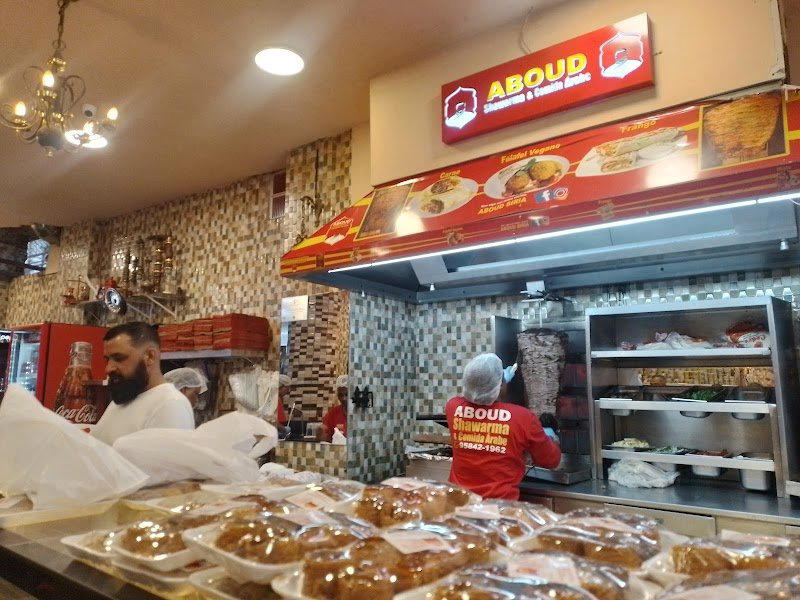
Largo do Paissandu sits at one of Centro Histórico's more loaded intersections. The square carries the weight of São Paulo's Afro-Brazilian religious history — the Igreja Nossa Senhora do Rosário dos Homens Pretos anchors one end — while the Galeria do Rock, directly across from Aboud Siria, has served as the city's subculture commercial hub since the 1960s. To eat Syrian food here, at street level, in the middle of all that layering, is to participate in something São Paulo has been doing quietly for over a century: absorbing immigrant food traditions into its most public spaces without ceremony.
São Paulo's Syrian Table and the Centro Tradition
Brazil received one of the largest waves of Syrian and Lebanese migration in the world during the late nineteenth and early twentieth centuries, and São Paulo became its commercial and cultural centre. That history is not abstract, it lives in the food. Esfihas, quibe, shawarma, and falafel entered the São Paulo street-food vocabulary so thoroughly that many Paulistanos no longer register them as foreign. Centro, with its density of workers, market traders, and foot traffic, became a natural home for this kind of cooking: fast, filling, priced for daily consumption, and carrying enough flavour memory to sustain a community across generations.
Aboud Siria positions itself inside that tradition rather than around it. The address on Largo do Paissandu is functional rather than curated, a working spot on a working square, where the customer base is drawn from the foot traffic between the metro, the market stalls, and the Galeria do Rock's maze of record shops and alternative fashion outlets. This is the opposite end of the São Paulo dining spectrum from the tasting-menu rooms that define the city's international reputation, places like D.O.M. or Tuju, where sourcing narratives are explicit and price points are substantial. Here, the sourcing tradition is implicit, it lives in the spice ratios, the bread-to-filling balance, the way lamb fat is handled, rather than written on a menu card.
Ingredient Logic in Syrian Street Cooking
The editorial angle that matters most when thinking about this category of São Paulo eating is ingredient provenance as cultural memory rather than as marketing. Syrian cooking, particularly in its diaspora form, carries a very specific set of sourcing commitments. Bulgur wheat, flat-leaf parsley, dried mint, sumac, pomegranate molasses, and particular cuts of lamb are not interchangeable. The dishes that define the tradition, quibe cru (raw kibbeh), tabule, stuffed grape leaves, spiced meat pastries, depend on ratios and textures that have been calibrated over generations. When those ratios shift, the dish shifts. Street-level Syrian spots in Centro are judged, by their regulars, on precisely this fidelity.
In broader Brazilian context, this kind of implicit sourcing discipline sits alongside, but separately from, the high-visibility ingredient-sourcing programmes associated with São Paulo's fine-dining tier. At Maní or Evvai, the provenance of a single ingredient is likely to appear in dish descriptions and press materials. At Aboud Siria, the equivalent commitment shows up differently: in whether the quibe uses the right cut, whether the parsley in the tabule is chopped fine enough, whether the dough for the esfiha is leavened correctly. Neither approach is superior, they serve different purposes and different eaters, but both reflect a kind of sourcing seriousness that defines the quality ceiling of their respective formats.
The Galeria do Rock Address as Context
The location opposite the Galeria do Rock is not incidental. The Galeria has operated since 1963 and remains one of the few commercial spaces in Latin America where independent record sellers, tattoo studios, gothic clothing shops, and vintage gear dealers coexist in a single building without being themed or curated into a lifestyle concept. The foot traffic it generates is correspondingly diverse: teenagers spending the afternoon, musicians on a supply run, tourists, workers from nearby offices, and older regulars who have been coming since before the building's current reputation solidified. Aboud Siria's position at street level on the square means it absorbs some of that diversity into its customer base, which shapes the pace and format of service, fast, direct, calibrated for people who are between things rather than lingering.
For comparison, the Syrian and Middle Eastern food tradition shows up across São Paulo in multiple formats. The Bom Retiro neighbourhood, historically the centre of Jewish and subsequently Korean immigration, also carries Middle Eastern food traces. The Liberdade district's food culture is predominantly Japanese, but the city's immigrant food geography is dense enough that Syrian-origin dishes appear in formats ranging from the highly formal to the deeply casual. Aboud Siria occupies a specific point on that range: Centro, outdoor-facing, street-food pace, historical address.
Planning Your Visit
Largo do Paissandu is accessible via the Anhangabaú metro station on Line 3 (Red), a short walk through the historic centre. The square itself is one of São Paulo's busier pedestrian nodes during weekday lunch hours, which is also when spots of this type tend to operate at full capacity. Those travelling to São Paulo with an interest in the broader regional food picture should note that the city's restaurant range extends well beyond the centro street-food tier, our full São Paulo restaurants guide covers the spectrum from street-level to tasting-menu. For reference points elsewhere in Brazil, Oteque in Rio de Janeiro and Manga in Salvador represent the kind of regionally grounded cooking that has put Brazilian dining on the international map, while Birosca S2 in Belo Horizonte and Orixás in Itacaré show how ingredient-rooted cooking operates at different scales. Further afield, Mina in Campos do Jordão, Manu in Curitiba, Primrose in Gramado, Castelo Saint Andrews in Gramado, Olivetto in Campinas, and State of Espírito Santo in Rio Bananal extend the picture across the country's varied food geography. For global context on what serious street-adjacent cooking looks like at its upper register, Le Bernardin in New York and Lazy Bear in San Francisco represent the point at which informal format and fine-dining discipline converge, a different end of the spectrum, but a useful reference for understanding how format and quality interact. For Italian in São Paulo, Fame Osteria represents the contemporary end of a similarly deep immigrant food tradition.
Frequently asked questions
What should I expect atmosphere-wise at Aboud Siria - em frente a Galeria do Rock?
Aboud Siria sits on Largo do Paissandú in São Paulo's historic centre, one of the city's most densely trafficked public squares, and the setting is shaped by that street-level energy rather than any designed dining room. The address opposite the Galeria do Rock — a counter-culture commercial hub operating since 1963 — means the crowd is mixed: market workers, record shop regulars, and people moving through the central corridor. Expect a functional, no-ceremony setup consistent with the Centro street-food tradition.
How do I find Aboud Siria - em frente a Galeria do Rock?
Aboud Siria - em frente a Galeria do Rock is located at Lg. do Paissandú, 55 - Centro Histórico de São Paulo, São Paulo - SP, 01034-010, Brazil, São Paulo.
Why is Aboud Siria located opposite the Galeria do Rock, and what does that tell me about the kind of place it is?
The Galeria do Rock has anchored the block at Largo do Paissandú since 1963, making it one of the longest-running independent commercial spaces in Latin American city-centre retail. A food operation choosing that address is positioning for foot traffic and neighbourhood permanence rather than destination dining, which is consistent with the Syrian street-food tradition São Paulo's Arab community established in Centro over more than a century. In practical terms, this is daytime, counter-service eating in one of the city's most historically layered squares, accessible directly from Anhangabaú metro station on Line 3.
What dish is Aboud Siria - em frente a Galeria do Rock famous for?
São Paulo received one of the largest Arab diaspora communities in the world, and Centro was, and remains, its commercial anchor. The menu at Aboud Siria should be read inside that tradition.
Quick Comparison
Comparable venues nearby, for context on price, style, and recognition.
| Venue | Cuisine | Price | Awards | Notes |
|---|---|---|---|---|
| Aboud Siria - em frente a Galeria do RockThis venue — the venue you are viewing | Syrian Shawarma & Falafel | $1–10 | Not listed | Not listed |
| Bob's Shakes - Itaquera Poupa Tempo | American Fast Food - Milkshakes & Burgers | $1–10 | Not listed | Vila Campanela |
| Rota do Acarajé | Bahian Brazilian | $20–30 | Not listed | Santa Cecilia |
| TAN TAN | Modern Japanese Chuka Noodle Bar | $20–30 | World's 50 Best #24 · Top 500 Bars Best Bars #19 | Pinheiros |
| Temperani | Italian Trattoria | $20–30 | Not listed | Agua Rasa |
| Tappo Trattoria | Classic Italian Trattoria | $30–50 | Not listed | Consolacao |
Continue exploring
More in São Paulo
Restaurants in São Paulo
Browse all →
Bars in São Paulo
Browse all →
Details
- Casual
- Casual Hangout
- Solo
- Group Dining
- After Work
- Standalone
- A La Carte
- Vegetarian Friendly
- Vegan Options
Current opening hours
- Monday
- 9 AM–8 PM
- Tuesday
- 9 AM–8 PM
- Wednesday
- 9 AM–8 PM
- Thursday
- 9 AM–8:30 PM
- Friday
- 9 AM–8 PM
- Saturday
- 9 AM–8 PM
- Sunday
- Closed
Hours can change for holidays and private events. Last verified .
Simple, welcoming, and casual atmosphere focused on quality street food classics.