


3 Michelin Stars · World's 50 Best #95 · La Liste Top Restaurants
Our verdict
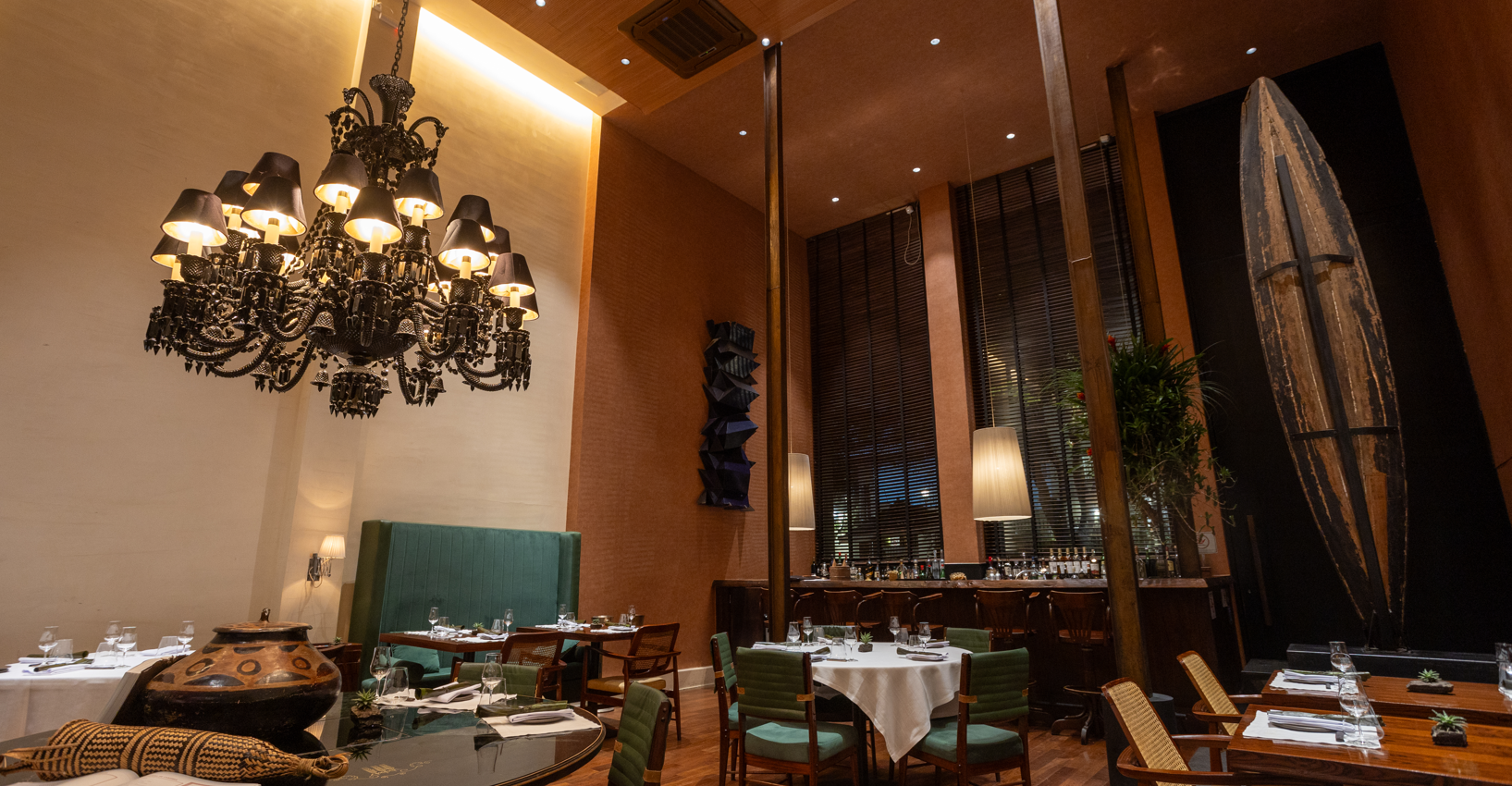
Evvai holds two Michelin stars and a place in the World's 50 Best at number 95, making it one of São Paulo's most decorated restaurants. Chef Luiz Filipe Souza's single tasting menu, Oriundi, channels the Brazilian-Italian migrant tradition through technically precise cooking and local ingredients. Pinheiros, Tuesday through Saturday evenings, with Saturday lunch service also available.

Pearl is the En Primeur Club membership app — saves, bookings, and concierge access live there. Same editors, same standards.
- Address
- R. Joaquim Antunes, 108 - Pinheiros, São Paulo - SP, 05415-000, Brazil
- Phone
- +55 11 3062-1160
- Hours
- Mon ClosedTue–Fri 7–10:30 PMSat 12–3 PM, 7–10:30 PMSun Closed
- Website
- evvai.com.br
- Directions
- Get directions
- Booking
- Book on Meitre
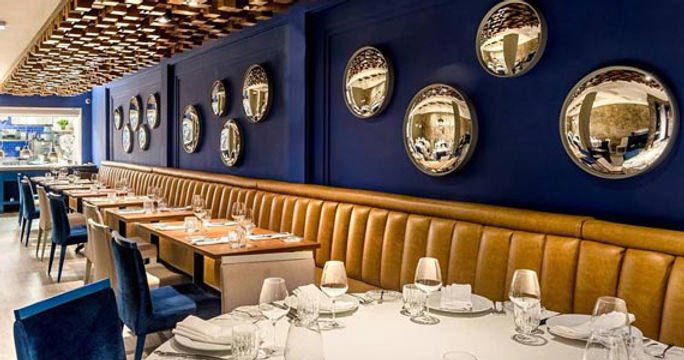
Where Pinheiros Meets the Tasting Menu Tier
São Paulo's fine dining scene has always operated at two speeds: a large, energetic middle tier of contemporary bistros and destination casual restaurants, and a much smaller upper bracket of tasting-menu-only counters that compete on the same global metrics as restaurants in Tokyo or Copenhagen. Rua Joaquim Antunes in Pinheiros sits comfortably within the latter. The street's low residential scale and shaded sidewalks give little indication that one of Brazil's most decorated restaurants occupies number 108, which is precisely the point. The neighbourhood's unassuming character suits a restaurant that earns its reputation through the plate rather than the façade.
Evvai entered the World's 50 Best at number 95 in 2025, placing it in direct conversation with peers in Lima, Mexico City, and Buenos Aires. La Liste awarded it 97 points in its 2026 ranking, up from 94.5 the year prior, a trajectory that matters when assessing where the restaurant sits relative to comparable tasting-menu formats in South America. For context, Opinionated About Dining ranked it 43rd in South America for 2025, following a 41st placement in 2024 and 47th in 2023: a consolidation in the upper quartile rather than a sudden arrival. Two Michelin stars from the 2025 guide, followed by three in 2026, confirmed what the broader award circuit had been signalling across consecutive years.
The Oriundi Format and What It Argues
Brazil's Italian immigration story is not a footnote. Between 1880 and 1930, roughly 1.5 million Italians arrived in São Paulo state alone, many settling in the coffee-farming interior before filtering into the city. The culinary traces of that migration have largely dissolved into everyday paulistano life, appearing in neighbourhood padarias and Sunday lunch traditions without much critical framing. Evvai's tasting menu, named Oriundi, a term used specifically for descendants of Italian emigrants, is an attempt to surface that history through contemporary technique.
The format is a single menu, no alternatives, which places it in a specific and increasingly narrow tier of São Paulo restaurants. D.O.M. operates with a comparable structure at the same price tier, anchoring Modern Brazilian technique through Amazonian ingredients. Tuju runs a similarly disciplined tasting format with a seasonal Brazilian focus. Evvai's distinction within that peer group is the Italian structural logic applied to Brazilian raw material: the sequence, the pasta-as-course architecture, the use of preserved and fermented elements in ways that reference Italian larder tradition while drawing on Brazilian producers.
The OAD citation describes a scallop dish sautéed in duck fat that has remained on the menu since opening, and a Melipona honey dessert employing multiple techniques. These details are significant not because they serve as a preview of specific dishes, but because they indicate a kitchen comfortable with signatures, a restaurant confident enough in its identity to hold certain preparations across years rather than rotating purely for novelty. That kind of editorial restraint in menu development tends to signal a coherent culinary argument, not just seasonal creativity.
The Italian Reference Point in Brazilian Fine Dining
Contemporary Italian cuisine as interpreted outside Italy occupies a complex position in global fine dining. The most interesting versions use Italian structure, preservation logic, and pasta technique as a framework while sourcing entirely from local producers. This approach appears in different forms at Fame Osteria in São Paulo and, at the European source, at restaurants like La Peca in Lonigo and Ilario Vinciguerra in Gallarate, both of which represent the technically rigorous end of northern Italian fine dining that Evvai's training lineage connects to.
What makes the Evvai position unusual within São Paulo is that it is neither straightforwardly Brazilian fine dining, as Maní or D.O.M. might be categorised, nor Italian-restaurant-in-Brazil, as a traditional ristorante would be. It occupies a hybrid that only makes cultural sense in São Paulo, the city that is, by documented population count, home to the largest Italian-descended community outside Italy. The Oriundi concept is therefore geographically specific in a way that could not be replicated in Rio de Janeiro, Buenos Aires, or any other South American capital without losing its foundational logic.
Booking and Planning: What the Format Requires
This is where the editorial angle becomes practical intelligence. Evvai operates Tuesday through Friday evenings from 7 to 11 pm, with Saturday offering both a lunch service from noon to 3 pm and an evening service. The restaurant is closed Sunday and Monday. That Tuesday-to-Saturday schedule is narrower than many comparable tasting-menu restaurants, and the Saturday lunch window represents the most accessible entry point for visitors whose travel schedule compresses their options.
The dual recognition from Michelin (three stars, 2026) and the World's 50 Best (number 95, 2025) places Evvai in a cohort of South American restaurants that operate with international reservation demand, not just local. Lasai in Rio de Janeiro occupies a comparable position on both circuits. That means lead time for reservations matters more than at restaurants of equivalent local standing that haven't yet crossed onto the global lists.
The restaurant does not publish a booking method or phone number through EP Club's verified data, which in practice means planning through the restaurant's direct channels or through a hotel concierge with established relationships. For visitors spending time beyond São Paulo, the broader Brazilian fine dining picture extends to Manu in Curitiba, Manga in Salvador, and Mina in Campos do Jordão for regional contrast, and Orixás in Itacaré for a northern coastal register. Castelo Saint Andrews in Gramado represents a different tradition entirely.
For the Pinheiros visit specifically, the neighbourhood warrants time on either side of dinner. The area around Rua Joaquim Antunes concentrates a density of wine bars, natural wine shops, and specialist cocktail rooms that has made it São Paulo's most interesting off-meal destination in the same bracket. Huto, the Japanese restaurant nearby, operates in a different register but within the same Pinheiros fine dining pocket. The full picture of what São Paulo's dining, bar, and hospitality scene offers is mapped across our São Paulo restaurants guide, São Paulo bars guide, São Paulo hotels guide, São Paulo wineries guide, and São Paulo experiences guide.
Where Evvai Sits in the Award Trajectory
The jump from 94.5 to 97 La Liste points between 2025 and 2026 is not cosmetic. La Liste's methodology weights critical consensus across multiple sources, and a 2.5-point gain at that level of the ranking typically reflects broader critical agreement rather than a single publication's enthusiasm. Combined with the World's 50 Best entry and sustained OAD top-50 South America placements across three consecutive years, Evvai has moved from a restaurant of strong local reputation to one with a documented international critical standing.
Chef Luiz Filipe Souza leads the kitchen, and the restaurant's Michelin citation notes that the cuisine fuses Brazilian ingredients with Italian techniques in a way that is visually striking and technically balanced. These are not characteristics common to the full São Paulo tasting-menu tier. They position Evvai closer to peers in Copenhagen or San Sebastián than to the city's broader restaurant culture, operating on international technical standards while remaining inseparable from a specifically São Paulo cultural identity.
FAQ
What is the signature dish at Evvai?
Evvai's most cited dish across published reviews is a scallop preparation sautéed in duck fat, which has appeared on the Oriundi tasting menu since the restaurant opened. A Melipona honey dessert, prepared using multiple techniques, is also consistently referenced in critical coverage as representing the kitchen's technical range. Both dishes are documented in the OAD citation as defining elements of the menu's identity. As a single fixed tasting menu, Oriundi, the full experience is built around the interplay between Brazilian ingredients and Italian culinary structure, so individual dishes are understood in sequence rather than in isolation.
Frequently asked questions
Where do I go for Evvai?
Evvai is located at R. Joaquim Antunes, 108 - Pinheiros, São Paulo - SP, 05415-000, Brazil, São Paulo.
Is Evvai chef-led?
The chef associated with Evvai is Luiz Filipe Souza.
What's the signature dish at Evvai?
Two dishes anchor the Oriundi tasting menu across its entire history at the restaurant. The first is scallops sautéed in duck fat, which has appeared on the menu since Evvai opened — an unusual preparation that Michelin reviewers have singled out for its technical surprise. The second is the Melipona honey dessert, built from multiple preparation techniques around a single native Brazilian ingredient. Both dishes reflect the menu's core argument: Italian method applied to Brazilian produce.
How would you describe the cuisine at Evvai?
What's the pricing like at Evvai?
Pricing at Evvai is listed as $$$$.
Is Evvai open every day?
Hours at Evvai: Hours: Monday Closed Tuesday 7–11 pm Wednesday 7–11 pm Thursday 7–11 pm Friday 7–11 pm Saturday 12–3 pm, 7–11 pm Sunday Closed.
The Quick Read
| Venue | Cuisine | Price | Awards | Notes |
|---|---|---|---|---|
| EvvaiThis venue — the venue you are viewing | Modern Italian-Brazilian Fusion | $200–300 | 3 Michelin Stars · World's 50 Best #95 | Not listed |
| D.O.M. | Modern Brazilian Amazonian Fine Dining | $150–200 | 2 Michelin Stars · World's 50 Best #74 | Modern Brazilian, Creative |
| Maní | Modern Creative Brazilian | $50–100 | 1 Michelin Star · World's 50 Best #67 | Brazilian - International, Creative |
| Jun Sakamoto | Japanese Omakase | $100–150 | 1 Michelin Star · La Liste Top Restaurants | Sushi, Japanese |
| A Casa do Porco | Modern Brazilian Pork-Centric | $30–50 | Michelin Bib Gourmand · World's 50 Best #25 | Regional Brazilian, Brazilian |
| Corrutela | Modern Brazilian Farm-to-Table | Not listed | Michelin Bib Gourmand | Brazilian, Seasonal Cuisine |
Recognition history
Dated appearances from independent guides and award organizations, with the underlying list record or original source where available.
Michelin 3 Stars
Michelin
World's 50 Best Restaurants #95
World's 50 Best
La Liste Top Restaurants
La Liste
Opinionated About Dining Top Restaurants in South America Ranked #36
Opinionated About Dining
Full recognition history (11 entries)
La Liste Top Restaurants
La Liste
Michelin 2 Stars
Michelin
Opinionated About Dining Top Restaurants in South America Ranked #43
Opinionated About Dining
World's 50 Best Latin America's Best Restaurants #20
World's 50 Best
Michelin 2 Stars
Michelin
Opinionated About Dining Top Restaurants in South America Ranked #41
Opinionated About Dining
Opinionated About Dining Top Restaurants in South America Ranked #47
Opinionated About Dining