





2 Michelin Stars · World's 50 Best #74 · La Liste Top Restaurants
Our verdict
D.O.M. holds two Michelin stars and a sustained presence in the World's 50 Best Restaurants list, positioning it at the top of São Paulo's fine dining tier. Chef Alex Atala's kitchen treats the Amazon as a pantry, bringing native ingredients like jambu, tucupi, and priprioca into a tasting format that has redefined how Brazilian cuisine is read internationally. Reservations are essential, and the Jardins address has anchored the city's premium dining scene since 1999.

Pearl is the En Primeur Club membership app — saves, bookings, and concierge access live there. Same editors, same standards.
- Address
- R. Barão de Capanema, 549 - Jardins, São Paulo - SP, 01411-010, Brazil
- Phone
- +55 11 96918-9947
- Hours
- Mon–Fri 12–3 PM, 7–8:30 PMSat 7–8:30 PMSun Closed
- Website
- domrestaurante.com.br
- Directions
- Get directions
- Booking
- Book on Tock
The menu
What to order
- Heart of palm fettuccine
- Pao de queijo
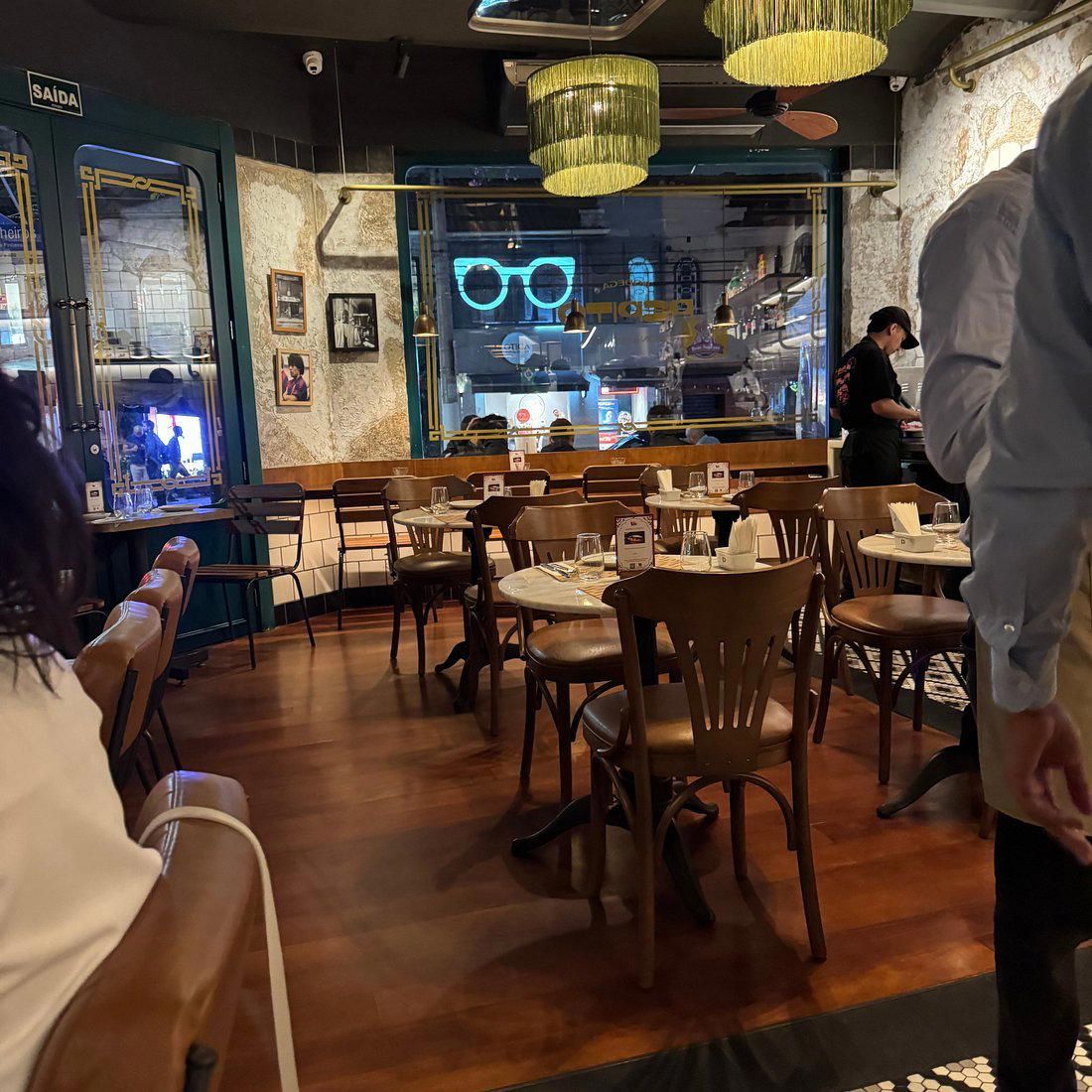
Rua Barão de Capanema runs through Jardins, the neighbourhood that has carried São Paulo's premium dining identity for decades. The street is quiet for a city this dense, lined with low-rise buildings and the kind of leafy discretion that signals old money rather than new spectacle. Arriving at number 549, there is no theatrical signage, no queue management theatre. The entrance is composed. What that restraint signals, if you know the neighbourhood, is that the restaurant inside has nothing left to prove to the street.
D.O.M. opened here in 1999, and its trajectory since has been one of the more instructive case studies in how a single kitchen can shift the axis of a national cuisine. By 2012, it held the fourth position on the World's 50 Best Restaurants list. It has carried two Michelin stars continuously since 2015. La Liste, which aggregates global restaurant rankings, scored it 93 points in 2025 and 92 in 2026. In a city where the fine dining tier has grown considerably more competitive over the past decade, with strong contenders at Evvai (Contemporary Italian, Modern Cuisine), Tuju (Creative), and Maní (Brazilian - International, Creative) each holding their own critical ground, D.O.M. remains the reference point from which those comparisons tend to begin.
The Amazon as Kitchen Pantry
Modern Brazilian fine dining has a defining tension: the country's biodiversity is staggering, but its fine dining vocabulary was, for most of the twentieth century, built on European frameworks. The shift that began in the late 1990s and accelerated through the 2000s involved a generation of chefs who decided that the Amazon, the Cerrado, and the Atlantic Forest were not romantic backdrops but active ingredient sources. D.O.M. sits at the centre of that shift, not as a follower of the trend but as the kitchen that made the argument first at international scale.
Jambu, tucupi, açaí, and priprioca are now recognisable on international menus in part because Alex Atala spent years travelling through Amazonian communities, working with small producers, and insisting that these ingredients belonged in the same conversation as European pantry staples. The ant-topped pineapple dish, which appeared in Chef's Table Volume 2 and drew considerable international attention, is less a gimmick than a thesis statement: the Amazon produces flavours that have no European analogue, and the right culinary technique is the one that makes that argument legible to a diner who has never encountered the ingredient before.
That broader Latin American context matters here. Where Peruvian cuisine built its international reputation on the geographical diversity of a single country, from coast to high altitude, Brazilian fine dining faces a different challenge: a country so large that its regional traditions can feel like separate culinary nations. D.O.M.'s contribution has been to establish the Amazon as the source of a specifically Brazilian identity, distinct from the European-inflected South, the African-rooted Northeast, or the Japanese-influenced cooking that characterises much of São Paulo's broader dining scene. For comparison, Manga in Salvador and Orixás | North Restaurant in Itacaré are developing similar arguments from a Northeast perspective, while Lasai in Rio de Janeiro applies a comparable ingredient-led rigour from a different regional base. The national conversation that D.O.M. started is now being answered from multiple directions.
Where D.O.M. Sits in São Paulo's Fine Dining Tier
São Paulo's leading restaurant tier has a clear price structure. The $$$ bracket includes places like Maní (Brazilian - International, Creative) and the more casual end of creative Brazilian cooking. D.O.M. prices at $$$$, alongside Evvai and the city's other two-Michelin-star operations.
What distinguishes D.O.M. within that upper bracket is the specificity of its source material. Where many high-end tasting menus in São Paulo draw on an international pantry with Brazilian inflections, D.O.M.'s kitchen operates more like a research programme. The Atá Institute, founded by Atala, formalises that work: it focuses on biodiversity preservation and the promotion of native food traditions, giving the restaurant's ingredient sourcing an institutional infrastructure that most kitchens lack.
For São Paulo visitors assembling a broader dining itinerary, D.O.M. pairs logically with venues that work in different registers. Huto (Japanese) and Fame Osteria (Italian Contemporary) represent the city's depth in non-Brazilian fine dining, while Tuju offers a younger, more experimental take on native ingredients. Outside São Paulo, Mina in Campos do Jordão, Primrose in Gramado, and Castelo Saint Andrews - Gramado in Vale do Bosque show how the country's fine dining ambition has distributed beyond its two largest cities.
A Pan-American Frame
Placed in a Latin American context, D.O.M. occupies a position comparable to what Central in Lima did for Peruvian cuisine or what Don Julio in Buenos Aires has done for Argentine culinary identity on the international stage. Each of these kitchens made a national argument at global volume. The argument D.O.M. makes is specifically about abundance and unfamiliarity: that Brazil holds ingredients the world has not yet learned to name, and that fine dining technique is one tool for closing that gap.
The Pan-American comparison also reveals what is particular about D.O.M.'s approach. Peruvian kitchens like Central have tended toward a systems-led, altitude-and-ecosystem framework that is highly conceptual. Argentine asado culture operates through a very different vocabulary of fire and protein. D.O.M. sits between those poles: rigorous in technique, but rooted in biodiversity rather than concept, and committed to making unfamiliar ingredients feel instinctive rather than academic. The jambu leaf's anaesthetic tingle, the fermented black tucupi's earth-and-acid profile, the floral persistence of priprioca root: these are not ideas on a plate, they are flavours with no European reference point, and the kitchen's job is to make that landfall feel inevitable.
What the Visit Delivers
D.O.M. is a tasting menu kitchen that operates lunch and dinner Tuesday through Friday, lunch only on Saturday evenings with no Sunday service. The Saturday dinner-only format and Monday lunch-and-dinner slots mean booking around those windows is the most reliable approach for visitors with limited days in the city. The Jardins address is well-served by the city's ride-share infrastructure, and the neighbourhood is walkable if you are staying in the Itaim Bibi or Jardim Paulista corridors. For a wider view of where D.O.M. fits in the city's broader hospitality picture, [our full São Paulo restaurants guide](), [São Paulo hotels guide](), [São Paulo bars guide](), [São Paulo wineries guide](), and São Paulo experiences guide cover the full picture.
The kitchen is noted in its La Liste assessment as entirely aligned with a produce-forward philosophy, and plant-based guests who declare their preference at booking can be accommodated without compromise. That flexibility at the two-Michelin-star level is less common than menus suggest, and it reflects a kitchen whose identity is built on ingredients rather than on protein-led classical structure.
Alex Atala's appearance on the Time 100 list in 2013 and his work alongside René Redzepi, Massimo Bottura, and Ferran Adrià at the Basque Culinary Center place him in the generation of chefs who rebuilt what fine dining's cultural obligations look like. At D.O.M. that biography is backdrop: what the kitchen delivers is a meal structured around things you have probably not eaten before, prepared in ways that make the unfamiliar feel earned rather than forced. That is a harder technical problem than it looks.
Frequently asked questions
Is D.O.M. award-winning?
D.O.M. has received recognition including: La Liste Top Restaurants (2026): 92pts; Alex Atala explores the gastronomic possibilities of local products and processes them with the current techniques in surprising and innovative preparations. And there are quite a few vegetables and f….
What does dinner at D.O.M. typically cost?
Pricing at D.O.M. is listed as $$$$.
What do regulars order at D.O.M.?
D.O.M. operates as a tasting menu format, so the kitchen sequences the meal rather than offering à la carte choices. The menu is anchored in native Brazilian ingredients — jambu, tucupi, açaí, and priprioca among them — sourced in part from Amazonian producers Atala has worked with since the restaurant opened in 1999. Signature preparations have included the ant-topped pineapple, which earned widespread attention through the Chef's Table Netflix profile. Diners with plant-based requirements can request a fully plant-forward menu at the time of reservation.
What's the cuisine at D.O.M.?
D.O.M.
What are the operating hours at D.O.M.?
Hours at D.O.M.: Hours: Monday 12–3 pm, 7–9 pm Tuesday 12–3 pm, 7–9 pm Wednesday 12–3 pm, 7–9 pm Thursday 12–3 pm, 7–9 pm Friday 12–3 pm, 7–9 pm Saturday 7–9 pm Sunday Closed.
Where do I go for D.O.M.?
D.O.M. is located at R. Barão de Capanema, 549 - Jardins, São Paulo - SP, 01411-010, Brazil, São Paulo.
The Short List
| Venue | Cuisine | Price | Awards | Notes |
|---|---|---|---|---|
| D.O.M.This venue — the venue you are viewing | Modern Brazilian Amazonian Fine Dining | $150–200 | 2 Michelin Stars · World's 50 Best #74 | Not listed |
| Evvai | Modern Italian-Brazilian Fusion | $200–300 | 3 Michelin Stars · World's 50 Best #95 | Contemporary Italian, Modern Cuisine |
| Maní | Modern Creative Brazilian | $50–100 | 1 Michelin Star · World's 50 Best #67 | Brazilian - International, Creative |
| Jun Sakamoto | Japanese Omakase | $100–150 | 1 Michelin Star · La Liste Top Restaurants | Sushi, Japanese |
| A Casa do Porco | Modern Brazilian Pork-Centric | $30–50 | Michelin Bib Gourmand · World's 50 Best #25 | Regional Brazilian, Brazilian |
| Corrutela | Modern Brazilian Farm-to-Table | Not listed | Michelin Bib Gourmand | Brazilian, Seasonal Cuisine |
Recognition history
Dated appearances from independent guides and award organizations, with the underlying list record or original source where available.
Michelin 2 Stars
Michelin
World's 50 Best Latin America's Best Restaurants #74
World's 50 Best
La Liste Top Restaurants
La Liste
Opinionated About Dining Top Restaurants in South America Ranked #11
Opinionated About Dining
Chef's Table Featured on Chef's Table
Chef's Table
Full recognition history (25 entries)
La Liste Top Restaurants
La Liste
Michelin 2 Stars
Michelin
The Best Chef Three Knives
The Best Chef
We're Smart World 3 Radishes
We're Smart World
Michelin 2 Stars
Michelin
Opinionated About Dining Top Restaurants in South America Ranked #8
Opinionated About Dining
Opinionated About Dining Top Restaurants in South America Ranked #7
Opinionated About Dining
World's 50 Best Restaurants #30
World's 50 Best
World's 50 Best Restaurants #16
World's 50 Best
World's 50 Best Restaurants #11
World's 50 Best
World's 50 Best Restaurants #9
World's 50 Best
World's 50 Best Restaurants #7
World's 50 Best
World's 50 Best Restaurants #6
World's 50 Best
World's 50 Best Restaurants #4
World's 50 Best
World's 50 Best Restaurants #7
World's 50 Best
World's 50 Best Restaurants #18
World's 50 Best
World's 50 Best Restaurants #24
World's 50 Best
World's 50 Best Restaurants #40
World's 50 Best
World's 50 Best Restaurants #38
World's 50 Best
World's 50 Best Restaurants #50
World's 50 Best