On Calle Velázquez in Madrid's Chamartín district, Abacería Macarena sits in a dining corridor that rewards those who look beyond the city's Michelin-heavy headline act. The abacería format, rooted in the Spanish tradition of provisions shops that evolved into eating places, positions it differently from the tasting-menu circuit that defines the capital's upper tier.
Pearl is the En Primeur Club membership app — saves, bookings, and concierge access live there. Same editors, same standards.
- Address
- Calle Velázquez, 136, Chamartín, 28006 Madrid, Spain
- Phone
- +34623551634
- Website
- restaurante.covermanager.com
- Directions
- Get directions
 Saves & bookings on Pearl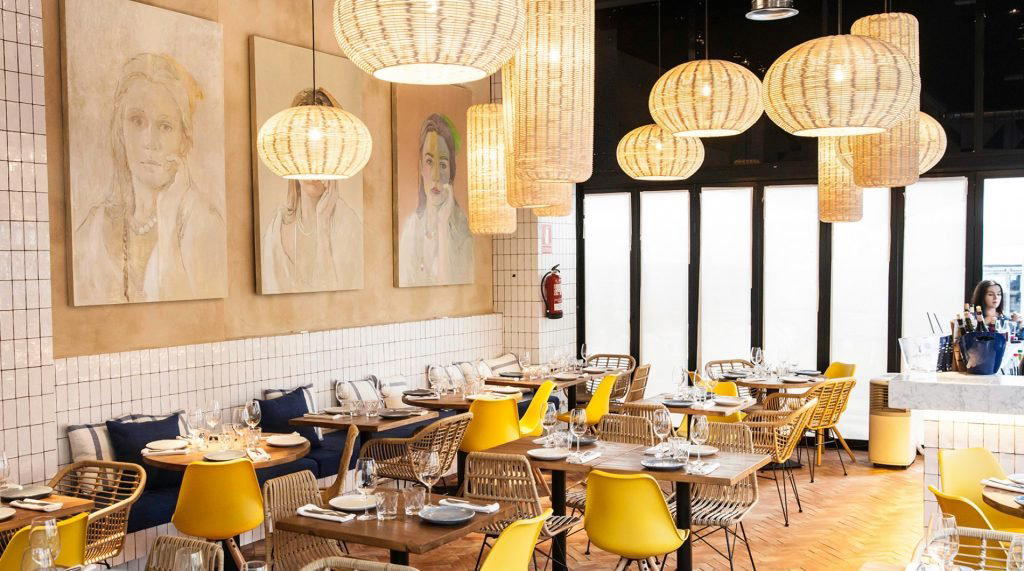
Chamartín's Abacería Tradition, and Where Macarena Fits
Madrid's dining identity has long been pulled in two directions: the grand Castilian roasting tradition of suckling pig and lamb, and the modernist Spanish cooking that put the country on the international map through venues like DiverXO and Coque. Between those two poles, a quieter category has persisted: the abacería, a format with roots in the grocery-tavern hybrid common across Andalusia and later adopted in Madrid's residential neighbourhoods. Abacería Macarena, on Calle Velázquez in Chamartín, draws on that tradition. Its address places it in one of the city's more composed residential stretches, away from the tourist density of the centre and the trophy-restaurant cluster around Recoletos.
The abacería as a concept implies a certain informality of service alongside serious attention to product. It is not the format of elaborate tasting menus with twelve courses and wine pairings calibrated to the millilitre. That space in Madrid belongs to Deessa, DSTAgE, and Paco Roncero. The abacería format instead favours a progression built on sharing plates, cured goods, conservas, and dishes assembled from market produce, where the arc of the meal is determined as much by the guest as by a fixed sequence.
The Shape of a Meal Here
The tasting progression at an abacería follows a different logic from a chef's table. The opening movement is typically cold: sliced cured meats, tinned fish of quality, olives, bread with something worth spreading. These are not amuse-bouches engineered for surprise; they are provisions eaten as provisions, presented without theatrical framing. Spain's tinned seafood culture, now well-documented internationally after decades of being underestimated outside Iberia, sits at the heart of this opening register. A good abacería treats its conservas shelf as seriously as a wine list.
Middle phase of a meal at this kind of venue tends to be where the kitchen stakes its credibility: hot dishes, braised or griddled, that reflect the season and the market rather than a fixed menu printed months in advance. This is where comparisons to the rigidly structured creative menus at venues like El Celler de Can Roca in Girona or Mugaritz in Errenteria become less useful. The abacería doesn't compete in that category, and the better ones don't try to. The progression closes with something sweet or fortified, often a glass of something from the south of Spain, consistent with the Andalusian lineage embedded in the format's name.
What distinguishes a serious abacería from a bar with food is the quality of sourcing at every stage of that progression. The gap between a perfunctory ibérico plate and one built from acorn-fed product is not subtle, and it shows in the fat, the texture, and the finish. Similarly, the difference between conservas sourced from quality Galician or Cantabrian producers and the generic tinned alternative is considerable. The abacería format places that sourcing question at the centre of the eating experience in a way that more elaborated cooking styles sometimes obscure.
Chamartín as a Dining Address
Calle Velázquez runs north through what Madrid residents tend to treat as a functional, upper-residential corridor, well-served by the Metro at Núñez de Balboa or Lista, both within easy walking distance. Chamartín is not a neighbourhood that generates the kind of international dining tourism that pulls visitors toward Malasaña or the area around Gran Vía, which makes its restaurants somewhat self-selecting. The clientele at venues along this stretch tends to skew local and repeat-visit, which imposes a different kind of accountability on the kitchen.
Spain's broader dining conversation has shifted considerably over the past decade. The Basque Country and Catalonia remain the reference points for international critics, with venues like Arzak in San Sebastián, Azurmendi in Larrabetzu, and Martin Berasategui in Lasarte-Oria drawing global attention. Madrid's contribution to that conversation has historically been weighted toward its roasting traditions and the few high-profile modernist outliers. The abacería tier occupies a different register: it is where the city eats habitually, not ceremonially, and that distinction matters when choosing what kind of meal you are after.
For reference points in other Spanish cities, the product-led, informal-progression format has equivalents in venues clustered around Ricard Camarena in València and in the tavern-adjacent tradition in Cádiz near Aponiente in El Puerto de Santa María. Internationally, the guest-paced progression model appears at venues as varied as Lazy Bear in San Francisco, though the format logic and price point differ substantially. At the structured end, Le Bernardin in New York City and Cocina Hermanos Torres in Barcelona represent the opposite end of the formality spectrum from what an abacería offers.
Visitors planning a broader Extremaduran or central Spanish itinerary might also note Atrio in Cáceres and Quique Dacosta in Dénia as reference points for how the region's produce traditions translate into more formal cooking contexts.
Planning a Visit
Calle Velázquez 136 is accessible from Núñez de Balboa Metro station on Line 9, approximately a five-minute walk north. The neighbourhood is quiet by central Madrid standards, and the address is primarily a residential and commercial building strip rather than a concentrated dining block. Reservations are recommended. The restaurant is closed on Monday and open Tuesday and Sunday from 12 PM to 12 AM, with Thursday through Saturday service extending to 2 AM.
The Quick Read
Comparable venues nearby, for context on price, style, and recognition.
| Venue | Cuisine | Price | Notes |
|---|---|---|---|
| Abacería MacarenaThis venue — the venue you are viewing | El Viso, Modern Traditional Spanish | $$ | Not listed |
| La Escalera del 15 | Almagro, Mediterranean Spanish | $$ | Not listed |
| Taberna del Olivo | Not listed | $$ | Lista, Traditional Spanish Paella and Tapas |
| MENDRUGO | Chueca, Spanish Taproom with Craft Beer | $$ | Not listed |
| La Vanduca | Not listed | $$ | Recoletos, Modern Spanish Mediterranean with Andalusian Touches |
| Gallobúho | Justicia, Modern Spanish Tapas | $$ | Not listed |
Continue exploring
More in Madrid
Restaurants in Madrid
Browse all →
Bars in Madrid
Browse all →
Hotels in Madrid
Browse all →



At a Glance
- Classic
- Rustic
- Casual Hangout
Current opening hours
- Monday
- Closed
- Tuesday
- 12 PM–12 AM
- Wednesday
- 12 PM–12 AM
- Thursday
- 12 PM–2 AM
- Friday
- 12 PM–2 AM
- Saturday
- 12 PM–2 AM
- Sunday
- 12 PM–12 AM
Hours can change for holidays and private events. Last verified .
Impressive setting with a welcoming traditional atmosphere.