Our verdict
In Shizuoka's Aoi Ward, ハラグチ ル・レストラン occupies a ground-floor space in Shichikencho that signals a particular kind of seriousness: the name combines a Japanese family name with the formal French designation 'le restaurant,' pointing toward a kitchen working at the intersection of two culinary traditions. Shizuoka's dining scene has long lived in the shadow of Tokyo and Kyoto, yet its access to Suruga Bay seafood and Izu-grown produce has quietly supported a tier of precise, ingredient-led cooking worth the detour.

Pearl is the En Primeur Club membership app — saves, bookings, and concierge access live there. Same editors, same standards.
- Address
- Japan, 〒420-0035 Shizuoka, Aoi Ward, Shichikencho, 9-5 トレンズビル 1F
- Phone
- +81542513803
- Hours
- Mon ClosedTue–Sun 12–1:30 PM, 6–8:30 PM
- Website
- haraguchi0108.jp
- Directions
- Get directions
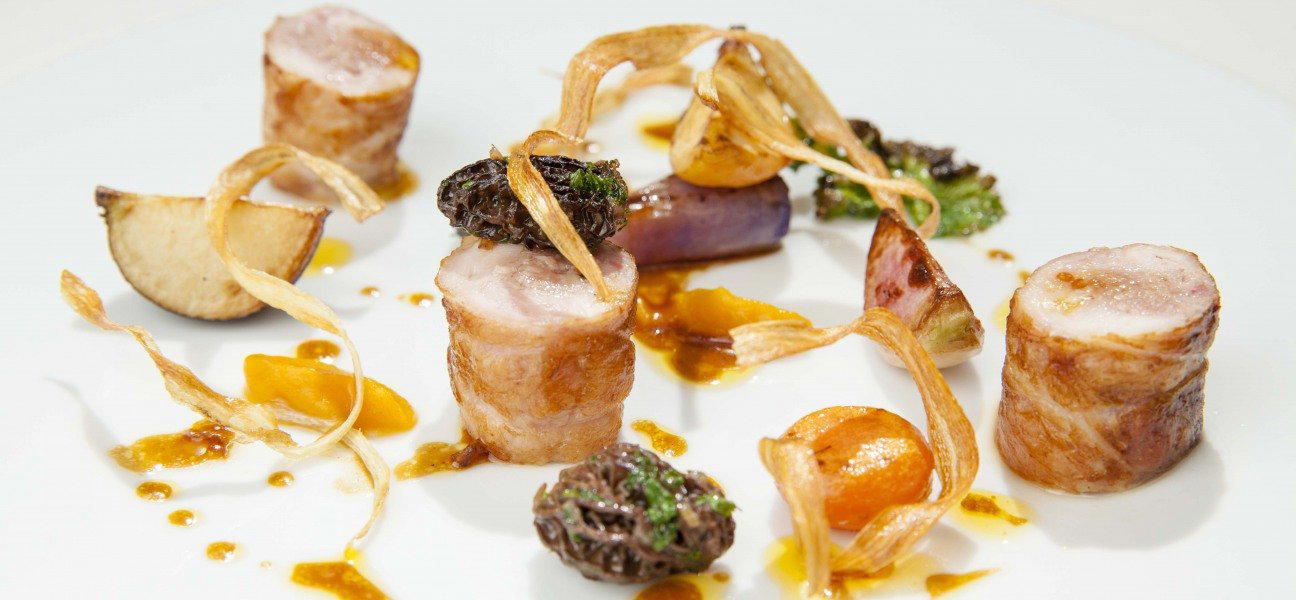
The menu
What to order
- Hand-made pasta
- Wagyu beef
- Chicken main courses
Where Shizuoka's French Instincts Meet Japanese Ritual
Shichikencho, a quiet commercial strip in Shizuoka's Aoi Ward, does not announce itself with the kind of foot traffic that signals a restaurant district. The ground-floor address in Trendz Building is easy to pass at pace, which is precisely the kind of situation that defines a certain category of serious Japanese dining: the physical understatement, the deliberate remove from spectacle, the suggestion that the work happening inside is the only advertisement needed. ハラグチ ル・レストラン, with its bilingual name straddling a Japanese surname and the formal French noun, positions itself in that space before a single course arrives.
Shizuoka as a dining city sits in a structurally interesting position. It lacks the density of Michelin-tracked Tokyo or the kaiseki heritage infrastructure of Kyoto, yet its geography gives it access to ingredients that kitchens in both cities actively source from: Suruga Bay, one of Japan's deepest bays, produces fish and shellfish with a profile that commands attention at market, while the Izu Peninsula and the highlands around the prefecture supply tea, wasabi, and mountain vegetables at a quality that rarely requires further explanation. A French-influenced kitchen in this city is not operating against the grain; it is, arguably, positioned at the source.
The Logic of a Franco-Japanese Dining Format
The pairing of French culinary structure with Japanese ingredients and service sensibility has become one of the defining patterns of serious dining across Japan's secondary cities. In Osaka, HAJIME in Osaka operates at the extreme end of that synthesis, holding three Michelin stars with a format that demands full attention from both kitchen and guest. In Nara, akordu in Nara draws on Spanish technique while embedding itself in local produce rhythms. The Franco-Japanese format ハラグチ ル・レストラン appears to occupy sits between those poles: French in its structural DNA, Japanese in the particularity of its ingredients and, most likely, its service pacing.
That pacing matters. French cuisine, as practiced seriously in Japan, tends to absorb the Japanese preference for sequential attention rather than the European tradition of overlapping courses and shared plates. Each course arrives as a complete thought. There is space between them. The meal functions as a set of discrete moments rather than a continuous flow, and a kitchen working in that register is making a claim about how it values the diner's attention. The name's French suffix signals that claim explicitly.
This structural approach places ハラグチ ル・レストラン in a peer group that includes formally structured French restaurants across Japan's non-capital cities. For reference, LAT.34°N by Ao in Shizuoka operates an auberge-format French and innovative menu that represents the prefecture's most ambitious expression of that tradition. These venues collectively suggest that Shizuoka has the ingredient base to support serious European cooking, even if the city's name rarely appears in the same sentence as that claim.
Ritual and Etiquette at the Table
In the context of French dining in Japan, the meal's ritual is shaped by two overlapping codes. The French service tradition brings a formal vocabulary: the menu progressing from lighter to richer preparations, wine moving through registers from aperitif to digestif, and a staff relationship with the table that is attentive but bounded by professional distance. The Japanese hospitality tradition layers onto that a form of consideration for the guest's experience that goes further: anticipating needs before they are stated, treating each plate as a presentation requiring acknowledgment, and calibrating the pace of service to the rhythm of the table rather than the kitchen's convenience.
Guests arriving at this kind of restaurant in Japan generally observe a few conventions that the format implies rather than enforces. Reservations are made in advance; the kitchen almost certainly prepares a fixed or semi-fixed menu based on headcount. Dietary information, if relevant, is communicated at booking rather than on arrival. The dress code at venues of this character in Japan typically defaults to smart-casual, with an understanding that the formality of the cuisine warrants some acknowledgment in presentation. These are not rules posted at the door; they are the social logic of the format.
For comparison, the kaiseki tradition operating in Shizuoka through restaurants like Asaba (Kaiseki) and Rin demands a similar fluency with sequence and restraint. The guest at a Franco-Japanese table arrives with the same implicit contract: the kitchen has made decisions; the diner's role is to receive them with care. That posture, more than any single dish, defines the quality of the experience.
Shizuoka's Dining Tier in Context
Shizuoka's restaurant scene operates across several distinct registers. At the casual end, Ichi Unagi represents the prefecture's deep tradition around freshwater eel, a category with its own strict ritual of preparation and service. Tempura counters like Tempura Naruse and Tempura Nakamura occupy a middle formal register, demanding technique and timing but a shorter meal format. At the longer, more deliberate end, French and kaiseki houses ask for an evening rather than an hour.
A Franco-Japanese restaurant in Shizuoka's Aoi Ward occupies the longer end of that spectrum. Its nearest culinary relatives outside the prefecture include Gion Sasaki in Kyoto, which operates at the intersection of Japanese and French technique, and Harutaka in Tokyo, a counter where the ritual of the meal is as considered as the sourcing. Further afield, the standard set by Le Bernardin in New York City for seafood-led French precision offers a reference point for what ingredient-focused French cooking at a serious level looks like in practice, even if the cultural context differs substantially.
For a complete map of where ハラグチ ル・レストラン sits among Shizuoka's options across cuisine types, price registers, and formats, the full Shizuoka restaurants guide provides the broader picture. Other venues worth considering in the same city include FUJI and, for those whose interest extends to the eel tradition specifically, Ichi Unagi.
Planning Your Visit
ハラグチ ル・レストラン is located at 9-5 Shichikencho, Aoi Ward, Shizuoka, on the ground floor of Trendz Building. Given the format implied by the name and the style of French restaurant common to this category in Japan, advance reservation is the standard expectation rather than an option; walk-in access at venues of this character in Japanese cities is rarely offered. Shizuoka Station on the JR Tokaido Shinkansen line places the city within approximately one hour of Tokyo, making the restaurant accessible as a day-trip destination or as part of a wider Shizuoka itinerary. Contact details are not currently listed in public directories; approach through the venue directly or through a concierge service with local knowledge.
Frequently asked questions
What part of town is ハラグチ ル・レストラン in?
ハラグチ ル・レストラン is located at Japan, 〒420-0035 Shizuoka, Aoi Ward, Shichikencho, 9-5 トレンズビル 1F, Shizuoka.
Is ハラグチ ル・レストラン a good choice for a French dinner in Shizuoka's Aoi Ward?
ハラグチ ル・レストラン on Shichikencho is one of the few addresses in Aoi Ward specifically operating under a French restaurant identity. Shizuoka's dining scene is more widely recognised for its unagi and seafood traditions, making a dedicated French house at this address a distinct option for visitors seeking that format in the city. Confirming current hours and reservation availability directly is recommended before planning your evening.
What's the must-try dish at ハラグチ ル・レストラン?
The restaurant's positioning suggests a set-course structure built around classical French technique applied to regional Japanese produce. Your best course of action is to check the venue's official channels for current menu information before visiting.
Should I book ハラグチ ル・レストラン in advance?
For a French-format restaurant on the ground floor of Trendz Building in Shichikencho, Aoi Ward, advance booking is advisable. Shizuoka's serious dining rooms at this tier typically run small covers and fill quickly, particularly on weekends. Reaching out directly to confirm availability and course options before your visit is the practical approach.
What's the standout thing about ハラグチ ル・レストラン?
The defining characteristic is the application of French culinary structure within Shizuoka, a prefecture that produces some of Japan's most respected agricultural and seafood ingredients. Located in the quiet Shichikencho commercial strip rather than a high-visibility dining district, the restaurant operates away from the foot-traffic circuit that drives casual trade. That positioning points toward a kitchen focused on the meal itself rather than the setting.
Style and Standing
Comparable venues nearby, for context on price, style, and recognition.
| Venue | Cuisine | Price | Awards | Notes |
|---|---|---|---|---|
| ハラグチ ル・レストランThis venue — the venue you are viewing | Modern French Fine Dining | $150–200 | Not listed | Not listed |
| カワサキ | French Gastronomy with Game & Seasonal Vegetables | $100–150 | Tabelog 100 #30 | Aoi-ku |
| Shizuoka Sichuan Hanten | Authentic Sichuan Chinese | $50–100 | Tabelog 100 #65 | Aoi Ward |
| LAT.34°N by Ao | Modern French Seafood Auberge | $200–300 | Tabelog Bronze #238 | Ajiro |
| Simples | Modern French-inspired Japanese Omakase | $150–200 | Tabelog Bronze #413 | Mariko, Suruga-ku |
| Tempura Nakamura | Shizuoka Tempura Omakase | $300–500 | Not listed | Yaizu |
Continue exploring
More in Shizuoka
Restaurants in Shizuoka
Browse all →
Hotels in Shizuoka
Browse all →
Wineries in Shizuoka
Browse all →
Details
- Elegant
- Sophisticated
- Intimate
- Romantic
- Date Night
- Business Dinner
- Celebration
- Special Occasion
- Open Kitchen
- Private Dining
- Extensive Wine List
- Sommelier Led
- Local Sourcing
- Tasting Menu
- Prix Fixe
- Wine Pairing
- Local Sake
- Allergy Accommodating
Current opening hours
- Monday
- Closed
- Tuesday
- 12–1:30 PM, 6–8:30 PM
- Wednesday
- 12–1:30 PM, 6–8:30 PM
- Thursday
- 12–1:30 PM, 6–8:30 PM
- Friday
- 12–1:30 PM, 6–8:30 PM
- Saturday
- 12–1:30 PM, 6–8:30 PM
- Sunday
- 12–1:30 PM, 6–8:30 PM
Hours can change for holidays and private events. Last verified .
Refined and intimate atmosphere with warm hospitality, designed for special occasions and fine dining experiences.