
Go is a compact Shizuoka Japanese restaurant with counter seating, private-room flexibility, and recognition in Tabelog’s Japanese cuisine EAST 100 for 2025. Its reputation sits around fish-led Japanese cooking, grilling credentials, and a drinks program that spans sake, shochu, and wine rather than leaning on a single pairing lane.
Pearl is the En Primeur Club membership app — saves, bookings, and concierge access live there. Same editors, same standards.
- Address
- 静岡県静岡市葵区常磐町1-6-2 グリーンハイツ和門 1F
- Phone
- +81542050017
- Website
- tabelog.com
 Saves & bookings on Pearl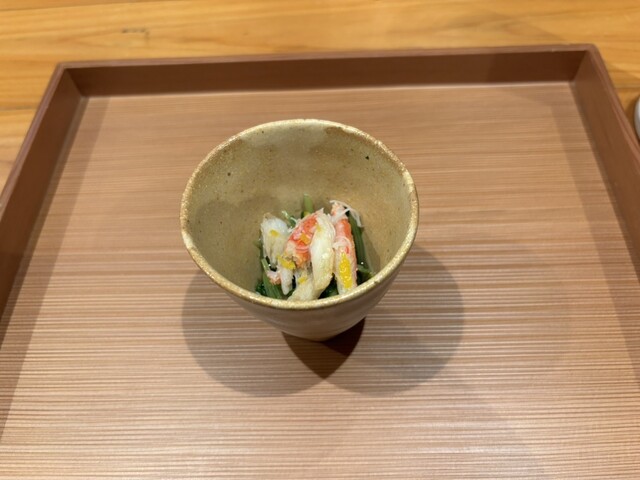
Tokiwacho’s dining rhythm is quieter than Tokyo’s counter culture, but the signals are familiar: a small room, a serious reservation book, and a style of Japanese cooking that treats the grill, the fish case, and the sake list as equal parts of the meal. In Shizuoka, that combination carries extra weight. The prefecture has deep seafood access, a strong drinking culture, and enough culinary independence to avoid becoming a satellite of the capital.
Go sits inside that context rather than above it. The room is small, with counter seating and private-room capacity, which places it closer to the intimate izakaya-kappo end of Japanese dining than to formal kaiseki. That distinction matters. Kappo-style meals reward proximity: the counter is not theater for its own sake, but a way to compress the distance between ingredient, fire, knife work, and guest. In a city where visitors often treat dinner as a stop between Mount Fuji, tea country, and the coast, this is the kind of address that argues for Shizuoka as a dining destination in its own right.
Fish, fire, and the Shizuoka kappo register
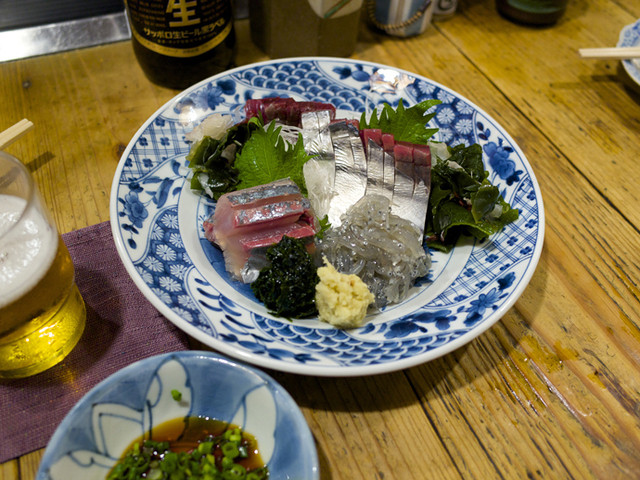
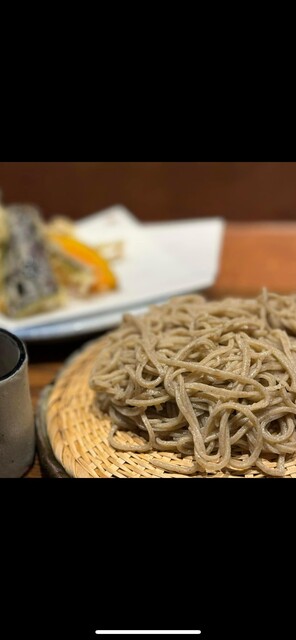
Shizuoka’s Japanese dining has a practical confidence. The city is close to fishing ports, tea fields, wasabi country, and sake-producing districts, so local restaurants do not need to borrow prestige from long tasting-menu speeches. The more persuasive rooms tend to be concise: seasonal fish, grilled elements, rice, sake, and a chef’s control of timing. Go’s listed categories, Japanese cuisine, meat dishes, and izakaya, point to that hybrid register. It is not a luxury hotel dining room, and it is not a casual drinking shop. It occupies the middle tier where technique, product selection, and conversation carry the evening.
The Tabelog Japanese cuisine EAST 100 selection in 2025 gives the restaurant a useful external marker, especially outside the Michelin-heavy cities. Tabelog’s Hyakumeiten lists are not star systems; they function more like scene maps, identifying restaurants that have earned sustained attention within a category and region. For Shizuoka, inclusion in that field matters because the city’s serious Japanese restaurants often work with less international visibility than Kyoto, Kanazawa, or Tokyo. The signal here is not glamour. It is consistency within a regional Japanese-cuisine set.
Grilling be a core part of the restaurant’s identity, and Chef Tozaki is associated with that discipline. The relevant point is not biography for its own sake, but lineage and control: Japanese grilling at this level is a test of heat management, seasoning restraint, and ingredient judgment. The note that he trained at Ginza Koju places the kitchen within a high-discipline Japanese dining grammar, but the Shizuoka setting changes the register. The meal reads less as metropolitan formality and more as a compact regional counter built around fish, fire, and drink.
Where it fits among Shizuoka's serious small rooms
Shizuoka’s upper casual dining tier has a narrower price and format spread than larger cities. Compared with Blue Label, which sits in a higher dinner band, Go occupies a more accessible bracket while retaining the signals serious diners watch for: a small seat count, reservations available, private rooms, and a drinks list that includes sake, shochu, and wine. Against Chabo, which operates at a higher spend level, it looks less like a splurge-only address and more like a compact dinner built for repeat local use.
That middle positioning is useful for travelers. In Japan, the gap between a casual izakaya and a formal kaiseki room can be wide, especially for visitors who want craft without a ceremonial evening. Go narrows that gap. The restaurant’s format suits diners who want Japanese cuisine with counter immediacy, not a long scripted progression. It also gives Shizuoka a credible alternative to the region’s more destination-coded meals, including ryokan dining such as Asaba (Kaiseki), or more specialized local choices like Aozora and Chinese Muramatsu.
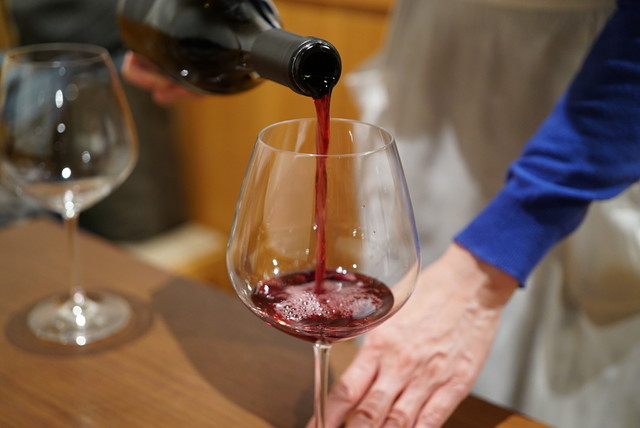
The drinks program reinforces the point. Sake is the natural partner for fish-led Japanese cooking, but the presence of shochu and wine keeps the room from feeling doctrinaire. That breadth reflects how contemporary Japanese counters have changed: wine is no longer an imported luxury cue, and sake is not treated as the only serious pairing language. The stronger restaurants use both without turning dinner into a lecture.
How to read the room before committing
This is a small-format restaurant, so the decision is less about checklist luxury and more about fit. Counter seats make sense for diners who want to watch the kitchen’s pacing and accept a tighter rhythm. Private rooms work better for small groups, dates, or business-style meals where conversation matters as much as the cooking. The house is non-smoking with a smoking area, which is also relevant in Japan, where older izakaya habits can still shape the room.
Shizuoka Station access makes the restaurant practical for travelers staying near the city center, but the better editorial reason to go is cultural rather than logistical. Shizuoka’s food identity is often reduced to seafood, tea, and views of Fuji. A restaurant like this shows the more adult version of that identity: fish handled in a Japanese-cuisine framework, meat and grilling used with restraint, and alcohol treated as part of the meal’s architecture. For a broader map of the city’s dining scene, start with our full Shizuoka restaurants guide; travelers building a longer stay can cross-reference our full Shizuoka hotels guide, our full Shizuoka bars guide, our full Shizuoka wineries guide, and our full Shizuoka experiences guide.
Readers comparing Japanese dining styles elsewhere in the country can place it beside the beef-focused format of -Grilled beef Sukiyaki- KAMAKURA TANUKIAN 鎌倉 たぬき庵 in Kamakura, the charcoal-and-tuna lane at. 鮪と炭火焼き うお炭 秋葉原店 in Tokyo, and the everyday-specialist end represented by.cafe in Osaka,.know in Kumamoto, (Shoku) Vietnam in Kawasaki, and [Curry Senmon Ten] Maruyama Kyoju. in Sapporo. For a North American sake lens, Jōdo Saké Bar in Los Angeles and Onigiri Time in Pasadena show how Japanese drinking and rice culture translate outside Japan, though Shizuoka’s appeal remains more compact and ingredient-led.
Booking and Cost Snapshot
Nearby venues at a similar price tier for orientation.
| Venue | Cuisine | Price | Awards | Notes |
|---|---|---|---|---|
| GoThis venue — the venue you are viewing | $$$ | , | ||
| Chabo | Aoi Ward, Traditional Yakitori | $$$ | , | |
| Taihei | $$$ | , | Aoi Ward (Ryougaemachi), Traditional Japanese Izakaya & Seafood | |
| Suien Dosai Honten | $$ | , | Aoi Ward, Traditional Tonkatsu (Japanese Pork Cutlet) | |
| Seki Beya | $ | , | Aoi-ku, Traditional Japanese wagashi & Abekawa mochi | |
| Blue Label | Aoi-ku, Cocktail & Whisky Bar | $$$ | , |
Continue exploring
More in Shizuoka
Restaurants in Shizuoka
Browse all →
Hotels in Shizuoka
Browse all →
Wineries in Shizuoka
Browse all →
At a Glance
- Cozy
- Intimate
- Hidden Gem
- Classic
- Business Dinner
- Group Dining
- Date Night
- Special Occasion
- After Work
- Private Event
- Chefs Counter
- Private Dining
- Standalone
- Sake Program
- Extensive Wine List
A small, non-smoking hideout near Shizuoka Station with just 12 seats, centered around a warm counter and one private room; the atmosphere is relaxed yet refined, driven by close interaction with the friendly, talkative owner-chef and a focus on carefully grilled dishes paired with sake and wine.