
1 Michelin Key
A restored 1907 sukiya-style teahouse and an eight-room guesthouse built using traditional wood-and-clay techniques, Numazu Club holds a Michelin One Key (2024) and rates from JPY 72,500 per night. Set within old-growth pine forest on the edge of a quiet Shizuoka fishing town, it operates as a deliberate retreat, pairing Fuji-fed spring baths and a contemplative garden with freshly caught seafood at its on-site restaurant.

Pearl is the En Primeur Club membership app, where members save venues, book tables and use the concierge.
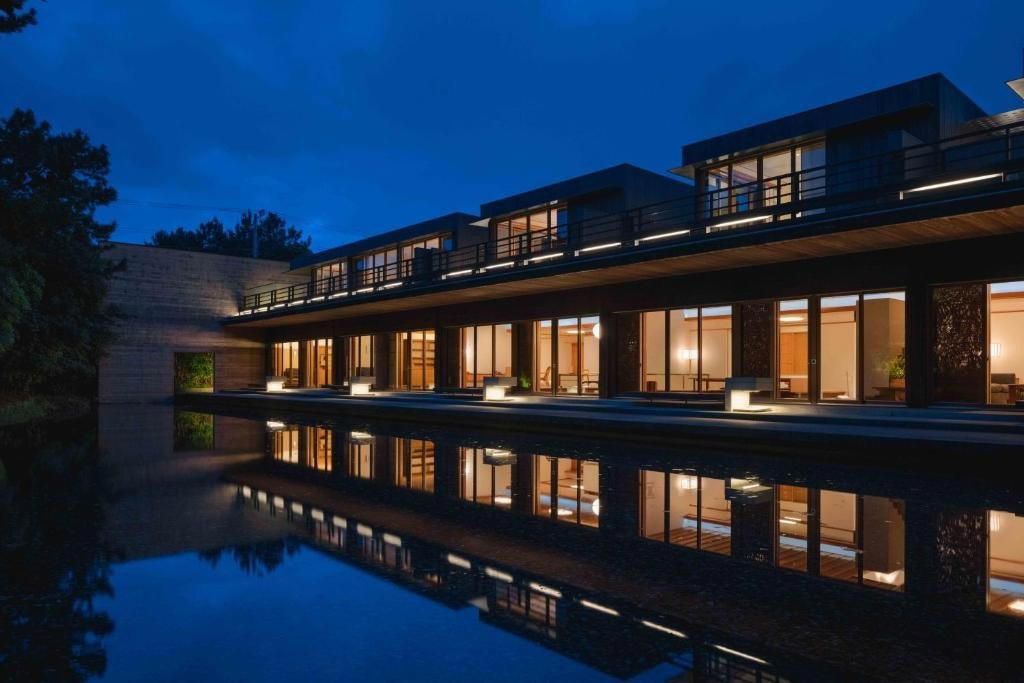
Where Sukiya Architecture Becomes the Entire Point
Japan's premium ryokan tier has divided, broadly, into two modes: properties that layer contemporary amenities onto traditional formats, and those that treat the architecture itself as the primary offering. Numazu Club belongs firmly to the second camp. Its original structure is a teahouse built in 1907 in the sukiya style, an aesthetic tradition developed in direct relation to the tea ceremony and defined by deliberate restraint, proportional precision, and the studied removal of anything unnecessary. That the building survived the Second World War intact is itself a historical footnote worth pausing on; most wooden structures of comparable age in Shizuoka Prefecture did not. The 2006 guesthouse addition was constructed using venerable wood-and-clay techniques rather than modern materials, a decision that placed craft continuity above construction efficiency. The result is a compound where both buildings communicate the same formal logic across a century of separate construction.
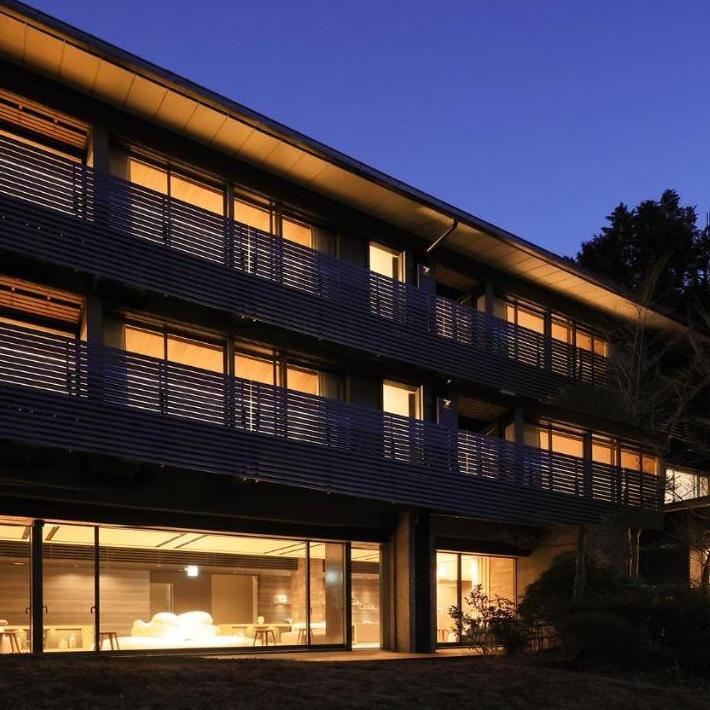
Sukiya as a style is worth understanding before arrival. It emerged from the wabi aesthetic of the tea ceremony: surfaces should read as quiet, joints should be hidden or minimal, and natural materials should carry the visual weight that ornament would carry elsewhere. At Numazu Club, this translates into rooms where tatami flooring, sliding paper panels, and low-slung furniture do the heavy lifting without competing for attention. Floor-to-ceiling windows frame garden views in a way that turns the outside into a composed picture rather than background scenery. The deep soaking tubs are carved from hinoki, Japanese cypress, a material chosen as much for its scent and grain as for its durability. None of this reads as theatrical. The discipline of the style is precisely that it refuses spectacle.
Eight Rooms, One Garden, Considerable Pine
Numazu Club operates at a scale that reinforces its character. Eight rooms across the property means the guest-to-space ratio stays low; the surrounding garden is large enough that sightlines from one room rarely intrude on another. The property sits within a substantial stand of old-growth pine, and a garden of considerable size encircles the buildings further. A contemplative pond sits within that garden, the kind of feature that rewards slow attention rather than a quick photograph.
The Fuji-fed natural springs feed the bathing facilities, a significant detail in a region where the quality and provenance of thermal water matters to guests in the way that grape sourcing matters to wine drinkers. In the broader onsen ryokan category across central Japan, properties near Mount Fuji occupy a specific sub-tier, distinct from the more widely visited Hakone circuit. Gora Kadan in Hakone and Asaba in Izu sit in adjacent geography with comparable design seriousness; Numazu Club operates at a smaller scale than either, with the intimacy that eight rooms permits. For guests comparing options across the Shizuoka and Izu region, the distinction is less about amenity lists and more about the ratio of architecture to everything else. Here, architecture wins decisively.
Room selection matters in a property this small. The rooms with outdoor tubs offer direct engagement with the garden and the pine canopy overhead, a qualitatively different experience from the indoor hinoki tubs. At a starting rate of JPY 72,500 per night, the premium for an outdoor-tub room is a reasonable investment against the overall commitment of getting to Numazu in the first place. The newer wing, constructed in 2006, handles contemporary touches with restraint: furniture with clean edges and graceful curves rather than the maximalist statement pieces that define some newer Japanese luxury properties. Flatscreens and Wi-Fi exist but occupy no visual priority. The 1907 teahouse and library remain functional, designed for the kind of slow, attentive use that sukiya architecture was always meant to support.
The Setting and What It Demands of the Guest
Numazu is a fishing town on Suruga Bay with a pace that does not accelerate to meet visitors. This is not a liability for the right traveler; it is the condition of the stay. The town itself offers limited programming beyond the property, which means Numazu Club works as a destination in the truest sense: you come for the compound, not the surrounding neighborhood. The on-site restaurant draws on the fishing town's direct supply lines, preparing seafood with a specificity that the location earns. Fresh-caught fish from Suruga Bay has a local reputation that exceeds casual tourist interest; the kitchen operates within a tradition of seafood preparation that the region takes seriously.
The still-functional tea room deserves more than a passing glance. Tea ceremony spaces in the sukiya tradition were designed to slow time through formal means: the proportions of the room, the placement of the tokonoma alcove, the sound of water nearby. Spending an hour in the library or the tea room at Numazu Club is not passive tourism; it is the intended use of the architecture. Properties elsewhere in Japan at similar price points offer more external programming. Amanemu in Mie and ENOWA Yufu in Yufu, for instance, sit within wider activity contexts. Numazu Club's comparative quiet is a feature for guests who understand what they are choosing.
Recognition and Where It Sits in the Category
The Michelin One Key designation (2024) places Numazu Club in a recognized tier within Japan's hotel evaluation system, a system applied with considerable seriousness in this market. One Key at Michelin indicates a property worth a stop, positioned below the Two and Three Key properties that warrant longer detours, but firmly within the tier of places that warrant the journey for guests whose priorities align with what the property offers. Within Japan's wider ryokan hierarchy, the sukiya pedigree and the 1907 construction date function as credentials that independent evaluation reinforces rather than creates. Properties like Nishimuraya Honkan in Kinosaki-cho or Araya Totoan in Kaga occupy comparable cultural registers in their respective regions.
Children under 12 cannot be accommodated, a policy that shapes the guest profile in predictable ways and reinforces the property's identity as a retreat oriented toward quiet rather than family programming.
Planning the Stay
Getting to Numazu Club from Tokyo involves the Shinkansen to Mishima Station, from which a 20-minute taxi ride reaches the property. Alternatively, JR Numazu Station is 10 minutes by taxi. The Shinkansen route makes a same-day arrival from Tokyo entirely practical, though the property rewards a minimum of two nights given the pace it encourages. Rates begin at JPY 72,500 per night, positioning it within the mid-tier of Japan's serious ryokan category, below the upper bracket occupied by properties like Bvlgari Hotel Tokyo or HOTEL THE MITSUI KYOTO but consistent with properties of comparable architectural and cultural weight. Reservations require coordination through EP Club's customer service team rather than direct online booking, a process that allows for room selection guidance and stay customization. The property closes on Wednesdays except during peak periods in mid-August and the New Year holiday. Guests planning around the cherry blossom or autumn foliage seasons should confirm availability well in advance given the eight-room capacity. For broader regional context, our full Numazu restaurants guide covers dining options in the surrounding area.
How It Stacks Up
Comparable venues nearby, for context on price, style, and recognition.
| Venue | Cuisine | Price | Awards | Notes |
|---|---|---|---|---|
| Numazu ClubThis venue (the venue you are viewing) | Restored historic teahouse with modern ryokan villa | $300–500 | 1 Michelin Key | Not listed |
| Gora Kadan | Contemporary ryokan blending traditional Japanese architecture with modern luxury, set within a historic Imperial retreat. | Not listed | 3 Michelin Keys · La Liste Top Hotels | Gora, Hakone-machi |
| Sengokubara COCON | Renovated traditional Japanese company facility into modern luxury ryokan | $750–1,000 | Michelin Selected | Sengokuhara |
| The Ritz-Carlton, Kyoto | Contemporary ryokan-inspired urban resort blending traditional Japanese elements with modern luxury. | $500–750 | 1 Michelin Key · La Liste Top Hotels | Gion |
| The Prince Park Tower Tokyo | Contemporary luxury hotel with Japanese design elements and park-integrated architecture, positioned as a sophisticated urban retreat. | $300–500 | Forbes 4-Star · Preferred Hotels L.V.X. Collection | Minato |
| 俵屋旅館 | Traditional Japanese ryokan with modern comforts and historical integrity. | Not listed | 5-Star | Nakagyo-ku |
Recognition history
Dated appearances from independent guides and award organizations, with the underlying list record or original source where available.
Michelin 1 Key
Michelin
Full recognition history (3 entries)
Michelin 1 Key
Michelin
Michelin 1 Key
Michelin
Continue exploring
More in Numazu
Hotels in Numazu
All hotels in Numazu →
Bars in Numazu
Browse all →
Restaurants in Numazu
All restaurants in Numazu →
Wineries in Numazu
Browse all →
Details
- Quiet
- Elegant
- Scenic
- Intimate
- Sophisticated
- Romantic Getaway
- Anniversary
- Wellness Retreat
- Garden
- Historic Building
- Wi Fi
- Spa
- Sauna
- Restaurant
- Free Parking
- Public Bath
- Garden
Serene and contemplative with natural light, verdant garden views through floor-to-ceiling windows, tatami flooring, and low minimalist furniture evoking timeless ryokan elegance.