ก๋วยจั๊บช้างม่อยตัดใหม่
Kuay Jab at the Edge of Waroros Along the older stretch of Changmoi Road that runs beside Waroros Market, the morning rhythm is set by broth, not traffic. Vendors set up before the city fully wakes, and the steam rising from wide pots of kuay...
Pearl is the En Primeur Club membership app — saves, bookings, and concierge access live there. Same editors, same standards.
- Address
- Near Waroros Market (New Changmoi Road), เชียงใหม่ 50200
 Saves & bookings on Pearl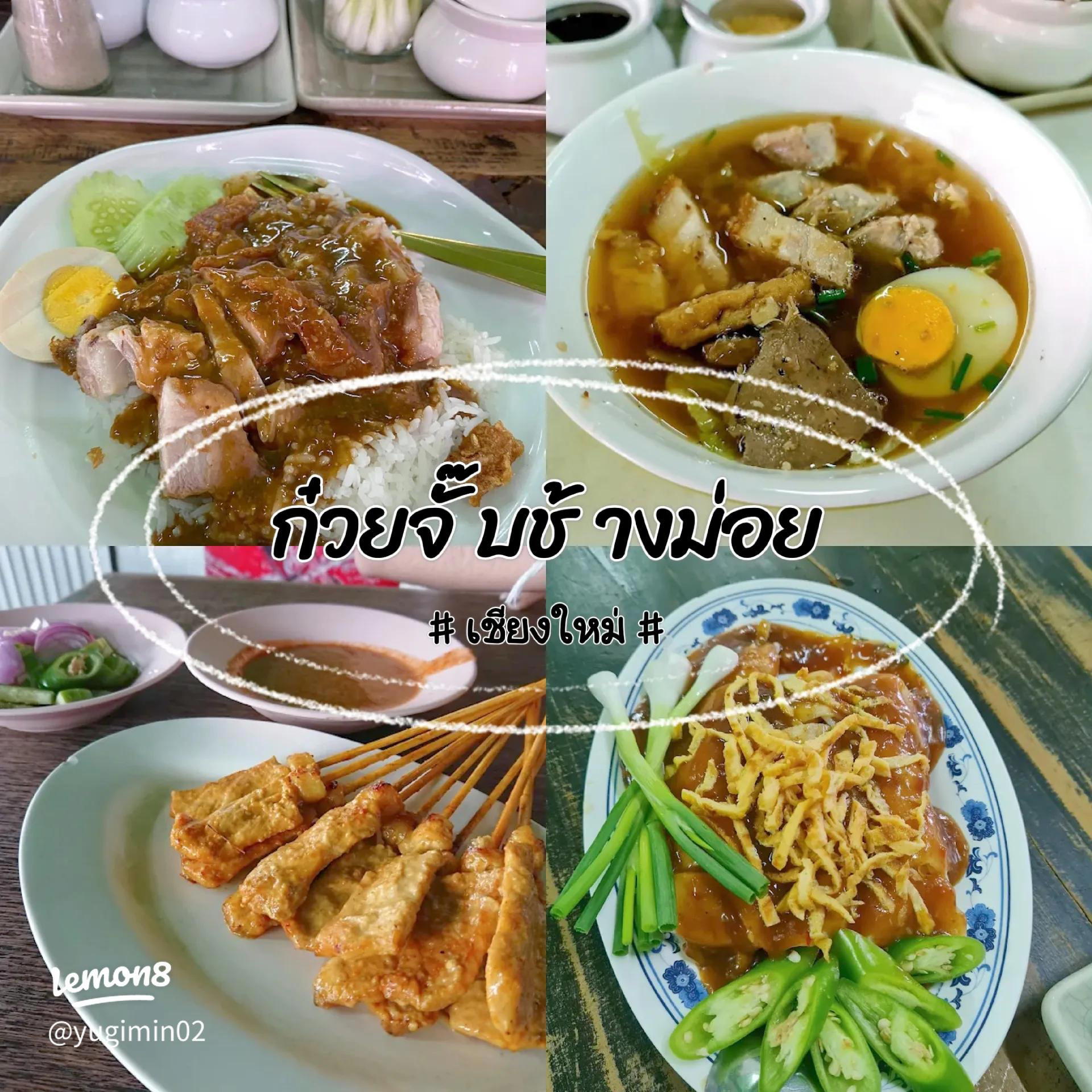
Kuay Jab at the Edge of Waroros
Along the older stretch of Changmoi Road that runs beside Waroros Market, the morning rhythm is set by broth, not traffic. Vendors set up before the city fully wakes, and the steam rising from wide pots of kuay jab signals something specific to anyone who knows northern Thai street eating: a bowl tradition that differs sharply from the noodle formats that dominate Bangkok's food stalls. ก๋วยจั๊บช้างม่อยตัดใหม่ sits near Waroros Market on New Changmoi Road, serving Thai guay jub noodles in a setting shaped by the area's market rhythm.
What Kuay Jab Actually Is
Kuay jab is one of the less globally exported members of Thailand's noodle canon. The format centers on rolled rice sheet noodles served in a dark, peppery pork broth, typically accompanied by braised offal, crispy pork belly, and a soft-boiled egg. Unlike the clear soups of khao soi or the dry-toss formats of pad see ew, kuay jab asks the diner to engage with a broth that is assertively seasoned from the first spoonful. The pepper note is functional, not decorative, and the balance between the broth's depth and the textural contrast of the accompaniments is where the craft sits. Across Thailand, the dish carries Chinese-Teochew lineage, and in Chiang Mai's older commercial districts, areas with long histories of Chinese merchant settlement, that heritage remains legible on the plate.
The Changmoi area specifically has sustained a concentration of this style of eating longer than most Chiang Mai neighbourhoods. Where the Old City's food scene has shifted toward tourist-facing menus, and Nimman has moved steadily toward café formats, the blocks around Waroros retain a working-population clientele that demands value, speed, and accuracy over presentation.
The Arc of the Bowl
Eating kuay jab in sequence is as close to a structured tasting progression as street food gets. The arrival of the bowl presents the broth first as aroma: pepper and star anise with a background of slow-cooked pork. The noodles, rolled into loose cylinders, soften steadily in the hot liquid, changing texture across the time it takes to eat. Starting with the broth alone establishes the base note. The braised components, typically ear, intestine, and belly depending on the stall's daily prep, carry the broth's seasoning into their own texture, each one requiring a slightly different approach from the diner. The crispy pork, if held to the end, loses its crunch to the broth, which is not necessarily a loss: the fat renders slightly and adds body to the remaining liquid. The egg, split at the midpoint of eating, distributes its yolk into what remains of the broth and changes the flavor register of the final spoonfuls. It is a bowl designed to be different at the start than at the end.
This progression is what separates kuay jab from the more static experience of, say, a khao soi, where the coconut curry base remains consistent from first bite to last. The northern Thai noodle tradition accommodates both: venues like Loet Rot in Mueang Chiang Mai and the broader market stall scene around Waroros represent complementary rather than competing formats. For contrast with the fine-dining end of Thai cuisine, Sorn in Bangkok and PRU in Phuket demonstrate how far the tradition can stretch when applied at restaurant scale.
The Market Stall Tier in Chiang Mai
Chiang Mai's food scene segments more clearly than most Thai cities of comparable size. The upper tier has developed genuine fine-dining credentials, with venues like Baan Landai and its Phra Pok Klao Road location representing northern Thai cooking at a different price and production register. At the other end, the market stall tier operates on margins that require volume, consistency, and a fixed, narrow menu. ก๋วยจั๊บช้างม่อยตัดใหม่ belongs to the latter category, alongside comparison venues like Chai and the Dan Chicken Rice operation in San Sai, where the single-dish focus is a feature rather than a limitation.
Venues operating at this tier within Chiang Mai's market districts compete primarily on broth quality and component sourcing, since price differentiation within the baht range of street noodles is minimal. The stalls that persist across years in the Waroros zone do so because the regulars who form their core clientele are knowledgeable and not particularly forgiving. That is a different kind of quality signal, but it is a coherent one. For readers accustomed to seeking out street-level credibility signals at markets across the region, from Bangkok's wet markets to the hawker clusters that operate near Chiang Mai's Night Bazaar, the logic is familiar. The Aunt Aoy Kitchen and Aeeen (Vegetarian) represent adjacent tiers of the same local eating culture, where credibility is built incrementally through repeat custom rather than awards cycles.
Planning a Visit
The practical logic of eating at market-adjacent stalls in Chiang Mai follows a consistent pattern. Morning hours, roughly from opening through mid-morning, represent peak freshness for broth-based formats: the pot is at its most concentrated before dilution from repeated additions of water or stock. By midday, the queue at popular Waroros stalls can extend into the surrounding lane, though the turnover rate for a bowl of noodles is fast enough that waits rarely stretch beyond fifteen minutes. There is no booking mechanism for a stall of this type, and no formal dress consideration. The address places it near Waroros Market on New Changmoi Road, walkable from the central market complex and accessible by songthaew from most parts of the Old City or Nimman. Payment is cash in the range typical for single-dish market stalls in Chiang Mai. Those exploring comparable food traditions elsewhere in Thailand might find context in venues like AKKEE in Pak Kret or the seafood-forward formats at Hoy Tord Chao Lay in Bangkok.
Recognition Snapshot
Comparable venues nearby, for context on price, style, and recognition.
| Venue | Cuisine | Price | Notes |
|---|---|---|---|
| ก๋วยจั๊บช้างม่อยตัดใหม่This venue — the venue you are viewing | Thai Guay Jub Noodles | $ | Not listed |
| Lim Lao Ngow Fishball | Traditional Thai Fishball Noodles | $ | Chiang Mai Old City |
| ก๋วยจั๊บน้ำข้น สามกษัตริย์ | Thai Thick Rice Noodle Soup (Kuay Jab Nam Khon) | $ | สามกษัตริย์ |
| Kao Man Kai Nantaram (ข้าวมันไก่นันทาราม) | Thai Chicken Rice (Khao Man Gai) | $ | Haiya |
| ข้าวมันไก่ กฤษโอชา (Kris Ocha) (กฤษโอชา) | Traditional Hainanese Chicken Rice | $ | Three Kings Monument (Saam Gsat) |
| Mana Sticky Rice | Thai Mango Sticky Rice | $ | Old City |
Continue exploring
More in Chiang Mai
Restaurants in Chiang Mai
Browse all →
Bars in Chiang Mai
Browse all →



At a Glance
- Classic
- Rustic
- Casual Hangout
- Solo
- Family
- Historic Building
Casual, bustling local eatery with a traditional, no-frills atmosphere focused on authentic flavors.