à¹à¸«à¸à¸«à¸à¸¢ HeckHoi
Our verdict
แหกหอย HeckHoi sits on Rajdamnern Road in Nakhon Pathom, a provincial city defined as much by its Buddhist heritage as its local food culture. The restaurant draws visitors and residents alike to a tradition of shellfish-forward Thai cooking that the wider Bangkok dining circuit rarely replicates at this price point and informality. For those tracing Thailand's regional eating beyond the capital, it represents a practical stop on the central plains.

Pearl is the En Primeur Club membership app — saves, bookings, and concierge access live there. Same editors, same standards.
- Address
- 246, 9 Tanon Rajdamnern, Phra Prathom Chedi Sub-district, Mueang Nakhon Pathom District, Nakhon Pathom 73000, Thailand
- Phone
- +66822688928
- Hours
- Daily 11 AM–9 PM
- Directions
- Get directions
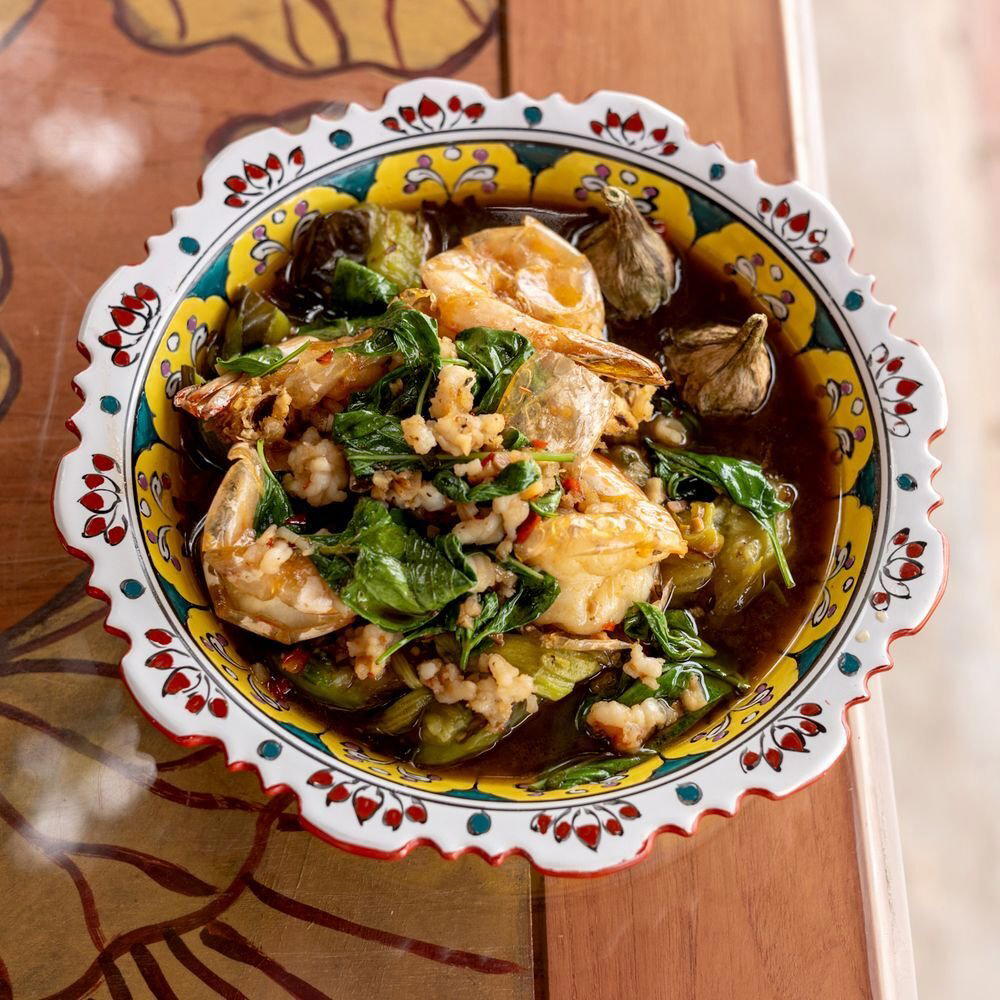
The menu
What to order
- Clam Noodle Soup
- Oyster Noodle Soup
Nakhon Pathom's Eating Culture and Where HeckHoi Sits Within It
Nakhon Pathom is leading understood as a city that has resisted the kind of culinary curation that Bangkok's dining press routinely applies to Chiang Mai or Phuket. The province sits roughly 56 kilometres west of Bangkok's centre, close enough for a day trip yet far enough that its restaurant scene develops on its own logic: local demand, provincial pricing, and cooking traditions rooted in the central plains rather than imported from the capital. Street-level shellfish cooking is one of those traditions, and แหกหอย HeckHoi, addressed at 246/9 Tanon Rajdamnern in the Phra Prathom Chedi sub-district, occupies that space.
The address is meaningful. Rajdamnern Road runs close to Phra Pathom Chedi, the towering stupa that anchors the city's identity and draws domestic pilgrims throughout the year. Restaurants along this corridor serve a mixed clientele: devotees arriving for the chedi, locals who eat out regularly, and an increasing number of Bangkok day-trippers who follow food recommendations beyond the capital. For context on the wider Mueang Nakhon Pathom dining scene, our full Mueang Nakhon Pathom restaurants guide maps the range of options across the district.
Shellfish Cooking as a Central Plains Tradition
To understand what แหกหอย HeckHoi represents, it helps to consider what shellfish cooking means in central Thailand. The region's proximity to the Gulf of Thailand coastline, combined with established supply routes through the Bangkok wholesale markets, means fresh bivalves, cockles, and oysters circulate reliably into provincial kitchens. Central plains cooking applies this supply differently from the south: less coconut milk, more open-flame wok heat, and a reliance on fish sauce, lime, and fresh herbs rather than the layered spice pastes that define Sorn in Bangkok's southern Thai program.
The name itself, which translates roughly as a colloquial verb for splitting or cracking open shellfish, signals the register of the cooking: direct, technique-forward, and unambiguous about its subject. This is not the kind of venue that frames shellfish as an ingredient within a broader contemporary Thai menu. The shellfish is the menu's core logic, and the cooking approach builds around that constraint.
This focus places HeckHoi in a different competitive conversation from Bangkok's higher-tier Thai restaurants. Venues like PRU in Phuket or AKKEE in Pak Kret operate within defined fine-dining or contemporary frameworks with corresponding price points. HeckHoi's position, by contrast, belongs to the category of provincial specialists: restaurants where the value lies in depth of focus and proximity to source rather than in formal service or tasting-menu architecture.
The Physical Environment and Dining Register
Approaching a restaurant on Rajdamnern Road in Nakhon Pathom, the physical context sets expectations clearly. This is a working provincial main road rather than a curated dining street, and venues here tend toward open-fronted formats, bright lighting, and the kind of ambient noise that comes from wok burners and street traffic rather than designed acoustics. That environment is not incidental to the experience; it is the experience. Thai shellfish cooking at this register belongs outdoors or in semi-open spaces where the smoke and heat of the cooking are part of the sensory contract.
For comparison, Bangkok's own shellfish-specialist tradition runs from the tourist-facing operations around Yaowarat to more locally known spots like Hoy Tord Chao Lay (หอยทอดชาวเล) in Wattana, where hoi tod, the pan-fried oyster omelette, anchors the menu. The Nakhon Pathom version of this tradition operates with less visibility on food media platforms but with equivalent culinary logic: get the freshest product, apply high heat correctly, and let the ingredient carry the dish.
Regional Eating Beyond Bangkok: Why the Journey Matters
Part of what makes restaurants like HeckHoi worth seeking out is precisely what makes them difficult to write about with the usual critical apparatus. What the venue represents instead is the kind of eating that serious food travellers in Thailand have always known exists outside the capital but rarely appears in English-language editorial.
The central plains dining circuit, which runs through Nakhon Pathom, Ratchaburi, and Samut Sakhon, has a depth that Bangkok's restaurant media tends to underreport. Nakhon Pathom specifically has a documented culinary identity around khao lam (bamboo-tube sticky rice) and fresh produce markets that supply both local restaurants and Bangkok wholesalers. A shellfish-focused restaurant in this context benefits from supply chains that bypass the additional handling and markup of Bangkok's central markets.
For those building a broader picture of Thai regional eating, connecting HeckHoi to other provincial specialists makes sense. Cherng Doi Roast Chicken in Chiang Mai operates on a similar logic in the north: a single-subject specialist, provincial pricing, and a following built on product quality rather than media exposure. Loet Rot in Mueang Chiang Mai represents a comparable tradition of unfussy central-recipe execution with deep local roots. These venues exist within a different tier from the ฿฿฿฿ Bangkok operations but are not lesser for it; they answer a different question about what Thai cooking can be.
Planning a Visit: What to Know Before You Go
Nakhon Pathom is accessible from Bangkok by train from Hua Lamphong or Bang Sue stations, with journey times typically under an hour, or by road via Highway 4. The Phra Prathom Chedi sub-district, where HeckHoi is located, is within reasonable distance of the chedi itself, making a combined visit direct for those travelling from the capital. No booking information or confirmed operating hours appear in current available data, which is consistent with the informal operating model common to this category of provincial Thai restaurant. Arriving without a reservation is the standard approach, and visiting outside peak pilgrimage periods around the chedi may reduce wait times.
For reference, the Bangkok market for similar cooking, as seen at spots documented in à้วยเที่ยวไปมะระก้านกัน and comparable central plains listings, suggests modest pricing by any standard.
Those building a broader Thailand itinerary around serious eating can cross-reference the central plains with coastal options: Krua Laew Tae R-Rom in Pattaya represents a Gulf coast seafood approach, while Khok Kloi Bami Tom Yam Khai in Takua Thung shows how southern peninsula cooking handles similar ingredients in a different regional register. For those whose Thailand travel extends into higher-end territory, Benz Restaurant at Soneva Kiri in Koh Kood and DEVASOM BEACH GRILL in Takua Pa sit at the opposite end of the formality spectrum, useful for understanding how broadly Thai seafood cooking ranges across contexts.
Frequently asked questions
Is แหกหอย HeckHoi child-friendly?
HeckHoi sits on a working provincial main road in Mueang Nakhon Pathom, which sets the tone: this is a casual, no-ceremony dining environment rather than a formal restaurant. That register tends to work well for families. Shellfish-focused menus in central Thai cooking typically include enough variety to accommodate younger diners alongside adults.
What part of town is à¹à¸«à¸à¸«à¸à¸¢ HeckHoi in?
à¹à¸«à¸à¸«à¸à¸¢ HeckHoi is located at 246, 9 Tanon Rajdamnern, Phra Prathom Chedi Sub-district, Mueang Nakhon Pathom District, Nakhon Pathom 73000, Thailand, Mueang Nakhon Pathom.
Can I walk in to à¹à¸«à¸à¸«à¸à¸¢ HeckHoi?
Reservations are recommended for à¹à¸«à¸à¸«à¸à¸¢ HeckHoi in Mueang Nakhon Pathom. Confirm current policy via the venue's official channels.
What's the vibe at แหกหอย HeckHoi?
The address on Rajdamnern Road in Nakhon Pathom signals the register immediately: provincial, straightforward, and focused on the food rather than the setting. Expect the kind of place where tables fill with locals rather than tourists, and where the cooking tradition carries more weight than the décor. It operates outside Bangkok's dining press circuit, which keeps the atmosphere grounded.
Pricing, Compared
Comparable venues nearby, for context on price, style, and recognition.
| Venue | Cuisine | Price | Notes |
|---|---|---|---|
| à¹à¸«à¸à¸«à¸à¸¢ HeckHoiThis venue — the venue you are viewing | Thai Shellfish Noodle Soup | $1–10 | Not listed |
| à¸à¹à¸§à¸¢à¹à¸à¸µà¹à¸¢à¸§à¹à¸à¹à¸¡à¸°à¸£à¸°à¸à¹à¸²à¸à¸à¸±à¸ | Authentic Thai Pond-Side Dining | $10–20 | Mueang Nakhon Pathom, Authentic Thai Pond-Side Dining |
| Seng Potchana | Thai-Chinese Seafood | $20–30 | Sukhumvit (between Thong Lo and Phrom Phong), Thai-Chinese Seafood |
| Supanniga Eating Room by Khun Yai | Authentic Eastern Thai Homestyle | $20–30 | Khlong Tan, Authentic Eastern Thai Homestyle |
| Kiew Kai Ka | Traditional Regional Thai | $20–30 | Ban Song Krathiam, Traditional Regional Thai |
| Ong Tipros (อ๋องทิพย์รส) | Northern Thai Noodles | $1–10 | Sri Bhoom, Northern Thai |
Continue exploring
More in Mueang Nakhon Pathom
Restaurants in Mueang Nakhon Pathom
Browse all →
Bars in Mueang Nakhon Pathom
Browse all →
Details
- Cozy
- Family
- Casual Hangout
- A La Carte
Current opening hours
- Monday
- 11 AM–9 PM
- Tuesday
- 11 AM–9 PM
- Wednesday
- 11 AM–9 PM
- Thursday
- 11 AM–9 PM
- Friday
- 11 AM–9 PM
- Saturday
- 11 AM–9 PM
- Sunday
- 11 AM–9 PM
Hours can change for holidays and private events. Last verified .
Warm and family-friendly atmosphere well-suited for enjoying hearty shellfish dishes.