Seng Potchana is a Bangkok institution that draws locals and curious visitors alike into the particular rhythms of Thai street-kitchen eating. The lunch and dinner divide here is real: daytime brings a compressed, working-crowd energy that evening service never quite replicates. For anyone mapping the city's less-curated dining circuit, it belongs on the list alongside the neighbourhood restaurants that define how Bangkok actually eats.

Pearl is the En Primeur Club membership app — saves, bookings, and concierge access live there. Same editors, same standards.
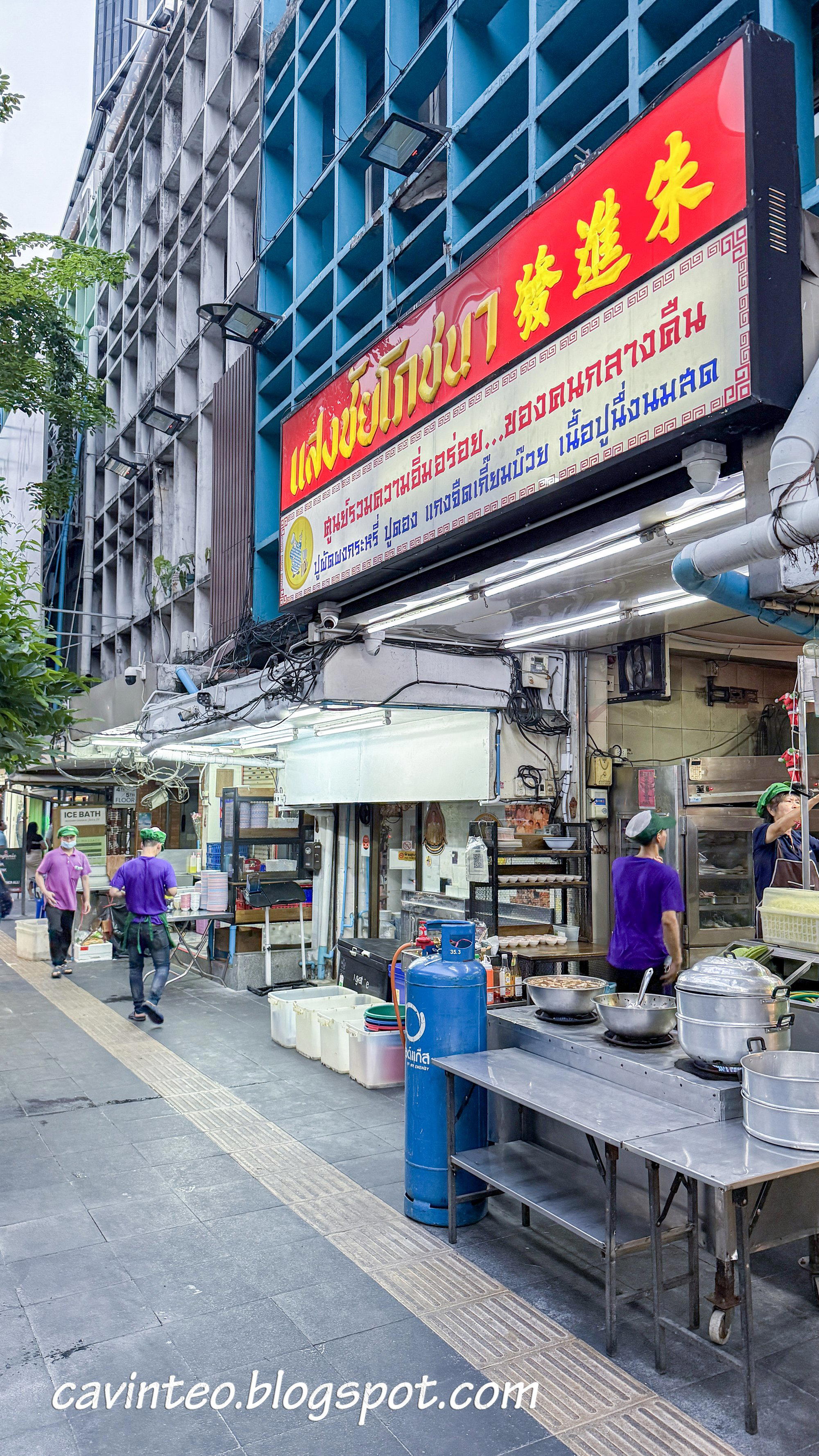
Where Bangkok Eats Without an Audience
Bangkok's dining conversation tends to collapse around two poles: the Michelin-decorated tasting-menu circuit, where venues like Sorn and Baan Tepa operate at the summit of the Thai fine-dining tier, and the tourist-facing street-food trail, where the same dozen stalls get photographed endlessly. Between those two poles sits the category that actually sustains the city: the neighbourhood restaurant that opens early, fills fast, and operates on local logic rather than external validation. Seng Potchana occupies that middle register. It is the kind of place that Bangkok residents treat as infrastructure rather than destination, which, in the city's culinary hierarchy, is a form of endorsement that no award can fully replicate.
Understanding Seng Potchana requires understanding what Bangkok's non-curated dining circuit looks like at scale. The city runs on rice-plate lunch culture from roughly 11am to 2pm, a window during which the real volume of Thai cooking moves through kitchens that rarely appear in international press. These are not simplified or tourist-adjusted menus: the dishes follow regional logic, seasoning runs assertive, and the pace of service reflects the working crowd eating on a schedule. Dinner shifts the register. Tables turn more slowly, the crowd skews more local-social than local-functional, and the kitchen, freed from the lunch sprint, can express a different range. At Seng Potchana, that lunch-versus-dinner divide is the primary axis through which to understand what the restaurant offers and why the two services attract different audiences.
The Lunch Hour and What It Signals
In Bangkok's neighbourhood restaurant culture, the quality of a lunch crowd is a reliable signal. Restaurants that fill with office workers, tradespeople, and regulars between noon and 1:30pm are, almost by definition, priced accessibly and cooking to a standard that survives daily repeat visits. A room that empties by 1pm and refills again suggests a kitchen hitting consistent notes rather than coasting on novelty. This is the frame in which Seng Potchana's daytime service should be read: not as a casual warm-up to a more serious dinner, but as the commercial and culinary core around which the restaurant is organised.
Thai lunch culture in this tier tends toward one-plate formats: rice with a protein, a curry alongside, something fried for contrast. The expectation is not abundance but precision within a narrow format, where the balance of sweet, sour, salt, and heat tells you immediately whether a kitchen is cooking with attention or simply executing by rote. Bangkok's most reliable neighbourhood kitchens, from shophouse restaurants in older residential districts to canteen-style operations in commercial blocks, succeed at lunch because they have cooked the same dishes enough times to make them automatic. The restaurant belongs to that tradition.
For visitors trying to place the restaurant within Bangkok's broader dining map, a useful reference point is the contrast with the city's high-end Thai operators. Where Sorn reconstructs Southern Thai cooking at a price point and formality that positions it against international fine dining, and where Baan Tepa applies a contemporary lens to Thai ingredients and technique, the restaurant operates without that intermediary layer. The cuisine is not framed or explained; it simply arrives. That directness is the point.
Evening Service: A Different Room
Bangkok's neighbourhood restaurants shift character after dark in ways that are easy to miss if you only visit at one time of day. The lunch crowd is purposeful; the dinner crowd lingers. Tables that turned in 25 minutes at noon become two-hour anchors by 7pm. The food may be identical in construction but different in context: ordered to share rather than to fuel, accompanied by beer or whisky rather than iced tea, and eaten in a register that is social rather than functional. At the restaurant, this shift is legible in the ordering patterns. Dinner guests tend to order wider, requesting dishes that would be excessive for a solo lunch but make sense as a spread across four or five people.
This is not unusual in Bangkok. The city's neighbourhood restaurant culture treats the same kitchen as two different propositions depending on the hour, and the better operators understand how to serve both without compromising either. The restaurants that fail this test tend to be ones that over-formalise their evening offering in response to perceived demand, losing the directness that made the lunch service worth returning to. The restaurants that get it right, including several of Bangkok's most-visited neighbourhood institutions, simply let the room change while the kitchen stays consistent.
Placing Seng Potchana on the Bangkok Map
For anyone building a Bangkok itinerary that goes beyond the tasting-menu circuit, the neighbourhood restaurant category requires some navigation. Bangkok's geography is not self-evident: the city sprawls, and the districts that contain particularly interesting local-dining options are not always the ones that appear first on tourist maps. The restaurant fits within a pattern common across the city's older residential and mixed-use neighbourhoods: a kitchen with repeat visits rather than discovery traffic, and a price structure that reflects local purchasing power rather than visitor expectations. Expect roughly $21 per person.
That positioning places the restaurant in a different conversation from Bangkok's international-facing restaurants. The European fine-dining operations that have established a foothold in the city, including Sühring and Côte by Mauro Colagreco, operate on booking lead times and price points that signal a different relationship with the city. So do Bangkok's acclaimed cross-cultural operators like Gaa. The restaurant's logic is entirely local: it succeeds because it serves Bangkok rather than performing it.
Comparable dynamics appear at neighbourhood restaurants across Thailand's other cities. In Chiang Mai, places like Loet Rot operate on the same local-first principle, as does Cherng Doi Roast Chicken for its particular format. In Pattaya, Krua Laew Tae R-Rom serves a similar function for its catchment. The pattern repeats because the underlying logic is consistent: Thai cities sustain a tier of restaurants that are primarily accountable to their immediate neighbourhood, and that accountability tends to produce cooking worth seeking out. Beyond Thailand, the same principle applies in radically different culinary contexts: New York's Le Bernardin and Atomix both built durable reputations through consistency rather than novelty, even at opposite ends of the formality spectrum.
Planning a Visit
The practical approach is to confirm details before visiting. Bangkok's neighbourhood restaurants of this type rarely operate reservation systems; arrival during off-peak lunch hours (before noon or after 1:30pm) tends to reduce wait times. Cross-reference with Hoy Tord Chao Lay and AKKEE in Pak Kret if you are building a broader Bangkok neighbourhood-dining day, as the logistical approach is similar across this category.
A Quick Peer Check
Comparable venues nearby, for context on price, style, and recognition.
| Venue | Cuisine | Price | Notes |
|---|---|---|---|
| Seng PotchanaThis venue — the venue you are viewing | Thai-Chinese Seafood | $$ | Not listed |
| Yoong Khao Hom | Authentic Southern Thai | $$ | Wang Mai |
| Phed Mark | Spicy Pad Krapao Specialist | $$ | Khlong Toei |
| Nara | Authentic Thai Cuisine | $$ | Siam Square |
| Somyos | Thai with Chinese influences | $$ | Ban Song Krathiam |
| Ongtong Khaosoi | Northern Thai Khao Soi | $$ | Phaya Thai Khwaeng |
At a Glance
- Lively
- Well Known
- Late Night
- Casual Hangout
- After Work
- Group Dining
- Open Kitchen