Our verdict
In Kita-Aoyama, Minato City, 花山流 田 occupies a basement-level room that operates within the quieter register of Tokyo's kaiseki-adjacent dining scene. The address places it among Aoyama's concentration of considered, format-driven restaurants, where sustainability and ethical sourcing have become defining signals rather than marketing additions. Specific awards and pricing data are not yet verified, but the venue's location and format position it within Tokyo's mid-to-upper tier of specialist dining.

Pearl is the En Primeur Club membership app, where members save venues, book tables and use the concierge.
Aoyama's Basement Tier and What It Signals
Tokyo's Minato City has developed a particular concentration of restaurants that operate below street level, below headline recognition, and, deliberately, below the volume of their Ginza or Roppongi counterparts. The basement restaurants of Kita-Aoyama tend to attract a different kind of attention: quieter, longer-booked, and sustained by word-of-mouth rather than review cycles. 花山流 田 sits at 2-7-13 Kita-Aoyama, B1F, in a building called Flora Aoyama, which places it physically and categorically inside this tier.
That basement position is not incidental in Tokyo's dining geography. Below-grade rooms in Aoyama communicate a certain withdrawal from spectacle, the opposite of the glass-fronted, counter-visible formats that dominate Ginza's premium sushi strip. Where restaurants like Harutaka and RyuGin operate within highly legible prestige frameworks, Michelin stars, published tasting menus, internationally visible chef profiles, Aoyama's smaller basement venues often trade in a different currency: discretion, local regulars, and formats shaped around a specific culinary argument rather than a broad market.
Sustainability as Structure, Not Gesture
Across Japan's premium dining scene, environmental consciousness has moved from optional positioning to structural practice. The restaurants generating sustained editorial interest in Tokyo are no longer those with vague commitments to seasonal menus. The more substantive conversation now involves sourcing chains: which producers, which fishing practices, what proximity between harvest and plate.
This shift is visible across the city's most closely watched rooms. L'Effervescence has built a significant part of its reputation on documented producer relationships and waste-reduction discipline. Crony, in its innovative French register, operates with similar sourcing intentionality. What these venues share is not a single cuisine type but a framework decision: that the supply chain is as much a part of the dining proposition as what arrives at the table.
In this context, restaurants positioned in Aoyama's quieter tier, with the room to operate at lower volume and higher specificity, are often better placed to execute genuine ethical sourcing than high-throughput venues where supplier relationships become harder to maintain at scale. The smaller the room, the more tractable the sourcing question. Across Japan, this logic has produced some of the country's most considered producer-to-plate formats, from Gion Sasaki in Kyoto to akordu in Nara, where local agricultural identity becomes the menu's organizing principle.
The Wider Japanese Context
Japan's regional dining scene reinforces this pattern at scale. Restaurants like HAJIME in Osaka, Goh in Fukuoka, and Abon in Ashiya each demonstrate how Japan's geography, its fishing traditions, its micro-regional agriculture, its seasonal precision, creates conditions for sourcing programs that restaurants in most other countries cannot replicate. The baseline ingredient quality available to a Japanese chef working with a committed regional supplier is structurally different from what a European or American chef can access, however well-resourced.
In Tokyo specifically, that ingredient quality is filtered through density: the city pulls produce from across Japan, which means that a Minato City basement restaurant can plausibly work with Hokkaido producers (see aki nagao in Sapporo for the northern end of that supply chain), Kyushu fisheries, and Shikoku mountain vegetables within a single menu. The ethical sourcing argument in Tokyo is therefore not primarily about proximity, it is about traceability and relationship depth within a supplier network that spans the archipelago.
Further afield, this conversation has parallels in how Le Bernardin in New York City and Lazy Bear in San Francisco have approached ingredient sourcing, each building documented supplier relationships that function as a credential, not merely a menu note. In Tokyo's quieter basement restaurants, the same credential logic applies, even when the rooms themselves resist the visibility that would make that argument legible to a wider audience.
Atmosphere and What to Expect
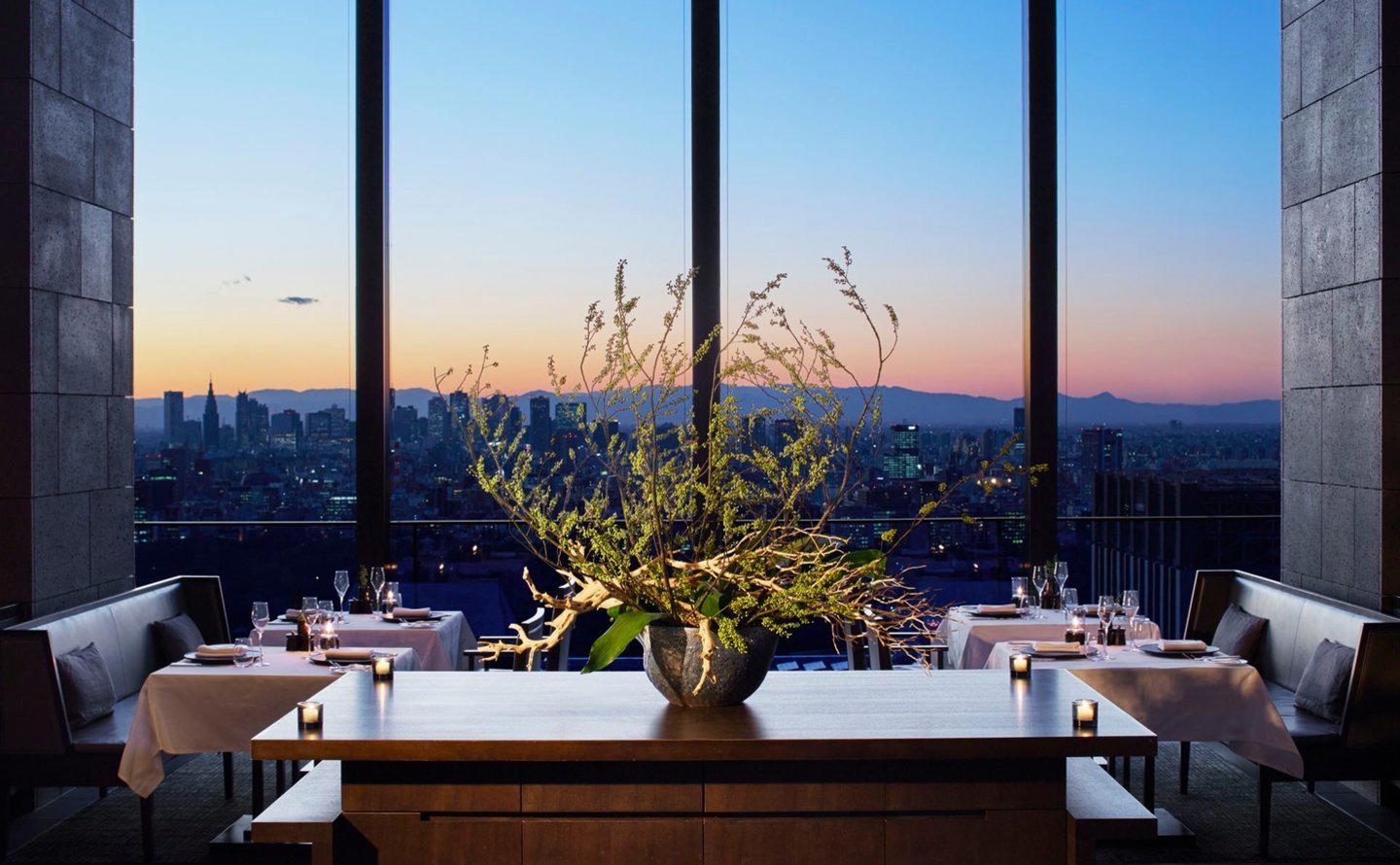
Basement-level rooms in Kita-Aoyama follow a consistent atmospheric logic: the descent from street level functions as a transition, reducing ambient noise and shifting the diner's attention inward. These are not theatrical venues in the sense of RyuGin's formal precision or Sézanne's European-inflected elegance. They operate with smaller, more compressed formats where the room's design tends toward materials and proportion rather than statement gestures.
At 花山流 田, the Flora Aoyama building address and the B1F designation place it within a building type common to Aoyama's side streets: mixed-use, unremarkable from the exterior, and deliberately understated.
How This Venue Sits Among Tokyo Peers
| Venue | Area | Cuisine | Price Tier | Format Signal |
|---|---|---|---|---|
| 花山流 田 | Kita-Aoyama, Minato | Not yet verified | Not yet verified | Basement, Aoyama tier |
| Harutaka | Ginza | Sushi | ¥¥¥¥ | Counter omakase |
| L'Effervescence | Nishi-Azabu | French | ¥¥¥¥ | Sustainability-led tasting |
| RyuGin | Roppongi | Kaiseki | ¥¥¥¥ | Formal kaiseki |
| Crony | Tokyo | Innovative French | ¥¥¥¥ | Sourcing-focused |
For a broader view of where 花山流 田 sits within Tokyo's full dining field, see our full Tokyo restaurants guide. The guide maps venues across price tiers, neighbourhoods, and cuisine traditions, which is the most useful frame for placing a venue whose specific data is still being confirmed.
Venues Across Japan Worth Knowing Alongside This
Readers researching the wider Japanese dining scene should consider affetto akita in Akita, Aji Arai in Oita, Ajidocoro in Yubari District, and Akakichi in Imabari as part of the same pattern of regional, sourcing-conscious dining that has produced Japan's most compelling food stories of the past decade. These venues collectively demonstrate how Japan's prefectural ingredient diversity becomes a menu argument when the restaurant is small enough to maintain genuine producer relationships.
Planning a Visit
The address, Flora Aoyama B1F, 2-7-13 Kita-Aoyama, Minato City, is specific enough to navigate to directly. Kita-Aoyama is served by Omotesando Station (Ginza, Chiyoda, and Hanzomon lines), which puts this address within a short walk of one of Tokyo's most useful transit hubs. The surrounding neighbourhood's density of design-led businesses means the streetscape is familiar and well-signed for those navigating on foot.
Readers should approach reservation planning through direct contact or a concierge with local Tokyo restaurant access, particularly for basement-format venues in Aoyama that may not maintain active online booking infrastructure.
Frequently asked questions
What's the address for 青山æµ 田?
青山æµ 田 is located at Japan, 〒107-0061 Tokyo, Minato City, Kita-Aoyama, 2 Chome−7−13 プラセオ青山 B1F, Tokyo.
What should I expect atmosphere-wise at 花山流 田?
The B1F address inside Flora Aoyama, 2-7-13 Kita-Aoyama, puts 花山流 田 in a below-street register that the neighbourhood does consistently well: the descent from pavement level reduces ambient noise and foot-traffic energy before you've sat down. Basement rooms in this part of Minato City tend toward contained, focused environments rather than animated street-level dining rooms. Expect a quieter, more concentrated setting than comparable above-ground venues in the Omotesando corridor.
What's the signature dish at 花山流 田?
Specific dish details have not been verified. What the address does confirm is a placement in Kita-Aoyama's specialist basement tier, a concentration of restaurants in Minato City, Tokyo, where menus tend toward precision over breadth. For confirmed dish information, contacting the venue directly via its Kita-Aoyama location is the most reliable route.
Is 花山流 田 in Kita-Aoyama easy to reach by public transport?
The venue sits at 2-7-13 Kita-Aoyama, Minato City, Flora Aoyama B1F, within walking distance of Omotesando Station, which is served by the Tokyo Metro Ginza, Chiyoda, and Hanzomon lines. Kita-Aoyama is one of central Tokyo's more transit-accessible dining neighbourhoods, making the below-street location the only navigation variable once you reach street level.
| Venue | Cuisine | Price | Awards | Notes |
|---|---|---|---|---|
| éå±±æµ ç°This venue (the venue you are viewing) | Not listed | Not listed | Not listed | Not listed |
| Harutaka | Edo-Style Omakase Sushi | $200–300 | 3 Michelin Stars · World's 50 Best #76 | Sushi |
| L'Effervescence | Modern French with Japanese Influences | $200–300 | 3 Michelin Stars · World's 50 Best #69 | French |
| RyuGin | Modern Kaiseki | $500+ | 3 Michelin Stars · World's 50 Best #41 | Kaiseki, Japanese |
| Crony | Modern French with Japanese Influences | $150–200 | 2 Michelin Stars · World's 50 Best #34 | Innovative, French |
| Den | Modern Japanese Kaiseki | $150–200 | 2 Michelin Stars · World's 50 Best #51 | Innovative, Japanese |
Continue exploring
More in Tokyo
Restaurants in Tokyo
All restaurants in Tokyo →



Bars in Tokyo
All bars in Tokyo →






Details
- Special Occasion
- Chefs Counter
- Sake Program
- Counter Dining