Our verdict
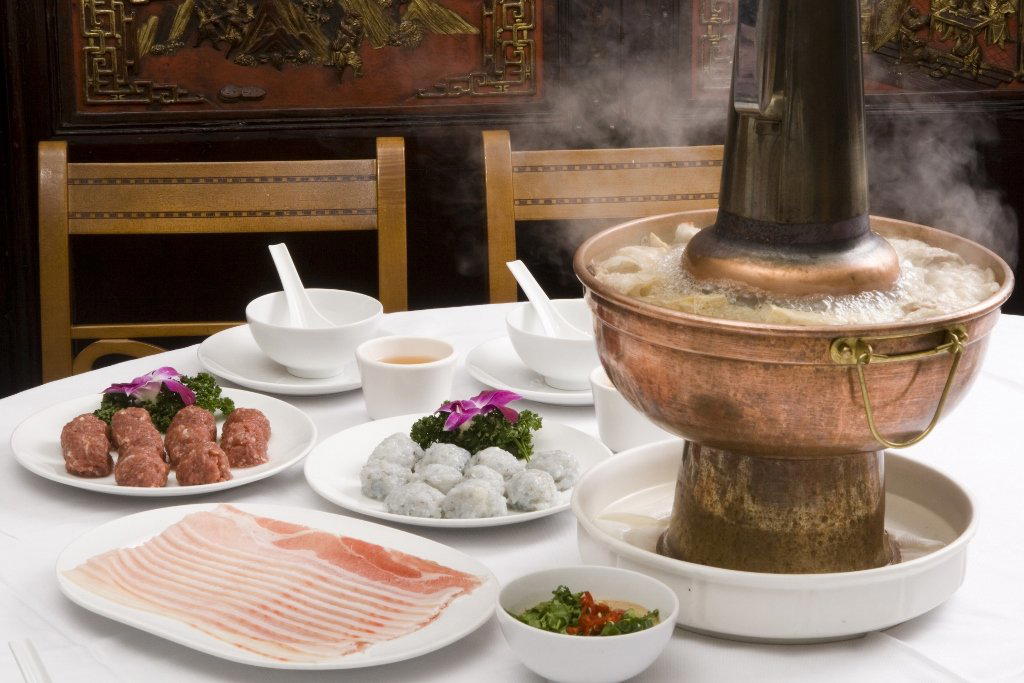
圍爐酸菜白肉火鍋 brings the slow-cooked northern Chinese tradition of suan cai bai rou hot pot to Da'an District, Taipei's most densely restaurant-competitive neighbourhood. The format centres on fermented cabbage broth and thinly sliced pork belly cooked tableside, positioning it squarely in the communal, long-meal tier of Taipei's hotpot scene rather than the flashier Sichuan-mala bracket that dominates city-centre chains.

Pearl is the En Primeur Club membership app, where members save venues, book tables and use the concierge.
A Cold-Weather Tradition in a Year-Round City
Taipei's hotpot scene divides more sharply than it first appears. The Sichuan-mala segment, with its numbing chilli broth and conveyor-belt ingredient selection, claims most of the foot traffic and the Instagram posts. A smaller, quieter tier runs parallel: the northeastern Chinese tradition of suan cai bai rou, fermented cabbage simmered low with pork belly, which arrived in Taiwan with the mainlanders who settled after 1949 and has been sustaining neighbourhood regulars ever since. 圍爐酸菜白肉火鍋, on a narrow lane off Ren'ai Road Section 4 in Da'an District, operates in that quieter tier.
The address is instructive. Da'an sits between the high-concept tasting-menu belt that runs through Zhongshan and Xinyi, where restaurants like logy, Taïrroir, and L'Atelier de Joël Robuchon operate in the four-figure-per-head range, and the street-level night-market economy further south. Hotpot at this neighbourhood level belongs to neither extreme. It is sit-down, unhurried, and priced for repeat visits rather than occasions. The lane setting, Alley 4 off Lane 345, filters for diners who already know the address rather than those browsing a strip.
The Format: Why Suan Cai Changes the Meal's Rhythm
Suan cai bai rou hot pot operates on a different logic than Sichuan or Japanese shabu-shabu. The fermented cabbage base is already complex when it arrives at the table: sour, slightly funky, with a depth that intensifies as the meal progresses rather than starting bold. Thinly sliced pork belly is the primary protein, and the interaction between the fat rendering into the sour broth and the cabbage softening across twenty or thirty minutes of cooking produces a dish that rewards patience. This is not a format where you order fast and leave quickly.
That rhythm shapes the lunch-versus-dinner experience in ways worth considering before booking. Lunch service at a hotpot restaurant of this type tends to be leaner: fewer diners, a broth that has not been cooking since morning service, and a pace that suits solo diners or pairs working through a weekday. Evening service carries more communal weight. The 圍爐 of the name translates loosely as "gathering around the fire," and the dinner table configuration in northeastern Chinese tradition is explicitly a group ritual, with the pot at the centre and conversation calibrated to the slow pace of the cook. If the editorial choice matters to you, dinner here is the more complete version of what the format is supposed to be.
Where This Sits in Taipei's Broader Hotpot Spectrum
Taipei supports one of the densest concentrations of hotpot formats in East Asia, ranging from chain-operated individual-pot restaurants with tablet ordering to old-school communal pots that predate most of the city's restaurant taxonomy. The suan cai bai rou category sits closer to the traditional end: shared pot, fixed protein emphasis, limited customisation. It is a less flexible format than build-your-own Taiwanese shabu, but that rigidity is the point. The discipline of the format is what makes the broth consistent.
For comparison within the broader Taiwan dining geography, the communal slow-cook tradition appears in different registers across the island. JL Studio in Taichung and GEN in Kaohsiung represent the contemporary tasting-menu expression of Taiwanese culinary identity, while places like A Xia in Tainan anchor the southern Taiwanese tradition. The northeastern Chinese hotpot lineage at 圍爐酸菜白肉火鍋 is a different thread entirely, one that traces its Taipei presence not to indigenous Taiwanese food culture but to the post-1949 migrations that seeded the city's northern Chinese restaurant layer.
That historical context matters for understanding what you are eating. Suan cai bai rou is not a Taiwanese dish adapted for local palates; it is a regional Chinese dish that has been preserved in Taipei with relatively little hybridisation. Its presence here belongs to the same culinary stratum as the beef noodle shops and Shandong-style steamed buns that populate Da'an and Zhongzheng Districts. The full Taipei restaurants guide covers the broader spectrum if you are mapping the city's distinct culinary layers before a trip.
Planning a Visit
The Ren'ai Road address puts the restaurant within reasonable walking distance of the Da'an Forest Park area and the MRT Da'an station, making it accessible without a taxi from most central Taipei hotels. Because no website or phone number is publicly verified, the most reliable approach for non-Chinese speakers is to visit directly during off-peak lunch hours, when the likelihood of walk-in availability is higher than on a Friday or Saturday evening. Group bookings for dinner, which suits the communal format leading, are worth verifying in person on a prior visit or through a hotel concierge with local contacts. No dress code applies; the setting is neighbourhood-level and the crowd reflects that.
Taipei's wider casual dining circuit includes strong alternatives at different price and format points. GARDENh in Yonghe District and the Sanchong District entry represent the outer-district casual tier, while Le Palais and Molino de Urdániz anchor the city's formal dining ceiling for the same visit. For those building a longer Taiwan itinerary, Chenggong Douhua and Volcanic Rock in Zhubei mark the range of regional eating worth building around a Taipei base.
Frequently asked questions
What should I eat at 圍爐酸菜白肉火鍋?
Is 圍爐酸菜白肉火鍋 reservation-only?
What makes 圍爐酸菜白肉火鍋 worth seeking out?
Can 圍爐酸菜白肉火鍋 handle vegetarian requests?
How does 圍爐酸菜白肉火鍋 compare to Taipei's high-end hotpot formats?
Comparable Venues
Comparable venues nearby, for context on price, style, and recognition.
| Venue | Cuisine | Price | Awards | Notes |
|---|---|---|---|---|
| 圍爐酸菜白肉火鍋This venue (the venue you are viewing) | Traditional Chinese Sauerkraut White Meat Hotpot | $20–30 | Not listed | Not listed |
| 藍玲四川牛肉麵 | Sichuan-Style Beef Noodles | $10–20 | Not listed | Daan District |
| 原創花雕雞 | Taiwanese Huadiao Chicken Hot Pot | $20–30 | Not listed | Songshan District (松山區) |
| ååé åº-é¢å®« | Fine Dining Cantonese | $150–200 | 3 Michelin Stars · La Liste Top Restaurants | Jianming |
| 大æ©é ç±³ç³ | Head Rice Noodles | Not listed | Not listed | Longhe |
| Beef Father (牛爸爸牛肉麵) | Premium Taiwanese Beef Noodle Soup | $20–30 | Not listed | Neihu District |
Continue exploring
More in Taipei
Restaurants in Taipei
All restaurants in Taipei →
Bars in Taipei
All bars in Taipei →
Hotels in Taipei
All hotels in Taipei →
Wineries in Taipei
Browse all →
Details
- Cozy
- Rustic
- Classic
- Group Dining
- Casual Hangout
- Family
- Open Kitchen
- A La Carte
Current opening hours
- Monday
- 11:30 AM–2 PM, 5:30–9:30 PM
- Tuesday
- 11:30 AM–2 PM, 5:30–9:30 PM
- Wednesday
- 11:30 AM–2 PM, 5:30–9:30 PM
- Thursday
- 11:30 AM–2 PM, 5:30–9:30 PM
- Friday
- 11:30 AM–2 PM, 5:30–9:30 PM
- Saturday
- 11:30 AM–2 PM, 5:30–9:30 PM
- Sunday
- 11:30 AM–2 PM, 5:30–9:30 PM
Hours can change for holidays and private events. Hours as of .
Simple, clean, and elegant residential-style interior with efficient service.