大æ©é ç±³ç³ serves head rice noodles at No. 41號, Section 3, Yanping N Rd, Datong District, Taipei City, Taiwan 103, with a quiet setting for a low-key stop.
Pearl is the En Primeur Club membership app — saves, bookings, and concierge access live there. Same editors, same standards.
- Address
- No. 41號, Section 3, Yanping N Rd, Datong District, Taipei City, Taiwan 103
- Phone
- +886225944685
- Website
- facebook.com
- Directions
- Get directions
 Saves & bookings on Pearl
Datong's Rice Noodle Counter and What It Says About Taipei Street Food
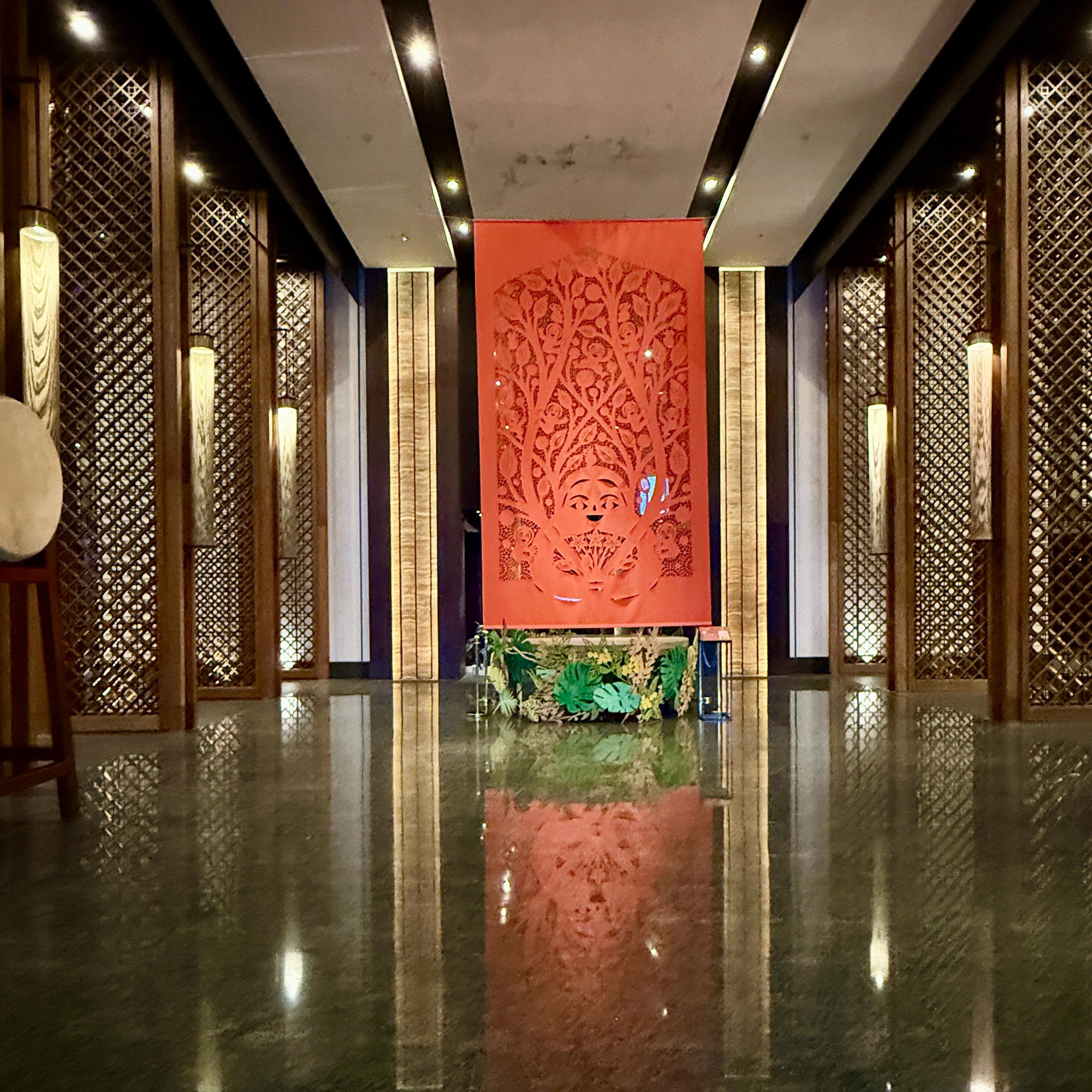
Yanping North Road cuts through Datong District like a timeline of old Taipei. The shophouses along Section 3 carry the architectural memory of the Japanese colonial era and the postwar decades that followed, their facades worn into something that feels less like preservation and less like neglect than a third thing entirely: continuity. It is in this stretch that 大橋頭米苔目 operates, occupying the kind of physical space that defines a category of Taipei eating that no tasting-menu counter, however accomplished, can replicate. The stall or shopfront format, the communal seating arranged for efficiency rather than comfort, the visual grammar of a kitchen operating in plain view: these are the design principles of a tradition that predates the city's current fine-dining moment by generations.
Taipei's food scene is often discussed through the lens of its ascendant fine-dining tier. Logy, Taïrroir, and Le Palais represent the city's capacity for formal ambition at the highest price points. But the city's street-level eating infrastructure, the dai pai dong descendants and traditional noodle counters anchored in working-class districts, constitutes a parallel tradition with its own competitive logic and its own form of earned authority. In that tradition, longevity and neighborhood loyalty function as the equivalent of awards and press coverage.
米苔目: The Noodle Format in Context
Mi tai mu (米苔目) is a rice noodle made from rice flour and tapioca starch, extruded into short, thick strands with a slippery, slightly chewy texture that sits closer to a Japanese udon in mouthfeel than to the thinner rice vermicelli common across Southeast Asia. The format is particularly associated with Hakka culinary tradition in Taiwan, and its presence in northern Taipei reflects the demographic layering of the city's immigrant communities across the twentieth century. It is typically served in a light broth, often pork-based, or eaten cold with a sesame or soy-based dressing, and the accompaniments, braised pork, fish balls, preserved vegetables, fried shallots, vary by stall and by the preferences that accumulate over decades of operation.
What distinguishes the serious practitioners of this format from the generic is precisely the kind of detail that does not appear on menus: the ratio of rice flour to tapioca that determines the noodle's structural integrity after several minutes in hot broth, the depth of a stock built over hours rather than assembled from concentrate, the precision of the shallot fry. These are craft variables invisible to a first-time visitor but legible to anyone who eats the dish regularly across multiple operators. Stalls that persist in high-traffic Taipei districts across multiple decades are, by that measure, demonstrating something.
The Physical Environment as Argument
The design logic of a counter like this one on Yanping North Road is not absence of design but a different set of priorities. Seating arrangements in traditional Taiwanese street food operations privilege throughput and accessibility over atmosphere in any decorative sense. Tables are typically shared, positioned close together, and oriented toward the street or the kitchen rather than toward each other. The counter itself, where ordering and payment often happen in close proximity, compresses the transaction and focuses attention on the food and the operation rather than on any surrounding context.
This is, in its own way, an architectural argument: the space insists that what matters is what is in the bowl. For a reader accustomed to the spatial choreography of a fine-dining counter, whether in Taipei or at a reference point like Le Bernardin in New York or Atomix, the compression of a traditional street stall reads as its own kind of discipline. The kitchen is not hidden. The process is not mystified. The seating does not ask you to linger beyond the meal. These are design choices, even when they predate the concept of hospitality design.
Taiwan's broader street food tradition operates along these lines from north to south. A Xia in Tainan and the local eating culture around GEN in Kaohsiung reflect regional variations on the same foundational principle: the physical container is minimal so that the food carries the full weight of the experience. In Taipei's Datong District, that principle persists in a neighborhood that has resisted the gentrification pressure visible in Da'an or Xinyi.
Datong District and the Logic of the Address
Datong is among the oldest settled districts in Taipei, with a commercial and residential history that predates the city's expansion into the eastern half of the basin. The area around Yanping North Road and Dihua Street retains a concentration of traditional businesses, wholesale suppliers, and old-format eating establishments that have been displaced from most other inner-city districts. For rice noodle operations, wet markets, and traditional snack stalls, Datong functions as one of the more coherent remaining ecosystems in central Taipei.
The practical consequence for a visitor is that eating at 大橋頭米苔目 is inseparable from moving through that neighborhood. The address at No. 41, Section 3, Yanping North Road places it within walking range of Dihua Street's dry goods and traditional medicine shops, the Dalongdong Baoan Temple, and the broader fabric of a district that still operates on a pre-tourism timetable. Timing is relevant: traditional rice noodle operations in Taipei typically run morning through early afternoon, with sell-out as the natural closing mechanism rather than a fixed hour. Arriving after midday carries meaningful risk of finding the day's noodles exhausted.
Taiwan's street food geography extends well beyond Taipei. The rice-based eating traditions visible in Datong connect to operations across the island, from Chenggong Douhua on the east coast to the Taichung dining scene that has developed its own distinct character. Within the Greater Taipei area, comparable traditional formats can be found at operators in Sanchong District and at establishments like GARDENh in Yonghe District, each reflecting the satellite towns' own food cultures.
For a more complete picture of where 大橋頭米苔目 sits within Taipei's eating categories, from this tier of traditional street food through to the city's Michelin-level operators including Molino de Urdániz, regional specialists in Hsinchu, and venues across the island, see our full Taipei restaurants guide.
Planning Your Visit
Street food operations in this category in Taipei are almost universally walk-in, with no reservation mechanism, and payment is typically cash. The practical approach is to arrive during morning service, treat sell-out as the closing signal, and budget accordingly for what is a low-price-point format by any measure in the city. The Datong address is accessible by MRT via Daqiaotou Station on the Tamsui-Xinyi Line, which places it roughly at the northern edge of the district's traditional commercial core.
A Tight Comparison
Comparable venues nearby, for context on price, style, and recognition.
| Venue | Cuisine | Price |
|---|---|---|
| 大æ©é ç±³ç³This venue — the venue you are viewing | Longhe, Head Rice Noodles | Not listed |
| G-Woo Restaurant | Da'an, Taiwanese Chicken Soup | $$ |
| 明福台菜 | Heng'an, Taiwanese Homestyle | Not listed |
| 小李子清粥小菜 | Da'an, Taiwanese Congee and Small Dishes | $$ |
| Din Tai Fung Chinese Taipei 101 Restaurant | Jingxin, Taiwanese Dim Sum | $$ |
| 施家鮮肉湯圓 | Guoshun, Chinese Dim Sum | $$ |
Continue exploring