456 New Shanghai
Our verdict
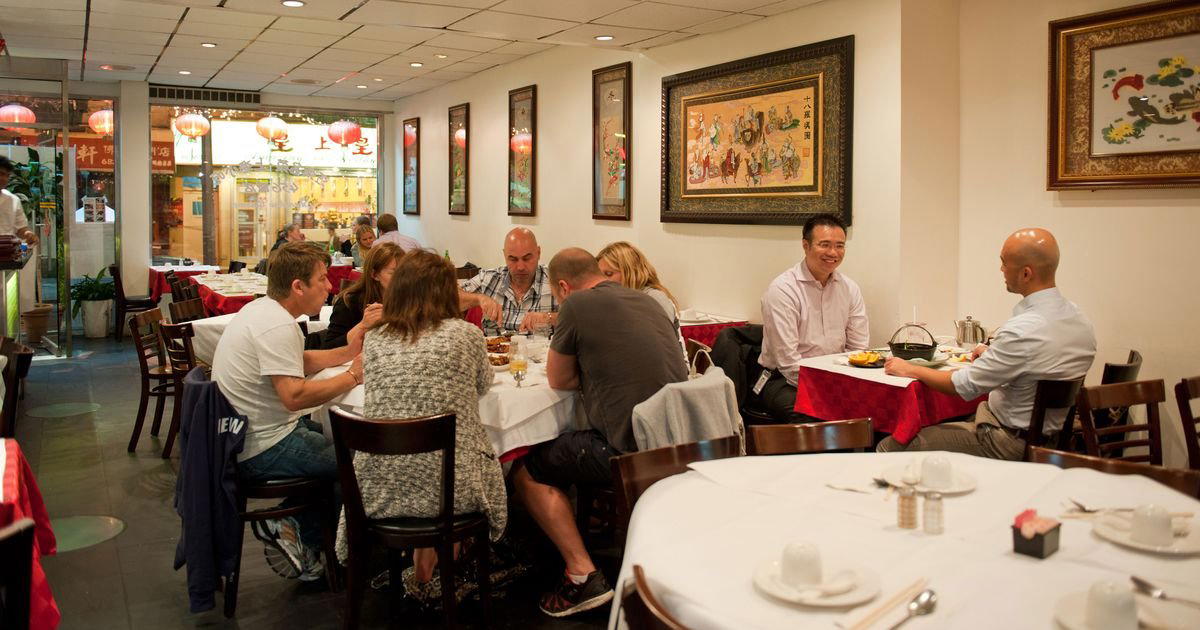
A Chinatown fixture at 69 Mott Street, 456 New Shanghai has fed generations of New Yorkers at the crossroads where immigrant dining traditions meet the neighbourhood's evolving restaurant scene. The address sits in the heart of Manhattan Chinatown's most concentrated dining corridor, making it a practical anchor for anyone working through the area's range of regional Chinese cooking.

Pearl is the En Primeur Club membership app, where members save venues, book tables and use the concierge.
The menu
What to order
- Soup dumplings
- Crispy pork chops
- Tiny fried pork buns
Mott Street and the Weight of Occasion in Chinatown
In Manhattan's Chinatown, milestone meals have long carried a logic all their own. The neighbourhood does not operate on reservation platforms or prix fixe calendars. Celebrations here move to a different rhythm: round tables, shared plates, banquet-style ordering, and the social architecture of a meal designed to hold a group together for hours. 456 New Shanghai at 69 Mott Street sits inside that tradition, on one of the most historically dense restaurant blocks in the United States.
Mott Street between Canal and Bayard has served as the backbone of Manhattan Chinatown's dining scene for well over a century. The street functions less as a collection of independent restaurants and more as a living record of successive waves of Chinese immigration, each generation layering its regional cuisine atop what came before. The Shanghai-inflected cooking that gives this address part of its name belongs to a specific chapter of that history, one where Shanghainese immigrants and their descendants brought soup dumplings, braised pork belly, and cold noodles into a neighbourhood that had been primarily Cantonese for decades.
What Shanghai-Style Cooking Means in This Context
Shanghainese food occupies a particular position within Chinese regional cuisine. It is richer than Cantonese, sweeter in its braising traditions, and more reliant on the interplay of soy, Shaoxing wine, and sugar that defines the red-braising technique known as hong shao. In New York, the category sits somewhere between the high-turnover dumpling shops of Flushing and the white-tablecloth Shanghainese restaurants that have come and gone in Midtown.
For occasion dining, that positioning matters. A meal built around Shanghainese cooking can scale: soup dumplings as a shared opener, a braised whole fish at the centre, cold appetisers arranged across the table, and rice or noodles to close. It is format-compatible with the kind of multi-generational, multi-preference group that milestone meals tend to produce. The cuisine handles vegetable-forward orders and meat-centred ones with equal ease, which is part of why Shanghai-style restaurants have historically anchored family celebrations in this neighbourhood.
The broader Chinatown dining tier operates at a price point well below the four-dollar-sign restaurants that define Manhattan's most decorated dining rooms. Properties like Masa, Le Bernardin, and Per Se occupy a category where occasion spending runs into hundreds of dollars per head before wine. The Chinatown tier offers a different transaction: the occasion is just as real, but the financial barrier is lower, which is not a lesser version of celebration dining, it is a different tradition of it.
The Mott Street Address as a Practical Anchor
The specific sub-address, 69 Mott St A, indicates a ground-floor unit on a block that houses multiple dining operations across different floors and storefronts. This is standard Chinatown geography: buildings on Mott, Bayard, and Doyers tend to stack or subdivide their restaurant tenants in ways that require some street-level navigation. The Canal Street subway station, served by the J, N, Q, R, W, and 6 lines, is less than a five-minute walk. Street parking in the immediate area is tightly contested; public transit or a drop-off is the practical choice for groups.
For anyone planning a celebration dinner, Chinatown timing carries specific advice. Weekend lunch and early dinner on Saturday draw the heaviest foot traffic from both neighbourhood regulars and visitors. Mid-week evenings tend to run quieter, which can mean faster seating and more attentive service for larger groups. The neighbourhood also clusters its activity around Lunar New Year in late January or early February, when tables fill weeks in advance and the streets themselves become part of the occasion.
How 456 New Shanghai Sits in the New York Occasion Dining Map
New York's occasion dining scene is not a single tier. It runs from the choreographed tasting-menu experiences at Atomix and Jungsik New York down through neighbourhood institutions where the celebration is marked by the company and the shared dish rather than the format. 456 New Shanghai functions in the latter register. The occasion is held together by the meal's structure, not by a set sequence handed down by the kitchen.
That distinction is meaningful for group organizers. At a tasting-menu counter, the kitchen controls pace, portion, and sequence. At a Chinatown banquet-style restaurant, the table does. For families with older members who set dietary parameters, for mixed groups where someone is feeding a child or avoiding a protein, or for celebrations where the real event is the conversation rather than the food itself, that table-led structure is the appropriate format. It is not a compromise; it is the right tool for a specific kind of occasion.
For those whose celebration itinerary stretches beyond a single city or a single meal format, the contrast is worth noting. Alinea in Chicago, The French Laundry in Napa, and Blue Hill at Stone Barns in Tarrytown represent the kitchen-as-conductor model of occasion dining. Lazy Bear in San Francisco, Single Thread Farm in Healdsburg, and Providence in Los Angeles extend that tradition across the West Coast. The neighbourhood restaurant in Chinatown answers a different need in that same occasion spectrum.
Beyond New York, the same logic plays out elsewhere. Emeril's in New Orleans, Addison in San Diego, Bacchanalia in Atlanta, and The Inn at Little Washington each occupy the formal occasion tier in their cities, just as restaurants at the other end of the formality scale serve the communal celebration tradition in their own neighbourhoods. For the full picture of New York's dining scene across those registers, see our full New York City restaurants guide.
International context reinforces how culturally specific banquet-occasion dining is. The kind of shared-table celebration format that Chinatown restaurants carry forward in New York connects to a tradition that runs through high-end Chinese dining globally, from the private rooms of 8 1/2 Otto e Mezzo Bombana in Hong Kong to the structured grandeur of Alain Ducasse at Louis XV in Monte Carlo, where the occasion meal is the product regardless of the cuisine underneath it.
Planning a Visit
456 New Shanghai is located at 69 Mott St A in Manhattan's Chinatown, accessible from the Canal Street station on multiple subway lines. The restaurant operates in the walk-in-friendly Chinatown tradition, though groups of six or more should confirm availability ahead of time through direct contact. For allergy questions or specific dietary requirements, direct communication with the restaurant before arrival is the most reliable approach, as menu compositions in this format depend on table-level ordering rather than a fixed kitchen sequence.
Quick reference: 69 Mott St A, New York, NY 10013. Nearest transit: Canal Street station (J, N, Q, R, W, 6). Leading for groups; walk-ins welcomed on a space-available basis.
Frequently asked questions
What's 456 New Shanghai's location?
456 New Shanghai is located at 69 Mott St A, New York, NY 10013, New York City.
How does 456 New Shanghai compare to other Shanghainese restaurants in New York City's Chinatown?
Within Manhattan's Chinatown, Shanghainese restaurants occupy a distinct niche from the Cantonese and Fujianese kitchens that dominate the neighbourhood's overall count. 456 New Shanghai at 69 Mott St A is one of a small number of full-service options in the area focused specifically on the Shanghai regional tradition, which includes red-braised meats, delicate dumplings, and cold-dish starters not commonly found on Cantonese menus. That relative scarcity within the immediate geography makes it a practical anchor for groups seeking that specific regional style without travelling outside Chinatown.
What should I order at 456 New Shanghai?
456 New Shanghai specializes in Shanghainese cooking, a regional style known for sweet-braised preparations, rich sauces, and dishes built for sharing across a table. Shanghainese staples in this tradition typically include red-braised pork, soup dumplings, and cold appetizer spreads. For specific current menu items, checking directly with the restaurant at 69 Mott St A is advisable, as offerings shift by season and kitchen availability.
Can I walk in to 456 New Shanghai?
Chinatown dining on Mott Street generally operates outside the reservation-platform model that governs uptown Manhattan, and walk-ins are a common part of the neighbourhood rhythm. That said, 456 New Shanghai draws occasion diners and family groups, which means weekend evenings and holiday periods can fill the room quickly. Arriving early or calling ahead gives you the clearest read on availability on a given night.
What do critics highlight about 456 New Shanghai?
Coverage of 456 New Shanghai tends to focus on its position within Manhattan's Chinatown as a destination for milestone meals and group gatherings rather than solo counter dining. The address at 69 Mott St situates it on one of the neighbourhood's most established dining blocks, which carries its own contextual weight. No Michelin stars or named award recognitions are recorded in available documentation.
Is 456 New Shanghai allergy-friendly?
Shanghainese cooking relies heavily on soy, wheat-based wrappers, shellfish, and rich stocks, which means the cuisine is not inherently accommodating for guests managing soy, gluten, or shellfish allergies.
Recognition, Side-by-Side
| Venue | Cuisine | Price | Awards | Notes |
|---|---|---|---|---|
| 456 New ShanghaiThis venue (the venue you are viewing) | Shanghainese Dumplings | $10–20 | Not listed | Not listed |
| Le Bernardin | French Seafood Fine Dining | $300–500 | 3 Michelin Stars · World's 50 Best #13 | French, Seafood |
| Atomix | Modern Korean Tasting Menu | $300–500 | 2 Michelin Stars · World's 50 Best #7 | Modern Korean, Korean |
| Masa | Traditional Japanese Omakase | $500+ | 2 Michelin Stars · World's 50 Best #27 | Sushi, Japanese |
| Per Se | French Fine Dining Tasting Menu | $300–500 | 3 Michelin Stars · World's 50 Best #40 | French, Contemporary |
| Jungsik New York | Modern Korean Fine Dining | $200–300 | 3 Michelin Stars · World's 50 Best #18 | Progressive Korean, Korean |
Continue exploring
More in New York City
Restaurants in New York City
All restaurants in New York City →
Bars in New York City
All bars in New York City →





Details
- Lively
- Trendy
- Late Night
- Casual Hangout
- Standalone
- A La Carte
- Vegetarian Friendly
- Vegan Options
Current opening hours
- Monday
- 11 AM–10 PM
- Tuesday
- 11 AM–10 PM
- Wednesday
- 11 AM–10 PM
- Thursday
- 11 AM–10 PM
- Friday
- 11 AM–10 PM
- Saturday
- 11 AM–10 PM
- Sunday
- 11 AM–10 PM
Hours can change for holidays and private events. Last verified .
Brightly lit, efficient, and polished Chinatown dining room with compact small tables.