Sifu Chio
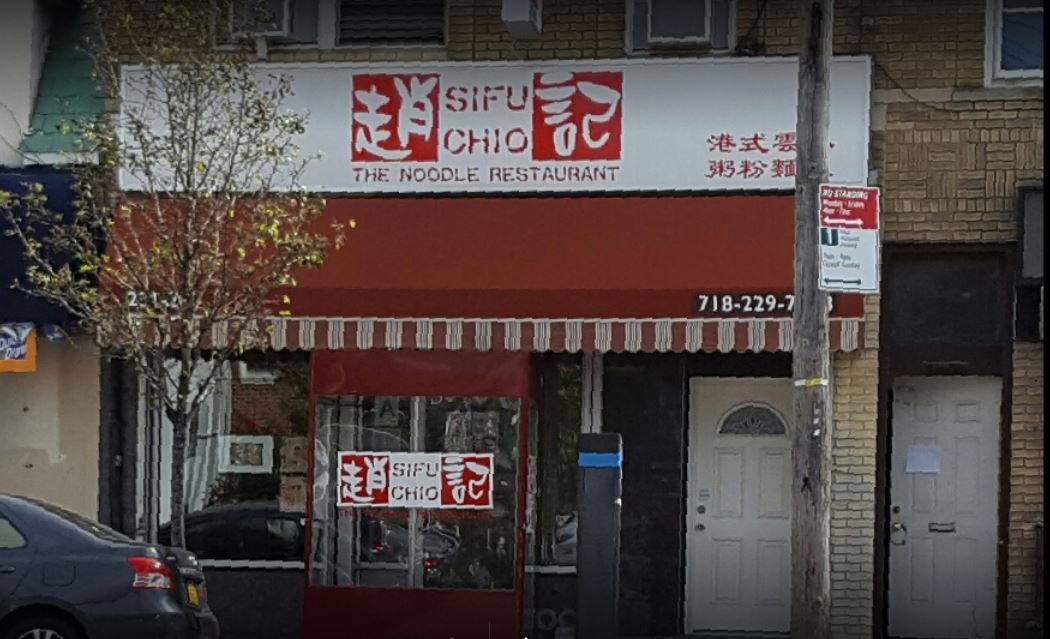
Sifu Chio occupies a specific corner of Flushing's dense Chinese dining scene, where Prince Street functions as a working address for serious regional cooking rather than a destination curated for outside visitors. The menu architecture here follows the logic of a particular culinary tradition rather than a crowd-pleasing composite, which places it in a different conversation from the Midtown tasting-counter circuit.
- Address
- 40-09 Prince St, Flushing, NY 11354
- Phone
- +1 718 888 9295
- Directions
- Get directions
Prince Street and the Flushing Dining Logic
Flushing's restaurant corridor on and around Prince Street operates by a different set of rules than the Manhattan venues that dominate New York's critical conversation. Where Le Bernardin, Per Se, and Eleven Madison Park operate within a framework of formal service, tasting menus, and award-cycle visibility, the kitchens along this stretch of Queens answer to a local clientele that arrived with specific regional expectations and will not accept substitutes. That dynamic produces particularly disciplined cooking in the city, precisely because the audience is self-selecting and demanding in a way that has nothing to do with Michelin geography.
Sifu Chio sits inside that ecosystem at 40-09 Prince St, Flushing. The address alone positions it within a competitive block where Chinese regional cooking, Taiwanese breakfast formats, Hong Kong-style cafes, and specialty dim sum operations run in close proximity. Survival in that environment is a credential of its own kind, one that functions differently from the award signals attached to a counter like Masa but is no less meaningful as a marker of sustained quality.
How the Menu Is Structured and What That Tells You
In Chinese restaurant culture, particularly in communities with strong Cantonese or Fujianese roots, the menu's architecture is a direct signal of the kitchen's priorities. A menu built around specific regional preparations, served in formats that reflect their origin, reads as a statement of culinary intent. It is the opposite of the composite pan-Asian menu that trades specificity for breadth. The latter is designed to minimize friction; the former is designed to reward knowledge.
Sifu Chio's menu structure reflects this principle. The name itself, with "Sifu" carrying the meaning of a skilled craftsperson or master in Cantonese usage, points toward a kitchen that frames its work around technical mastery rather than novelty. That framing is common in the Flushing dining scene and rare almost everywhere else in New York, where restaurants in comparable price tiers tend to present cooking as a creative proposition rather than a disciplined one. The contrast with the tasting-menu format used by venues like Atomix is instructive: both approaches demand precision, but they organize the diner's experience around entirely different values.
In practice, menus at this address type in Flushing tend to be read vertically, by category and preparation, rather than horizontally through a fixed sequence. That structure puts ordering decisions in the diner's hands and rewards familiarity with the cuisine. It also means that the kitchen's range is visible all at once rather than parceled out through a chef-directed arc, which is a fundamentally different relationship between kitchen and guest than the one offered by, say, Blue Hill at Stone Barns or The French Laundry.
Where Sifu Chio Sits in the Flushing Competitive Set
Flushing's restaurant density is not a recent development. The neighborhood's position as among the more significant Chinese immigrant communities on the East Coast was established over decades, and the dining infrastructure reflects that depth. Compared to Chinatown in Manhattan, which has seen significant commercial pressure and demographic shift, Flushing has maintained a wider range of regional Chinese cooking styles and a customer base that sustains highly specific preparations.
Within that context, a venue named with a craft-mastery reference occupies a distinct positioning. It is not presenting itself as a casual destination for the curious outsider. The Prince Street address, the naming convention, and the menu logic all signal a kitchen operating with a specific audience in mind. For a visitor accustomed to the kind of formal context signaling used by Smyth in Chicago or Providence in Los Angeles, the experience of reading a Flushing menu without that scaffolding is genuinely instructive about how culinary authority communicates itself in different cultural registers.
The comparison set for the restaurant is not the Michelin-tracked tasting counter. It is the adjacent operators on Prince Street and in the surrounding blocks: the roast meat specialists, the hand-pulled noodle shops, the Hong Kong barbecue houses. That is a harder competitive environment in some respects, because the diners it serves are comparing every dish to a specific memory or regional standard, not to a general idea of fine dining. Venues like Single Thread Farm or Addison in San Diego compete in a world where the evaluation criteria are largely set by critical consensus; the restaurant competes in a world where the evaluation criteria live inside the diner.
Planning Your Visit
Flushing is accessible via the 7 train to Flushing-Main Street, which is the logical approach from Midtown Manhattan and takes roughly 30 to 40 minutes depending on service. The Prince Street address is within walking distance of the Main Street subway stop, and the surrounding blocks offer dense options for extending a meal into a longer afternoon or evening of eating across multiple stops, a format that is common practice for visitors who treat Flushing as a half-day food destination rather than a single-restaurant outing.
Because specific booking information, hours, and phone contact for the restaurant are not confirmed in current records, one reliable approach is to arrive with some flexibility. Flushing restaurants at this tier often operate on lunch and dinner splits with a mid-afternoon closure, and weekend peak hours from roughly noon to 2pm can mean short waits at particularly popular spots. Arriving slightly off-peak, around 11:30am or after 2pm on weekends, generally produces a more comfortable experience.
Visitors planning a wider regional eating itinerary might also consider how the Flushing experience compares to high-craft Chinese dining in other American cities, or how the menu logic here relates to the kind of precision-driven kitchen culture documented at venues like Lazy Bear in San Francisco or Frasca Food and Wine in Boulder, both of which organize their menus around a clearly defined culinary point of view even if the traditions they draw on are entirely different.
How It Stacks Up
Comparable venues nearby, for context on price, style, and recognition.
| Venue | Cuisine | Price | Notes |
|---|---|---|---|
| Sifu ChioThis venue — the venue you are viewing | Cantonese Wonton Noodles | $$ | Not listed |
| Rulin | Modern Chinese Hand-Pulled Noodles | $$ | Union Square |
| Lilli and Loo | Gluten-Free Chinese | $$ | Chelsea-Hudson Yards |
| Kings Co Imperial LES | Modern Chinese with Sichuan & Cantonese influences | $$ | Lower East Side |
| August Gatherings富瑤 | Modern Cantonese | $$ | SoHo-Little Italy-Hudson Square |
| Royal Seafood | Cantonese Dim Sum | $$ | SoHo-Little Italy-Hudson Square |
Continue exploring
More in New York City
Restaurants in New York City
Browse all →
Bars in New York City
Browse all →



Hotels in New York City
Browse all →





At a Glance
- Cozy
- Casual Hangout
Cozy and well-lit atmosphere.