
Michelin Bib Gourmand
Our verdict
Sushi-Jo sits on Tenjinbashi-suji, one of Osaka's longest and most densely local shopping streets, in the Kita-ku district where the city's everyday eating culture has deep roots. The address places it in a neighbourhood that rewards visitors willing to move beyond the tourist corridors of Namba and Dotonbori. Contact details and booking information should be confirmed directly before visiting.

Pearl is the En Primeur Club membership app — saves, bookings, and concierge access live there. Same editors, same standards.
- Address
- 北区天神橋2-4-3, 大阪市, 大阪府, 530-0041
- Phone
- +81 6-6351-9886
- Hours
- Mon–Wed ClosedThu 5–9:30 PMFri–Sun 11 AM–2 PM, 5–9:30 PM
- Website
- ryusdc.net
- Directions
- Get directions
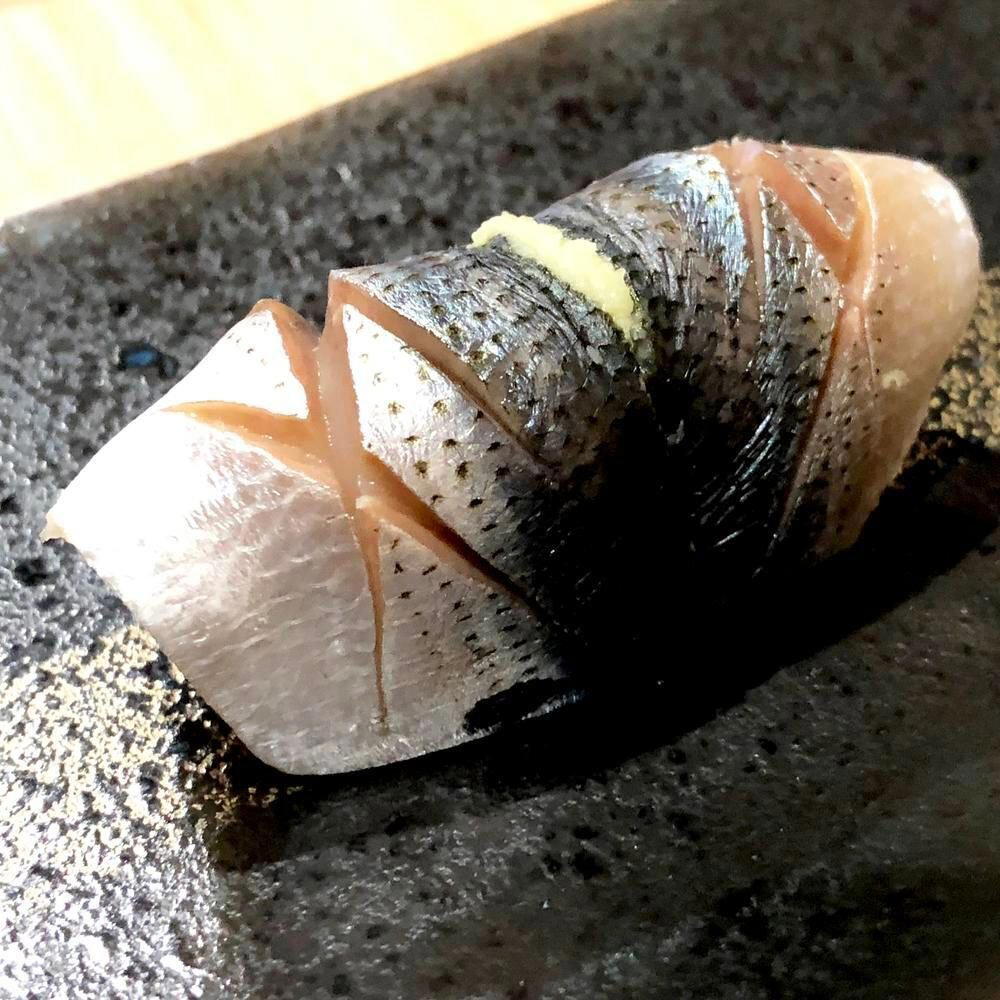
Tenjinbashi-suji and the Case for Eating Where Osaka Actually Eats
The stretch of Tenjinbashi-suji running through Kita-ku is often described, by Osaka residents rather than guidebook editors, as the city's longest shopping arcade. That distinction matters less than what it implies: a street shaped by daily commerce and neighbourhood appetite, not by tourism planning. The address at 北区天神橋2-4-3 places 寿司常 at the southern end of that corridor, in a ward where the density of working sushi counters, ramen shops, and standing bars reflects how seriously Osaka's residents take the economics of good eating. This is not the Osaka of Dotonbori neon or Namba weekend crowds. It is the Osaka that feeds itself.
That neighbourhood context is a meaningful filter when choosing where to eat sushi in this city. Osaka's sushi tradition has always differed from Tokyo's in character if not always in technique: the Kansai region's long preference for pressed oshizushi and vinegared rice with slightly more sweetness has produced a distinct regional sensibility alongside the Edo-style nigiri that now dominates most counters. A sushi-ya on Tenjinbashi-suji operates within both inheritances, shaped by a neighbourhood that expects value and regularity rather than occasion-driven theatrics.
The Neighbourhood as the Dining Room
Kita-ku's restaurant density is a function of its dual identity as both a commercial district and a transit hub. Osaka-Tenmangu station and Tenjinbashi-suji 6-chome station bracket the arcade, making the area accessible from most of the city without the congestion that surrounds the southern entertainment districts. For visitors using Osaka as a base to reach Gion Sasaki in Kyoto or akordu in Nara, eating in Kita-ku rather than Namba makes geographic sense as well as culinary sense.
The broader Osaka dining picture is well-documented in formal terms. The city's most decorated tables sit at a considerable distance from Tenjinbashi-suji in both geography and price: HAJIME and La Cime operate at the ¥¥¥¥ tier with French and innovative menus designed around extended tasting formats, while the kaiseki counters Kashiwaya Osaka Senriyama and Taian represent the ¥¥¥ segment of the Japanese fine-dining tier. Fujiya 1935 rounds out the upper-tier innovative category. 寿司常 occupies a different position in the city's eating ecology, one closer to the neighbourhood sushi-ya format that sustains the day-to-day appetite of Osaka residents rather than serving occasion dining.
What the Kita-ku Counter Format Tends to Offer
Neighbourhood sushi counters along and near Tenjinbashi-suji typically operate on a different logic from the tasting-menu omakase format that has come to define premium sushi in Tokyo and, increasingly, in Osaka's tourist-facing restaurants. The Kansai neighbourhood counter often keeps a broader menu in view: set courses alongside à la carte ordering, a price point that makes repeat visits sustainable, and a rhythm calibrated to diners who arrive after a working day rather than after a long journey to a reservation they made weeks in advance. In Tokyo, the parallel format is well represented by counters such as Harutaka, which straddles the line between neighbourhood accessibility and omakase seriousness. The Osaka version tends to resolve that tension differently, often leaning toward the former.
This dynamic appears across Japanese regional cities. Goh in Fukuoka demonstrates how a city's culinary identity can express itself through a house style rooted in local produce and local expectation rather than national fine-dining convention. The same logic applies in Osaka: the city's sushi counters in residential and semi-commercial neighbourhoods like Kita-ku draw on proximity to the wholesale markets and the preferences of a local clientele, not on the international visitor trade that shapes menus in Namba and Shinsaibashi.
Japan's Neighbourhood Sushi Counter in Context
The neighbourhood sushi-ya is one of Japan's most durable institutional formats, running from post-war reconstruction through to the current era largely unchanged in basic structure: a wooden counter, a glass case displaying the day's fish, and a relationship between itamae and regular customer built over years rather than single visits. That format has come under pressure from two directions simultaneously: the rise of conveyor-belt kaiten-zushi at the accessible end, and the expansion of high-priced omakase counters at the formal end. The middle-ground sushi-ya, the kind that fills the streets of Kita-ku and neighbourhoods like it across Japan, has maintained its position partly through price discipline and partly through the loyalty of clientele who have no interest in either extreme.
Comparable regional expressions of this format are visible elsewhere in Japan. 一本杉 川嶋 in Nanao operates in a regional city context shaped by local seafood, while 夕凪亭 in Sapporo reflects the northern seafood abundance of Hokkaido within a neighbourhood-scale format. The geographic spread of credible regional sushi outside Tokyo and Osaka is larger than it is often credited to be. That context is worth carrying when arriving at a counter on Tenjinbashi-suji.
Planning a Visit to 寿司常
The address at 北区天神橋2-4-3, 大阪市 places 寿司常 in the southern portion of the Tenjinbashi-suji arcade, accessible on foot from Minami-Morimachi station on the Osaka Metro Tanimachi and Sakaisuji lines. The surrounding neighbourhood is dense with mid-range restaurants, making the area worth an extended evening rather than a single-stop visit. Walk-in availability at neighbourhood counters in Kita-ku tends to be more reliable on weekday evenings than at weekends, though that pattern varies considerably by venue. For the broader context of eating in Osaka, our full Osaka restaurants guide covers the city's dining tiers from kaiseki to neighbourhood standing bars.
Visitors building an itinerary around Japanese dining more broadly might note that the Kansai region allows day trips from Osaka that connect to significantly different culinary registers: Gion Sasaki in Kyoto operates in the kaiseki tradition with Michelin recognition, and akordu in Nara brings a European-influenced approach to local Yamato produce. Neither requires more than forty minutes by rail from central Osaka.
Frequently asked questions
Where is 寿司常 located?
寿司常 is located at 北区天神橋2-4-3, 大阪市, 大阪府, 530-0041, Osaka.
Is 寿司常 on Tenjinbashi-suji suitable for a solo dining visit in Osaka?
Counter-format sushi restaurants along Tenjinbashi-suji in Kita-ku are among the more accommodating settings for solo diners in Osaka, where single seats at a bar carry no social friction and service is typically directed at the individual guest rather than the table. 寿司常's address at 北区天神橋2-4-3 places it within the arcade's southern stretch, accessible on foot from Minami-Morimachi station and surrounded by the kind of working-neighbourhood density that sustains lunchtime solo traffic. No seating capacity is currently confirmed, but the format itself is structurally well-suited to one-person visits.
What do regulars order at 寿司常?
Neighbourhood counters along Tenjinbashi-suji in Kita-ku typically draw repeat customers through a la carte nigiri rather than fixed omakase courses, allowing regulars to build meals around seasonal fish at their own pace. Given 寿司常's address at 天神橋2-4-3 in the heart of that arcade, the format likely follows the same logic: a rotating selection driven by market availability rather than a printed set menu.
Can I walk in to 寿司常?
Kita-ku neighbourhood sushi counters in the Tenjinbashi-suji corridor vary considerably on walk-in policy; smaller counters in the area often seat fewer than ten guests, which makes unannounced visits a gamble during evening service. Arriving early in a service period or at lunch, where such counters tend to have more flexibility, is the practical approach until contact details are confirmed.
What has 寿司常 built its reputation on?
寿司常 operates within the Tenjinbashi-suji corridor in Osaka's Kita-ku, a district where restaurant credibility is established primarily through local patronage rather than award recognition. The neighbourhood sushi-ya format it occupies is one of Japan's most durable dining institutions, maintained by proximity to daily markets and a counter dynamic that rewards returning customers.
Do they accommodate allergies at 寿司常?
At counter-format sushi restaurants in Osaka, allergy communication is most reliably handled at the time of reservation or on arrival, when the chef can assess the day's fish and preparation methods directly. Given that no phone or website is currently listed for the venue, visiting in person ahead of a planned meal is the most direct way to confirm what can be adjusted.
Cuisine-First Comparison
A quick peer check to anchor this venue’s price and recognition.
| Venue | Cuisine | Price | Awards | Notes |
|---|---|---|---|---|
| 寿司常This venue — the venue you are viewing | Traditional Osaka Sushi | $30–50 | Michelin Bib Gourmand | Not listed |
| HAJIME | Avant-Garde Japanese Fine Dining | $300–500 | 3 Michelin Stars · World's 50 Best #83 | French, Innovative |
| La Cime | Modern French with Japanese Ingredients | $150–200 | 2 Michelin Stars · World's 50 Best #13 | French |
| Kashiwaya Osaka Senriyama | Seasonal Kaiseki Omakase | $200–300 | 3 Michelin Stars · La Liste Top Restaurants | Japanese |
| Taian | Traditional Japanese Kaiseki Omakase | $150–200 | 3 Michelin Stars · La Liste Top Restaurants | Kaiseki, Japanese |
| Fujiya 1935 | Modern Japanese with European influences | $100–150 | 2 Michelin Stars · La Liste Top Restaurants | Innovative |
Recognition history
Dated appearances from independent guides and award organizations, with the underlying list record or original source where available.
Michelin Bib Gourmand
Michelin
Full recognition history (3 entries)
Michelin Bib Gourmand
Michelin
Michelin Bib Gourmand
Michelin















