
Osaka’s tachinomi culture rewards speed, appetite and sharp pricing, and Niku Ryori PINE sits in that lane with a meat-led standing-bar format rather than a formal yakiniku room. Its selection for Tabelog 100 Tachinomi 2025 gives it a useful signal in a crowded Umeda drinking district, especially for travellers weighing value against more expensive beef counters.
Pearl is the En Primeur Club membership app — saves, bookings, and concierge access live there. Same editors, same standards.
- Address
- 7-16 Doyamacho, Kita Ward, Osaka, 530-0027, Japan
- Phone
- +81 6-7777-0535
- Website
- instagram.com
 Saves & bookings on Pearl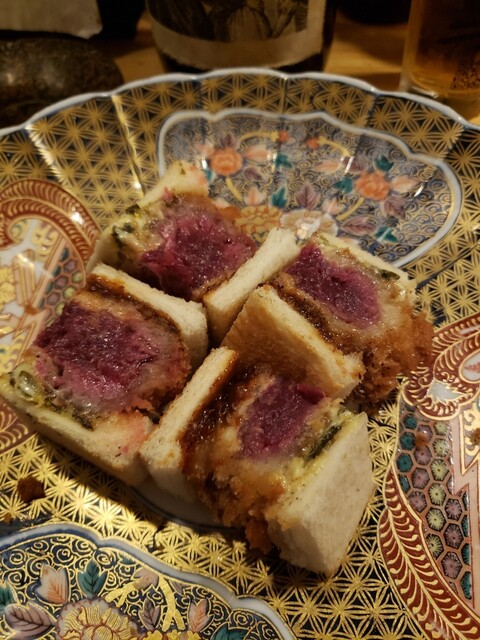
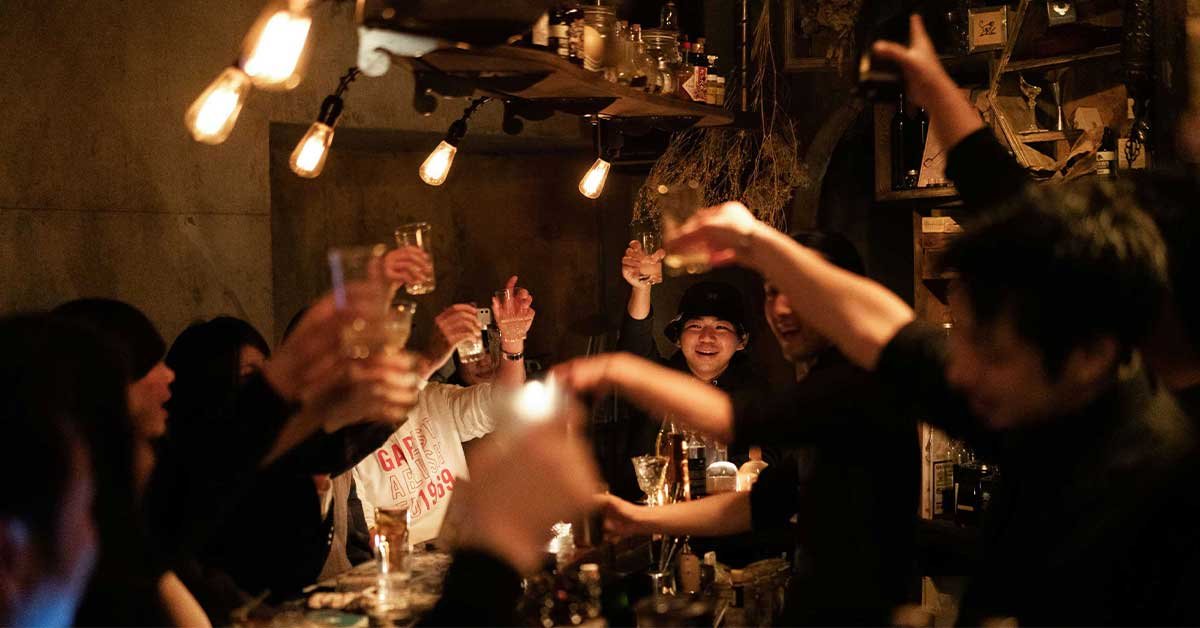
Doyamacho after dark is not a quiet dining quarter. The appeal is compression: narrow approaches, quick decisions, drinkers moving between counters, and food that has to justify its place beside the first glass. In that setting, Osaka’s tachinomi tradition works because it trims away ceremony without trimming appetite. The standing-bar format favours immediacy, and a meat-focused version of it changes the usual calculation around beef in Japan: less private-room yakiniku ritual, more quick-turn drinking food with enough substance to carry a full evening.
Niku Ryori PINE belongs to that newer value tier. The category is tachinomi, not steakhouse, and that distinction matters. Osaka has plenty of meat rooms where the spend climbs quickly, including comparison points such as Yakiniku Horumon Uchida at JPY 5,000–5,999 and Goichi at JPY 8,000–9,999. Against that field, a standing-bar meat counter with a JPY 3,000–3,999 average spend reads as a different proposition: not a compromise version of luxury beef, but a separate Osaka format built around pace, informality and cost control.
Meat-led tachinomi, not a miniature steakhouse
The defining idea is clear enough: a stand-up bar dedicated to meat dishes, with wagyu, offal, heart sashimi, yukke and katsu sandwiches listed among the house highlights. That range puts the venue closer to Osaka’s drinking-food culture than to a set-course beef restaurant. Tachinomi succeeds when the menu can move between a drink stop and a meal, and this style of meat cooking gives it that flexibility. The chef’s background in yakiniku and kaiseki is useful context rather than a biography; it explains why the format can borrow from grilled beef culture and composed Japanese cooking without turning formal.
The Tabelog 100 Tachinomi 2025 selection is the clearest external marker. Tabelog’s Hyakumeiten lists are category-specific, so the recognition places the venue inside a standing-bar conversation rather than a general restaurant sweep. That distinction is useful for visitors. Osaka’s dining reputation often gets flattened into okonomiyaki, takoyaki and late-night snacks, but the city’s counter culture is broader: meat bars, izakaya, kushikatsu rooms and casual drinking restaurants compete on speed, price and repeatability. A tachinomi award tells the reader to judge the place by those rules, not by tasting-menu metrics.
Value argument is also comparative. Dontaku, another Osaka comparison point, sits lower at JPY 2,000–2,999, while more beef-specific rooms can run higher. Niku Ryori PINE occupies the middle, where the guest is paying for meat focus and drink-range breadth without entering the higher-spend yakiniku bracket. For travellers building a day around Umeda rather than a single destination dinner, that middle ground is practical: enough structure for dinner, loose enough to precede or follow another stop.
Umeda's advantage is choice, and this room suits the second stop
Umeda’s strength is density. It is the part of Osaka where a meal can be assembled in stages: bakery in the afternoon, counter food before drinks, another bar later. That pattern is where tachinomi makes sense. A standing bar does not ask for the same commitment as a reservation-only dining room, and a meat menu gives the experience more weight than a snack counter. The setting is also solo-friendly and family-friendly, unusual but not contradictory in Osaka, where casual counters and small tables often handle a broader audience than their footprint suggests.
For readers mapping a fuller Osaka itinerary, the comparison is not only with other beef venues. The city’s range runs from pork buns at 551 Horai (551蓬莱) to Italian rooms such as a canto (Italian) and 99 Pizza Napoletana Gourmet, plus daytime addresses like 52CHO-ME BAKERY and .cafe. The useful move is to treat this as part of a sequence rather than a formal climax. Start with our full Osaka restaurants guide, then layer in our full Osaka bars guide if the night is being built around Umeda drinking rather than a single table.
That broader editorial frame also helps prevent a category mistake. A 25-seat standing-bar format with counter seating should be read through throughput, proximity and appetite. It is not designed to behave like a hushed beef salon, and that is the point. In Osaka, the pleasure of this tier is that serious food can still arrive in a room where the evening has not been overplanned. The lack of private-room formality is not a defect; it is part of the economic model that keeps the spend in check.
How to place it in an Osaka trip
The strongest use case is a meat-and-drinks stop in Kita, especially for visitors who want a recognisable Osaka night without committing to a long tasting format. The opening in 2023 also matters: this is not an old-school relic being carried by nostalgia, but part of the current generation of casual specialist rooms that have made the standing-bar category more competitive. The Tabelog 3.62 score and 2025 tachinomi selection give it enough signal to separate it from random walk-in drinking spots, while the format keeps expectations grounded.
Travellers staying in the city can use nearby planning layers rather than overbuild the meal itself: our full Osaka hotels guide for base selection, our full Osaka experiences guide for daytime structure, and our full Osaka wineries guide for a wider drinks map. For Japan-wide contrast, meat and counter formats read differently beside -Grilled beef Sukiyaki- KAMAKURA TANUKIAN 鎌倉 たぬき庵 in Kamakura. 鮪と炭火焼き うお炭 秋葉原店 in Tokyo.know in Kumamoto, (Shoku) Vietnam in Kawasaki, [Curry Senmon Ten] Maruyama Kyoju. in Sapporo and [ki:] in Kyoto. Even overseas Japanese casual formats, from Jōdo Saké Bar in Los Angeles to Onigiri Time in Pasadena, show how much the Osaka original depends on density, drinking rhythm and price discipline.
The editorial verdict is simple: choose Niku Ryori PINE for Osaka’s standing-bar economy at its meatier end. The draw is not luxury signalling. It is the collision of wagyu-oriented cooking, casual drinking culture and a spend level that leaves room for the rest of the night.
Comparable Spots
Comparable venues at the same tier for side-by-side context.
| Venue | Cuisine | Price | Notes |
|---|---|---|---|
| Niku Ryori PINEThis venue — the venue you are viewing | Meat-focused Japanese standing bar | $$ | Not listed |
| Akira Curry | Japanese curry & spice izakaya | $$ | Nishi |
| KURODARUMA | Creative Japanese standing bar (izakaya-style) | $$ | Chūō |
| Udon Dining KONA×MIZU×SHIO | Modern udon dining with udon-based bread | $$ | Chūō |
| Konamon Dokoro Mitsukuni Ura nanba ten | Premium Okonomiyaki & Creative Monjayaki | $$ | Chūō |
| Atari Ya | Traditional Japanese Soba | $$ | Yodogawa |
Recognition history
Dated appearances from independent guides and award organizations, with the underlying list record or original source where available.
Tabelog 100 #63 · No. 63
Tabelog · Tabelog 100 - Tachinomi - 2025
Continue exploring
More in Osaka
Restaurants in Osaka
Browse all →




Bars in Osaka
Browse all →



Hotels in Osaka
Browse all →



Wineries in Osaka
Browse all →
At a Glance
- Lively
- Cozy
- Trendy
- Intimate
- After Work
- Casual Hangout
- Late Night
- Solo
- Date Night
- Standalone
Current opening hours
- Monday
- 5 PM–1 AM
- Tuesday
- 5 PM–1 AM
- Wednesday
- 5 PM–1 AM
- Thursday
- 5 PM–1 AM
- Friday
- 5 PM–1 AM
- Saturday
- 5 PM–1 AM
- Sunday
- 5 PM–1 AM
Hours can change for holidays and private events. Last verified .
A compact standing bar with about 25 seats in central Umeda, creating a lively yet cozy atmosphere focused on casual drinking and meat-centric small plates into the late night.