
Tabelog 100 #65
Our verdict
In Nanto, a small city in Toyama Prefecture where mountain terrain and agricultural tradition shape what ends up on the plate, 薪の音 occupies an address in the Noguchi district that already signals a certain remove from urban dining circuits. The name translates roughly to 'the sound of firewood,' and that framing, combustion, locality, seasonal material, positions it within a broader current of rural Japanese dining that prizes proximity to source over metropolitan polish.

Pearl is the En Primeur Club membership app, where members save venues, book tables and use the concierge.
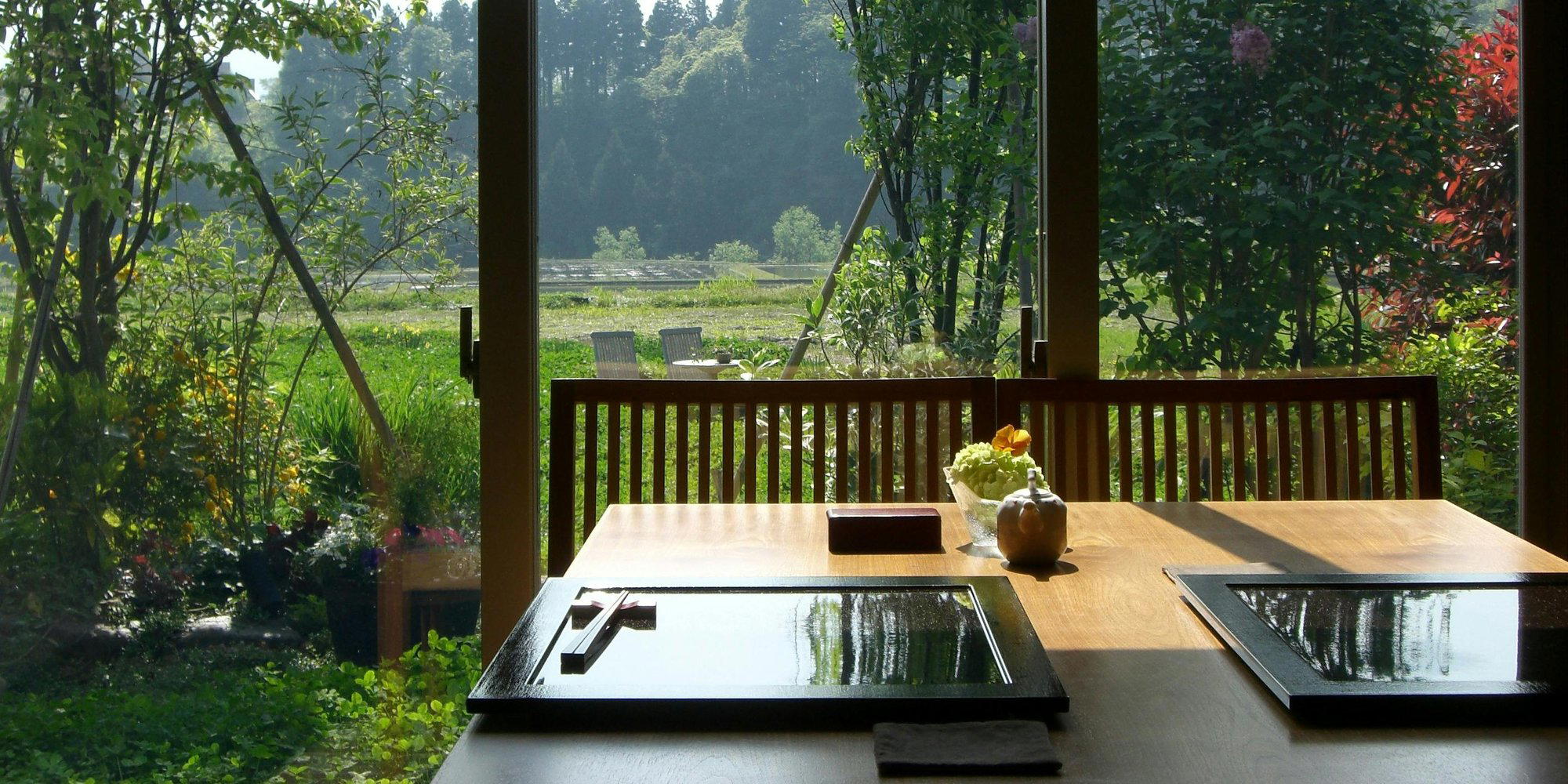
Where Toyama's Agricultural Depth Meets an Open Flame
Toyama Prefecture has a stronger claim to ingredient provenance than most of Japan's rural regions. The prefecture sits between the Japan Alps and the Sea of Japan, a geography that produces exceptional seafood from deep, cold waters, buri (yellowtail), white shrimp, firefly squid, alongside mountain vegetables, game, and rice grown in some of the country's cleanest river water systems. Nanto, positioned inland toward the foothills, draws more heavily on the mountain side of that equation: foraged materials, river fish, and produce shaped by altitude and temperature variation. Restaurants in this part of Toyama are not competing on metropolitan density or imported prestige; they are competing on how faithfully they can render a specific geography onto a plate.
That context matters when approaching 薪の音, located at 140 Noguchi in Nanto. The name, which carries the meaning of firewood's sound, signals an open-fire or wood-burning approach before a single dish arrives. Wood fire as a cooking method is experiencing a serious reappraisal across Japan's dining scene, not as theatre but as a technique with genuine flavour consequences: different combustion profiles, variable heat zones, and a relationship between cook and material that gas and induction simply do not replicate. In rural settings, where the firewood itself may come from known local sources, that relationship extends into ingredient sourcing territory. The fuel becomes part of the provenance story.
The Sourcing Logic of Rural Japanese Dining
Across Japan's secondary cities, a category of restaurant has emerged that is harder to classify than kaiseki and more technically specific than izakaya. These places share certain characteristics: menus built around weekly or daily market availability rather than fixed signatures, close relationships with farmers and fishermen that predate any trend toward farm-to-table rhetoric, and a physical setting that reflects the surrounding region rather than aspirationally gesturing toward Tokyo or Kyoto. L'évo in Toyama is one reference point for this category in the prefecture, a restaurant that has drawn national attention precisely because it treats Toyama's ingredient depth as the entire argument, not as a backdrop.
薪の音 operates in comparable territory, though Nanto's inland position gives it a different ingredient palette. The mountain-facing sourcing logic here aligns it with a small set of Japanese restaurants that have built their identity around terrestrial rather than coastal materials: wild plants, fungi, river fish, preserved and fermented preparations that extend seasonal availability into colder months. This is not a minor stylistic distinction. A restaurant anchored to coastal seafood sources operates on a different production calendar than one anchored to mountain forage, and the cooking techniques, preparation times, and menu rhythms differ accordingly. Wood fire suits the latter context particularly well, slow combustion works with the density of root vegetables and game in ways that fast high-heat cooking does not.
For comparative scale, the kind of ingredient-driven, regionally rooted dining that 薪の音 appears to represent finds its most recognised expressions in restaurants like Gion Sasaki in Kyoto, where seasonal availability from specific suppliers dictates the pace of service, or akordu in Nara, which maps local agricultural output onto a European-inflected format. In each case, the sourcing relationship is the editorial spine of the menu, not a marketing note appended to it. Our full Nanto restaurants guide places 薪の音 within the broader dining picture of the city.
The Physical Setting and What It Implies
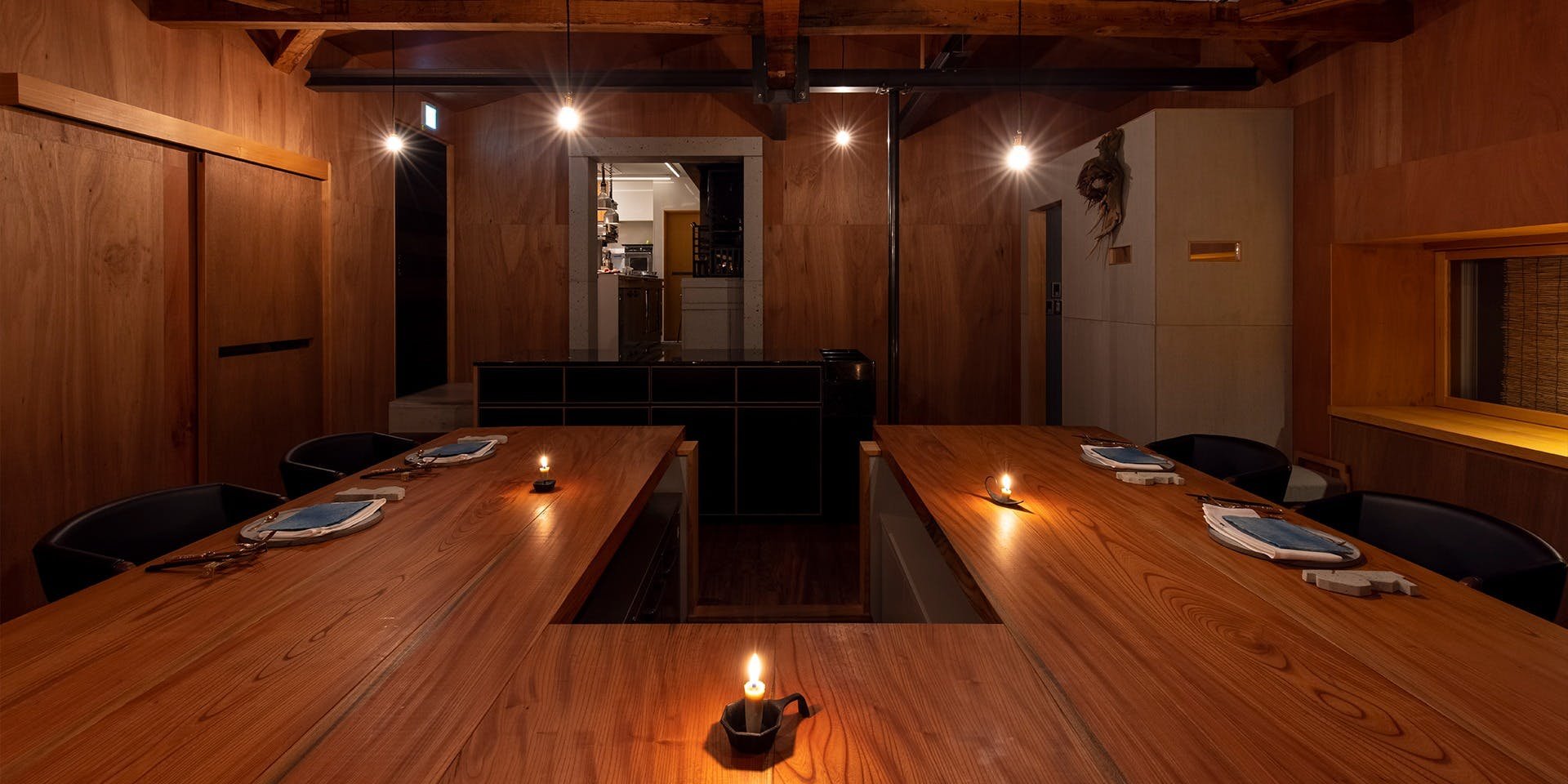
The Noguchi district address, some distance from Nanto's modest city centre, is consistent with a dining format that does not rely on foot traffic or casual walk-ins. In Japan's rural dining scene, physical remove functions as a kind of editorial statement: guests come with intent, having sought the place out, which changes the dynamic of the meal. The room itself, given the name and the implied cooking method, is likely to prioritise warmth and material honesty over the spare refinement of high-end urban kaiseki. Rough timber, stone, or earthen surfaces are common in this register of Japanese rural restaurant, not as a designed aesthetic imported from a mood board, but as a reflection of local building tradition.
Wood-fire cooking requires spatial accommodation that most urban restaurants cannot provide: ventilation, hearth infrastructure, fuel storage. A rural setting makes these practical demands easier to meet, and also means the firewood itself can plausibly be sourced locally, closing the provenance loop in a way that urban fire-cooking formats rarely achieve. Restaurants like Goh in Fukuoka have demonstrated how a distinct physical format, tied to a specific culinary approach, creates a legible identity that persists regardless of menu rotation. The format is the signal; the seasonal content fills it.
Nanto in the Wider Japanese Dining Conversation
Japan's serious dining conversation has broadened considerably over the past decade. The concentration of critical attention on Tokyo, Kyoto, and Osaka, all three cities well represented by restaurants like HAJIME in Osaka, Harutaka in Tokyo, and the full spectrum of Kyoto kaiseki, has gradually given way to interest in second-tier cities and rural prefectures where ingredient quality is high and real estate costs have not forced the compromises common in metropolitan dining. Toyama has benefited from this shift more than most prefectures, partly because its ingredient story is genuinely compelling and partly because access from Tokyo via the Hokuriku Shinkansen (which reached Toyama in 2015 and extended toward Fukui in 2024) has made the region practicably reachable for a day or overnight visit.
Within that regional awakening, Nanto represents the quieter, more rural end of Toyama's dining offer. It does not have the coastal seafood infrastructure of Toyama City's harbour-adjacent restaurants, nor the density of options found along the Shinkansen corridor. What it has is agricultural depth, access to mountain terrain, and the conditions under which a restaurant like 薪の音 can operate with genuine locality rather than simulated regionalism. Comparable dynamics play out at 一本杉 川島製 in Nanao on the Noto Peninsula and at 湖嶺荘庵 in Takashima near Lake Biwa, rural Japanese addresses where proximity to specific natural resources is the foundational premise.
Planning Your Visit
Nanto is most practically reached from Toyama City, which sits on the Hokuriku Shinkansen line. From Toyama, road access into Nanto takes roughly 30 to 40 minutes depending on the specific destination within the city's spread-out geography. The Noguchi address at 140 Noguchi sits in a district that does not have dense public transport links, making a rental car or taxi the most reliable approach. Given the format implied by the name and the rural address, a small-capacity, fire-cooking restaurant in an agricultural district, reservations are almost certainly required, and the booking window for this type of Japanese rural restaurant can run several weeks to months ahead, particularly on weekends. Direct contact via phone or through a local concierge service is the standard approach when no online booking platform is confirmed. Given the absence of publicly confirmed pricing data, budgeting in line with comparable Toyama Prefecture dining experiences in the mid-to-upper range is a reasonable working assumption.
Frequently asked questions
Is 薪の音 child-friendly?
Rural Nanto's dining scene is not structured around casual family dining, and a wood-fire focused restaurant at this address is unlikely to be an exception. The format, intimate, produce-driven, fire-centred, suits adults with a specific interest in the cooking approach. Families with young children should assess fit carefully before booking.
What kind of setting is 薪の音?
薪の音 sits at 140 Noguchi in Nanto, an inland district of Toyama Prefecture framed by mountain terrain well removed from the city centre. The address and name, roughly translating to 'sound of firewood', point to a format built around a wood-fire hearth rather than a conventional kitchen. This is a destination-specific room: guests come deliberately, not incidentally.
How does 薪の音 fit into Toyama's broader food culture?
Toyama City's dining reputation rests largely on coastal produce, buri yellowtail, white shrimp, and firefly squid among the most cited, but Nanto sits inland, in the agricultural and mountain zone of the prefecture. 薪の音's Noguchi address positions it within a different tradition: upland ingredients, open fire, and a pace of dining that coastal urban venues rarely accommodate. It represents the interior counterpart to Toyama's more widely publicised seafood offer.
What dish is 薪の音 famous for?
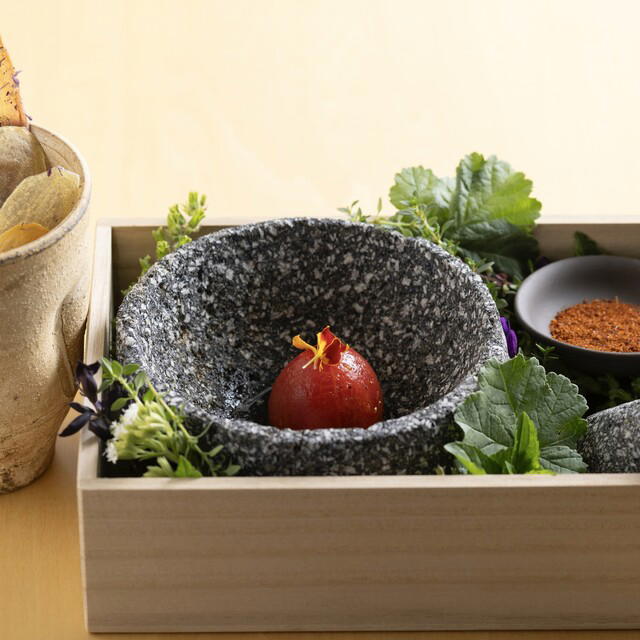
The cooking logic implied by both the name and the Toyama setting points toward seasonal, locally sourced ingredients, the prefecture is known for mountain vegetables, river fish, and alpine-influenced produce, prepared over direct wood fire. Menus at restaurants of this type are typically dictated by season and supply.
Where is 薪の音 in Nanto?
薪の音 is located at 140 Noguchi, Nanto, Toyama 939-1844, Japan, Nanto.
Should I book 薪の音 in advance?
Advance booking is strongly advisable. Small-format rural restaurants in Toyama Prefecture operating around open-flame techniques typically run with tight seat counts and no walk-in capacity. The Noguchi district location confirms this is not a high-footfall operation. Contact should be made well ahead, particularly for weekend or seasonal visits.
Comparable Venues
Comparable venues nearby, for context on price, style, and recognition.
| Venue | Cuisine | Price | Awards | Notes |
|---|---|---|---|---|
| 薪の音This venue (the venue you are viewing) | Satoyama French-Japanese Fusion | $50–100 | Tabelog 100 #65 | Not listed |
| Levo | Avant-Garde French-Japanese Fusion | $200–300 | World's 50 Best #97 · La Liste Top Restaurants | 利賀村 |
| L'évo | Avant-Garde French-Japanese Fusion | $200–300 | World's 50 Best #97 · La Liste Top Restaurants | Toga Village |
| à nu Shohei Shimano | French Fine Dining | Not listed | Not listed | Hiroo |
| Asperges | Seasonal French with Biei Vegetables | Not listed | Not listed | Biei |
| Salamanger de Casino | French bistro | Not listed | Tabelog 100 #59 | Nakamura |
Recognition history
Dated appearances from independent guides and award organizations, with the underlying list record or original source where available.
Tabelog 100 #65 · No. 65
Tabelog · Tabelog 100 - French - WEST - 2025
Continue exploring
More in Nanto
Restaurants in Nanto
All restaurants in Nanto →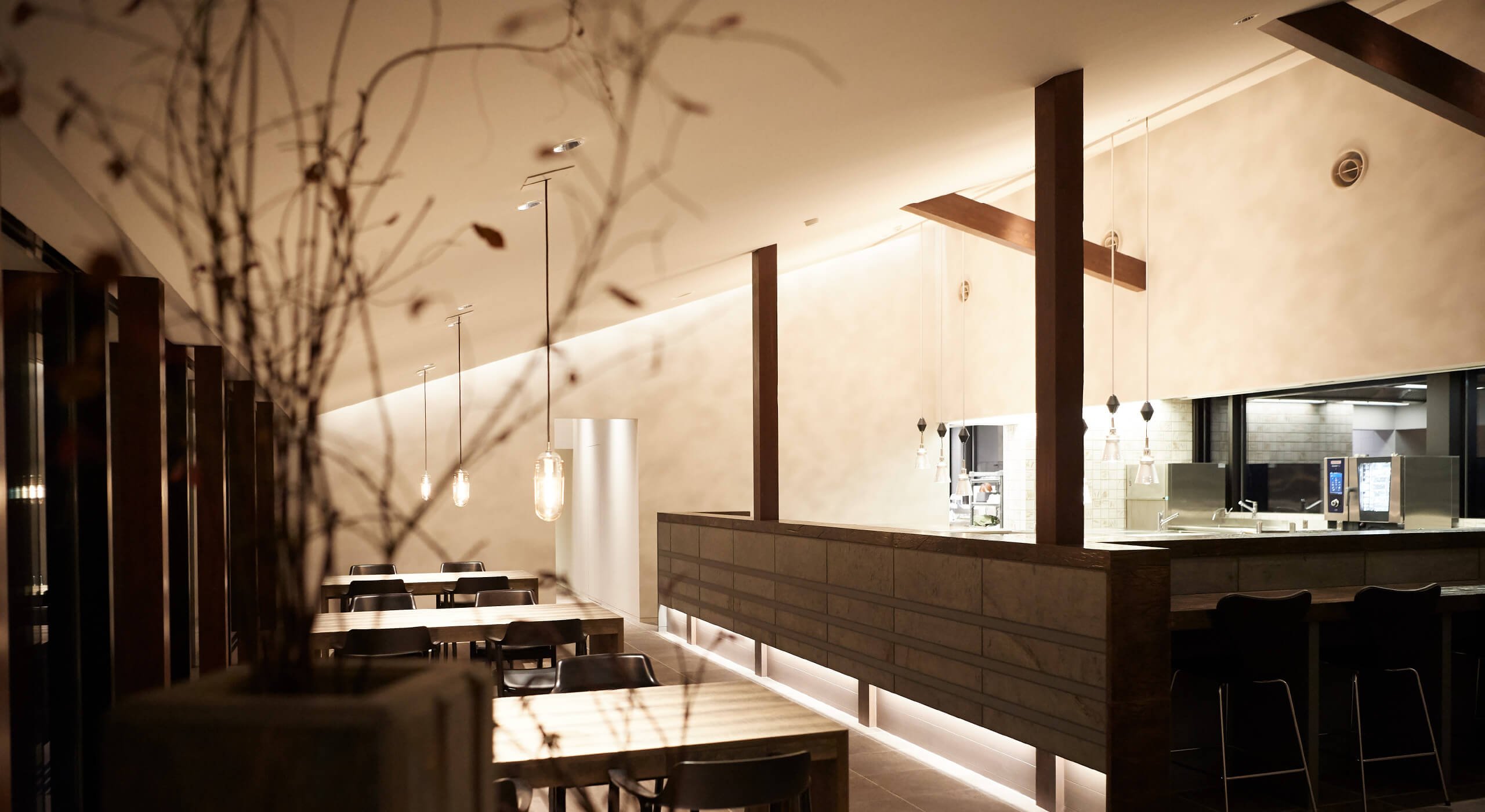
Hotels in Nanto
All hotels in Nanto →
Wineries in Nanto
Browse all →
Details
- Quiet
- Cozy
- Rustic
- Intimate
- Scenic
- Special Occasion
- Date Night
- Open Kitchen
- Sake Program
- Local Sourcing
- Farm To Table
- Mountain
- Garden
- Prix Fixe
Serene and tranquil satoyama atmosphere with cozy private rooms, emphasizing peaceful relaxation and personalized hospitality in a rustic mountain hideaway.