1387
Strasbourg's Address, and What It Carries The Rue des Francs-Bourgeois cuts through the Grande Île, Strasbourg's UNESCO-listed historic centre, where medieval guild houses and 18th-century bourgeois facades sit shoulder to shoulder. Arriving at number 4, the physical weight of the address communicates something before a menu is even consulted. This is not a neighbourhood that tolerates the ordinary. Strasbourg's Grande Île has been a trading crossroads between France and the Germanic world for more than a millennium, and the city's restaurant culture carries that legacy in how it sources, how it seasons, and how it thinks about the relationship between a kitchen and its immediate region. Strasbourg sits in a rare culinary position within France. It is the only major French city where the local food tradition draws with equal confidence from Riesling-producing vineyards on the Alsatian slopes, from Rhine Valley farms, and from the charcuterie and dairy culture that stretches across the border into Baden. The city's leading tables, from the long-standing grandeur of Au Crocodile to the more contemporary creative registers of de:ja and 1741, share a sourcing intelligence that is hard to replicate elsewhere in France. The proximity to extraordinary raw materials, from Munster fermier to white asparagus from the Rhine plain, gives Strasbourg kitchens a competitive advantage rooted in geography rather than trend. The Ingredient Logic Behind Alsatian Fine Dining To understand what any serious Strasbourg restaurant is doing, it helps to understand the sourcing map. The Alsatian plain between the Vosges foothills and the Rhine produces some of France's most distinctive agricultural ingredients: foie gras from small farms in the Bas-Rhin, freshwater fish from the Rhine tributaries, lard fumé from artisan charcutiers in villages that have been curing pork the same way since the 17th century. These are not luxury add-ons to an Alsatian kitchen. They are the structural vocabulary. What separates this tradition from other French regional cuisines is the directness of the sourcing chain. Alsace's relatively compact geography means farm-to-table is less a branding exercise and more a logistical reality. The distance from a Vosges trout farm to a Strasbourg kitchen is measured in tens of kilometres, not hundreds. That compression shapes what goes on the plate and how it's treated: minimally transformed, seasonally precise, respectful of texture and provenance in a way that aligns with the best of what France's ingredient-led restaurants are doing nationally. This is the same sourcing logic at work in places like Arpège in Paris, where the distance from soil to plate is treated as a measure of quality, or at Bras in Laguiole, where the surrounding plateau is the pantry. In Alsace, the equivalent pantry is unusually rich and unusually close. Where 1387 Sits in Strasbourg's Dining Tier Strasbourg's premium dining scene has stratified in recent years into distinct tiers. At the leading, multi-Michelin houses like Au Crocodile set the benchmark for formal Alsatian cuisine with classical foundations. A second tier of creative and modern-format restaurants, including Les Funambules and Umami, builds on the regional sourcing tradition while pushing format and technique in different directions. Then there are the neighbourhood-anchored restaurants that occupy Grande Île addresses and attract both discerning locals and informed visitors who have done the research before booking. 1387's address on the Rue des Francs-Bourgeois places it squarely in the latter category: a central Strasbourg location that draws on the city's deep culinary culture without necessarily operating in the formal tasting-menu upper bracket. This is the tier where Strasbourg's food culture is most alive to visitors: accessible enough to visit without a special-occasion itinerary, serious enough to reward attention to what's on the plate and where it came from. Practically, 4 Rue des Francs-Bourgeois is a short walk from the Cathédrale Notre-Dame and the cluster of historic squares that mark the heart of the Grande Île. The neighbourhood is navigable on foot from most central Strasbourg hotels, and the address is easily reached via tram from the main railway station, which connects to Paris by TGV in roughly 1 hour 50 minutes. For visitors structuring a longer Alsatian itinerary, the restaurant sits within direct driving distance of the region's wine route and of nearby benchmarks such as Auberge de l'Ill in Illhaeusern, roughly 40 kilometres south. The Broader Context: Why Strasbourg Matters for French Dining Strasbourg is not Paris, and that is precisely why it matters on the French dining map. The city's food culture operates at a different register: more rooted, less trend-driven, more dependent on the integrity of local ingredients than on the ambition of a particular chef's global profile. This makes it comparable, in spirit if not in geography, to the approach at places like Flocons de Sel in Megève or Troisgros in Ouches, where terroir specificity is the editorial point of the menu rather than a supporting note. France has a strong tradition of regional restaurants that derive their authority from place rather than from celebrity. Paul Bocuse's Auberge du Pont de Collonges, Georges Blanc in Vonnas, and Auberge du Vieux Puits in Fontjoncouse are all, in different ways, expressions of that logic. Strasbourg's leading restaurants, and 1387 among them, belong to the same tradition: the argument is always, ultimately, about the place itself. Internationally, the same sourcing-first philosophy drives the most compelling restaurants elsewhere, from Mirazur in Menton to Lazy Bear in San Francisco and Le Bernardin in New York City, where the integrity of the primary ingredient is what the kitchen builds around. For visitors to Strasbourg, the city's food scene rewards a particular kind of attention: a willingness to read sourcing provenance rather than just technique, and to find interest in the Franco-German specificity of Alsatian ingredients rather than treating them as a variant on broader French cuisine. That approach is the right frame for understanding what a restaurant at this address, in this city, is trying to do. For a full map of where 1387 sits within Strasbourg's dining options, see our full Strasbourg restaurants guide. Similarly, La Table du Castellet offers a useful point of comparison for how French regional fine dining operates outside the capital. Planning Your Visit The Rue des Francs-Bourgeois address makes 1387 convenient to fold into a broader Grande Île afternoon or evening. Given Strasbourg's status as a major European city with a dense concentration of serious restaurants, booking ahead is advisable, particularly during the December Christmas market season when the city's visitor numbers peak sharply and tables across all dining tiers fill early. The autumn and spring windows offer the most coherent alignment between seasonal Alsatian produce and manageable visitor volume. Frequently Asked Questions Is 1387 good for families? For Strasbourg, where restaurant culture skews toward adult-oriented dining rooms at the central addresses, 1387's Grande Île location suggests a setting better suited to couples or small groups than to families with young children. How would you describe the vibe at 1387? If you respond to the kind of atmosphere that comes from a historically dense neighbourhood rather than a designed interior, and if you value address weight over venue spectacle, 1387's position on the Rue des Francs-Bourgeois will deliver. Strasbourg's Grande Île dining rooms tend toward the intimate and the considered rather than the theatrical. What's the must-try dish at 1387? Order around those categories and you'll be eating in the right register for the city. Do I need a reservation for 1387? For any central Strasbourg restaurant at a Grande Île address, a reservation is the practical default, particularly in December during the Christmas market period when the city's visitor density is at its highest. Booking ahead by at least a week is the reliable approach. What's the standout thing about 1387? The address itself is the argument. Rue des Francs-Bourgeois sits inside one of France's most historically significant food cities, and a restaurant operating at this location is drawing on a sourcing tradition that stretches back centuries. The Franco-German ingredient culture of Alsace is the distinguishing frame, and few cities in France offer that particular combination of proximity to extraordinary raw materials and depth of culinary heritage. Is 1387 connected to the history of the building it occupies? The name 1387 likely references the historical record of the address or building it occupies on the Grande Île, a part of Strasbourg where medieval and early modern structures carry documented histories running back to the 14th and 15th centuries. In a city where Michelin-recognised restaurants like Au Crocodile have operated for generations and where culinary heritage is treated as a live reference rather than a marketing note, a restaurant naming itself after a date is situating itself within that continuity. Confirmed historical details about the specific building would require direct verification with the venue.
Pearl is the En Primeur Club membership app — saves, bookings, and concierge access live there. Same editors, same standards.
- Address
- 4 Rue des Francs-Bourgeois, 67000 Strasbourg, France
- Phone
- +33 3 88 22 43 73
- Website
- restaurantle1387.com
- Directions
- Get directions
 Saves & bookings on Pearl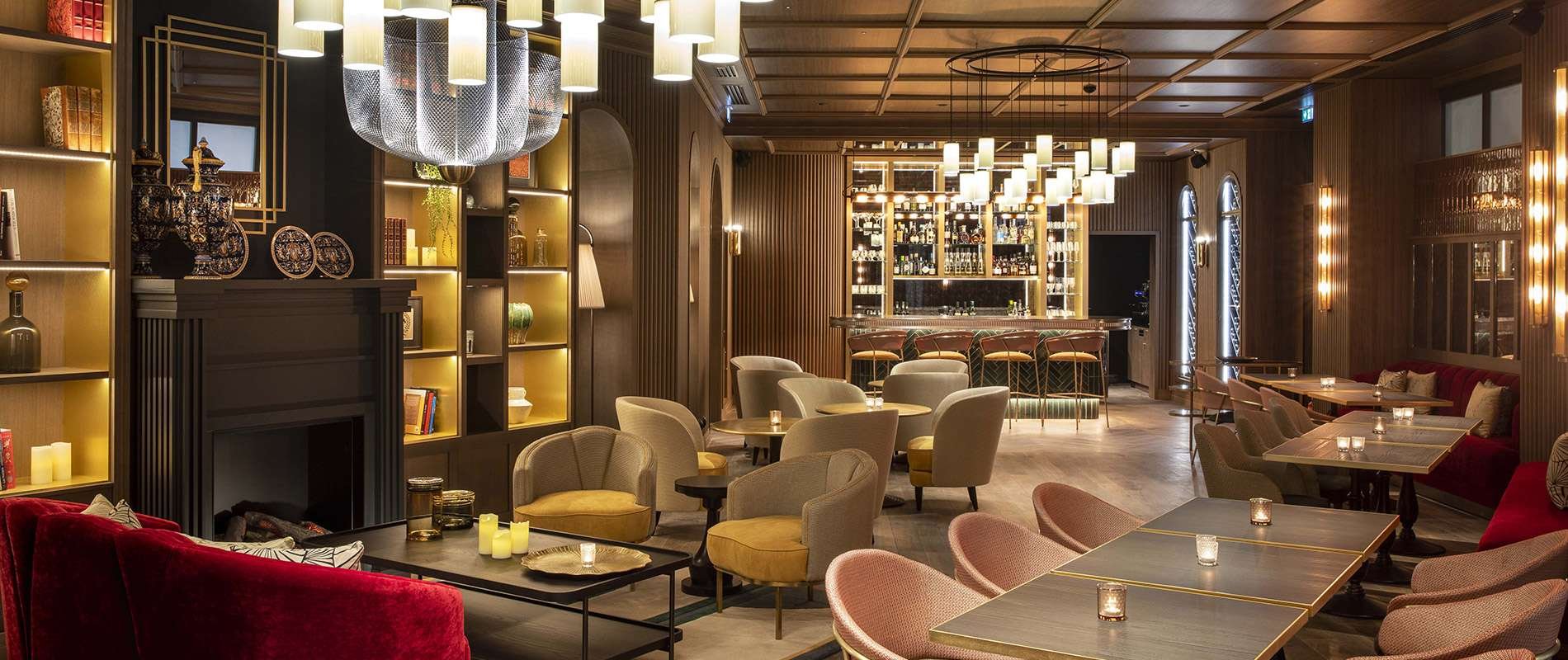
Strasbourg's Address, and What It Carries
The Rue des Francs-Bourgeois cuts through the Grande Île, Strasbourg's UNESCO-listed historic centre, where medieval guild houses and 18th-century bourgeois facades sit shoulder to shoulder. Arriving at number 4, the physical weight of the address communicates something before a menu is even consulted. This is not a neighbourhood that tolerates the ordinary. Strasbourg's Grande Île has been a trading crossroads between France and the Germanic world for more than a millennium, and the city's restaurant culture carries that legacy in how it sources, how it seasons, and how it thinks about the relationship between a kitchen and its immediate region.
Strasbourg sits in a rare culinary position within France. It is the only major French city where the local food tradition draws with equal confidence from Riesling-producing vineyards on the Alsatian slopes, from Rhine Valley farms, and from the charcuterie and dairy culture that stretches across the border into Baden. The city's leading tables, from the long-standing grandeur of Au Crocodile to the more contemporary creative registers of de:ja and 1741, share a sourcing intelligence that is hard to replicate elsewhere in France. The proximity to extraordinary raw materials, from Munster fermier to white asparagus from the Rhine plain, gives Strasbourg kitchens a competitive advantage rooted in geography rather than trend.
The Ingredient Logic Behind Alsatian Fine Dining
To understand what any serious Strasbourg restaurant is doing, it helps to understand the sourcing map. The Alsatian plain between the Vosges foothills and the Rhine produces some of France's most distinctive agricultural ingredients: foie gras from small farms in the Bas-Rhin, freshwater fish from the Rhine tributaries, lard fumé from artisan charcutiers in villages that have been curing pork the same way since the 17th century. These are not luxury add-ons to an Alsatian kitchen. They are the structural vocabulary.
What separates this tradition from other French regional cuisines is the directness of the sourcing chain. Alsace's relatively compact geography means farm-to-table is less a branding exercise and more a logistical reality. The distance from a Vosges trout farm to a Strasbourg kitchen is measured in tens of kilometres, not hundreds. That compression shapes what goes on the plate and how it's treated: minimally transformed, seasonally precise, respectful of texture and provenance in a way that aligns with the best of what France's ingredient-led restaurants are doing nationally.
This is the same sourcing logic at work in places like Arpège in Paris, where the distance from soil to plate is treated as a measure of quality, or at Bras in Laguiole, where the surrounding plateau is the pantry. In Alsace, the equivalent pantry is unusually rich and unusually close.
Where 1387 Sits in Strasbourg's Dining Tier
Strasbourg's premium dining scene has stratified in recent years into distinct tiers. At the leading, multi-Michelin houses like Au Crocodile set the benchmark for formal Alsatian cuisine with classical foundations. A second tier of creative and modern-format restaurants, including Les Funambules and Umami, builds on the regional sourcing tradition while pushing format and technique in different directions. Then there are the neighbourhood-anchored restaurants that occupy Grande Île addresses and attract both discerning locals and informed visitors who have done the research before booking.
1387's address on the Rue des Francs-Bourgeois places it squarely in the latter category: a central Strasbourg location that draws on the city's deep culinary culture without necessarily operating in the formal tasting-menu upper bracket. This is the tier where Strasbourg's food culture is most alive to visitors: accessible enough to visit without a special-occasion itinerary, serious enough to reward attention to what's on the plate and where it came from.
Practically, 4 Rue des Francs-Bourgeois is a short walk from the Cathédrale Notre-Dame and the cluster of historic squares that mark the heart of the Grande Île. The neighbourhood is navigable on foot from most central Strasbourg hotels, and the address is easily reached via tram from the main railway station, which connects to Paris by TGV in roughly 1 hour 50 minutes. For visitors structuring a longer Alsatian itinerary, the restaurant sits within direct driving distance of the region's wine route and of nearby benchmarks such as Auberge de l'Ill in Illhaeusern, roughly 40 kilometres south.
The Broader Context: Why Strasbourg Matters for French Dining
Strasbourg is not Paris, and that is precisely why it matters on the French dining map. The city's food culture operates at a different register: more rooted, less trend-driven, more dependent on the integrity of local ingredients than on the ambition of a particular chef's global profile. This makes it comparable, in spirit if not in geography, to the approach at places like Flocons de Sel in Megève or Troisgros in Ouches, where terroir specificity is the editorial point of the menu rather than a supporting note.
France has a strong tradition of regional restaurants that derive their authority from place rather than from celebrity. Paul Bocuse's Auberge du Pont de Collonges, Georges Blanc in Vonnas, and Auberge du Vieux Puits in Fontjoncouse are all, in different ways, expressions of that logic. Strasbourg's leading restaurants, and 1387 among them, belong to the same tradition: the argument is always, ultimately, about the place itself. Internationally, the same sourcing-first philosophy drives the most compelling restaurants elsewhere, from Mirazur in Menton to Lazy Bear in San Francisco and Le Bernardin in New York City, where the integrity of the primary ingredient is what the kitchen builds around.
For visitors to Strasbourg, the city's food scene rewards a particular kind of attention: a willingness to read sourcing provenance rather than just technique, and to find interest in the Franco-German specificity of Alsatian ingredients rather than treating them as a variant on broader French cuisine. That approach is the right frame for understanding what a restaurant at this address, in this city, is trying to do. For a full map of where 1387 sits within Strasbourg's dining options, see our full Strasbourg restaurants guide. Similarly, La Table du Castellet offers a useful point of comparison for how French regional fine dining operates outside the capital.
Planning Your Visit
The Rue des Francs-Bourgeois address makes 1387 convenient to fold into a broader Grande Île afternoon or evening. Given Strasbourg's status as a major European city with a dense concentration of serious restaurants, booking ahead is advisable, particularly during the December Christmas market season when the city's visitor numbers peak sharply and tables across all dining tiers fill early. The autumn and spring windows offer the most coherent alignment between seasonal Alsatian produce and manageable visitor volume.
How 1387 Strasbourg compares with similar nearby venues.
| Venue | Cuisine | Price |
|---|---|---|
| Au Crocodile | French - Alsatian, Modern Cuisine | €€€€ |
| Ondine | Seafood, Modern Cuisine | €€€ |
Continue exploring
More in Strasbourg
Restaurants in Strasbourg
Browse all →

Bars in Strasbourg
Browse all →


Hotels in Strasbourg
Browse all →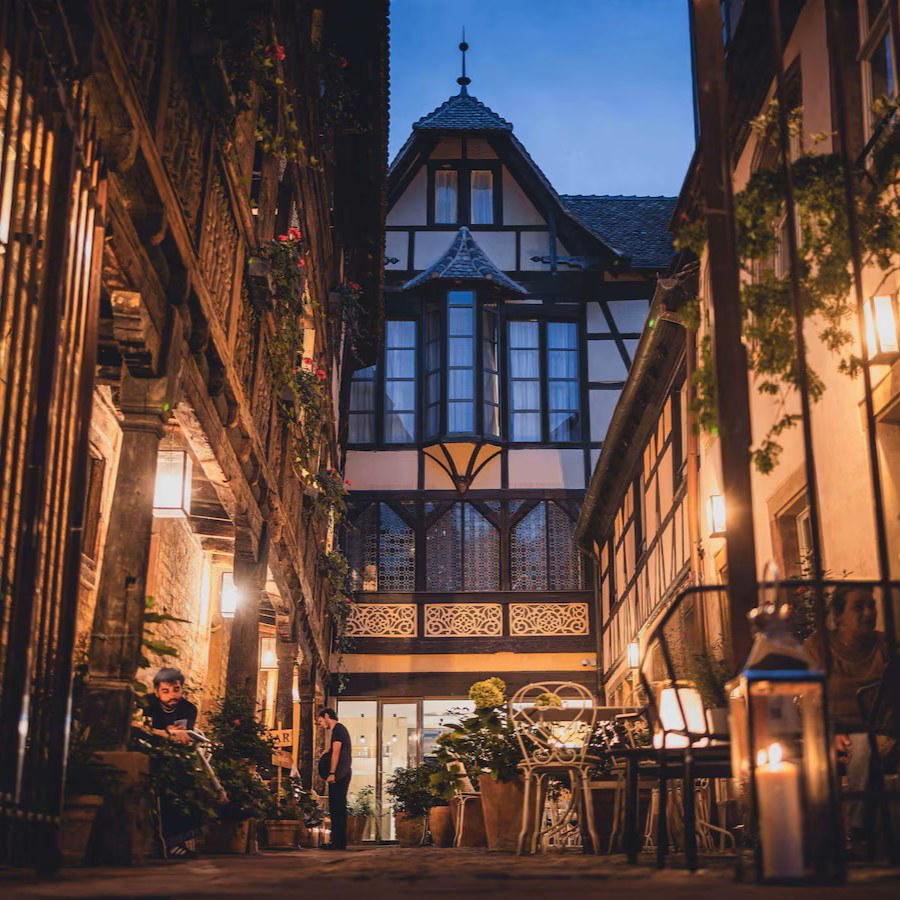
At a Glance
- Cozy
- Elegant
- Sophisticated
- Date Night
- Business Dinner
- Brunch
- Hotel Restaurant
- Craft Cocktails
- Extensive Wine List
- Local Sourcing
Current opening hours
- Monday
- 12–11:30 PM
- Tuesday
- 12–11:30 PM
- Wednesday
- 12–11:30 PM
- Thursday
- 12–11:30 PM
- Friday
- 12 PM–12:30 AM
- Saturday
- 12 PM–12:30 AM
- Sunday
- 3–11:30 PM
Hours can change for holidays and private events. Last verified .
Cozy, elegant, and refined atmosphere with warm lighting, well-suited for intimate or business dining.
Know Before You Go
- Getting there
- 4 Rue des Francs-Bourgeois, 67000 Strasbourg, France