

1 Michelin Key · Mr & Mrs Smith Seal of Approval
A nine-room Padronale residence in the Val di Chiana, Villa Fontelunga earned a Michelin Key in 2024 and occupies a distinct position among Tuscan small hotels: contemporary in spirit, with design by Philippe Starck and Arne Jacobsen alongside traditional antique furniture, open seasonally from March through November, and oriented toward the quiet rhythms of the countryside around Arezzo rather than the theatre of mainstream Tuscan luxury travel.

Pearl is the En Primeur Club membership app, where members save venues, book tables and use the concierge.
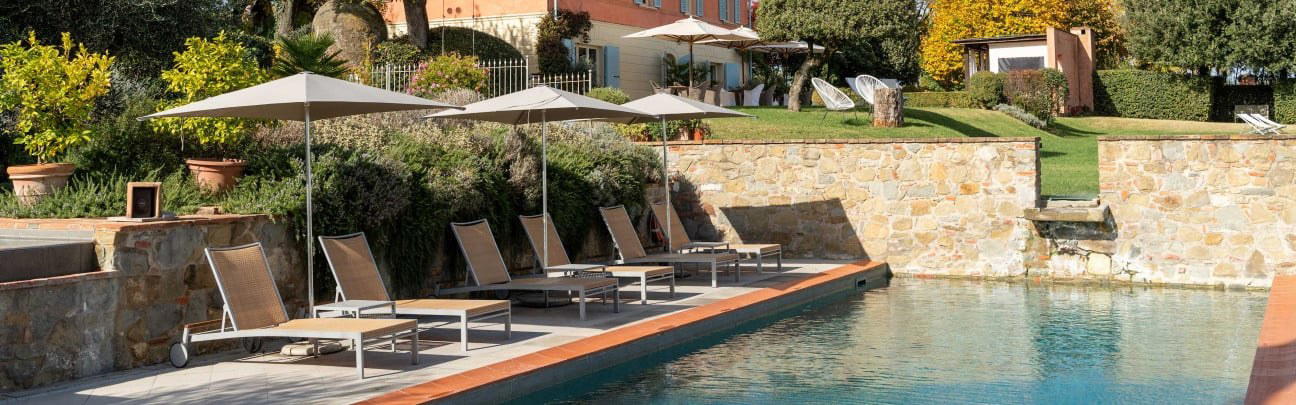
A Different Proposition in the Val di Chiana
The dominant image of the Tuscan villa hotel is a well-established formula: frescoed ceilings, heavy antiques, stone corridors, and an atmosphere that hovers somewhere between a heritage museum and a family estate. That formula has served Italian hospitality well for decades, and it remains in perennial demand. But it is a formula, and its dominance has left a gap for something more considered. Villa Fontelunga, a nine-room Padronale residence in the hills between Arezzo and Cortona, occupies that gap deliberately.
The property received a Michelin Key in 2024, a recognition scheme that evaluates the overall hospitality experience rather than the plate, and which tends to distinguish properties that offer something coherent and intentional rather than simply prestigious. For context, comparable Michelin Key holdings in Italy include properties like Passalacqua in Moltrasio and Castel Fragsburg in Merano, both of which have carved identities around restraint and setting rather than scale.
Design That Takes a Position
Interior approach at Villa Fontelunga is its clearest editorial statement. Traditional antique furniture sits alongside pieces by Philippe Starck and Arne Jacobsen, a pairing that could easily tip into awkward eclecticism but which, in a house of nine rooms, tends toward something more like a curated private residence than a hotel attempting to be all things. The redesign was thorough enough to read as a commitment rather than a renovation, stripping the property of the wax-museum quality that characterises so many Italian villa conversions.
In the broader context of Italian small luxury hotels, this positions Villa Fontelunga closer to design-led properties like Corte della Maestà in Civita di Bagnoregio than to the frescoes-and-antiques establishments that defined the category. The nine-room scale matters here: at this size, the design choices feel personal rather than branded, and the house operates more like a guest house than a hotel in the conventional sense.
The View and What It Tells You
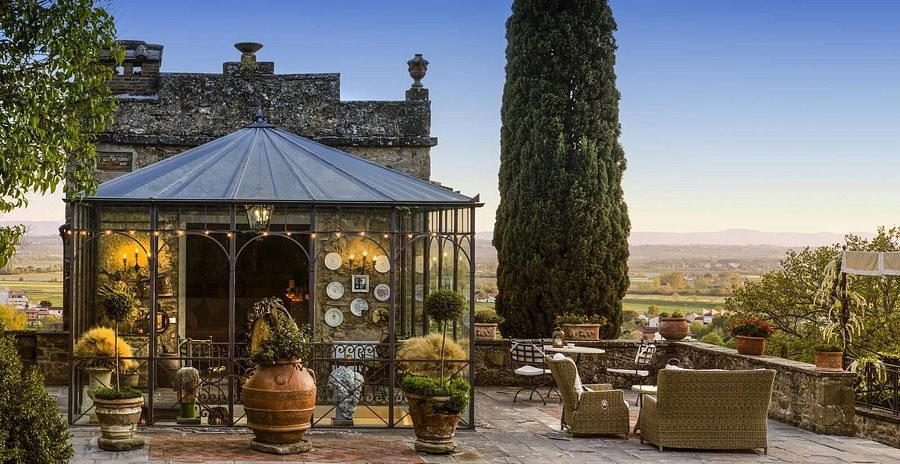
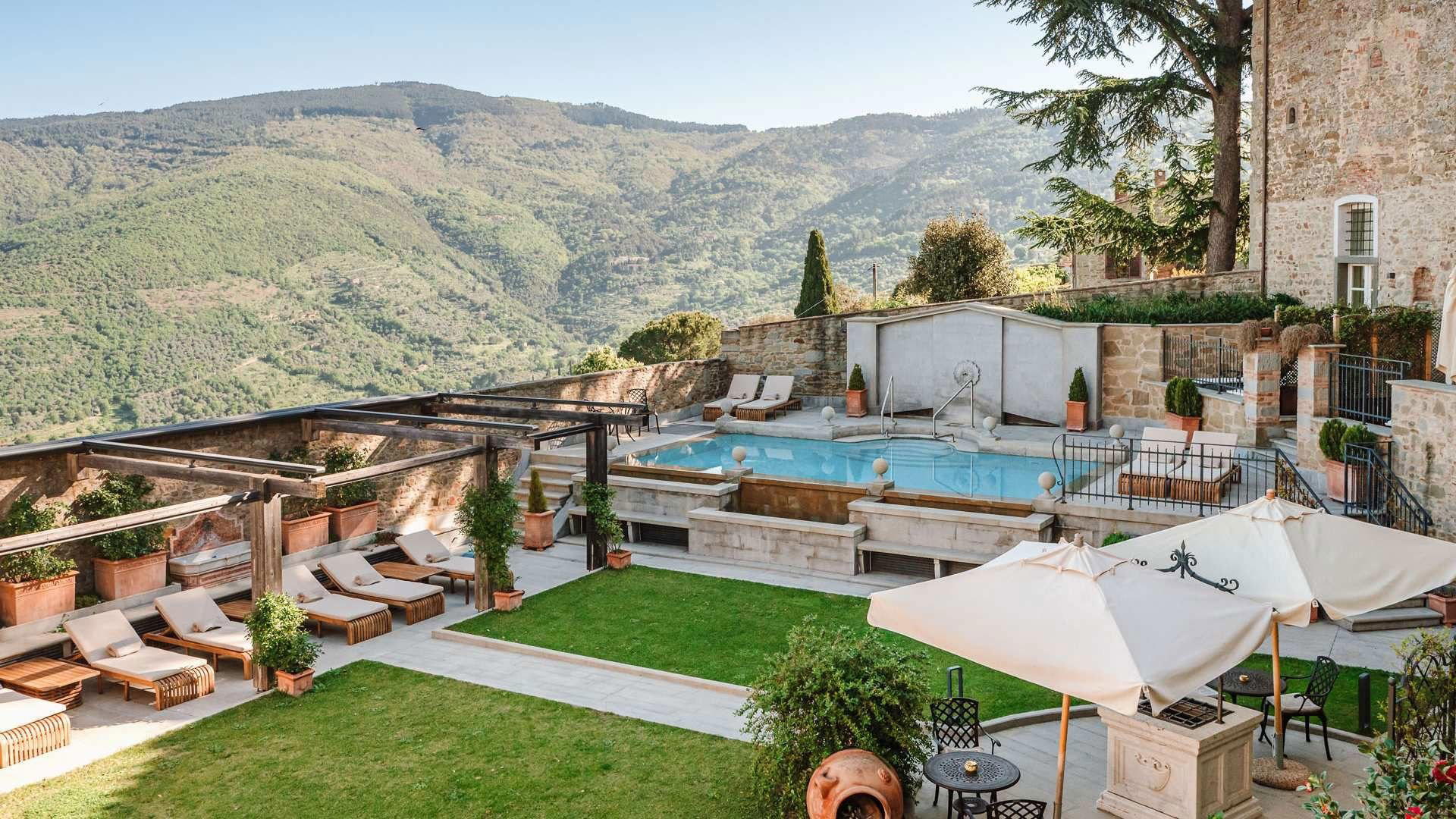
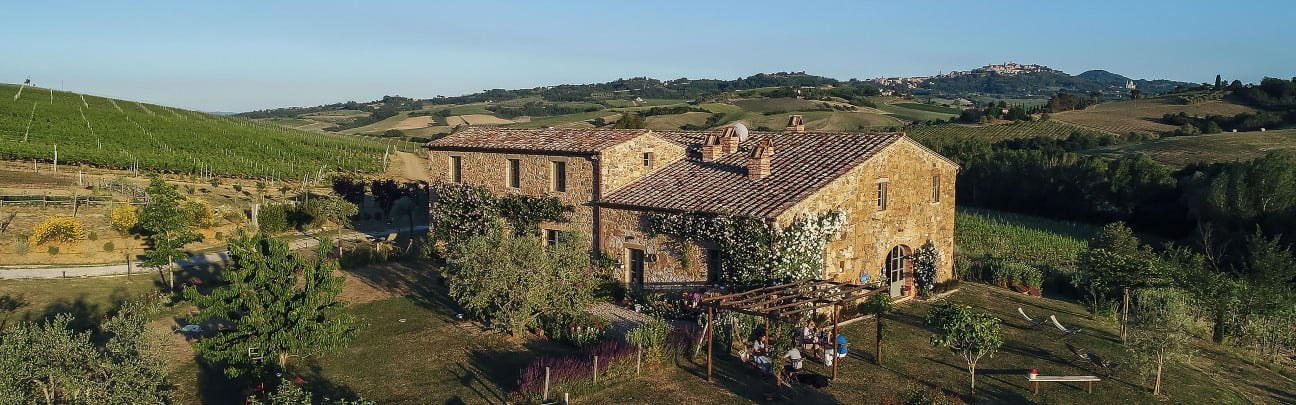
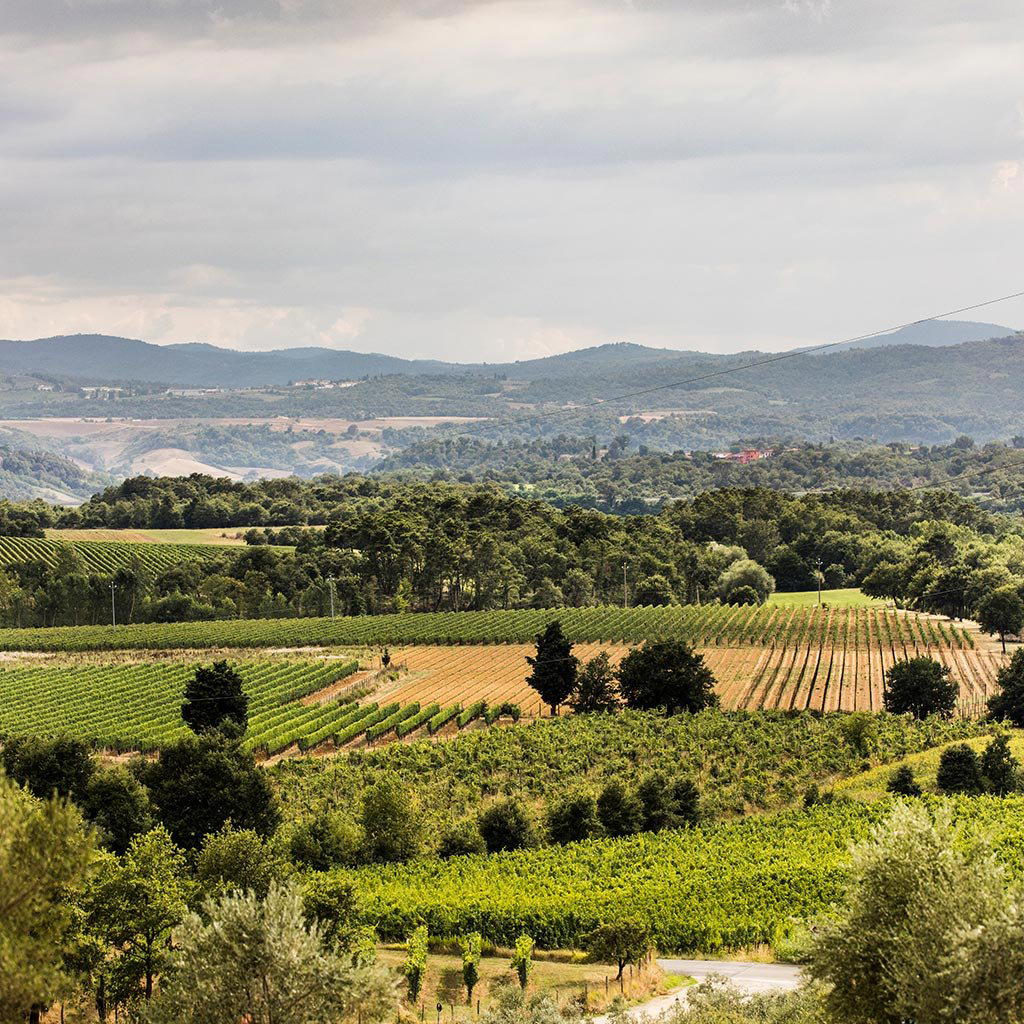
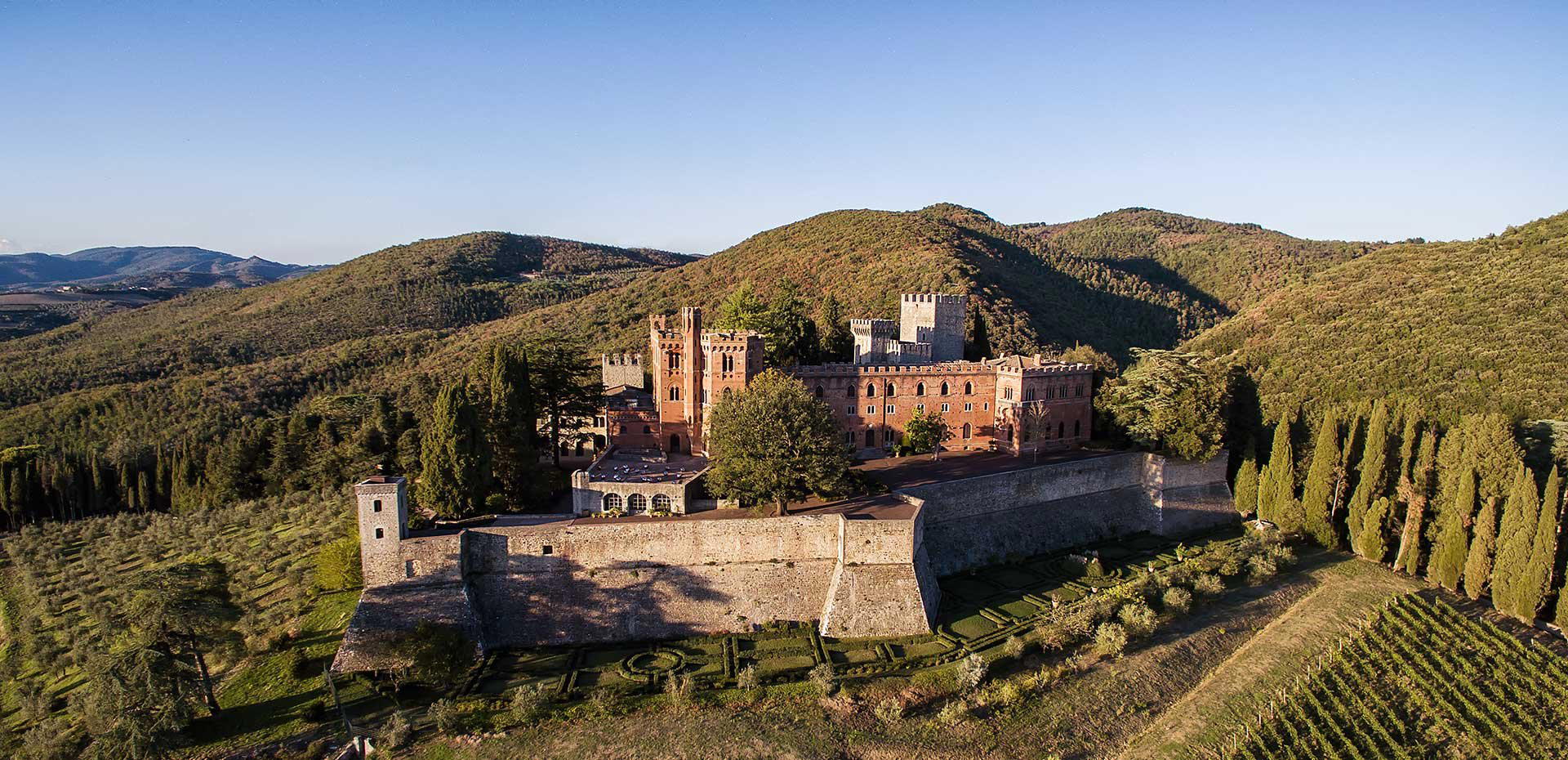
From the terrace, the Val di Chiana unfolds toward Cortona, framed by olive groves and cypress. It is not the kind of view that competes for attention. The Amalfi properties, the lakeside resorts, the Positano terraces above the sea, places like Il San Pietro di Positano or Borgo Santandrea on the Amalfi Coast, deal in dramatic, photogenic panoramas that demand a response. The Val di Chiana view asks less of you. It is quieter, more inland, more agricultural in character, and that quietness is the point. Villa Fontelunga's appeal is built on precisely the kind of understated Tuscan countryside that does not generate the same volume of online content as a cliffside pool shot, but which tends to reward the people who actually seek it out.
The terrace serves as the primary social space during the day: breakfast is taken there, as are lunch and drinks, making it the functional heart of the stay. The lack of an on-site restaurant means meal patterns are shaped by the landscape rather than by a fixed dining programme, which suits a property of this size and philosophy. The surrounding area, including the restaurants of Arezzo and the wine towns of the Val di Chiana, supplies the dining context. For guidance on where to eat in the area, our full Arezzo restaurants guide covers the local options in depth.
The Absent Restaurant as a Design Choice
The editorial angle most frequently applied to hotel dining programmes focuses on what a property has: the Michelin-starred chef, the farm-to-table narrative, the cellar. Villa Fontelunga inverts that frame. The absence of an on-site restaurant here is not a gap but a posture. Properties at this scale frequently attempt to add a dining room as a means of justifying rate and adding perceived value, often producing underpowered food operations that serve neither the kitchen nor the guest well.
By declining that route, Villa Fontelunga aligns with a small subset of Italian properties that treat the local restaurant culture as an asset rather than a competitor. In practical terms, this means guests engage with the actual dining geography of the Val di Chiana rather than defaulting to an in-house option. The Arezzo region supports a credible local food and wine culture, and the proximity to Cortona, Montepulciano, and the broader southern Tuscany corridor means the restaurant context is richer than the property's quiet location might initially suggest. The nearby Badia di Pomaio operates on a different model and is worth considering for travellers who want dining on-site as part of their stay.
For comparison, hotel-restaurant integration at the level of Rosewood Castiglion Del Bosco in Montalcino or Four Seasons Hotel Firenze comes with the full infrastructure of a large property and a culinary team scaled accordingly. Villa Fontelunga operates in an entirely different register, and the absence of a restaurant is part of that register rather than a shortcoming within it.
Arezzo Beyond the Countryside
The Val di Chiana setting can make Villa Fontelunga read as purely a retreat property, which undersells the practical range of the location. Arezzo itself hosts outlet stores for Prada, Gucci, and Armani, positioning the town as a genuine shopping destination for those whose travel schedule accommodates it. The city also contains one of the better-preserved historic centres in the Valdichiana region, with the Basilica of San Francesco housing Piero della Francesca's Legend of the True Cross cycle, a work of sufficient significance to warrant a visit in its own right. The property is also well-placed for day trips to Cortona, Montepulciano, and Pienza, covering cultural, wine, and landscape interests across southern Tuscany.
That range of context matters when assessing where Villa Fontelunga sits relative to other small Tuscan hotels. Properties like Borgo San Felice Resort in Castelnuovo Berardenga or Castelfalfi in Montaione are more integrated with their own wine and food production. Villa Fontelunga does not compete on that axis. It competes on the quality of the setting, the coherence of the design approach, and the calibre of the escape it offers from the more theatrically packaged end of Tuscan hospitality.
Planning the Stay
Villa Fontelunga is open seasonally, from March through November, and requires a minimum two-night stay. For those considering Villa Gallo or Villa Galletto, the minimum extends to seven nights, a significant commitment that signals the format of those accommodations. With nine rooms in total, availability across the season is limited, and the property's Michelin Key recognition in 2024 has raised its profile in the design-hotel and specialist-travel editorial space, which tends to translate into faster booking windows during peak Tuscan travel months of June through September. Guests arriving for the first time should plan their dining independently of the property, using the terrace for breakfast and lighter meals, and treating the surrounding towns and villages as the evening dining destination.
At nine rooms, there is limited tolerance for variability, and the rating suggests the property manages that constraint well.
Both share the design-led, low-key luxury positioning; the distinctions come down to location priorities and how much the dining programme factors into the decision.
Booking and Cost Snapshot
Comparable venues nearby, for context on price, style, and recognition.
| Venue | Price | Awards | Notes |
|---|---|---|---|
| Villa FontelungaThis venue (the venue you are viewing) | Not listed | 1 Michelin Key · Mr & Mrs Smith Seal of Approval | Not listed |
| Badia di Pomaio | $500–750 | Michelin Selected · Mr & Mrs Smith Seal of Approval | Pomaio, Restored 17th-century Tuscan abbey blending heritage with modern minimalism |
| Graziella Patio Hotel | $200–300 | Michelin Selected | Quartiere di Porta Crucifera, Historic boutique hotel in renovated 15th-19th century palazzo |
| Casa Newton | $300–500 | 1 Michelin Key · Mr & Mrs Smith Seal of Approval | Val d'Orcia, Rural residence blending traditional Tuscan features with bespoke mid-century furnishings. |
| Riva Lofts Florence | $200–300 | 1 Michelin Key · Mr & Mrs Smith Seal of Approval | Pignone, rustic boutique lofts with contemporary art and reclaimed materials |
| Precise Tale Poggio Alla Sala | Not listed | 1 Michelin Key · Mr & Mrs Smith Seal of Approval | Montepulciano outskirts, Historic residence blending Tuscan heritage with contemporary luxury |
Recognition history
Dated appearances from independent guides and award organizations, with the underlying list record or original source where available.
Michelin 1 Key
Michelin
Mr & Mrs Smith Seal of Approval
Mr & Mrs Smith
Full recognition history (4 entries)
Michelin 1 Key
Michelin
Michelin 1 Key
Michelin
Continue exploring
More in Arezzo
Hotels in Arezzo
All hotels in Arezzo →
Bars in Arezzo
Browse all →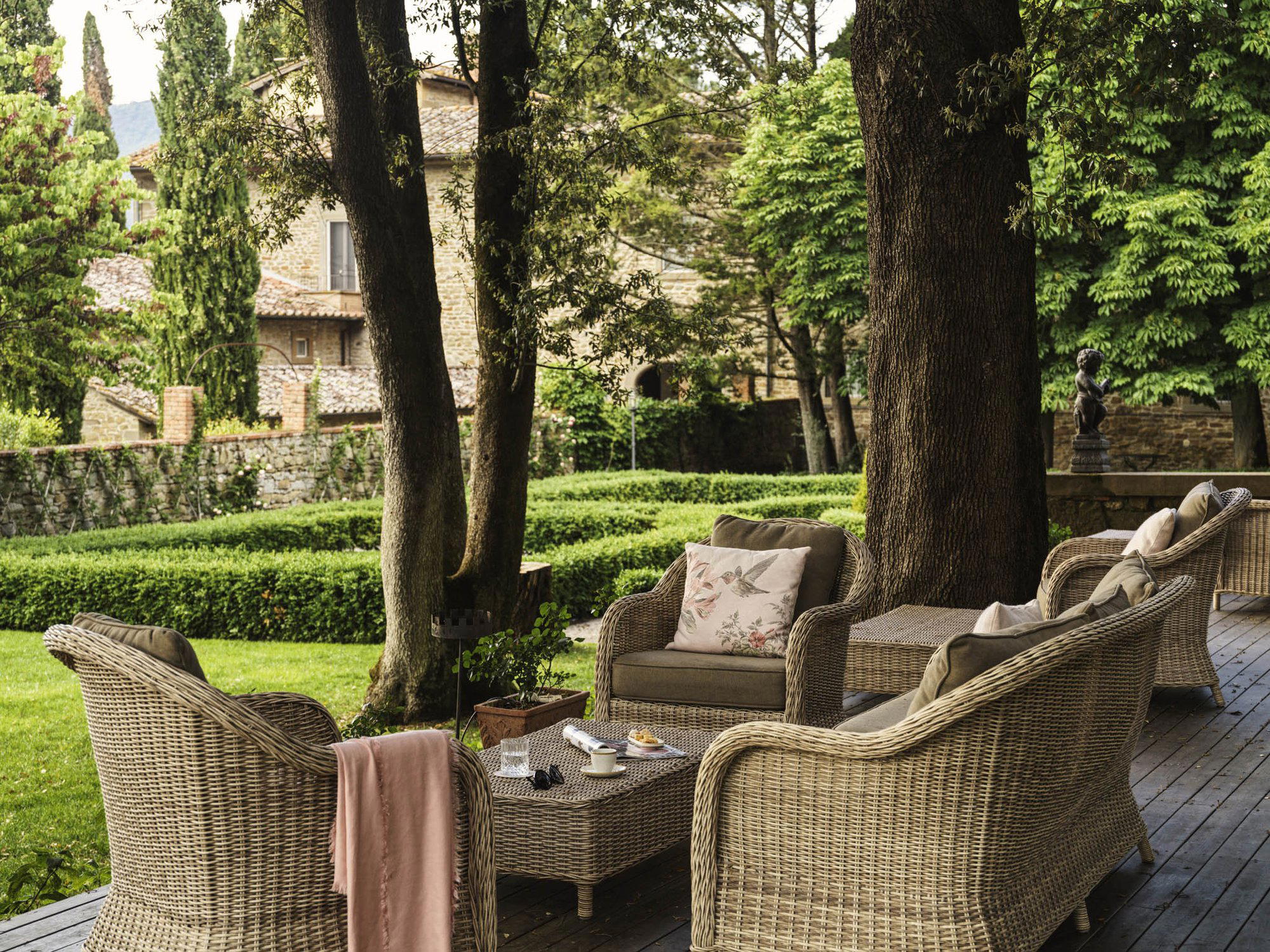
Restaurants in Arezzo
All restaurants in Arezzo →
Details
- Romantic
- Elegant
- Rustic
- Scenic
- Cozy
- Sophisticated
- Romantic Getaway
- Honeymoon
- Weekend Escape
- Anniversary
- Garden
- Terrace
- Historic Building
- Panoramic View
- Wi Fi
- Pool
- Tennis
- Spa
- Fitness Center
- Concierge
- Room Service
- Garden
- Mountain
- Step Free Entrance
Peaceful and elegant with natural light, garden views, and a relaxed Tuscan countryside atmosphere praised for its tranquility and comfort.