
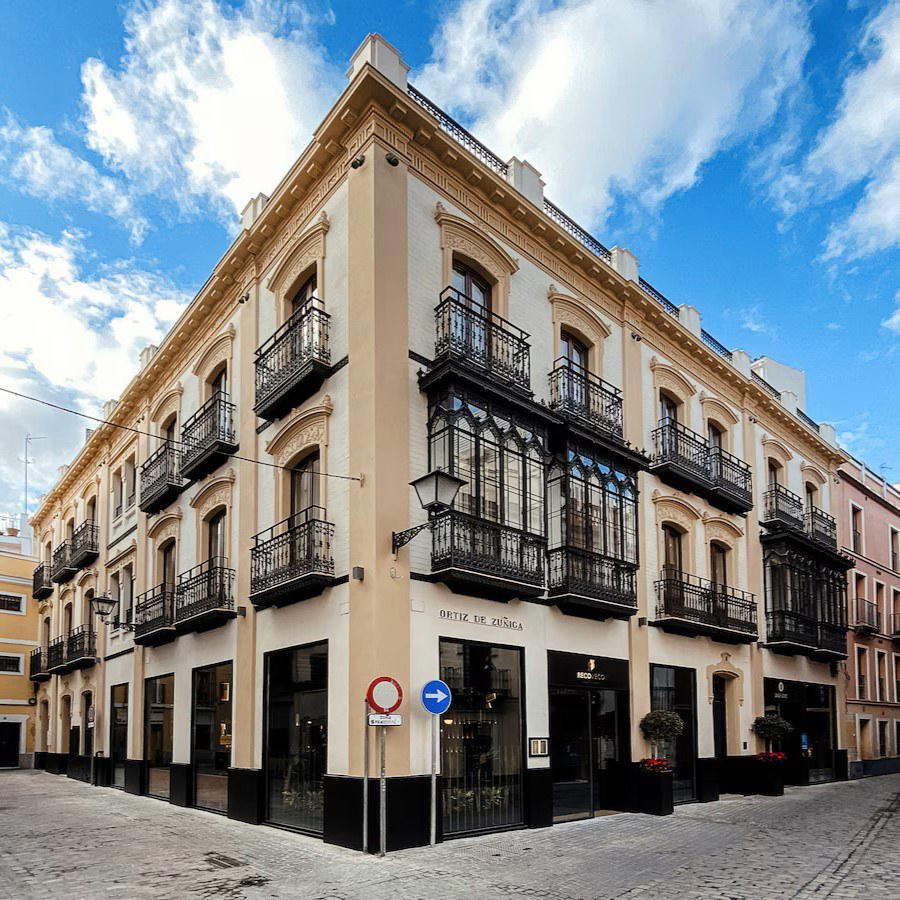
A Michelin Selected guesthouse on Calle Rodrigo de Triana, Triana House occupies one of Sevilla's most characterful working-class barrios, where tile workshops and flamenco tablaos define the street-level culture. The property sits in a compact, design-conscious tier of Sevillan accommodation that trades scale for neighbourhood immersion and a lighter physical footprint than the city's grand palace hotels.
Pearl is the En Primeur Club membership app — saves, bookings, and concierge access live there. Same editors, same standards.
- Address
- Calle Rodrigo de Triana 96, Sevilla, Spain
- Phone
- +34 955 25 25 16
 Saves & bookings on Pearl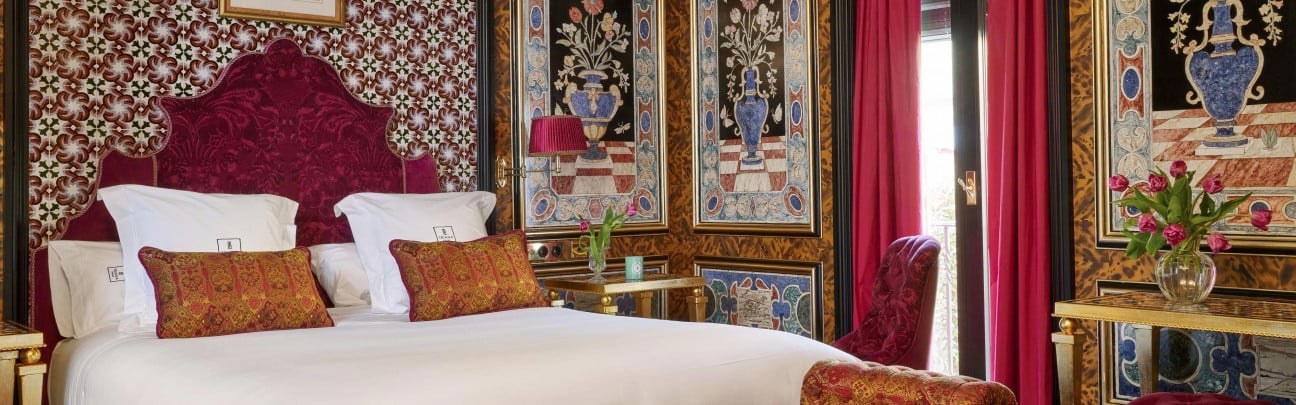
The Barrio as the Brief
Across Sevilla, the accommodation offer has split along a clear fault line. On one side sit the grand palace hotels of the historic centre, properties like Hotel Alfonso XIII and H10 Casa de la Plata, which trade on monumental architecture and high capacity. On the other, a smaller cohort of neighbourhood-rooted properties has grown around a different premise: that a Sevillan stay is more interesting when it belongs to a specific place within the city rather than floating above it. Triana House belongs to this second tier, and its address on Calle Rodrigo de Triana is part of its editorial identity as much as its Michelin Selected designation.
Triana, the barrio across the Guadalquivir from the old city, has always operated on its own terms. Historically the home of Sevilla's Roma community, its ceramics tradition, and its flamenco lineage, it is a neighbourhood where the relationship between craft and daily life remains legible at street level. Tile workshops still operate near the riverbank. The Mercado de Triana draws a local crowd in the mornings. For a property to anchor itself here rather than in the tourist core of Santa Cruz is a positioning choice with consequences: guests trade proximity to the cathedral for immersion in a neighbourhood with a distinct economic and cultural character. That is not a neutral trade-off, and for the right traveller it is precisely the point.
Michelin Selected in Context
The Michelin Selected designation, awarded as part of the 2025 Michelin Hotels guide, signals a property that has cleared a quality threshold without necessarily competing on the same terms as larger starred establishments. In Spain, the Michelin hotel programme has expanded its coverage of smaller, independent properties, recognising that quality hospitality does not require scale. Triana House sits in this category alongside other compact, design-conscious properties across the country, including Hotel Casa 1800 Sevilla and Cavalta Boutique Hotel in Sevilla itself, and further afield, properties like Hotel Can Ferrereta in Santanyí and Hotel Can Cera in Palma.
Within Sevilla's Michelin Selected cohort, the differentiating factor is almost always neighbourhood placement and the degree to which a property's design and operation reflect its immediate context. Triana House, by name and by address, has committed to that reflection more explicitly than most.
Sustainability and the Logic of Neighbourhood Hospitality
The environmental and community case for neighbourhood hospitality in dense historic cities is well-established in current responsible travel thinking. Properties that operate at lower capacity, sit within existing urban fabric rather than requiring new construction, and encourage guests to use local commerce rather than in-house facilities tend to carry a lighter footprint than large resort-style hotels. Triana House's position in a working residential and commercial barrio aligns it with this pattern.
In Triana specifically, the sustainability argument has a community dimension. The barrio's artisan economy, its ceramics workshops and its small food traders, depends partly on foot traffic from visitors who actually spend time in the neighbourhood rather than passing through on a day-trip from a hotel on the other side of the river. Staying in Triana rather than visiting it is a different kind of engagement with the place. Comparable properties elsewhere in Spain that have made similar commitments to their immediate communities include Hacienda de San Rafael outside Sevilla, which has built relationships with local agricultural producers, and Pepe Vieira Restaurant & Hotel in Poio, which anchors its entire operation in the Galician coastal food economy.
At the broader scale of Spanish boutique hospitality, the same principle applies to wine-estate hotels such as Abadía Retuerta LeDomaine and Terra Dominicata in Escaladei, where the hospitality operation is explicitly tied to land stewardship. The scale is different, but the underlying logic, that a property's quality and character should be inseparable from its place, maps onto what Triana House is doing at the urban level.
Peer Properties and Where Triana House Sits
Sevilla's boutique hotel tier has grown more sophisticated over the past decade. Properties like Casa Palacio Don Ramón and Cristine Bedfor Sevilla represent the Spanish-rooted palacio format, converting historic mansions with interior patios into hotels that read as authentically Andalusian without sacrificing comfort. Gravina 51 occupies a similar design-led niche in a different part of the city.
Triana House operates in this same design-conscious independent tier but with a barrio logic rather than a palacio one. Where the palacio hotels emphasise architectural heritage and interior courtyard drama, a Triana address emphasises street-level texture and neighbourhood access. Neither is more correct as a Sevillan experience; they answer different questions about what a stay in this city should feel like.
For travellers who have stayed at properties like Marbella Club Hotel or Mandarin Oriental Barcelona and are looking for something with a narrower, more specific sense of place, Triana House represents a deliberate step toward the granular end of the Spanish hospitality spectrum.
Planning a Stay
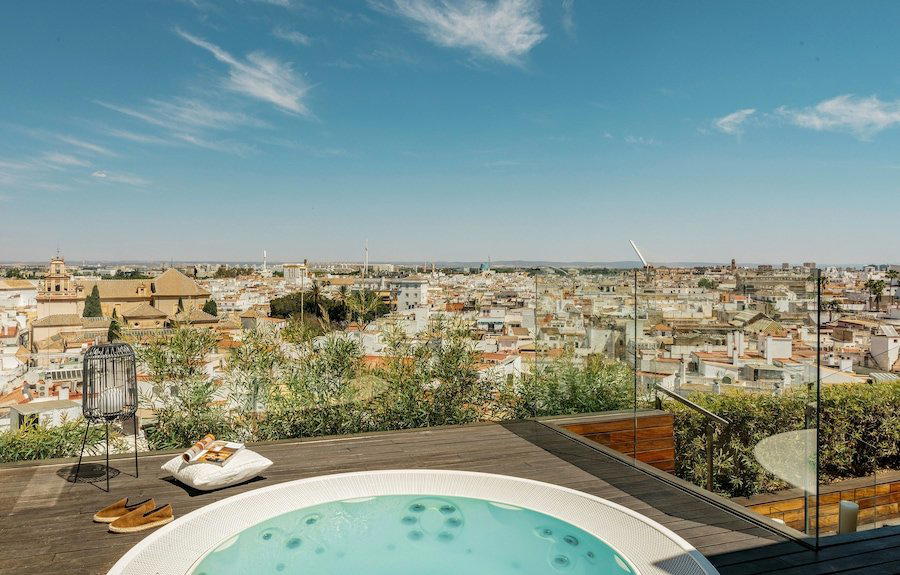
The property sits at Calle Rodrigo de Triana 96, on the western bank of the Guadalquivir. The Puente de Isabel II, known locally as the Puente de Triana, connects the barrio to the historic centre in a ten-minute walk. The Triana market is a short distance along the riverbank. For context on broader Sevillan hospitality options and neighbourhood dining, our full Sevilla guide maps the city's offer across price tiers and districts.
Sevilla's peak season runs from March through May, when Semana Santa and the Feria de Abril draw significant visitor numbers and room rates across all tiers rise sharply. Staying in Triana during these periods places guests in a neighbourhood that participates in both festivals with particular intensity, especially the Feria, which takes place in the Real de la Feria just across the river. Autumn, from late September through November, offers more moderate conditions and a quieter rhythm. Booking ahead of the spring festival period is advisable regardless of property tier.
Reaching the property directly or through a travel specialist is the most reliable route for reservation enquiries.
Price Lens
Comparable venues nearby, for context on price, style, and recognition.
| Venue | Price | Awards | Notes |
|---|---|---|---|
| Triana HouseThis venue — the venue you are viewing | $$$$ | Not listed | Not listed |
| Hacienda de San Rafael | $$$$ | Not listed | Las Cabezas de San Juan, 18th-century restored hacienda blending rustic charm with modern sophistication |
| Parador de Carmona | $$$ | 4-Star | Carmona, Andalusi palace in a reconstructed Moorish fortress |
| H10 Casa de la Plata | $$$ | 4-Star | Casco Antiguo, Andalusian-inspired boutique hotel fusing traditional Sevillian elements with contemporary design |
| Hotel Alfonso XIII | $$$$ | 5-Star | Santa Cruz, Historic luxury palace with Andalusian regionalist architecture |
| Four Seasons Seville | $$$$ | 5-Star | Plaza Nueva, Luxury urban heritage hotel in a landmark 1940s office building, reimagined as a nerve centre for high-end tourism in Seville. |
Recognition history
Dated appearances from independent guides and award organizations, with the underlying list record or original source where available.
Mr & Mrs Smith Smith Seal of Approval
Mr & Mrs Smith
Michelin Selected
Michelin
At a Glance
- Romantic
- Elegant
- Sophisticated
- Whimsical
- Intimate
- Trendy
- Romantic Getaway
- Anniversary
- Weekend Escape
- Terrace
- Design Destination
- Historic Building
- Wi Fi
- Street Scene
- Wi Fi
Flamboyant and theatrical with dazzling Art Deco-inspired decor, kaleidoscopic patterns, mirrored ceilings, ornate wallpapers, and a lively yet intimate atmosphere.
Know Before You Go
- Getting there
- Calle Rodrigo de Triana 96, Sevilla, Spain