
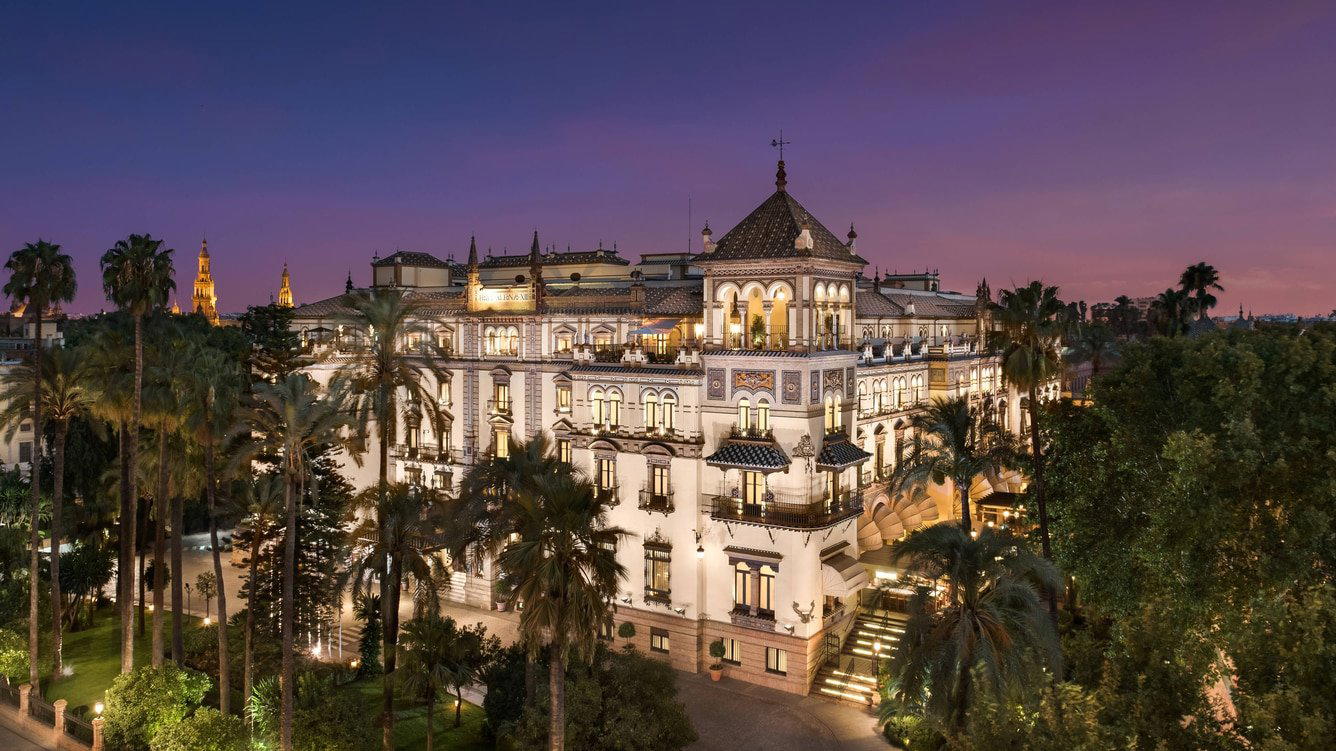
Built for the 1929 Ibero-American Exposition and selected by the Michelin Hotels Guide 2025, Hotel Alfonso XIII occupies a Mudéjar Revival palace at the edge of Seville's historic centre. The address places guests within walking distance of the Alcázar and Parque de María Luisa, setting a standard of Andalusian grandeur that smaller Sevillian hotels measure themselves against.
Pearl is the En Primeur Club membership app — saves, bookings, and concierge access live there. Same editors, same standards.
- Address
- C. San Fernando, 2, Casco Antiguo, 41004 Sevilla, Spain
- Phone
- +34 954 91 70 00
- Website
- marriott.com
- Directions
- Get directions
 Saves & bookings on Pearl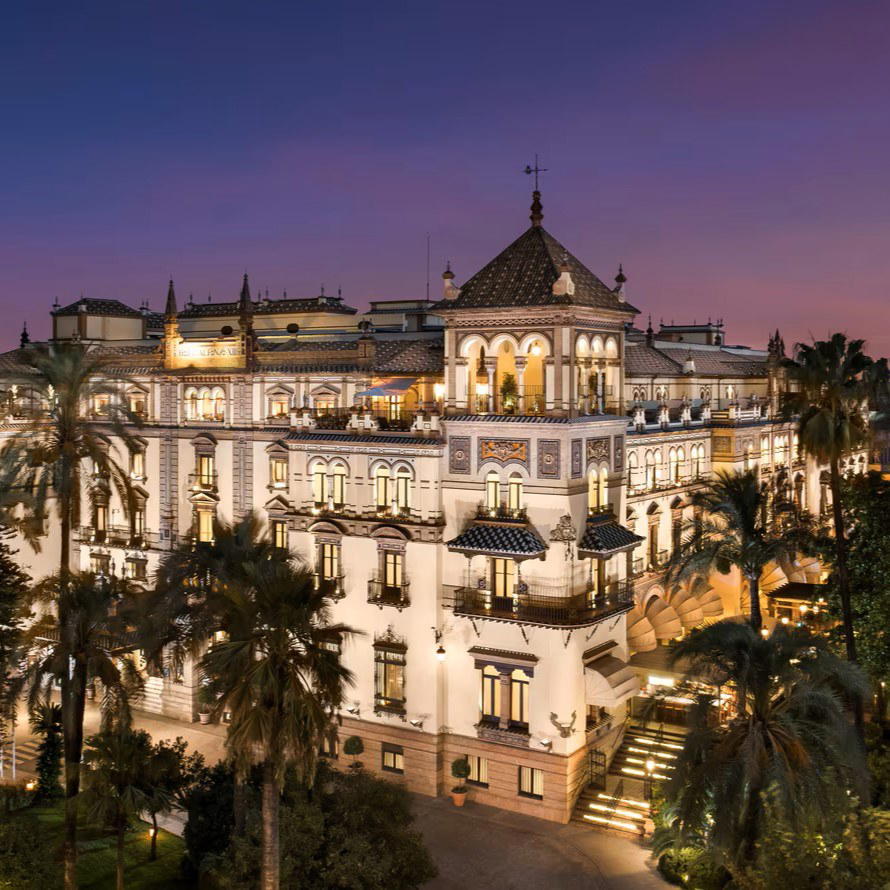
Where the City's Ceremonial Weight Lands
San Fernando 2 is not a street address you stumble onto. It runs along the southern boundary of Seville's monumental core, where the old tobacco factory (now the Universidad de Sevilla) faces Parque de María Luisa across a boulevard that still carries the proportions of a world's fair city. The Alcázar is less than a ten-minute walk north. The cathedral, a few minutes beyond that. Hotel Alfonso XIII sits precisely at this junction, in a building completed in 1928 to receive foreign dignitaries attending the 1929 Ibero-American Exposition. That origin is not incidental to the experience: it explains the scale, the courtyard, the tilework, and the particular civic gravity the property carries within Seville's hotel offering.
Seville's accommodation market divides, broadly, into three tiers: the palace-grade addresses that date from the early twentieth century or earlier, a growing cohort of design-led boutique conversions in the Santa Cruz and El Arenal neighbourhoods (properties like Hotel Casa 1800 Sevilla and Casa Palacio Don Ramón), and a functional middle layer of international chain hotels. Alfonso XIII competes exclusively in the first tier, and within that tier it is the property other Seville hotels are implicitly ranked against. The Michelin Hotels Guide 2025 selection formalises what the building's pedigree already implies.
Mudéjar Revival and the Logic of Andalusian Ornament
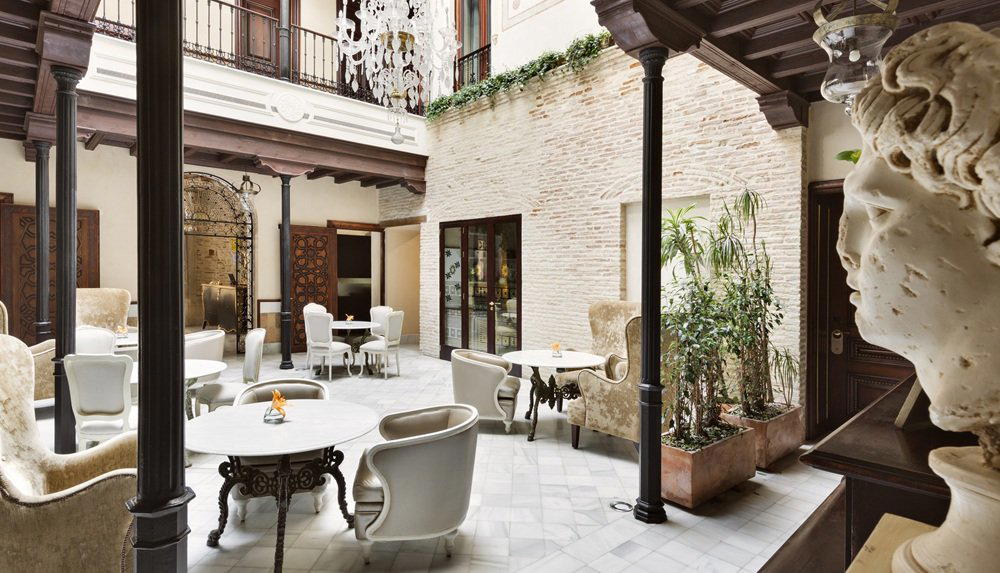
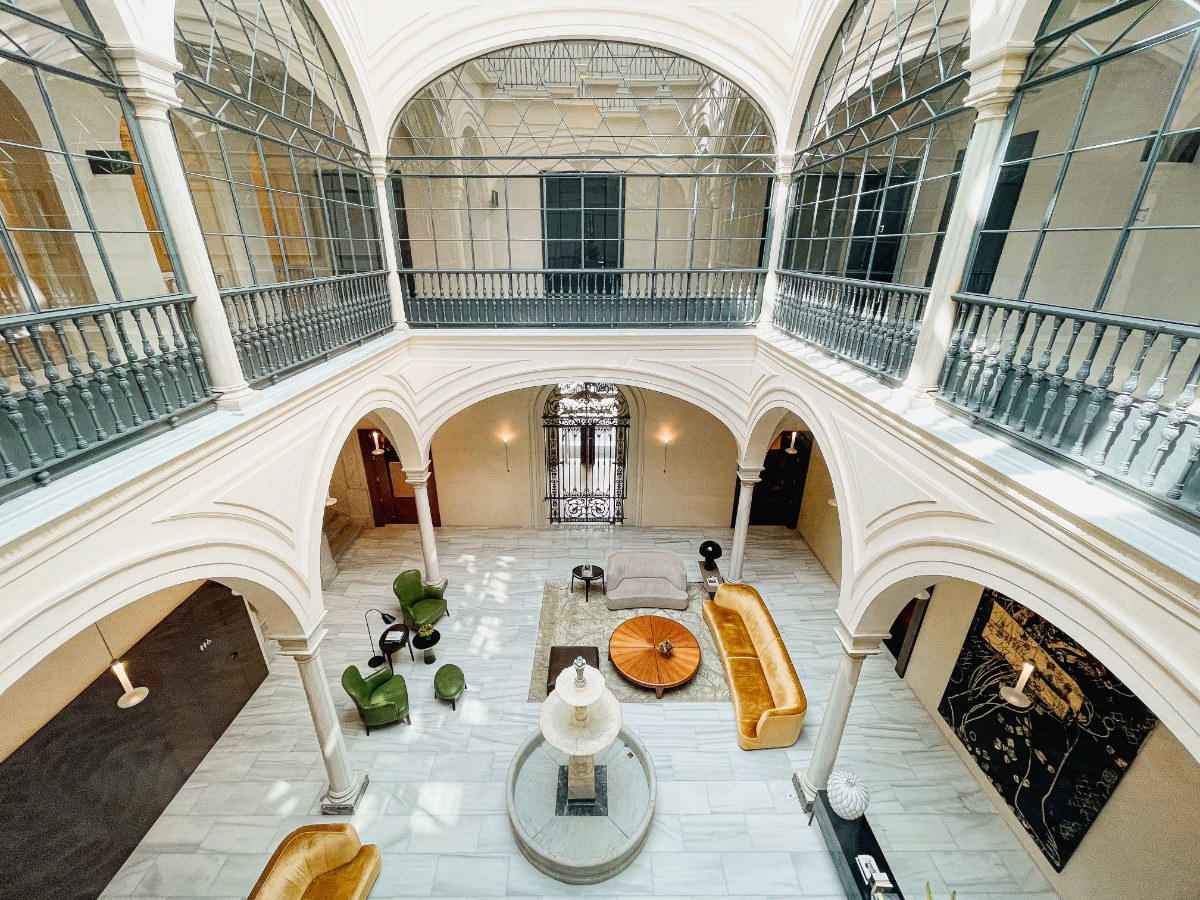
The architectural style deployed here, Mudéjar Revival, is the key to reading the building correctly. Mudéjar is not pastiche; it is the fusion tradition that emerged when Christian, Islamic, and Jewish craftspeople worked alongside each other in medieval Andalusia, producing a decorative vocabulary of geometric tilework, horseshoe arches, carved stucco, and interlocking wooden ceilings (artesonados) that has no precise parallel elsewhere in Europe. The revival version, built four centuries later for an international exposition, amplifies those elements to institutional scale. The central courtyard anchors the ground floor and serves as both social space and architectural statement: coloured ceramic tiles rise to the lower arcades, wrought ironwork appears in the balustrades, and the proportions recall the patios of the Alcázar a few hundred metres away. For guests arriving from international capitals, the courtyard functions as an immediate orientation to Seville's own aesthetic logic rather than the neutral design language of a global hotel brand.
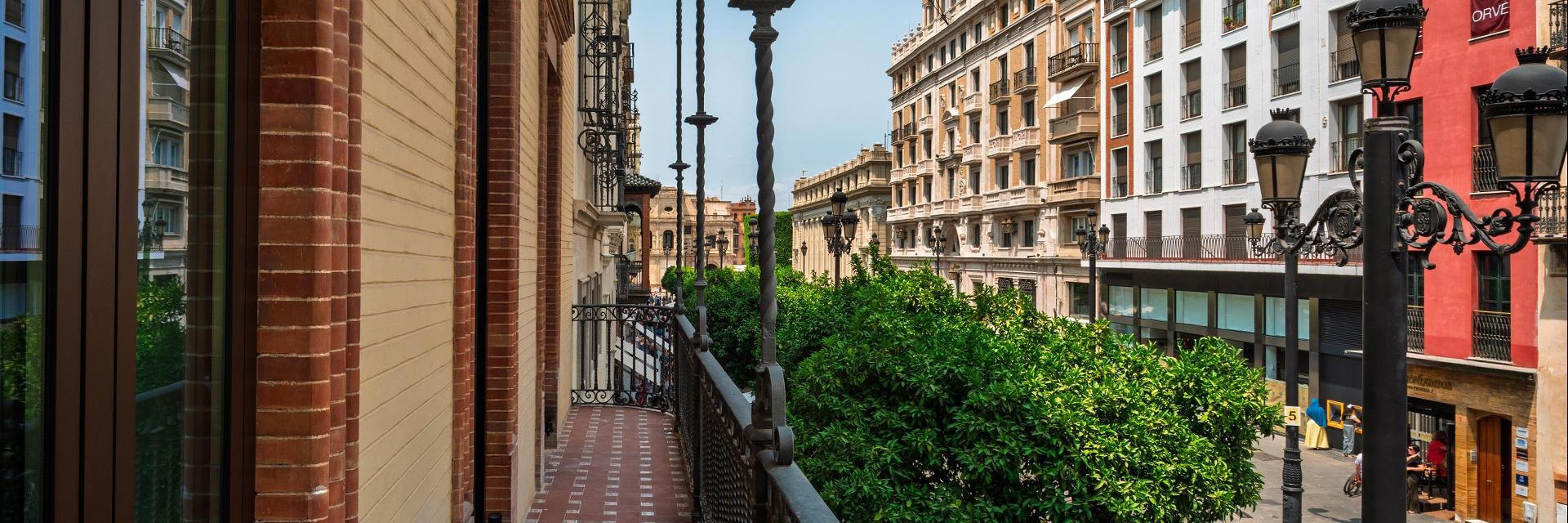
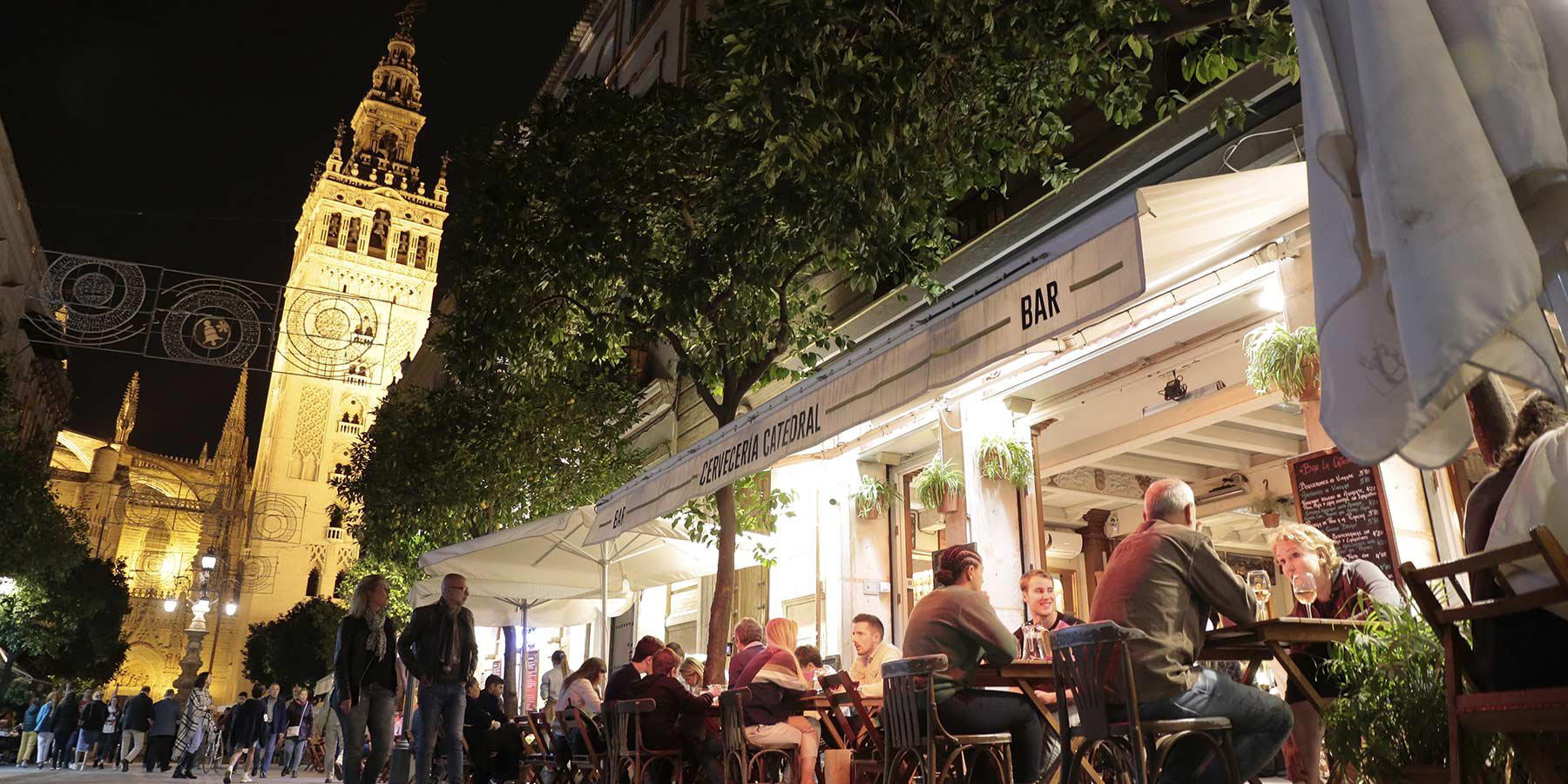
This matters for the neighbourhood context. The Barrio de Santa Cruz, directly north, is where most visitors spend their first hours in Seville: narrow lanes, orange trees, the smell of jasmine in spring. Alfonso XIII sits just outside that dense historic weave, on the edge where the city opens up into wider avenues and public gardens. The position gives it ceremonial address without the access difficulties of the deeper old town. Guests at smaller properties like Cavalta Boutique Hotel or Cristine Bedfor Sevilla trade scale for immersion in the street-level texture of Santa Cruz. Alfonso XIII trades the narrow-lane intimacy for a building that reads as part of Seville's civic furniture.
The Season Question
Seville's calendar structures the experience of any hotel in the city, but particularly one at this location. Semana Santa (Holy Week) and Feria de Abril, which fall in spring (typically March through April), bring the city to a kind of organised intensity that visitors either plan around or plan for. The processions of Semana Santa route through the historic centre, passing close to San Fernando; the Feria moves to the fairground south of the Guadalquivir, a twenty-minute walk or short taxi ride. For a hotel built to receive heads of state at a world's fair, this is its native operating mode. Rooms at major Seville hotels during these periods book months in advance, and rates reflect the demand.
The shoulder periods, late September through November, and February into early March before the spring festival season, offer the city at a more navigable pace. Temperatures drop to a range where the courtyards and gardens around the hotel are genuinely pleasant rather than something to be crossed quickly. The Parque de María Luisa, which runs along the hotel's southern flank, is at its most accessible in these months. For guests whose priority is the city's architecture, museums, and food scene rather than the spectacle of the major festivals, the autumn window is a calmer choice.
Planning should account for the hotel's Michelin Selected status in the Michelin Hotels Guide 2025. It places Alfonso XIII alongside Spain's other palace-grade hotel addresses that carry independent editorial validation, including properties like Mandarin Oriental Ritz, Madrid and, across different formats, smaller verified properties such as Atrio Restaurante Hotel in Cáceres and Abadía Retuerta LeDomaine.
Placing It in the Wider Iberian Context
The category of early-twentieth-century grand hotel in Spain is not large. Most major cities have one or two buildings of this generation that survived the twentieth century with their architectural integrity intact and their hotel function continuous. In Seville's case, the Alfonso XIII is the example, in the same way that certain buildings in Barcelona, Madrid, or the Balearics define the upper tier of their local market. For comparison: La Residencia in Mallorca, Marbella Club Hotel, and Cap Rocat in Cala Blava each occupy analogous positions in their respective markets: hotels where the building itself is the primary credential and where the physical address is inseparable from what the stay means.
Within Seville specifically, the relevant comparison set includes properties that have chosen different strategies for operating at the premium end. Hacienda de San Rafael offers the rural Andalusian alternative, olives, horses, a working agricultural estate, while Gravina 51 and H10 Casa de la Plata represent the urban boutique tier. Alfonso XIII operates as none of these: it is the ceremonial anchor of the Seville hotel market, the property that other addresses in the city use, implicitly or explicitly, as their reference point.
Practical Notes
The hotel's address at San Fernando 2 puts it at the edge of the pedestrianised historic zone, making arrivals by taxi or car more direct than deeper old-town locations. The Seville Santa Justa high-speed rail station is the main arrival point for visitors from Madrid or Málaga; a taxi from Santa Justa to the hotel takes roughly fifteen minutes in normal traffic. For the spring festival periods, reservations made three to four months ahead are advisable. For shoulder-season travel, the booking window is more flexible, though the hotel's Michelin Selected status means it maintains a consistent occupancy profile across the year.
Comparable Options
Comparable venues nearby, for context on price, style, and recognition.
| Venue | Cuisine | Price | Notes |
|---|---|---|---|
| Hotel Alfonso XIIIThis venue — the venue you are viewing | Historic luxury palace with Andalusian regionalist architecture | $$$$ | Not listed |
| Vincci Selección Unuk | Grand Luxury boutique hotel blending traditional Sevillian architecture with contemporary design; intimate 34-room property positioned as a design destination with Michelin Key recognition. | $$$$ | Soho (Seville Old Town) |
| Casa Palacio Don Ramón | Historic palace with modern luxury renovations | $$$$ | Encarnacion-Regina |
| Gravina 51 | Restored historic palacio with contemporary classic interiors | $$$$ | Casco Antiguo |
| Hotel Casa 1800 Sevilla | Restored 19th-century Andalusian mansion with traditional courtyards | $$$ | Santa Cruz |
| Mercer Plaza Sevilla | Restored early 20th-century family residences in Regionalist style with Baroque and Mudéjar elements. | $$$$ | Plaza San Francisco |
Recognition history
Dated appearances from independent guides and award organizations, with the underlying list record or original source where available.
Michelin Selected
Michelin
At a Glance
- Elegant
- Classic
- Well Known
- Sophisticated
- Ornate
- Romantic Getaway
- Anniversary
- Honeymoon
- Historic Building
- Terrace
- Garden
- Pool
- Spa
- Fitness Center
- Concierge
- Room Service
- Street Scene
- Pool
- Spa
- Fitness Center
- Concierge
- Room Service
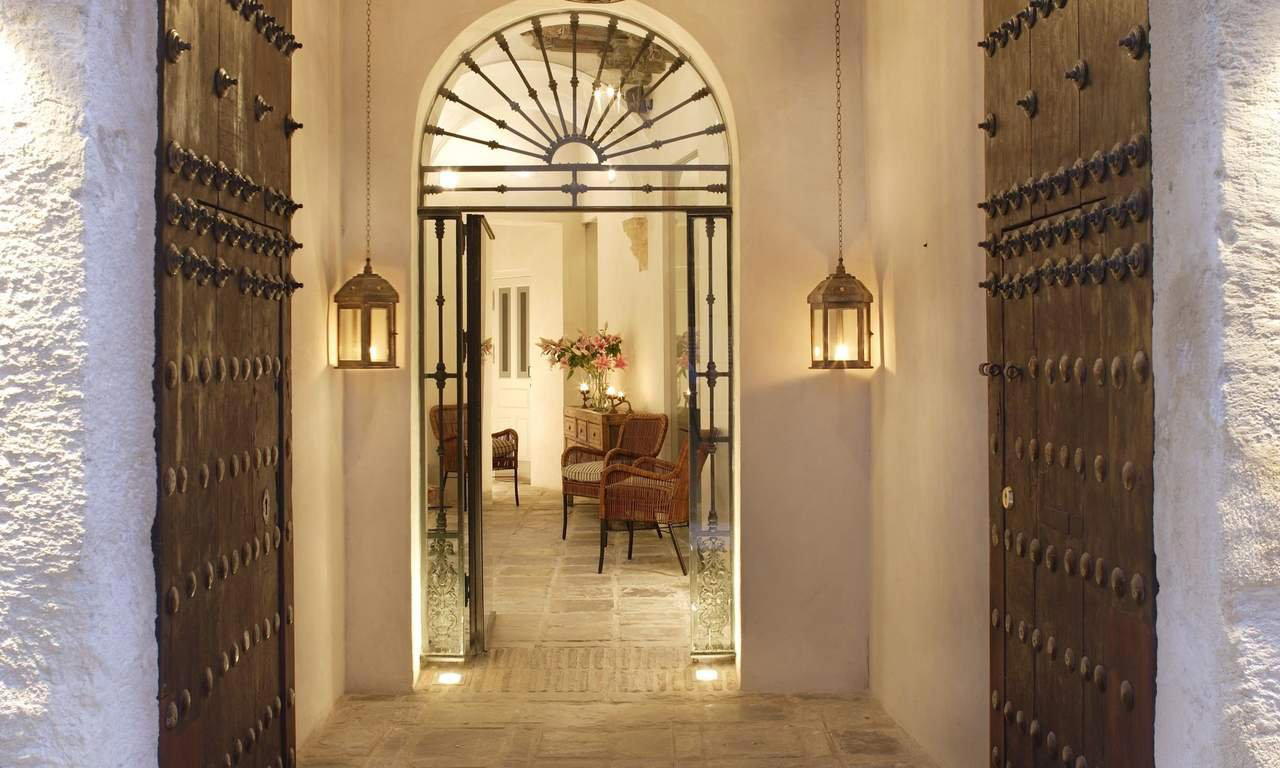
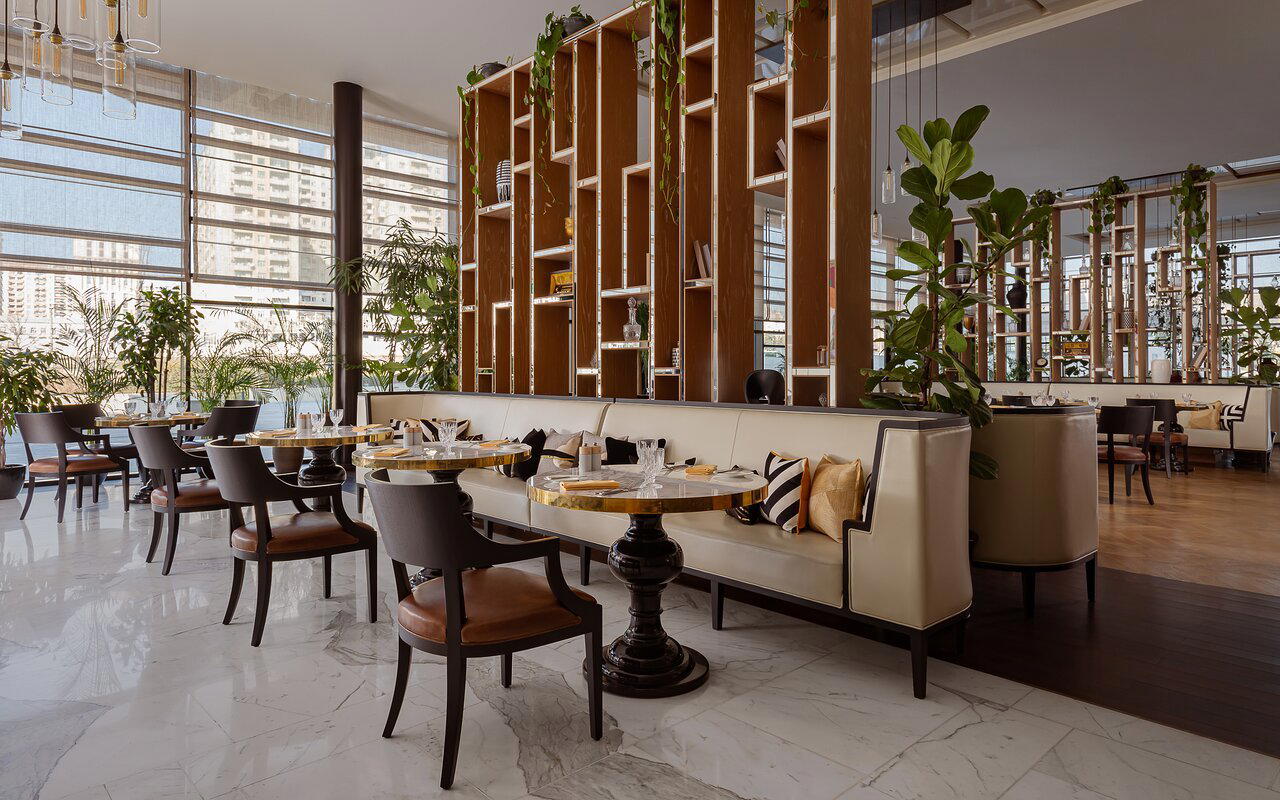
Ornate with sweeping arches, intricate tilework, marble floors, and tranquil courtyards evoking timeless Andalusian grandeur.