

Seville's luxury hotel scene has long concentrated around the cathedral quarter on the east bank. Cavalta Boutique Hotel breaks that pattern, placing 12 architect-designed rooms in Triana, the neighbourhood historically associated with flamenco, ceramic craft, and a more local rhythm. The rooftop garden, pool, and cocktail bar position it as a credible alternative to the city's more established luxury addresses, at around $395 per night.
Pearl is the En Primeur Club membership app — saves, bookings, and concierge access live there. Same editors, same standards.
- Address
- C. San Jacinto, 89, 41010 Sevilla
- Phone
- +34 955 44 20 10
- Website
- hiddenhotels.com
- Directions
- Get directions
 Saves & bookings on Pearl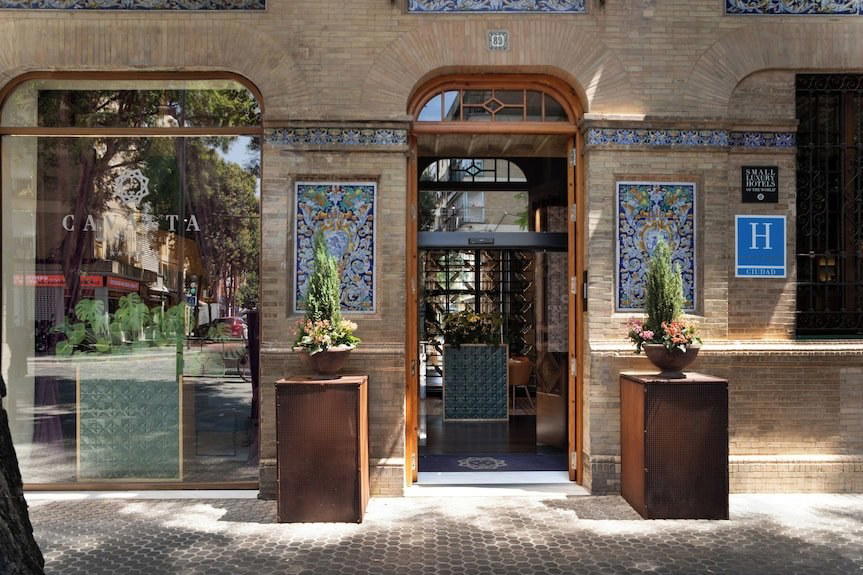
A Corner Building in Triana Changes the Map of Seville Luxury
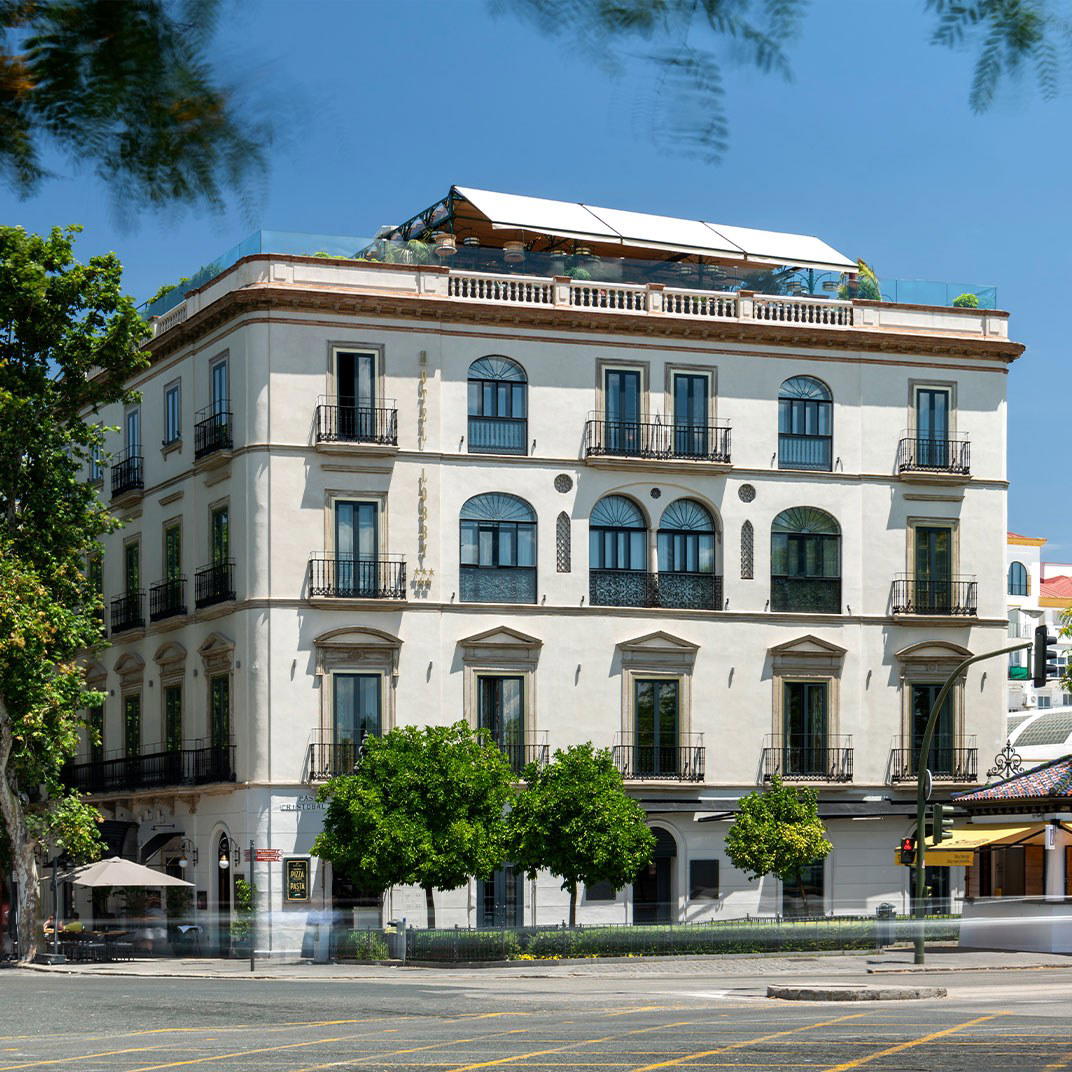
Walk across the Puente de Isabel II from Seville's historic centre and the character of the city shifts noticeably. The cathedral, the Alcázar, and the grand hotels that cluster around them recede. In their place: azulejo tile workshops, flamenco tablaos, and a residential density that feels lived-in rather than staged for visitors. This is Triana, and until recently, it had little in the way of upscale accommodation. Cavalta Boutique Hotel, on Calle San Jacinto, is the first property to fill that gap.
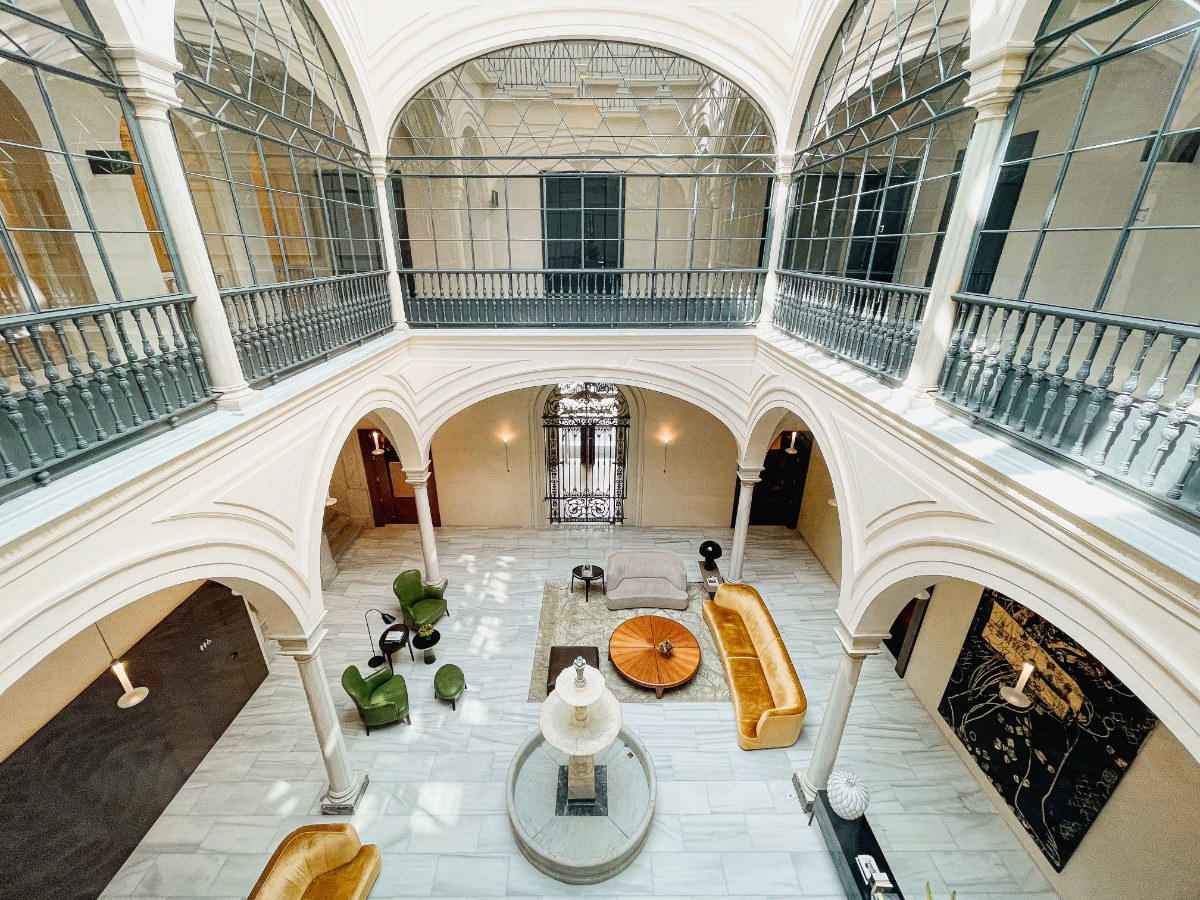
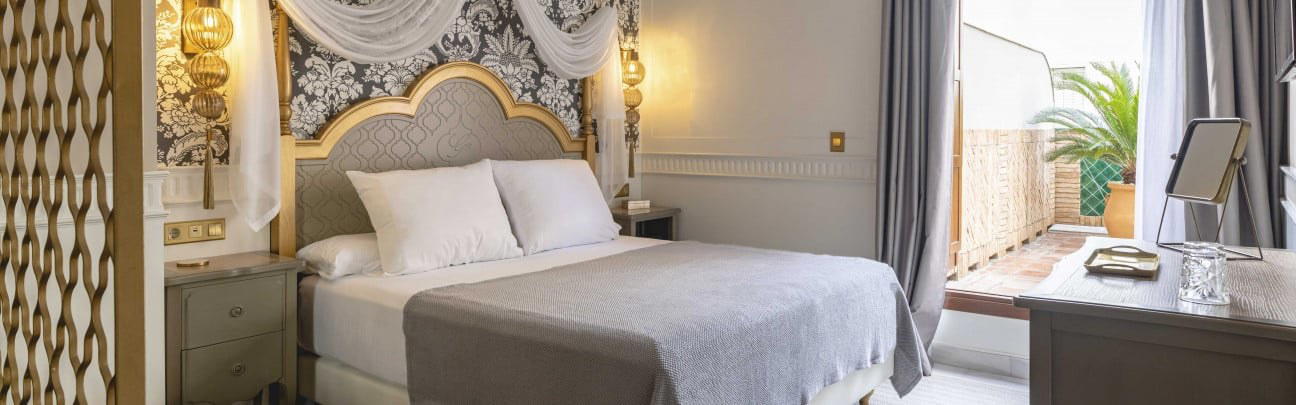
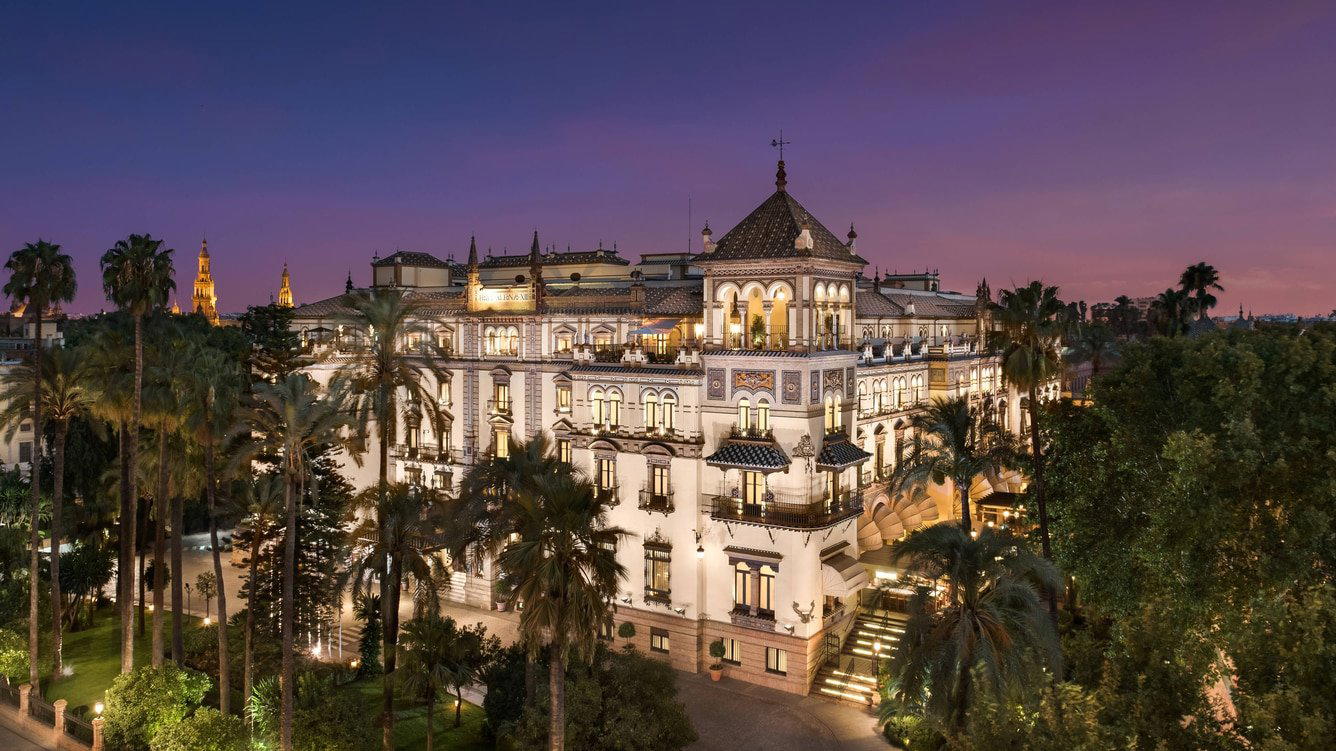
The building's identity is clear before you cross the threshold. Wrought-iron balconies and cheerful ceramic tilework on the facade signal a preservation-first approach, and the architect-led restoration confirms it inside. Early 20th-century structural features remain intact, integrated into a scheme that layers natural wood flooring and exposed brick against colourful contemporary detailing: decorative headboards, emerald-green accent walls, and the kind of restrained ornamental confidence that takes more skill than minimalism. The result is a property that reads as European boutique hospitality at its most considered, closer in spirit to the design-led independents of Catalonia or the Balearics than to the heritage palace conversions that dominate central Seville's five-star tier.
Twelve Rooms and the Logic Behind the Scale
Spain's premium boutique sector has split into two clear camps over the past decade: scaled-up design hotels chasing brand recognition, and genuinely small-footprint properties where the architecture and the neighbourhood do most of the work. Cavalta sits firmly in the second camp, with 12 rooms that keep the guest count low enough to preserve the building's domestic character. Comparable small-format properties elsewhere in Spain, from Hotel Can Ferrereta in Santanyí to Can Alberti 1740 in Mahón, use restricted keys as a selling argument rather than a limitation, and Cavalta follows that same logic.
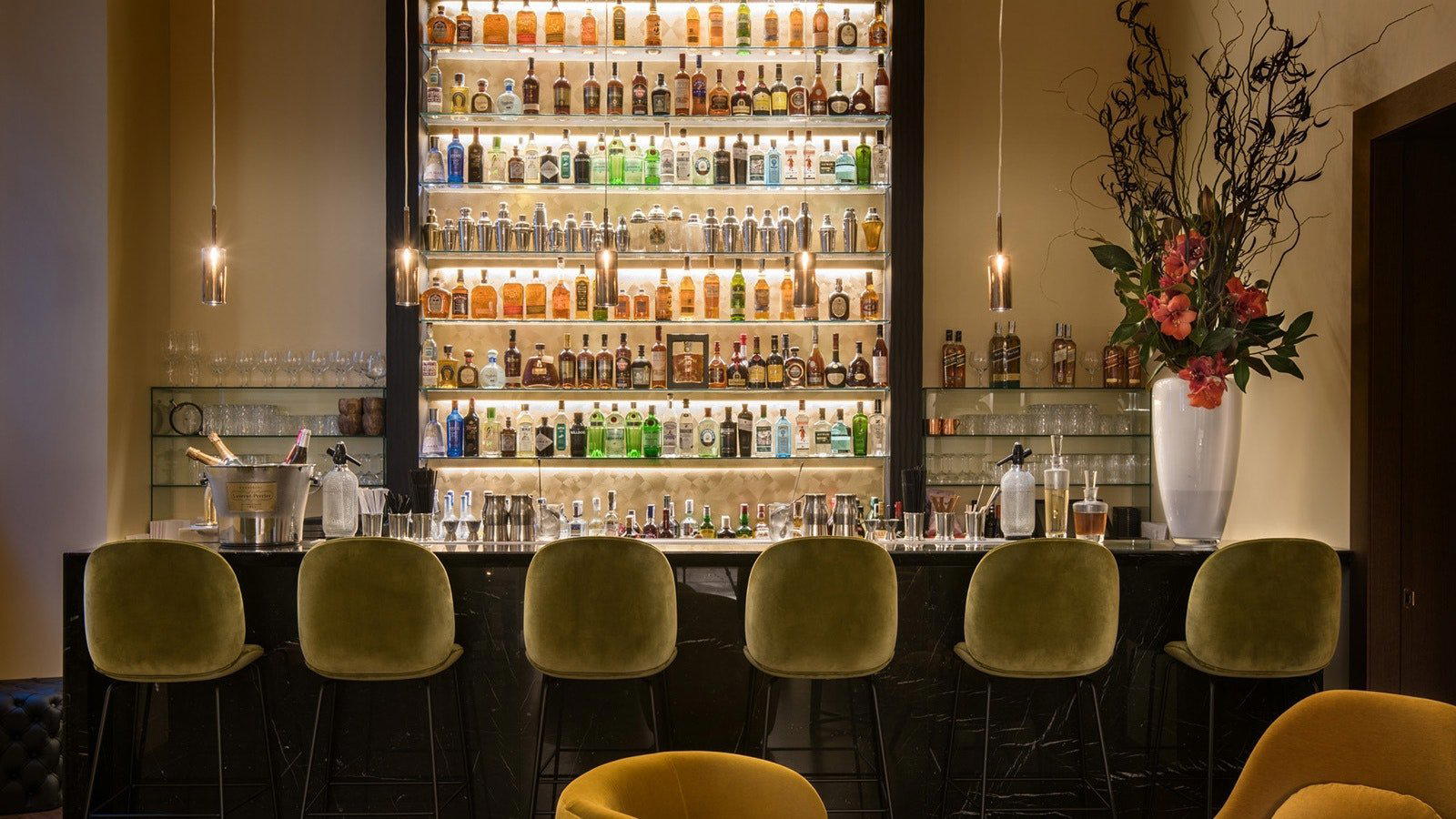
Rooms are described as simple and modern, which in this context is a considered choice rather than a budget constraint. The simplicity is structural: natural materials, honest surfaces, and colour used sparingly but deliberately. The common spaces carry more decorative ambition, and that hierarchy makes sense architecturally. A building of this scale works well when the shared areas serve as its public rooms, and at Cavalta, it's the rooftop garden, pool, and cocktail bar that anchor the property's identity. Guests arriving from the historic centre, where properties like Hotel Casa 1800 Sevilla occupy similarly intimate historic buildings, will recognise the format, even if the Triana context gives it a different charge.
The Rooftop as Architectural Argument
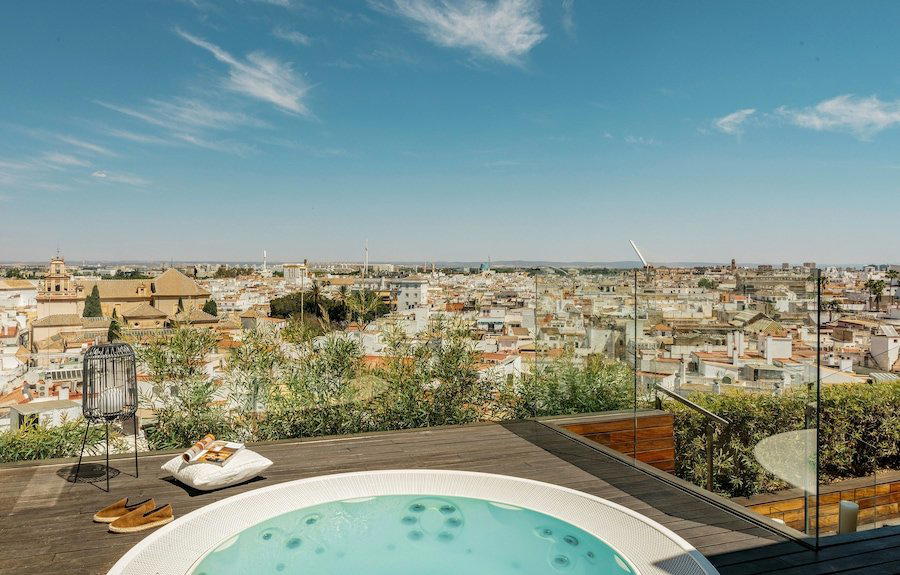
In Seville, where summer temperatures routinely climb above 35°C, a rooftop pool is a practical asset as much as a visual one. But the rooftop garden club at Cavalta carries a particular architectural logic: it converts what could be dead building-leading space into the property's most legible public statement. The combination of a planted garden, swimming pool, and cocktail bar, arranged to face the Triana skyline and catch the city's famously extended sunsets, positions the rooftop as the hotel's primary amenity rather than an afterthought.
This approach places Cavalta in a conversation with a broader pattern in Spanish boutique hotels, where rooftop terraces have become especially contested design element. At Cap Rocat in Cala Blava or BLESS Hotel Ibiza, refined outdoor spaces serve as the primary social infrastructure of the property. Cavalta's version is more intimate, scaled to 12 rooms and set in a residential neighbourhood rather than a coastal resort, but the editorial logic is the same: the outdoor space is where the hotel makes its case to the city.
Balbuena y Huertas and the Question of Neighbourhood Integration
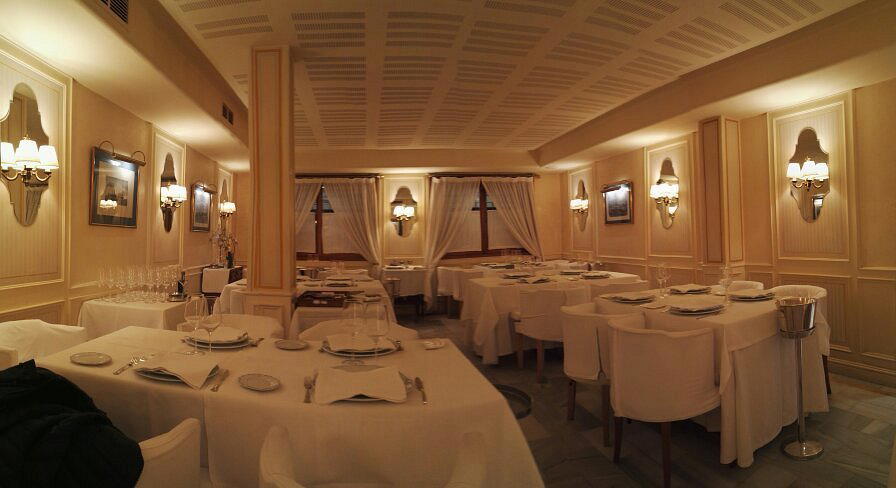
The hotel's restaurant, Balbuena y Huertas, operates as a meeting point for both residents and visitors, which in Triana is a meaningful credential. The neighbourhood has a strong local dining culture, and a hotel restaurant that attracts the barrio's own residents rather than just its overnight guests signals genuine embeddedness. Seville's food scene across the river has become more ambitious in recent years, and a Triana address places Balbuena y Huertas within walking distance of some of the city's more interesting neighbourhood dining.
The positioning of a hotel restaurant as a local social anchor rather than a captive-audience service is a pattern worth noting. It appears at properties like Pepe Vieira Restaurant & Hotel in Poio, where the restaurant draws a regional audience independent of the rooms, and at Atrio Restaurante Hotel in Cáceres, where the culinary program defines the property's identity. Cavalta's version is lower-key, but the intent is the same: use food and drink to build a connection to the surrounding neighbourhood that reinforces the hotel's claim to authenticity.
Triana's Place in the Wider Seville Narrative
Seville's historic luxury hotel concentration on the east bank reflects the city's tourist geography: most visitors come for the cathedral, the Alcázar, and the tapas bars of El Centro, and hotels followed that footfall. Triana, despite being among Seville's most historically significant neighbourhoods, the birthplace of flamenco as a codified performance tradition and the centre of the city's ceramic craft industry for centuries, remained largely outside the premium accommodation map. Cavalta's positioning on Calle San Jacinto represents a geographic argument as much as a commercial one: that the neighbourhood has enough cultural density and architectural character to anchor a luxury stay independent of proximity to the major monuments.
For those comparing the property to Seville's more established luxury addresses, the trade-off is clear. You're farther from the cathedral and the Alcázar, accessible by a short walk across the bridge or a brief taxi ride, but you're inside a neighbourhood with a texture that the historic centre's tourist pressure has largely eroded. That trade is increasingly familiar from boutique properties elsewhere in Spain: Casa Beatnik Hotel in A Coruña and Can Mascort Eco Hotel in Palafrugell each occupy neighbourhoods where local character is the primary amenity. Cavalta makes the same bet in a city where, until its arrival, no comparable property had tried.
Planning Your Stay
Cavalta Boutique Hotel sits at C. San Jacinto, 89, in Triana, with 12 rooms and rates from about $120 per night. Given the property's size, advance booking is recommended. The rooftop garden and pool make it a property whose outdoor amenities reward warmer months, though Triana's neighbourhood character makes it a functional base year-round.
How It Stacks Up
Comparable venues nearby, for context on price, style, and recognition.
| Venue | Cuisine | Price | Awards | Notes |
|---|---|---|---|---|
| Cavalta Boutique HotelThis venue — the venue you are viewing | Intimate Gran Lujo boutique in Seville's creative Triana quarter | $$$$ | Michelin 1 Key | Not listed |
| Four Seasons Seville | Luxury urban heritage hotel in a landmark 1940s office building, reimagined as a nerve centre for high-end tourism in Seville. | $$$$ | 5-Star | Plaza Nueva |
| Hotel Lobby | Refurbished historic palace offering exclusive luxury in Seville's historic center. | $$$$ | 5-Star | Old Town |
| Casa Palacio Don Ramón | Historic palace with modern luxury renovations | $$$$ | 5-Star | Encarnacion-Regina |
| Hotel Alfonso XIII | Historic luxury palace with Andalusian regionalist architecture | $$$$ | 5-Star | Santa Cruz |
| Mercer Plaza Sevilla | Restored early 20th-century family residences in Regionalist style with Baroque and Mudéjar elements. | $$$$ | 5-Star | Plaza San Francisco |
Recognition history
Dated appearances from independent guides and award organizations, with the underlying list record or original source where available.
Michelin 1 Key
Michelin
Small Luxury Hotels of the World Member
Small Luxury Hotels of the World
At a Glance
- Elegant
- Intimate
- Modern
- Sophisticated
- Cozy
- Romantic Getaway
- Weekend Escape
- Business Trip
- Rooftop Pool
- Historic Building
- Terrace
- Wi Fi
- Pool
- Spa
- Room Service
- Concierge
- Restaurant
- Massage
- Elevator
- Airport Transfer
- Street Scene
- Wi Fi
- Pool
- Spa
- Room Service
- Concierge
- Restaurant
- Massage
- Elevator
- Airport Transfer
Tranquil and elegantly relaxed with modern design, soundproofed rooms, and a peaceful rooftop garden oasis.