
1 Michelin Key
The only hotel in València officially designated as a historical monument, Caro Hotel occupies a 14th-century Gothic palace in the Ciutat Vella. Twenty-six rooms sit alongside a 12th-century Arabic wall, medieval coffered ceilings, and Moorish archways, with a monochromatic contemporary design that lets the architecture speak. Awarded a Michelin Key in 2024, with rates from around $238 per night.

Pearl is the En Primeur Club membership app — saves, bookings, and concierge access live there. Same editors, same standards.
- Address
- C/ de l'Almirall, 14, Ciutat Vella, 46003 València, Valencia
- Phone
- +34 963 05 90 00
- Website
- carohotel.com
- Directions
- Get directions
A Palace Built in Layers
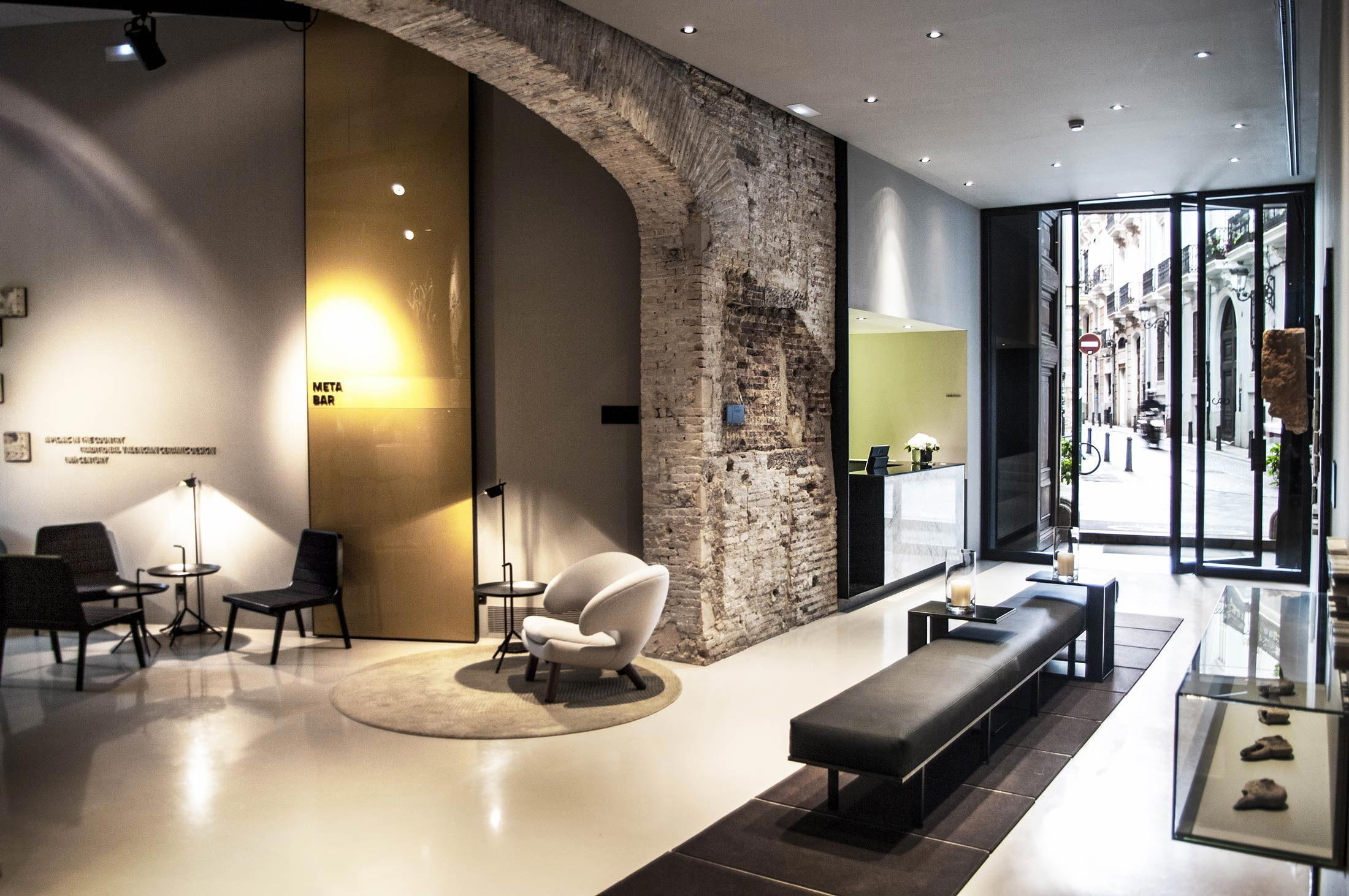
València's Ciutat Vella has accumulated centuries of occupation — Roman, Moorish, Gothic, and Baroque — and the neighbourhood's streetscape reflects every one of them. In Carrer de l'Almirall, a short walk from the Catedral and the Llotja de la Seda, a 14th-century Gothic palace once belonging to the Marquis de Caro holds that stratigraphic history more visibly than almost anything else in the old city. The building is now Caro Hotel, and it is the only establishment in València to carry an official historical monument designation. That distinction shapes every design decision inside it.
Spain's historic-conversion hotel category is crowded with competitors, many of which drape period buildings in heavy period decoration. The approach here runs in the opposite direction. The interior design is monochromatic and deliberately spare: pale walls, sophisticated lighting, and a restraint that functions more like a contemporary art gallery than a conventional heritage hotel. The logic is sound. When a 12th-century Arabic wall is the feature of your restaurant dining room, and medieval coffered ceilings frame your guest rooms, ornamental furnishings are a distraction. Stripping the interiors back allows the architectural layers to do the interpretive work themselves. Among comparable design-led heritage conversions in Spain, this kind of studied neutrality is relatively rare, the Atrio Restaurante Hotel in Cáceres takes a more overtly contemporary art approach, while Hotel Can Cera in Palma leans into Baroque detail. Caro's minimalism is its own editorial position.
What the Architecture Actually Contains
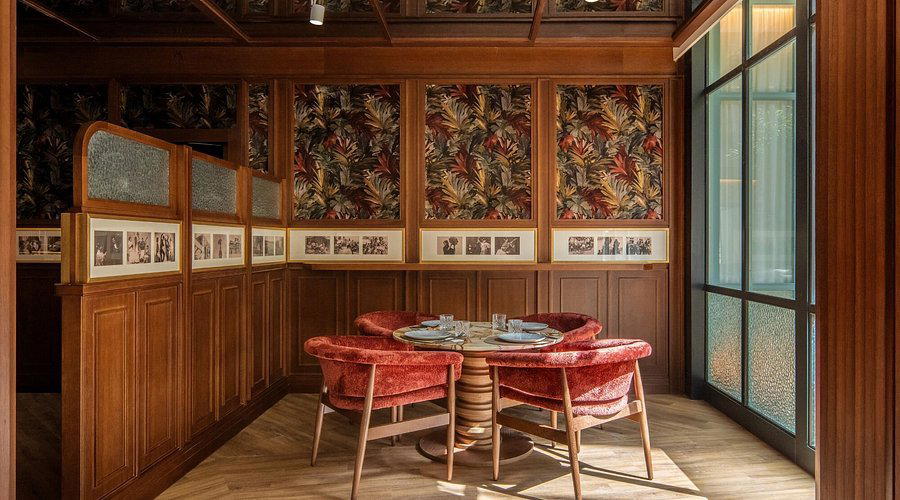
The building's most arresting element is the section of 12th-century Arabic wall that runs through the restaurant space. This is not a relic behind glass. It is present in the room, part of the dining environment, and visible as a working architectural surface. Medieval coffered ceilings and Moorish archways appear throughout the guest room areas, structural features from different occupations of the same site, coexisting without heavy-handed explanation. The building reads as an accumulation rather than a reconstruction, which is what makes it a credible historical monument rather than a heritage theme.
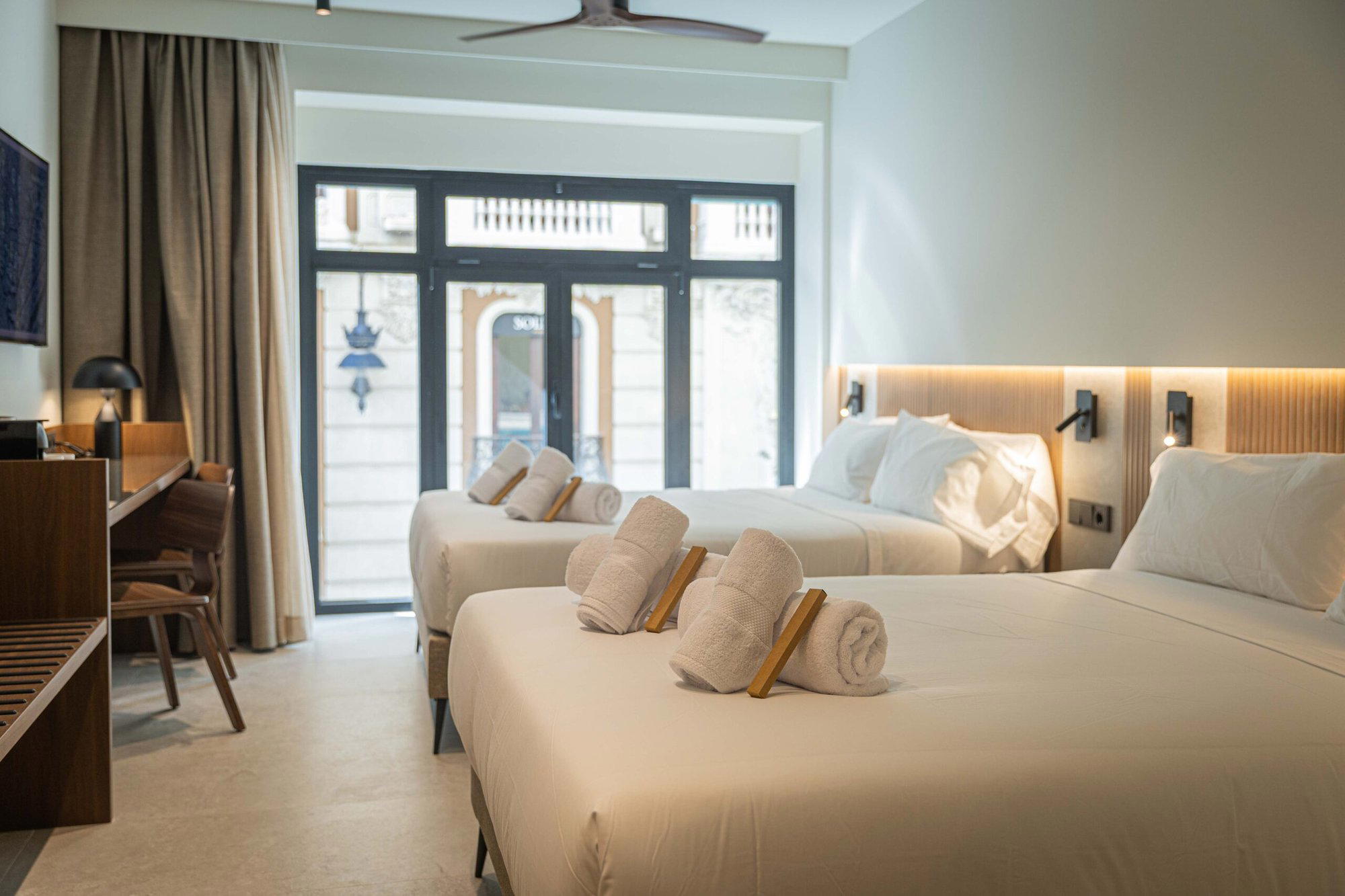
The 26 rooms are distributed across this layered structure, with individual spaces shaped by whichever architectural period they sit closest to. The room count is deliberately limited. At 26 keys, Caro occupies the smaller end of the boutique spectrum in the Ciutat Vella, which creates a quieter residential quality that larger old-city properties in the neighbourhood cannot replicate. For context, properties like Hospes Palau de la Mar operate at a different scale with different common-area programming. The intimacy at Caro is structural, a product of the building's original footprint rather than a hospitality choice imposed on top of it.
Xanglot: Where Cuisine and Architecture Share a Brief
Restaurant, Xanglot, takes its interpretive framework directly from the building. Its menu draws on the city's Roman, Arabic, and Christian culinary inheritance, the same civilisational sequence that left its marks on the walls and ceilings surrounding the dining room. This is a coherent concept rather than a marketing hook: the Arabic wall visible from the tables is the same civilisation that introduced rice cultivation to the Valencia region, a staple that still defines the city's most recognised dishes centuries later. In 2024, Michelin awarded Caro Hotel one Key, a recognition that positions the property in the tier of European hotels where the hospitality offer, including dining, clears a defined quality threshold. The Michelin Key system, relaunched for hotels specifically, does not rate rooms in isolation, it factors in the overall experience, which at Caro includes Xanglot's design coherence and culinary ambition alongside the rooms themselves.
Akelarre in San Sebastián pairs its starred kitchen with hotel accommodation; Terra Dominicata in Escaladei integrates winery heritage with its lodging offer. Caro's version of that integration is architectural and culinary simultaneously, with the building itself as the primary exhibit.
Common Spaces and Outdoor Programming
Beyond the guest rooms and restaurant, the hotel includes a library and multiple outdoor terraces. One terrace has a plunge pool, a practical feature that carries real significance in a city where summer temperatures regularly exceed 35°C. The library functions as a quieter alternative to lobby seating, a room with a specific purpose in a building where every space has been considered. These are not incidental amenities added to fill a brochure checklist; they fit the gallery-like logic of the interiors, where each area has a legible function and nothing is superfluous.
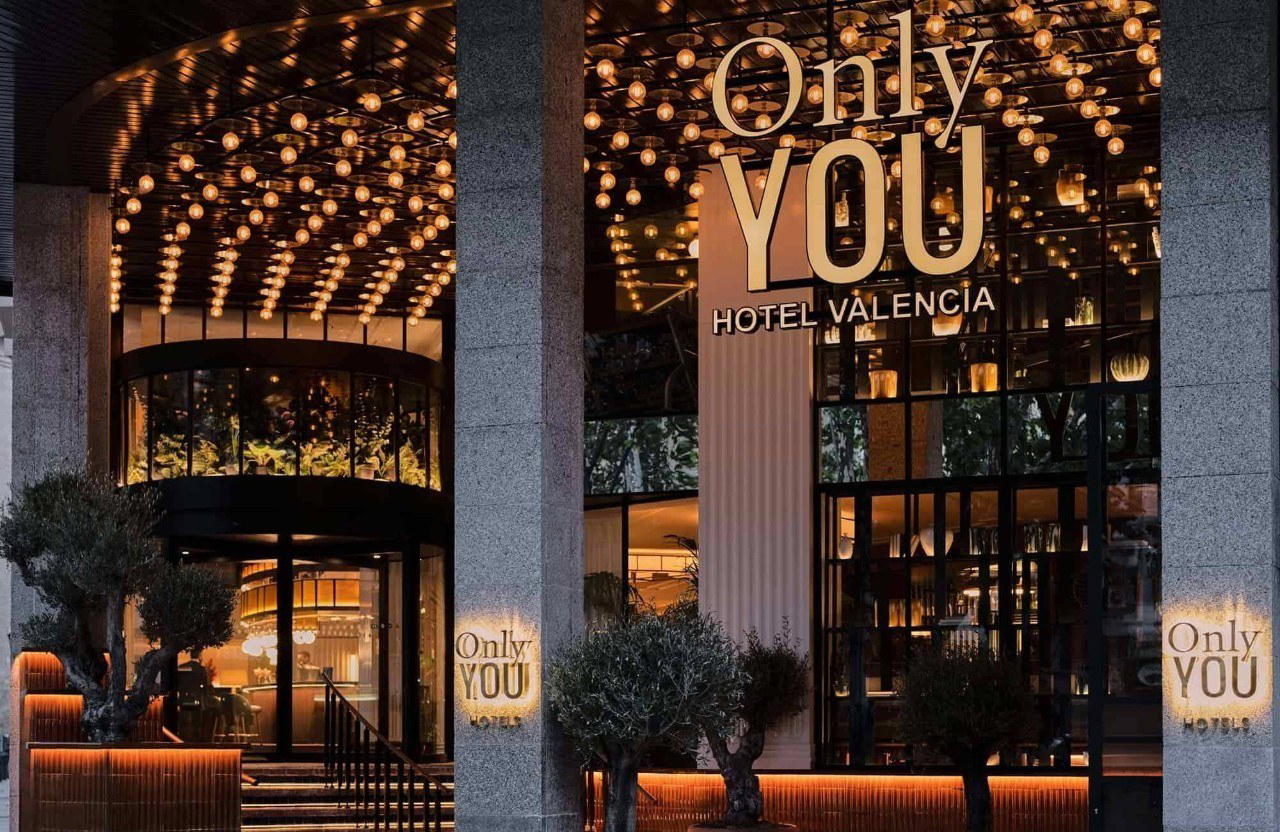
The outdoor terraces, given the urban density of the Ciutat Vella, represent a meaningful spatial asset. Old-town properties in dense European city centres rarely have exterior space at this quality level. Only YOU Hotel Valencia and the Helen Berger Boutique Hotel offer different outdoor configurations; Hotel Las Arenas, by contrast, operates closer to the beach with a very different outdoor brief. Caro's terraces work specifically because of the surrounding Gothic streetscape, they are framed by the old city rather than detached from it.
Where It Sits in the Broader Spain Heritage Hotel Category
Spain's conversion-hotel sector is well developed, and the competition for architecturally significant properties is meaningful. The Mandarin Oriental Ritz, Madrid operates at a different scale and price tier. Properties like Mas de Torrent Hotel & Spa in Torrent and Abadía Retuerta LeDomaine in Teruel offer rural estate alternatives with their own architectural weight. Across the Mediterranean coast, Cap Rocat in Cala Blava occupies a 19th-century military fortress. What distinguishes Caro from all of these is the specific combination of an urban setting, a legally protected monument status, and a multi-civilisational architectural record on a single site, Roman foundations, an Arabic wall, Gothic structure, that is visible rather than merely documented.
At a rate from around $238 per night for 26 rooms in the centre of València's historic quarter, the hotel occupies a mid-premium position in the city's accommodation market. It is not the least expensive option in Ciutat Vella, nor does it pitch against the full-luxury tier of properties like Mandarin Oriental Barcelona. For comparison within the broader Iberian hotel set, the 2024 Michelin Key adds a credentialed signal that helps calibrate expectations against similarly recognised properties such as Pepe Vieira Restaurant & Hotel in Poio or Hotel Can Ferrereta in Santanyí.
Planning a Stay
Caro Hotel is located at Carrer de l'Almirall 14 in the Ciutat Vella, within comfortable walking distance of the Catedral de València, the Mercado Central, and the Llotja de la Seda. The old city is densely walkable, and the hotel's position means most of the historic centre's major sites are reachable on foot. Rates start from approximately $238 per night across 26 rooms. Given the limited room count, booking ahead is advisable, particularly for weekend stays and during peak summer months when demand across Valencian accommodation runs high. The Michelin Key awarded in 2024 adds a layer of external validation that is likely to sustain forward demand. For the broader dining and hotel context of the city, the EP Club full València guide covers the competitive set across neighbourhoods.
Comparable Venues
Comparable venues nearby, for context on price, style, and recognition.
| Venue | Cuisine | Price | Awards | Notes |
|---|---|---|---|---|
| Caro HotelThis venue — the venue you are viewing | Historic palace transformed into a luxury boutique hotel blending heritage and contemporary luxury. | Not listed | 1 Michelin Key | Not listed |
| Only YOU Hotel Valencia | Lifestyle hotel with events and family-friendly positioning | $200–300 | 1 Michelin Key · Preferred Hotels L.V.X. Collection | Sant Francesc |
| Helen Berger Boutique Hotel | Contemporary boutique hotel with curated design elements and personalized service in a historic urban setting. | $100–200 | 1 Michelin Key | La Xerea |
| Parador de El Saler Golf | Modern resort seamlessly integrated into natural park landscape | $100–200 | Michelin Selected | El Saler |
| Room Mate Helen Berger | Intimate and elegant 4-star boutique in the heart of Valencia's historic center | $100–200 | 1 Michelin Key | La Xerea |
| Hotel Las Arenas | Luxury beachfront resort with Mediterranean architecture | Not listed | Leading Hotels of World Member | Cabanyal-Canyamelar |
Recognition history
Dated appearances from independent guides and award organizations, with the underlying list record or original source where available.
Michelin 1 Key
Michelin
Full recognition history (3 entries)
Michelin 1 Key
Michelin
Michelin 1 Key
Michelin
Continue exploring
More in València
Hotels in València
Browse all →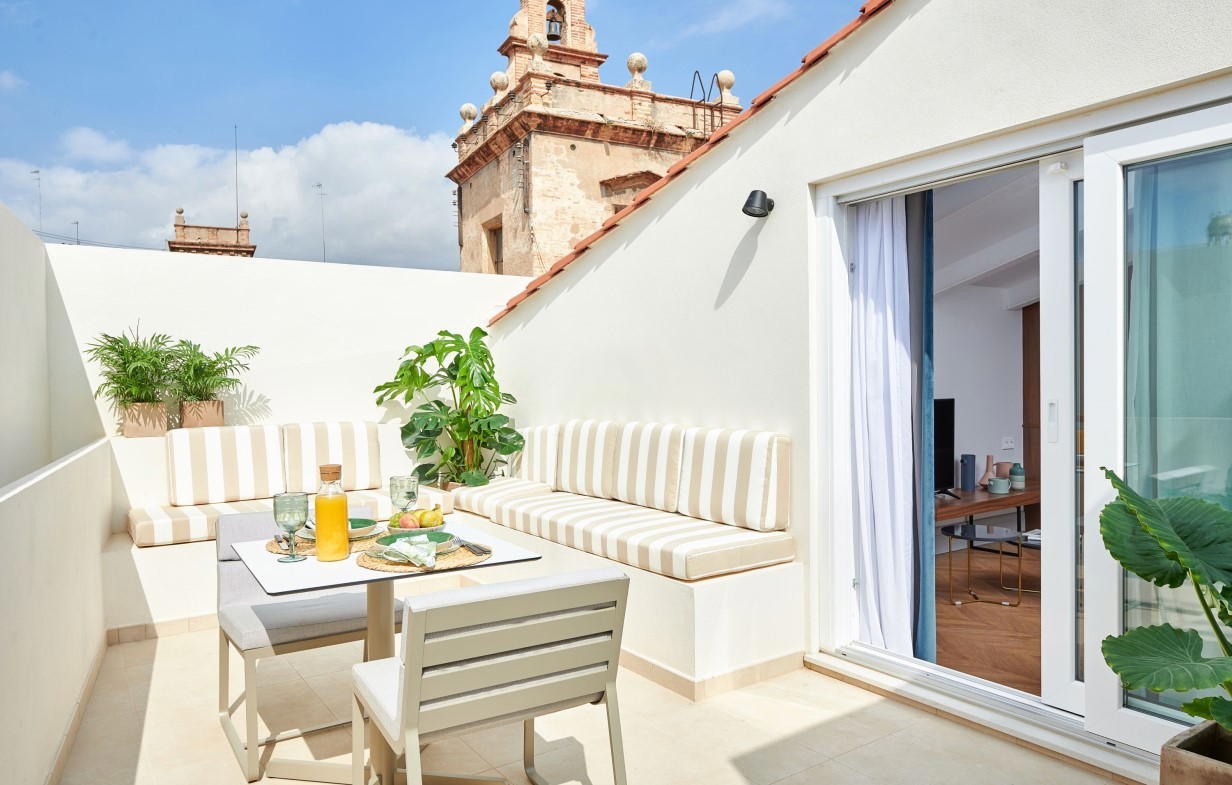
Bars in València
Browse all →
Restaurants in València
Browse all →
Wineries in València
Browse all →
Details
- Elegant
- Modern
- Sophisticated
- Intimate
- Historic
- Romantic Getaway
- Anniversary
- Business Trip
- Historic Building
- Terrace
- Rooftop Pool
- Wi Fi
- Pool
- Spa
- Room Service
- Concierge
- Fitness Center
- Laundry Service
- Elevator
- Step Free Entrance
- Wheelchair Accessible
Sophisticated and elegant with historic charm, featuring discreet lighting, soundproofed rooms, and serene courtyard pool atmosphere.