Hotel Orphee

Michelin Selected
Hotel Orphee occupies a centuries-old townhouse on Untere Bachgasse, one of Regensburg's most characterful medieval lanes, placing guests within walking distance of a UNESCO World Heritage city centre that sees relatively few international visitors despite its extraordinary architectural density. The property belongs to a category of Central European boutique hotels where the building itself is the primary statement, rooms fitted into ancient fabric, corridors that turn where history dictated, and a scale that chain formats cannot replicate.

Pearl is the En Primeur Club membership app, where members save venues, book tables and use the concierge.
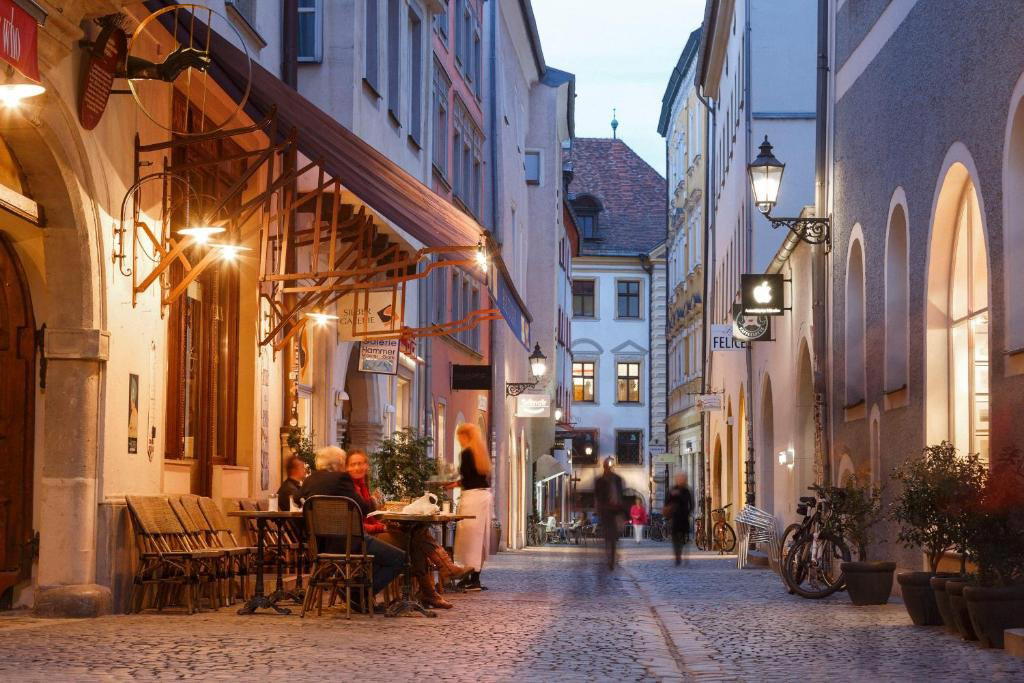
A Medieval Lane, a Townhouse, and What That Combination Means for a Stay
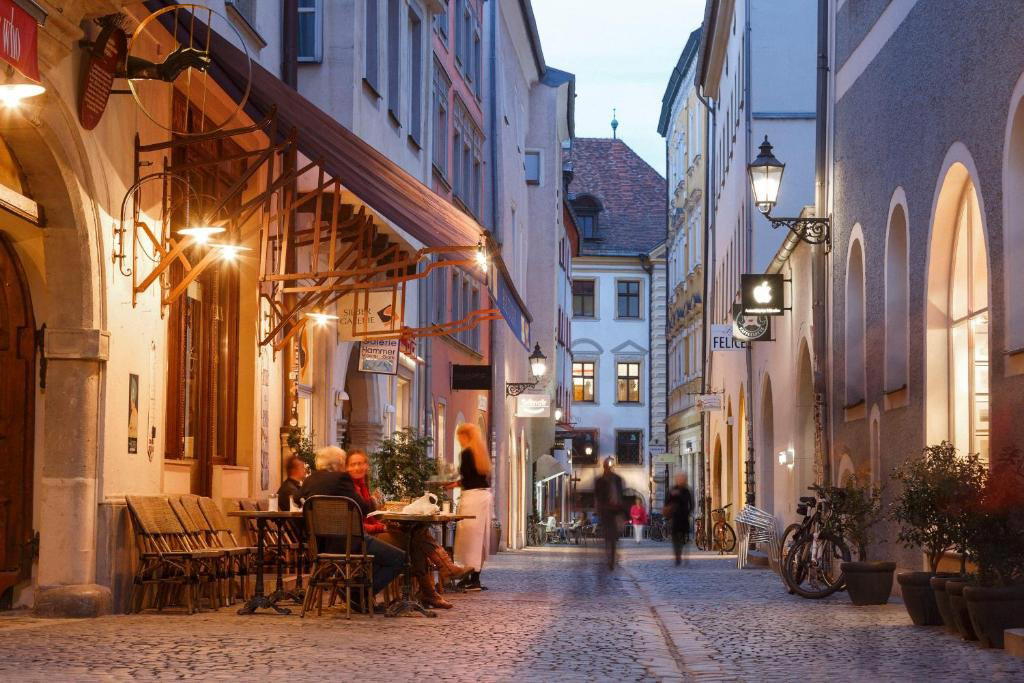
Regensburg is one of the most intact medieval cities in the German-speaking world. Its UNESCO World Heritage designation, awarded in 2006, covers a city centre where Roman walls, Romanesque churches, and Gothic mercantile towers exist in close proximity, largely uninterrupted by the kind of postwar reconstruction that altered so many comparable German cities. Untere Bachgasse, the address where Hotel Orphee sits, runs through the southern edge of the Altstadt, a narrow lane typical of the city's medieval street pattern, where building facades press close and the scale is emphatically pre-industrial. Arriving here on foot from the main train station, a walk of roughly fifteen minutes through progressively older streetscapes, the shift in atmospheric register is gradual and then sudden: by the time you reach the property, the modern city has receded almost entirely.
This address matters because it shapes what the hotel can and cannot be. A townhouse embedded in historic fabric operates under constraints that are also its primary asset. Rooms cannot be standardised the way a purpose-built hotel block would allow. Corridors follow the logic of the original structure. Ceiling heights vary. The building's age is present in textures and proportions that new construction cannot reproduce. Hotels in this category, and there is a coherent European tradition of them, from converted merchant houses in Prague to patrician residences in Bologna, succeed or fail on how well the accommodation design works with rather than against those inherited conditions.
The Physical Logic of the Building
The townhouse format that Hotel Orphee occupies is characteristic of Regensburg's urban history. The city was a major trading hub on the Danube during the medieval period, and the architecture of the Altstadt reflects the wealth of that era: tall, narrow plots, substantial stone construction, and interiors that were built to impress commercial visitors as much as to house families. The patrician towers visible across the city centre, Regensburg has more of them than almost any other German city, are the most visible expression of that ambition, but the residential and commercial fabric around them follows the same logic of compressed, vertical space.
Boutique hotels operating in this kind of building face a consistent set of design choices. The most direct approach is cosmetic: update finishes, add modern bathroom fixtures, and leave the structure largely as found. A more considered approach integrates contemporary design decisions with the existing fabric in ways that make both legible, where the old is preserved because it is genuinely interesting, not merely because it was cheaper to leave it. The most effective examples of this type in Central Europe tend toward the latter approach, allowing the inherited architecture to carry the atmospheric weight while ensuring the operational layer (light, temperature, sound) meets the expectations of a guest who could equally be staying at a modern property in Munich or Hamburg.
For context, consider how differently the same challenge plays out at scale. Properties like the Fairmont Hotel Vier Jahreszeiten in Hamburg or the Excelsior Hotel Ernst in Cologne occupy grand historic buildings but at a key count and operational scope that requires extensive modernisation of original fabric. The boutique townhouse model that Hotel Orphee represents operates at the opposite end of that spectrum: fewer rooms, more idiosyncratic spatial conditions, and a guest experience that is more directly determined by the building's history.
Regensburg as a Context for the Stay
The city surrounding the hotel is, for most international visitors, a genuine discovery. Regensburg receives a fraction of the tourism that flows through Munich, two hours to the southwest by train, despite holding a comparable depth of historical material. The Steinerne Brücke, a twelfth-century stone bridge crossing the Danube, predates London Bridge. The Dom St. Peter is one of the most complete Gothic cathedrals in Bavaria. The Altes Rathaus, where the Perpetual Imperial Diet convened for over a century, is open for tours that describe a political structure with no real parallel in English-language history curricula.
For a hotel positioned on a medieval lane in the middle of all this, the city is the primary amenity. Staying at Untere Bachgasse means the Steinerne Brücke is walkable in minutes, the Dom is within the same radius, and the dense concentration of restaurants, wine bars, and market activity that characterises the Altstadt is immediately accessible. Practically, this means a guest can orient the entire stay around walking, the city is compact enough that a car is a liability rather than an asset within the UNESCO zone.
Visitors planning around the city's cultural calendar should note that Regensburg's Christmas market, centred in the Thurn und Taxis palace grounds, draws significant domestic German visitors and is one of the more architecturally atmospheric markets in Bavaria. Summer visits align with longer evening light along the Danube, which changes the character of the riverfront considerably. Both periods represent peak demand for Altstadt accommodation, and boutique properties of Hotel Orphee's scale book ahead faster than their larger counterparts during these windows.
The broader German boutique hotel category includes properties that make instructive comparisons. Bülow Palais in Dresden operates a similar historic-building premise in another UNESCO-adjacent German city, at a somewhat larger scale. Hotel Ketschauer Hof in Deidesheim represents the wine-country variant of the same model. Hotel de Rome in Berlin shows what happens when a historic banking hall conversion is executed at a considerably higher investment level. Hotel Orphee belongs to a more intimate register than any of these, which is precisely where its positioning sits.
For those exploring the wider German hotel market, the EP Club covers a range of regional properties including Schloss Elmau Luxury Spa Retreat & Cultural Hideaway in Elmau, Hotel Bareiss in Baiersbronn, Althoff Seehotel Überfahrt in Rottach-Egern, Das Kranzbach Hotel & Wellness Retreat in Kranzbach, Kempinski Hotel Berchtesgaden, Mandarin Oriental Munich, Der Öschberghof in Donaueschingen, Gut Steinbach Hotel Chalets Spa in Reit im Winkl, Breidenbacher Hof Düsseldorf, BUDERSAND Hotel in Hörnum, Esplanade Saarbrücken, LA MAISON in Saarlouis, Landhaus Stricker in Sylt, Luisenhöhe in Horben, Villa Contessa in Bad Saarow, and Weissenhaus Private Nature Luxury Resort. For international points of comparison at the boutique end of the spectrum, Aman Venice represents the high-investment historic palazzo conversion, while The Fifth Avenue Hotel in New York City and Aman New York show how different the building-as-asset thesis plays out in a very different urban context.
See our full Regensburg restaurants guide for dining options across price points within walking distance of the Altstadt.
Planning the Stay
Hotel Orphee's address at Untere Bachgasse 8 places it inside the UNESCO zone, which means arriving by car requires planning around Altstadt parking restrictions, public car parks on the periphery of the old city are the practical solution. The main station connection makes train arrival considerably simpler, and for most visitors coming from Munich or Nuremberg, rail is the more direct option. Given the small scale typical of townhouse properties in this category, advance booking during peak Regensburg periods (the Christmas market season and summer months along the Danube) is the more prudent approach.
How It Stacks Up
| Venue | Price | Awards |
|---|---|---|
| Hotel OrpheeThis venue (the venue you are viewing) | Not listed | Michelin Selected |
| Fairmont Hotel Vier Jahreszeiten | $300–500 | 3 Michelin Keys · La Liste Top Hotels |
| Kempinski Hotel Berchtesgaden | $500–750 | 2 Michelin Keys |
| Kempinski Hotel Taschenbergpalais | $300–500 | 2 Michelin Keys · Virtuoso Luxury Hotel Partner |
| Mandarin Oriental Munich | Not listed | 2 Michelin Keys · La Liste Top Hotels |
| Rocco Forte Charles Hotel | $300–500 | 2 Michelin Keys · La Liste Top Hotels |
Recognition history
Dated appearances from independent guides and award organizations, with the underlying list record or original source where available.
Michelin Selected
Michelin
Continue exploring
More in Regensburg
Hotels in Regensburg
All hotels in Regensburg →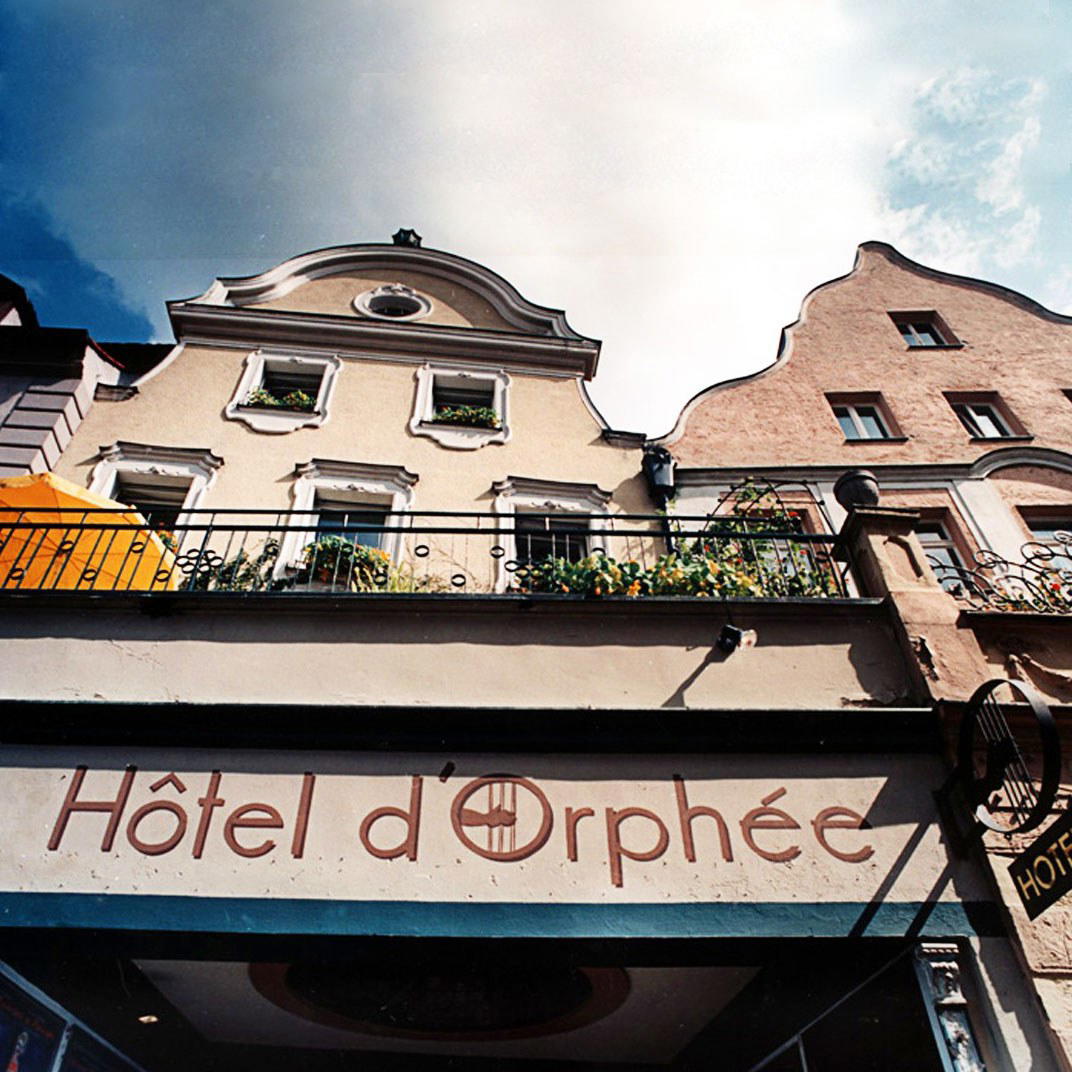
Bars in Regensburg
All bars in Regensburg →
Restaurants in Regensburg
All restaurants in Regensburg →
Wineries in Regensburg
Browse all →
Details
- Romantic
- Classic
- Elegant
- Intimate
- Romantic Getaway
- Weekend Escape
- Anniversary
- Historic Building
- Terrace
- Wi Fi
- Restaurant
- Bar
- Luggage Storage
- Concierge
- Elevator
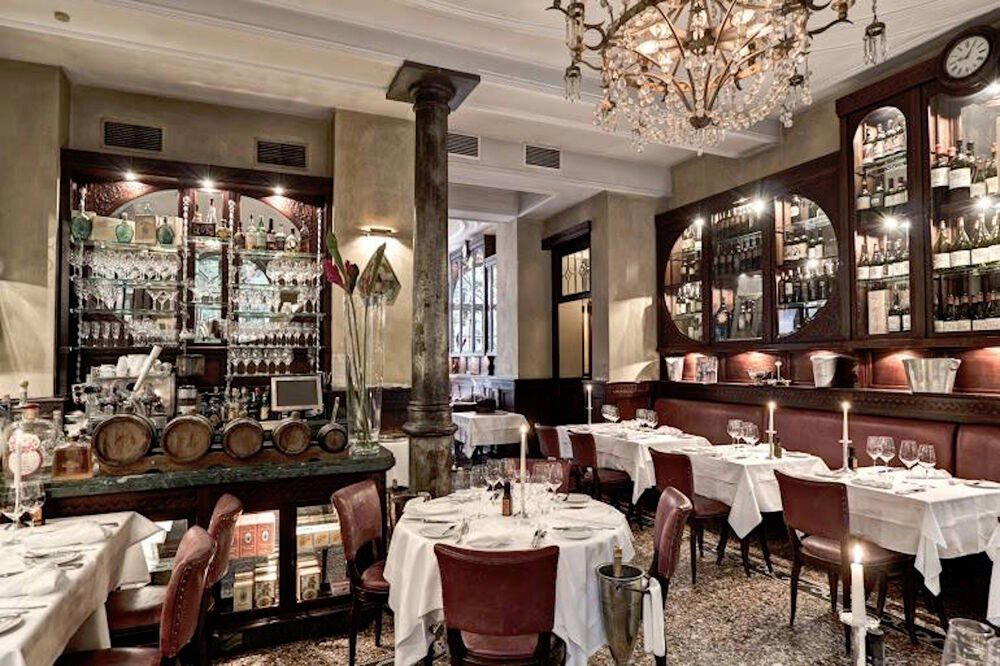
Eclectic and artistic with expressionistic touches, featuring polished wooden floors, quirky art installations, and a lively ground-floor brasserie that spills into a covered courtyard, creating a sophisticated yet playful atmosphere.