Mokuli

Michelin Plate
Our verdict
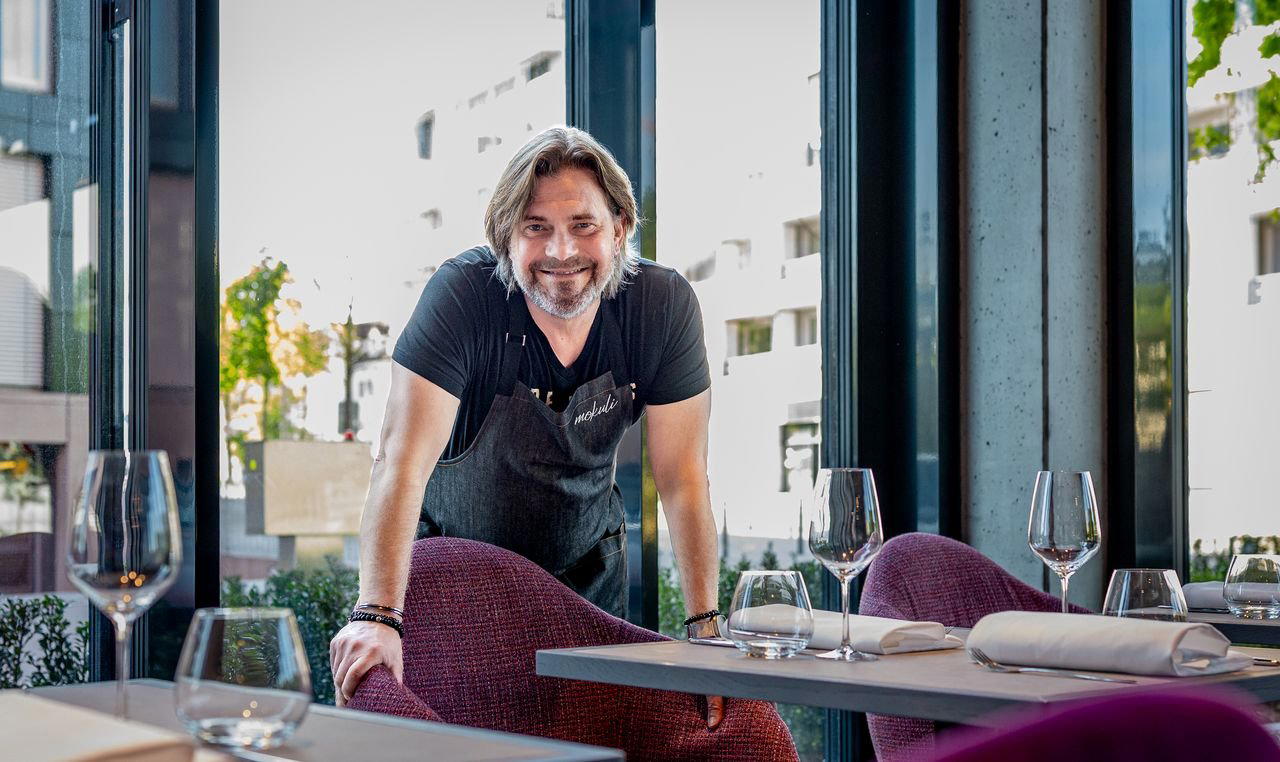
Behind an orange façade on Fritz-Fend-Straße, Mokuli occupies a bright, minimalist space defined by floor-to-ceiling windows and an open kitchen. The menu anchors international seasonal cooking to named regional producers, with named-source venison and yellowfin tuna appearing alongside four- and six-course evening menus. A lunchtime three-course deal and à la carte option make it one of Regensburg's more flexible serious-dining addresses.

Pearl is the En Primeur Club membership app — saves, bookings, and concierge access live there. Same editors, same standards.
- Address
- Fritz-Fend-Straße 4
- Phone
- +49 941 89846666
- Hours
- Mon ClosedTue–Thu 11:30 AM–2 PM, 5:30–11 PMFri 11:30 AM–2 PM, 5:30 PM–12 AMSat 11:30 AM–2 PM, 6 PM–12 AMSun Closed
- Website
- mokuli-restaurant.de
- Directions
- Get directions
- Booking
- Book on the venue's website
The menu
What to order
- Two types of yellowfin tuna romanesco cauliflower artichoke
- Venison from Gutshof Polting chanterelles celery watermelon
Orange Façade, Open Kitchen, Clear Intentions
Regensburg's restaurant scene has been sorting itself into recognisable tiers over the past decade. At the higher end, set-menu formats with Michelin recognition dominate: Storstad and ROTER HAHN by Maximilian Schmidt operate at the €€€€ end of the market, with tasting menus that run long into the evening and booking windows that demand advance planning. Below that sits a middle tier that is harder to define but arguably more useful for regular dining: restaurants with genuine culinary ambition and seasonal sourcing discipline that stop short of the full ceremony. Mokuli on Fritz-Fend-Straße occupies that space with some confidence.
The building announces itself clearly. The orange façade is not a colour choice designed to blend in, and inside the visual logic continues: a minimalist room, three paintings that carry enough presence to anchor the space without cluttering it, and floor-to-ceiling windows that run natural light through the dining room for most of the day. The kitchen is open. That detail matters more than it might seem. An open kitchen is a commitment, a signal that what happens back there is considered part of the experience rather than something to be hidden behind a swing door. At Mokuli, it makes the room feel less formal without making it feel casual.
Where the Ingredients Come From
German seasonal-contemporary cooking has spent the better part of two decades arguing about its own identity. The debate, running across restaurants from Aqua in Wolfsburg to JAN in Munich, centres on whether international technique applied to regional ingredients constitutes a coherent cuisine or just a convenient marketing position. The restaurants that answer this question most persuasively do so through supply chain transparency: they name producers, they let provenance drive the menu structure, and they change dishes when the source changes rather than when the calendar says so.
Mokuli's menu makes its sourcing position legible. Venison from Gutshof Polting appears by name, which is a specific and verifiable claim rather than the vague regional gesture that many restaurants in this tier fall back on. Gutshof Polting is an estate operation with a direct-supply relationship to a small number of restaurants, and appearing on that list places Mokuli inside a network of producers and kitchens that take the supply side seriously. Paired with chanterelles, celery, and watermelon, the dish works as a seasonal composition rather than a static signature, the kind of plate that is only fully coherent at the moment the ingredients converge.
The yellowfin tuna preparation, listed as two types with romanesco, cauliflower, and artichoke, reaches further geographically but remains disciplined in its structure. Tuna-forward dishes can become exercises in technical showmanship at this level of cooking, particularly when kitchens try to justify an international product against a regional-sourcing ethos. Here, the vegetable framing does some of that work: romanesco and artichoke are handled with the same seriousness as the protein, which tells you something about where the kitchen's priorities sit. Compare this approach with how seafood-focused kitchens like Le Bernardin in New York City use precision vegetable preparation to support rather than subordinate the main ingredient, and the strategy becomes clearer.
Format and Flexibility
Evening service runs on two set menus, one omnivore and one vegetarian, each available in four- or six-course formats. That structure is now common enough among serious German restaurants that it barely requires comment, but the vegetarian parity is worth noting. In many cities, the vegetarian tasting menu is an afterthought assembled from sides and substitutions. Here, it runs parallel to the main menu in both length and format, which implies a kitchen that has thought about plant-based cooking as a discipline rather than an accommodation.
The à la carte option at dinner sits alongside the set menus rather than replacing them, giving the room a degree of flexibility that fully tasting-menu-only restaurants at this level, including Schwarzwaldstube in Baiersbronn or Vendôme in Bergisch Gladbach, deliberately avoid. That is not a critique of those restaurants; it is a different audience proposition. Mokuli, by keeping both options open, positions itself closer to the middle of the Regensburg market where Ontra's Gourmetstube and Kreutzer's also operate, though with a higher ingredient sourcing profile than most at that tier.
Lunch is where Mokuli's practical case gets most direct. A three-course deal, available in both omnivore and vegetarian versions, is described as reasonably priced and draws a consistent crowd. For a restaurant with evening menus of this ambition, a functional lunch offering at an accessible price point is a considered decision, not a default. It opens the kitchen to a weekday audience who might not commit to a four-course dinner, and it gives the sourcing story a broader audience. A bar area is available for drinks only, and a terrace in front of the restaurant extends the options in warmer months, adding a street-facing dimension to what is otherwise an interior-focused room.
Regensburg in Context
Regensburg is a smaller city by German standards, roughly 160,000 people and a UNESCO-listed medieval centre that drives tourism without fully defining the food scene. The serious restaurants here operate without the density of Munich or Berlin, which means each one carries more individual weight in the conversation. Storstad has Michelin recognition; ROTER HAHN operates at a comparable formal level. Mokuli sits below that ceiling in price and format but above the casual tier in ingredient quality and menu discipline, which makes it the kind of restaurant that a smaller city needs and often struggles to sustain. Dessert-forward or high-concept formats like CODA Dessert Dining in Berlin or highly specialised Japanese counters like Aska require a larger urban market to support the narrowness of their offer. Mokuli's broader format is better suited to Regensburg's scale while still holding a clear culinary position.
For visitors building a few days in Regensburg, the full picture across restaurants, hotels, bars, wineries, and experiences is available across EP Club's Regensburg guides. Within the restaurant tier specifically, Mokuli earns its place as a lunch or dinner anchor rather than a single special-occasion destination, which is arguably the more durable position in a city of this size.
Planning Your Visit
Mokuli is located at Fritz-Fend-Straße 4 in Regensburg. Evening menus run to four or six courses in both omnivore and vegetarian formats, with à la carte also available. Lunch service offers a three-course set at an accessible price point. The terrace operates seasonally. The room suits a range of occasions given the format flexibility, though the evening set menu format rewards advance planning over walk-in assumptions, particularly on weekends. A drink at the bar is possible without a dining reservation, which offers a lower-commitment entry point to the space. For further context on where Mokuli sits among Regensburg's current restaurant options, the EP Club Regensburg restaurants guide covers the broader field. For those comparing international seasonally-driven concepts in similar mid-size German cities, ES:SENZ in Grassau offers a useful point of reference on how regional sourcing can anchor an internationally trained kitchen.
Frequently asked questions
Would Mokuli be comfortable with kids?
Evening service is structured around four- or six-course set menus, a format that favours a slower, adult-oriented pace. The lunchtime three-course deal, available in omnivore and vegetarian versions, is described as popular and reasonably priced, which makes it a more practical option for families. The terrace at Fritz-Fend-Straße 4 adds flexibility that a purely indoor room would not.
What should I expect atmosphere-wise at Mokuli?
Floor-to-ceiling windows do most of the work: the room reads bright and airy rather than intimate or candlelit. An open kitchen anchors the space functionally, while three paintings and a minimalist fit-out keep decoration intentional rather than dense. The orange façade outside signals personality that the interior reins in toward calm precision.
Does Mokuli have a Michelin star or similar recognition?
Mokuli has received recognition including: Behind its orange façade with an original design, this trendy restaurant is chic and airy with its modern, minimalist look, three striking paintings, open kitchen and large floor-to-ceiling windows that make it wonderfully bright. The inter….
What's the must-try dish at Mokuli?
The venison from Gutshof Polting, paired with chanterelles, celery, and watermelon, is the dish that most directly communicates the kitchen's sourcing logic: named estate, seasonal accompaniments, no vagueness about provenance. The yellowfin tuna with romanesco, cauliflower, and artichoke shows the international register Mokuli operates alongside its regional core.
Where do I go for Mokuli?
Mokuli is located at Fritz-Fend-Straße 4, Regensburg.
Can I walk in to Mokuli?
The three-course lunch deal is noted as popular, which suggests walk-in seats are contested rather than guaranteed, particularly on weekday middays. Evening set menus across Regensburg's serious dining tier generally require a reservation. Booking ahead, especially for dinner, is the practical approach at Fritz-Fend-Straße 4.
What makes Mokuli worth seeking out?
Mokuli operates at a price and ambition level that sits between Regensburg's casual options and its tasting-menu-only rooms, with named sourcing (Gutshof Polting venison) and a vegetarian set menu running in parallel rather than as an afterthought. The à la carte option at dinner adds flexibility that rigid tasting-menu formats do not allow. In a city of roughly 160,000 with a UNESCO-listed centre, that specific positioning is uncommon.
Comparable Venues
Comparable venues nearby, for context on price, style, and recognition.
| Venue | Cuisine | Price | Awards | Notes |
|---|---|---|---|---|
| MokuliThis venue — the venue you are viewing | Modern International Seasonal | Not listed | Michelin Plate | Not listed |
| Kreutzer's | Premium Steakhouse with International Grill | $50–100 | Michelin Plate | Not listed |
| Roter Hahn | Modern German Fine Dining | Not listed | Not listed | Altstadt |
| Spelunke | Modern Cuisine | Not listed | Michelin Plate | Regensburg |
| Sticky Fingers | Contemporary Fusion | $30–50 | Michelin Bib Gourmand | Old Town |
| Historische Wurstkuchl | Historic Bavarian Sausage Kitchen | $10–20 | Not listed | Old Town |
Recognition history
Dated appearances from independent guides and award organizations, with the underlying list record or original source where available.
Michelin Plate
Michelin · 2026 Michelin Plate
Continue exploring
More in Regensburg
Restaurants in Regensburg
Browse all →
Bars in Regensburg
Browse all →
Hotels in Regensburg
Browse all →
Wineries in Regensburg
Browse all →
Details
- Modern
- Minimalist
- Trendy
- Elegant
- Business Dinner
- Date Night
- Special Occasion
- Open Kitchen
- Terrace
- Local Sourcing
- Street Scene
- Set Menu
- A La Carte
- Vegetarian Friendly
Current opening hours
- Monday
- Closed
- Tuesday
- 11:30 AM–2 PM, 5:30–11 PM
- Wednesday
- 11:30 AM–2 PM, 5:30–11 PM
- Thursday
- 11:30 AM–2 PM, 5:30–11 PM
- Friday
- 11:30 AM–2 PM, 5:30 PM–12 AM
- Saturday
- 11:30 AM–2 PM, 6 PM–12 AM
- Sunday
- Closed
Hours can change for holidays and private events. Last verified .
Chic and airy with modern minimalist look, three striking paintings, open kitchen, and large floor-to-ceiling windows that make it wonderfully bright.