Hotel Milano Alpen Resort & Spa

Michelin Selected
Michelin Selected for 2025, Hotel Milano Alpen Resort & Spa occupies a distinct position among mountain properties in the Presolana valley, where alpine architecture and spa programming define the offer rather than urban proximity. The resort sits in Castione della Presolana, a small Bergamo province town that draws skiers in winter and hikers through summer, making it a genuinely seasonal property with dual-season credentials.

Pearl is the En Primeur Club membership app — saves, bookings, and concierge access live there. Same editors, same standards.
- Address
- Via Silvio Pellico, 3, 24020 Castione della Presolana BG, Italy
- Phone
- +39 348 662 6501
- Website
- hotelmilano.com
- Directions
- Get directions
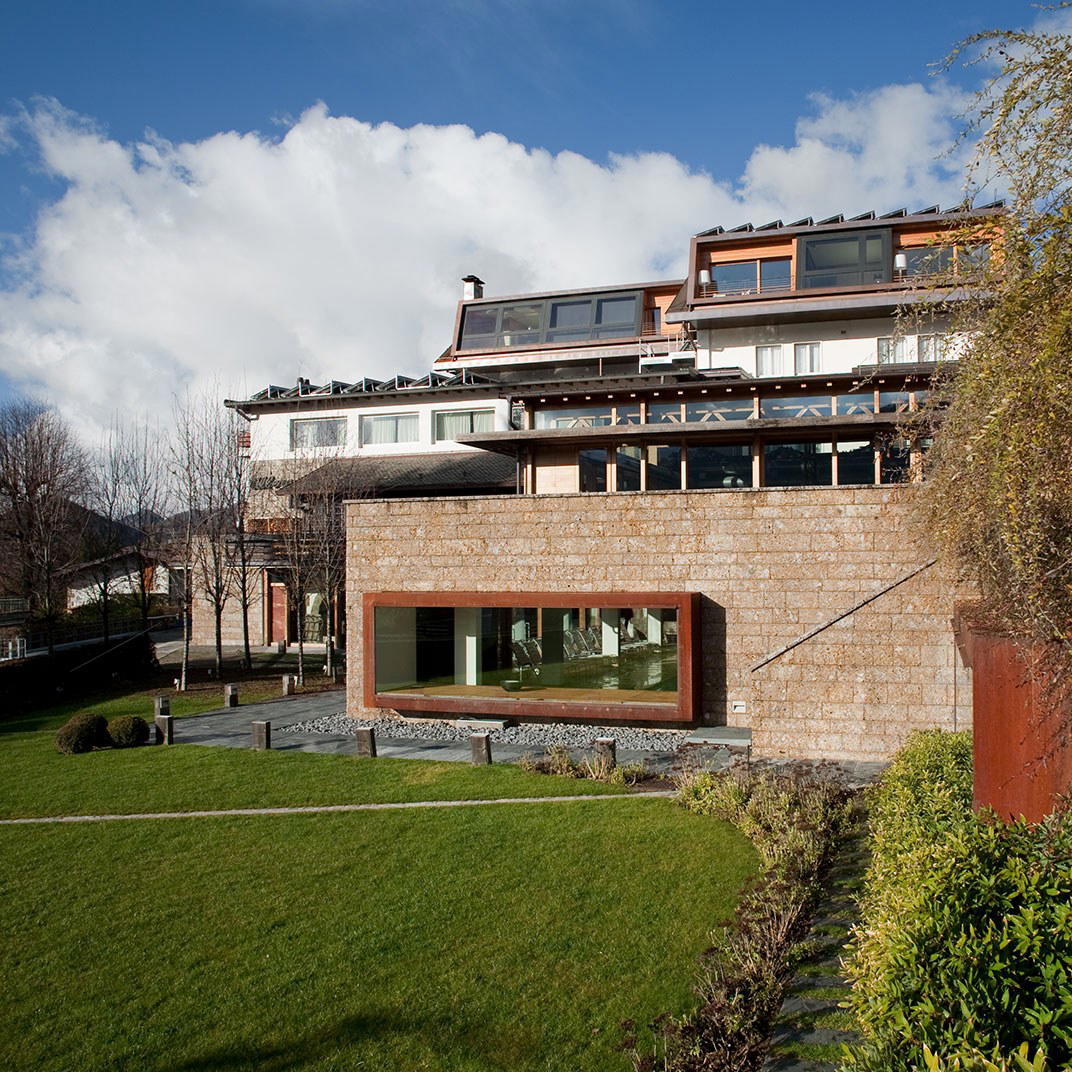
Where Alpine Architecture Meets the Presolana Valley
The approach to Castione della Presolana tells you something about the kind of mountain hotel that can exist here. The Presolana massif rises sharply above the Seriana Valley, its limestone faces catching light differently across the seasons, and the town itself sits at roughly 1,000 metres, high enough to feel genuinely alpine but accessible enough that it has served as a Bergamo-province retreat for generations of northern Italian families rather than an exclusive enclave for international ski tourists. Within that context, Hotel Milano Alpen Resort & Spa belongs to a category of property that has shaped itself around the valley's specific character: mid-mountain resorts that function as anchors for the destination rather than destinations that happen to be near mountains.
The architecture of alpine resort hotels in the Lombardy pre-Alps tends toward one of two registers. The first is the grand early-twentieth-century hotel in stone and render, built when rail access made these valleys fashionable for Milanese bourgeoisie escaping summer heat. The second is the more contemporary mountain vernacular, which draws on timber cladding, pitched rooflines, and a material palette drawn from the immediate landscape. Hotel Milano Alpen Resort & Spa sits in that tradition, where the physical structure is expected to acknowledge the terrain rather than contrast with it. In a valley where the skyline is dominated by the Presolana's ridgeline, that is not simply an aesthetic choice; it is what the location demands.
The Presolana Valley as a Design Context
Understanding what distinguishes mountain resort design in this part of Lombardy requires some sense of the Orobie Alps as a travel context. These are not the Dolomites, with their UNESCO designation and associated international footfall, nor are they the Aosta Valley, where properties like Bellevue Hotel & Spa in Cogne occupy a specific niche within one of Italy's most photographed alpine corridors. The Orobie are quieter, more local in their guest profile, and the hotels that have built reputations here have done so largely on repeat business from northern Italian guests who treat them as seasonal anchors rather than discovery destinations.
That guest relationship shapes the design logic of the better properties. A resort in this context is not performing mountain drama for first-time visitors; it is providing a reliable, well-considered physical environment for people who know exactly what they want from the valley. The spa component becomes central to that offer, particularly in the shoulder seasons when skiing is finished but the landscape remains compelling for walking. Across alpine northern Italy, from Castel Fragsburg in Merano to the Lake Como properties, the integration of thermal and wellness facilities into mountain architecture has become a defining category marker for properties that hold Michelin recognition. Hotel Milano Alpen Resort & Spa carries Michelin Selected status for 2025, which places it within that broader pattern of recognition for mountain properties that deliver consistent physical and hospitality quality.
Spa Architecture in the Alpine Resort Tier
The spa designation in this resort's name is not incidental. In the current Italian mountain hotel market, wellness infrastructure has moved from amenity to architectural priority. Properties at the Michelin Selected level in alpine settings are increasingly judged on whether the spa feels integrated into the building's spatial logic or appended to it. The distinction matters because it affects how guests actually move through the property across a multi-day stay, particularly in winter when outdoor time is structured around skiing rather than unplanned wandering.
This structural integration of wellness into mountain hospitality is visible across the northern Italian Alps at different price points. At the upper end, properties like Passalacqua in Moltrasio and Il Sereno in Torno have built international reputations on the coherence of their physical environments. In the mountain resort category specifically, the question is whether a property's spa and common spaces feel like a coherent architectural whole or like a hotel that added a wellness centre to meet market expectations. Michelin's selection process, which evaluates accommodation quality across design, service, and setting, tends to reward the former.
Castione della Presolana as a Seasonal Destination
Castione della Presolana operates on a genuinely dual-season rhythm. The ski area of Presolana Monte Pora connects to a modest but well-regarded network of pistes that draw primarily from Bergamo and Milan, roughly 90 kilometres to the southwest. In summer, the trails above the town offer access to the Presolana ridgeline, and the valley's position within the Orobie Alps Regional Park means the landscape context is protected in ways that prevent the kind of resort sprawl visible in more commercially developed alpine zones.
That protected character influences the hotel experience directly. Guests who visit Castione della Presolana are not arriving into a busy international ski resort with the associated infrastructure of large gondola stations and après-ski strips. They are arriving into a quieter, more contained environment where the hotel itself carries more of the social and atmospheric weight of the stay. This places a corresponding demand on properties like Hotel Milano Alpen Resort & Spa to function as genuine resorts in the full sense: providing enough within their own walls to constitute a stay rather than simply serving as a base for external activity.
For those planning a broader exploration of northern Italy's mountain and lake properties, the Orobie valley makes a credible addition to itineraries that might combine Grand Hotel Tremezzo in Tremezzo or Il Sereno in Torno on Lake Como with a higher-altitude stay. The drive from the Como shore to the Seriana Valley runs through Bergamo and takes around ninety minutes, making the combination logistically coherent for a week-long northern Italian circuit. For context on the full range of properties and dining in the area, our full Castione della Presolana restaurants guide maps the broader destination.
Planning a Stay
Michelin Selected status in the 2025 guide indicates the property met the Guide's quality threshold for accommodation across design, service, and setting, a credential that places it alongside a selective tier of Italian mountain hotels rather than the broad mass of valley properties. Guests considering the Presolana valley should note that winter weekends, particularly during the February school holiday weeks, represent the property's highest-demand period, and advance booking is advisable for those dates. Summer months offer a quieter entry point into the destination, with hiking access to the Orobie trails and generally more availability. The address at Via Silvio Pellico 3 places it within the town centre of Castione della Presolana, close to the main valley road that connects to Clusone and onward to Bergamo.
For reference across the broader spectrum of Italian hotel options at different price points and settings, EP Club covers properties ranging from Borgo Egnazia in Savelletri di Fasano and Rosewood Castiglion Del Bosco in Montalcino to Corte della Maestà in Civita di Bagnoregio and Four Seasons Hotel Firenze in Florence, offering points of comparison across Italy's diverse accommodation categories. Further afield, properties like Aman Venice, Bulgari Hotel Roma in Rome, and Castello di Reschio in Lisciano Niccone represent the upper tier of Italian destination hotels for those calibrating options across a longer Italian itinerary. Beyond Italy, Badrutt's Palace Hotel in St. Moritz offers a useful benchmark for what alpine mountain hospitality looks like at the highest price tier.
At-a-Glance Comparison
Comparable venues nearby, for context on price, style, and recognition.
| Venue | Cuisine | Price | Awards | Notes |
|---|---|---|---|---|
| Hotel Milano Alpen Resort & SpaThis venue — the venue you are viewing | Alpine resort with meeting facilities and spa | Not listed | Michelin Selected | Not listed |
| Relais San Giuliano | Contemporary boutique hotel housed in a restored 18th-century noble estate with rural Sicilian heritage. | $300–500 | Michelin Selected | Viagrande |
| Villa Svetoni Wine Resort | Historic Tuscan estate reimagined as luxury wine resort; blends 18th-century architectural heritage with contemporary hospitality and wellness focus. | $100–200 | Michelin Selected | Montepulciano |
| SINA Maria Luigia | Historic palace with traditional and contemporary rooms | $100–200 | Michelin Selected | Parma City Centre |
| Cave Bianche Hotel | Eco-designed hotel carved into ancient tuff quarries | $200–300 | Michelin Selected | Isola di Favignana |
| Villa Grey | Renovated 20th-century beachfront villa with historic Versilian charm. | $300–500 | Michelin Selected | Forte dei Marmi seafront |
Recognition history
Dated appearances from independent guides and award organizations, with the underlying list record or original source where available.
Michelin Selected
Michelin
Continue exploring
More in Castione Della Presolana
Hotels in Castione Della Presolana
Browse all →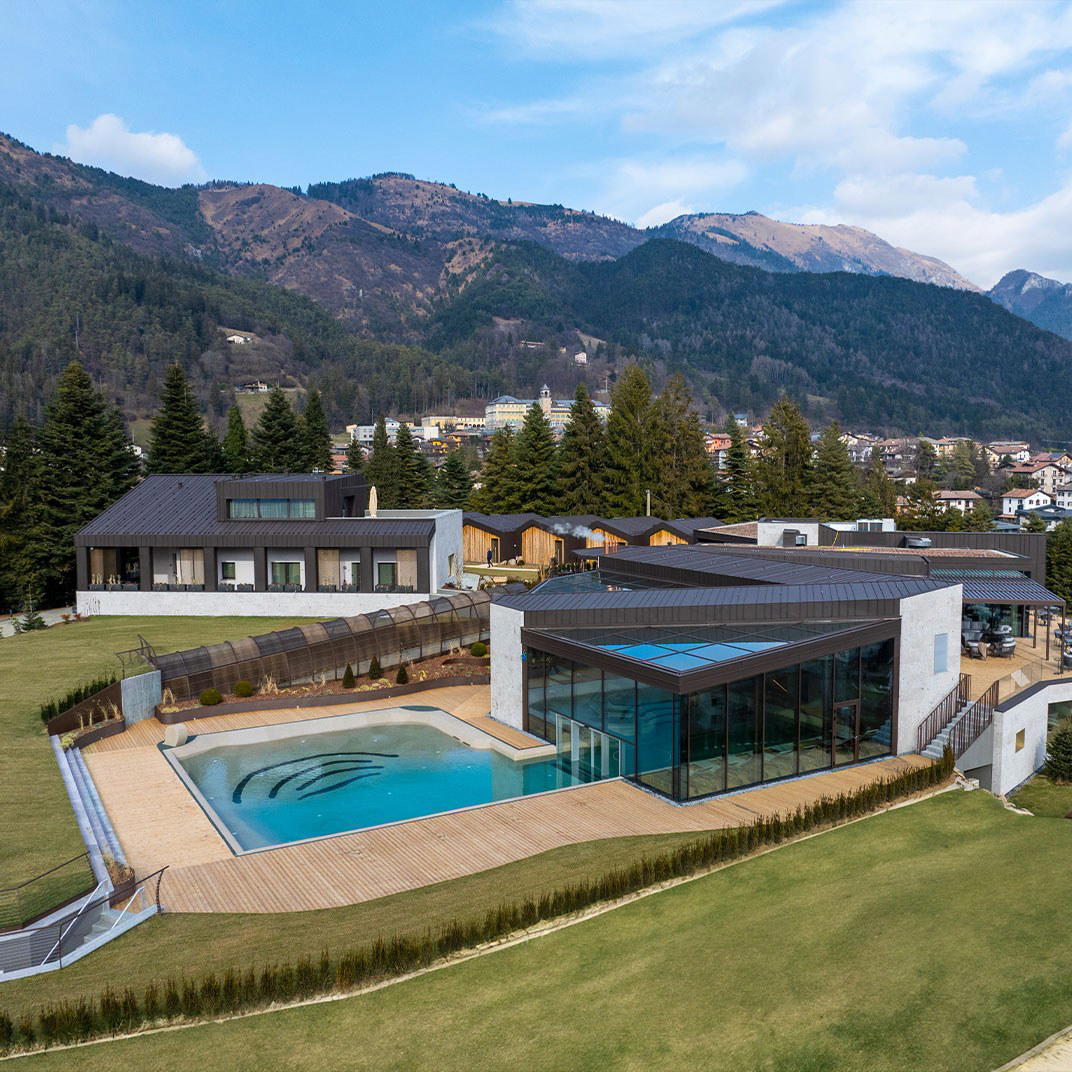
Bars in Castione Della Presolana
Browse all →
Restaurants in Castione Della Presolana
Browse all →
Wineries in Castione Della Presolana
Browse all →
Details
- Cozy
- Elegant
- Scenic
- Family Vacation
- Wellness Retreat
- Weekend Escape
- Panoramic View
- Destination Spa
- Terrace
- Spa
- Pool
- Fitness Center
- Indoor Pool
- Wi Fi
- Room Service
- Restaurant
- Mountain
- Garden
- Elevator
Contemporary classic atmosphere with elegant Italian design, soundproofed rooms, and a quiet, inviting mountain retreat vibe.