

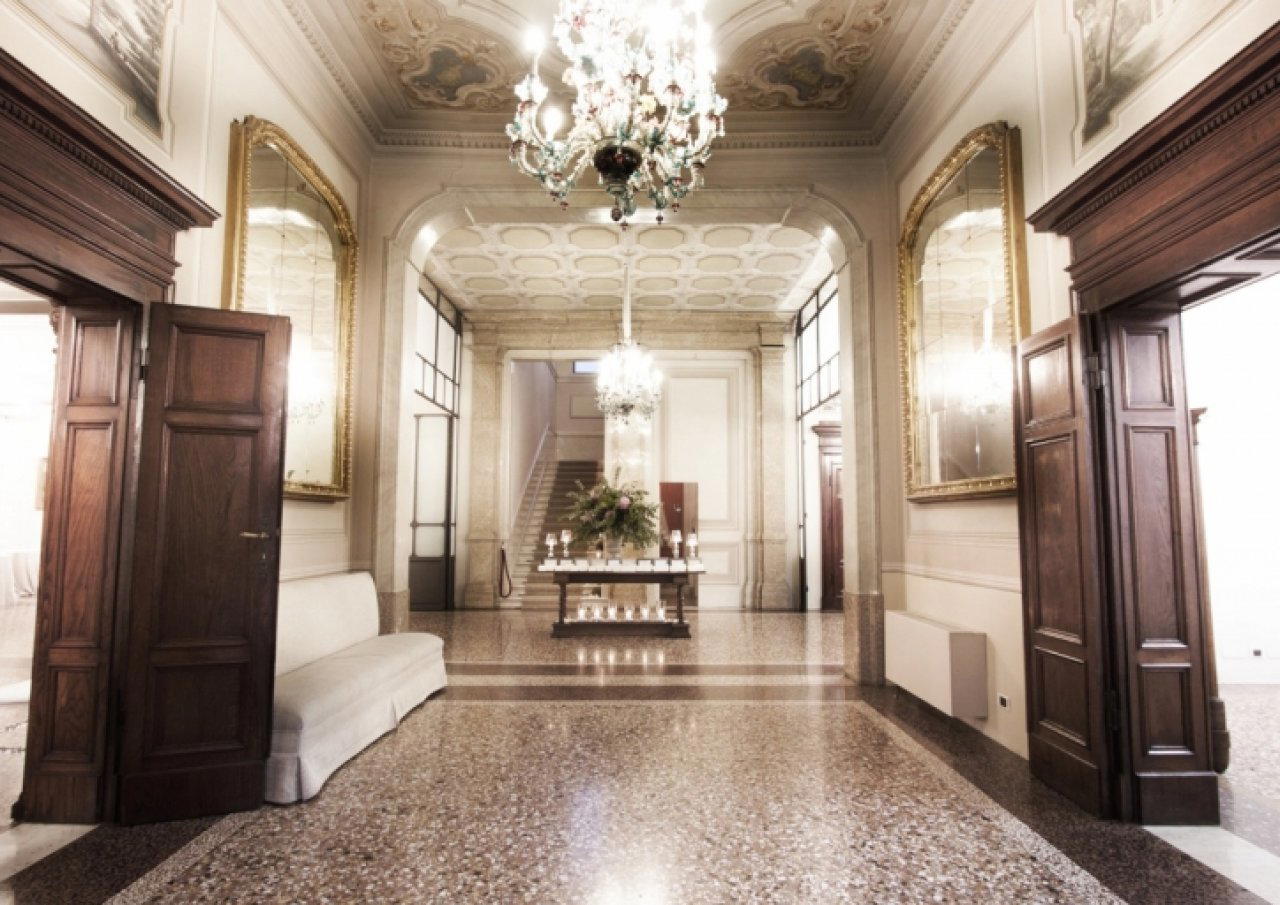
A restored aristocratic residence outside Bologna, Elizabeth Country House occupies a setting shaped by centuries of rural Emilian life, manicured grounds, stately architecture, and a medieval village as backdrop. It belongs to a small tier of Italian country-house properties where the building itself carries the programme, and the surrounding Po Valley countryside does the rest.
Pearl is the En Primeur Club membership app — saves, bookings, and concierge access live there. Same editors, same standards.
- Address
- Via Savena Superiore 28, Minerbio 40061, Italy
- Phone
- +39 051 1987 6689
- Website
- marriott.com
- Directions
- Get directions
 Saves & bookings on Pearl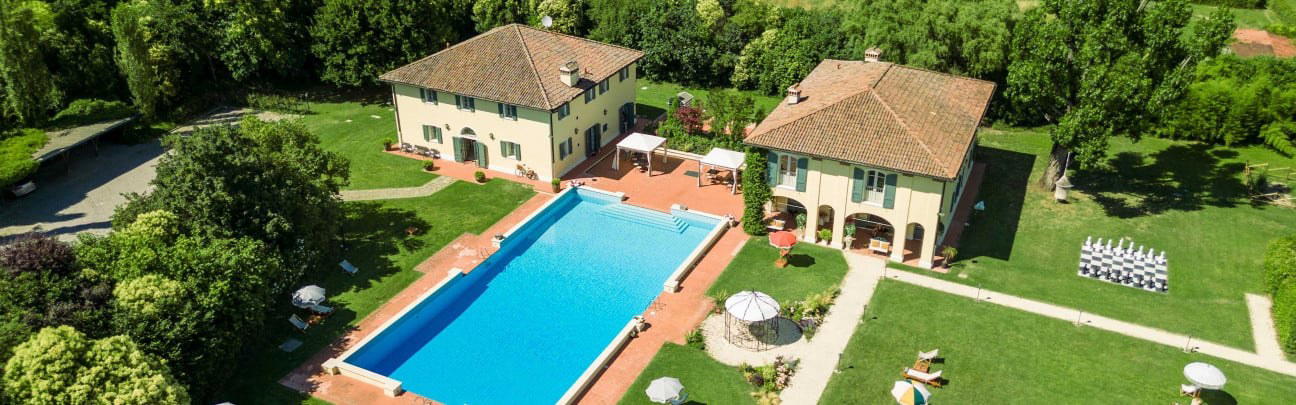
Where the Architecture Is the Argument
The approach to Minerbio sets expectations early. The Po Valley flatlands southeast of Bologna give way to a medieval village whose pace and scale feel removed from the motorway Italy just twenty or so kilometres behind you. It is in this context that Elizabeth Country House makes its case, not through amenity stacking or branded programming, but through the weight of its physical fabric. The property was once a regal family residence, and that lineage shows in every proportioned facade, every formal garden axis, every interior room whose ceiling height signals a different century's idea of domestic ambition. Elizabeth Country House is a five-star hotel in Minerbio, near Bologna.
Italian country-house hospitality has developed two distinct registers. One leans into agricultural production, wine estates, olive groves, farm-to-table framing, where the land is both backdrop and commodity. The other, rarer tier is the aristocratic residence restored to guest use, where the building itself is the primary experience and the surrounding grounds function as extension of an architectural idea rather than a working landscape. Elizabeth Country House belongs to the second category. Its manicured rural setting reads as a designed environment, continuous with the formal intentions of the house rather than incidental to it.
The Physical Language of an Emilian Residence
Emilia-Romagna's rural architecture developed under specific pressures, agricultural wealth, civic rivalry between cities, and a tradition of the villa di delizia, the pleasure villa built for aristocratic withdrawal from urban life. The stately residences that survive this tradition tend to be legible in their ambitions: symmetry, axial planning, and a relationship between interior and exterior space that treats the garden as a room without walls. Properties in this mode, and there are fewer than a dozen of real note across the region, hold their value precisely because the architectural vocabulary is coherent and irreproducible. You cannot build what they are. You can only restore it or lose it.
Elizabeth Country House sits within that tradition. The exterior communicates the typical grammar of the Emilian country seat: formal massing, agricultural outbuildings brought into aesthetic relationship with the main residence, grounds that function as a curated threshold between the cultivated and the wild. This is architecture that was designed to be read from a distance as well as lived in at close quarters, which is why the approach through the village matters as much as the arrival courtyard.
Setting It Against Comparable Properties
Italy's premium country-house tier has expanded significantly in the last decade, with international groups acquiring and repositioning historic rural estates across Tuscany, Umbria, and the Veneto. Properties like Castello di Reschio in Lisciano Niccone and Rosewood Castiglion Del Bosco in Montalcino represent the branded end of this tier, meticulously restored, internationally marketed, and priced accordingly. At the other end sit family-operated residences where the experience is more intimate but the infrastructure less predictable.
Emilia-Romagna remains underrepresented in this segment relative to its cultural weight. Bologna commands serious food-tourism attention, and the region's culinary identity is stronger than any comparable Italian province, yet the premium rural accommodation offer has lagged behind Tuscany and the Italian lakes in international profile. This creates an asymmetry that works in the informed traveller's favour: the setting is as architecturally serious as many better-known alternatives, the surroundings are more authentic in their agricultural character, and the competition for attention is considerably lighter.
For comparison, properties like Borgo San Felice Resort in Castelnuovo Berardenga or Castelfalfi in Montaione operate in a Tuscan market with substantially more inbound luxury traffic and, correspondingly, more competitive pricing. The Emilian equivalent, staying at a restored aristocratic residence within reach of Bologna, Modena, and Ferrara, tends to carry different value dynamics. Other notable Italian properties in the wider comparable set include Borgo Egnazia in Savelletri di Fasano, Il Pellicano in Porto Ercole, and Castel Fragsburg in Merano, each anchoring a different regional character.
The Minerbio Proposition
Minerbio is a working municipality in the Bologna metropolitan area, which means its rhythms are agricultural and civic rather than touristic. The medieval village at its core has the compressed, functional architecture of the Po Valley, towers, fortified perimeters, streets scaled to foot traffic and draft animals rather than tourism flows. Staying in this context is a specific choice. It suits travellers for whom the point of a rural Italian stay is absorption into a place that has not been curated for their consumption, not a resort environment that deploys Italian vernacular as a design language.
Bologna is the obvious day-trip anchor and among the more significant food cities in Europe, the source of ragu, mortadella, and tortellini in their canonical forms. Modena sits within comparable reach, placing Casa Maria Luigia and Modena's broader dining scene in easy range. Ferrara, a UNESCO-listed Renaissance city, adds a different architectural register to the itinerary. This geographic position, equidistant from three cities of serious cultural and gastronomic weight, is one of the more compelling structural arguments for Minerbio as a base.
Planning a Stay
The property is located at Via Savena Superiore 28, Minerbio, approximately twenty kilometres from Bologna's historic centre by road. A car is the practical way to operate from this base, both for the arrival itself and for day-trip flexibility across the region. Bologna's international airport connects the area to most major European hubs, reducing the logistical friction that can accompany rural Italian stays. For those travelling without a car and preferring urban-anchored luxury, alternatives like Four Seasons Hotel Firenze in Florence, Portrait Milano in Milan, or Bulgari Hotel Roma in Rome represent the urban end of the Italian luxury spectrum. For those drawn to water rather than land, Aman Venice or Grand Hotel Tremezzo in Tremezzo sit in a different register entirely.
Seasonally, the Po Valley runs hot and humid in July and August, with flat agricultural land amplifying both. Spring, April through early June, and autumn, September through October, offer particularly comfortable conditions for exploring on foot and by car. The autumn harvest period across Emilia-Romagna carries particular weight, when the region's food production is at its most visible and the culinary calendar runs at full pitch.
Side-by-Side Snapshot
Comparable venues nearby, for context on price, style, and recognition.
| Venue | Cuisine | Price | Awards | Notes |
|---|---|---|---|---|
| Elizabeth Country HouseThis venue — the venue you are viewing | Historic country house with three restored villas featuring frescoed ceilings and large bright spaces. | $$$$ | 5-Star | Not listed |
| Hotel Gabrielli Venezia | Refined five-star Venetian palazzo hotel combining historic architecture with contemporary Starhotels Collezione luxury in a prime lagoonfront location. | $$$$ | 5-Star | Castello / Riva degli Schiavoni (near St. Mark’s Square) |
| Relais Villa San Martino | Elegant historic relais villa with modern luxuries. | $$$$ | 5-Star | Zona G |
| Therasia Resort Sea & Spa | Aeolian resort with modern luxury and natural integration | $$$$ | 5-Star | Vulcano |
| Grand Hotel Majestic Gia’ Baglioni | Historic luxury palazzo with classic Italian elegance. | $$$$ | 5-Star | Historic Center |
| Tivoli Palazzo Gaddi | Historic palace blending Renaissance heritage with modern luxury | $$$$ | 5-Star | Centro Storico |
Recognition history
Dated appearances from independent guides and award organizations, with the underlying list record or original source where available.
Design Hotels Member
Design Hotels
Mr & Mrs Smith Smith Seal of Approval
Mr & Mrs Smith
Michelin Selected
Michelin
Continue exploring
More in Minerbio
Hotels in Minerbio
Browse all →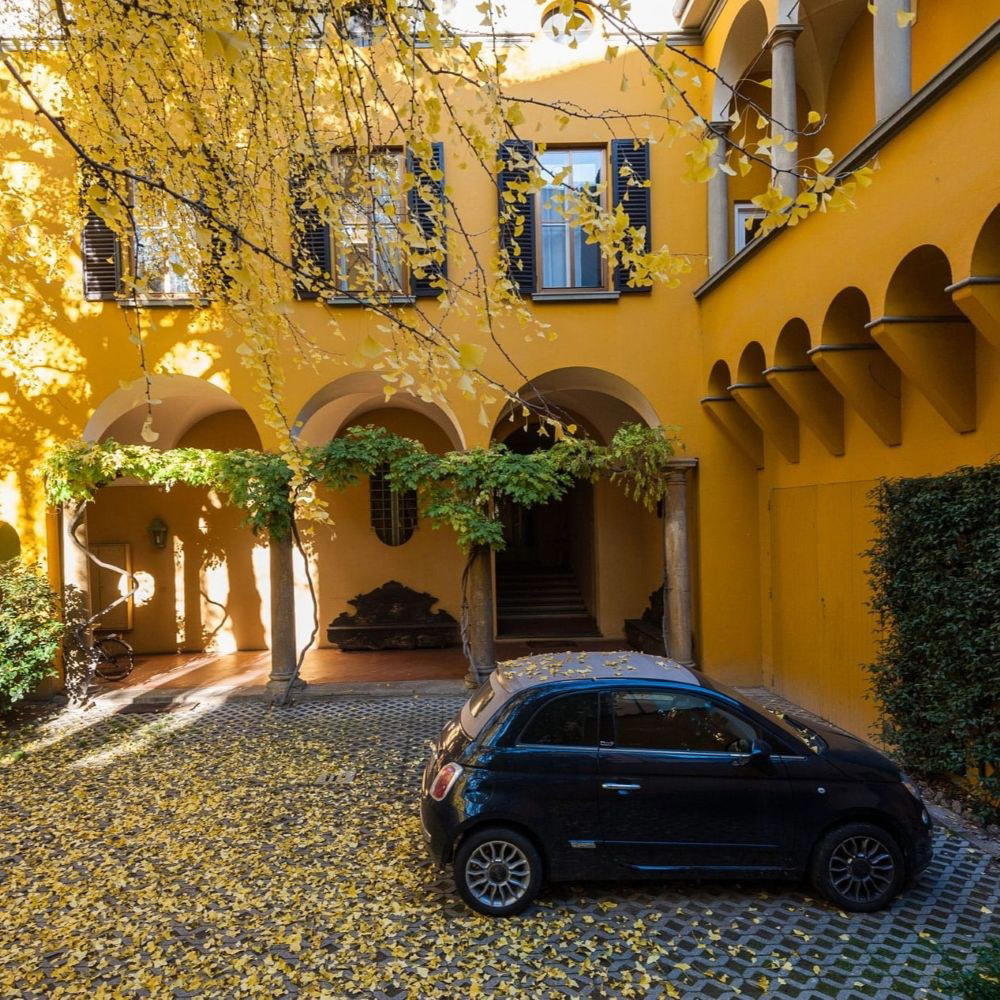
Bars in Minerbio
Browse all →
Restaurants in Minerbio
Browse all →

At a Glance
- Romantic
- Quiet
- Elegant
- Rustic
- Cozy
- Romantic Getaway
- Wellness Retreat
- Weekend Escape
- Garden
- Historic Building
- Wi Fi
- Pool
- Spa
- Fitness Center
- Room Service
- Concierge
- Breakfast Included
- Airport Transfer
- Hot Tub
- Sauna
- Garden
- Wi Fi
- Pool
- Spa
- Fitness Center
- Room Service
- Concierge
- Breakfast Included
- Airport Transfer
- Hot Tub
- Sauna
Peaceful and relaxing oasis with bright spacious rooms, wooden beams, Provençal style walls, and a tranquil garden atmosphere praised for its serenity and comfort.