Casa Palacio María Luisa

Michelin Selected
A Michelin Selected palacio hotel occupying a restored aristocratic townhouse on Calle Tornería in central Jerez de la Frontera, Casa Palacio María Luisa belongs to a small cohort of Andalusian heritage properties where the architecture is the offer. Its position in Jerez's old city places guests within walking distance of the sherry bodegas and flamenco venues that define the town's cultural identity.

Pearl is the En Primeur Club membership app — saves, bookings, and concierge access live there. Same editors, same standards.
- Address
- C. Tornería, 22, 11403 Jerez de la Frontera, Cádiz, Spain
- Phone
- +34 956 92 62 63
- Website
- casapalaciomarialuisa.com
- Directions
- Get directions
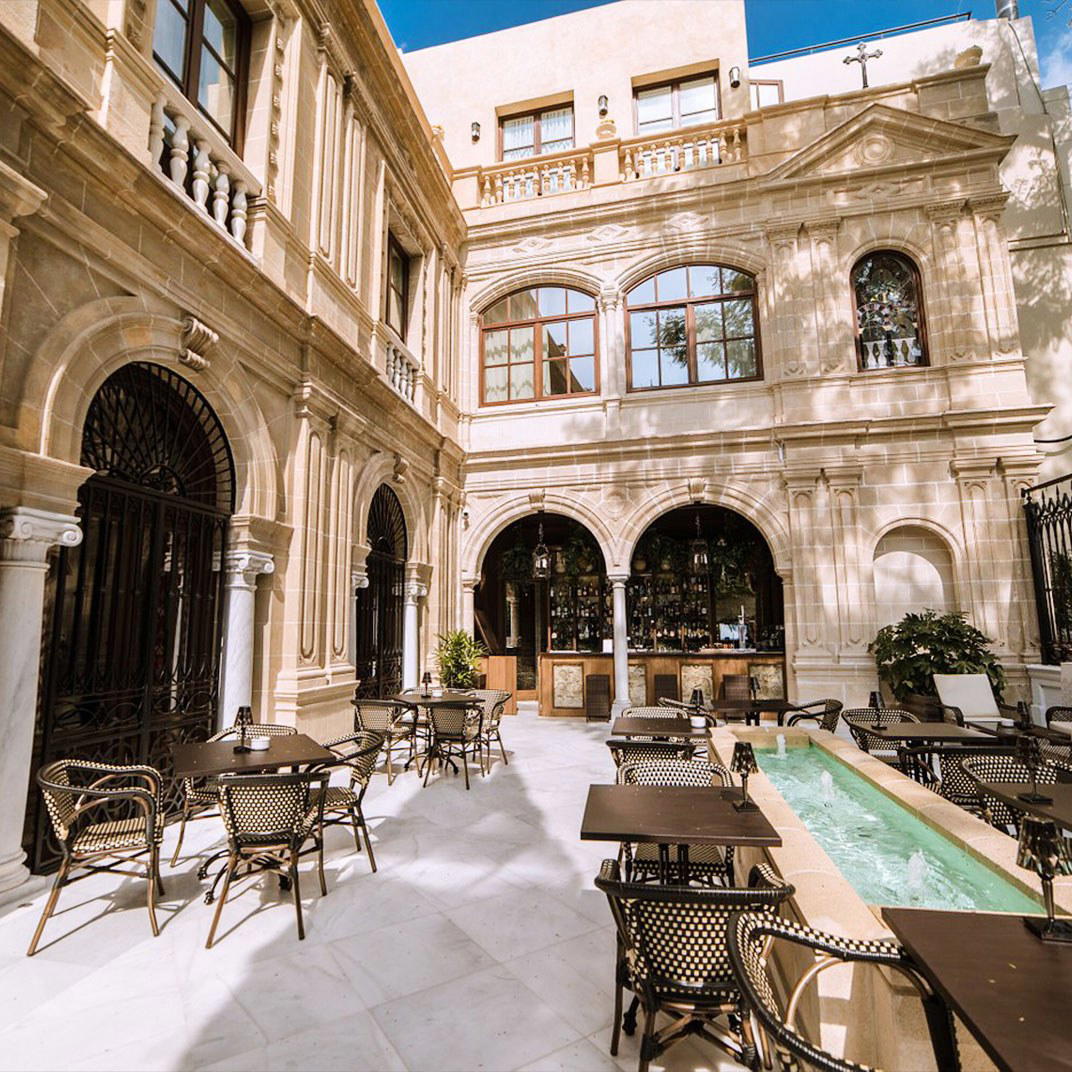
Stone Courtyards and Sherry Country: Staying Inside Jerez's Architectural Heritage
Jerez de la Frontera has never been a city that wears its wealth obviously. The grandest buildings here turn inward, presenting plain whitewashed facades to the street while concealing arcaded courtyards, tilework, and double-height galleries behind heavy wooden doors. Casa Palacio María Luisa, on Calle Tornería in the historic centre, follows exactly that logic. The address is a narrow lane in the tangle of streets between the cathedral and the old equestrian quarter, and nothing about the exterior signals what the property contains. That deliberate restraint is, in itself, an architectural statement about how Andalusian domestic grandeur has always operated.
The casa palacio typology is specific to southern Spain, particularly to Seville, Jerez, and Córdoba: a large private residence built around one or more interior patios, typically from the 16th to 19th centuries, with rooms arranged to catch cross-ventilation and shade rather than street-facing views. These buildings were not designed for display from the outside. They were designed for living inside. When properties of this type are converted to hospitality use, the architecture itself becomes the primary experience, and the conversion quality matters more than brand affiliation or amenity count. Casa Palacio María Luisa's inclusion in the Michelin Selected Hotels 2025 guide places it within the tier of European heritage properties that the guide recognises for character and setting rather than for spa square footage or restaurant starred credentials.
What the Palacio Format Means in Practice
Spain's premium hotel market has split into two reasonably distinct groups: large international operators with full-service infrastructure — the Mandarin Oriental Ritz in Madrid and the Mandarin Oriental Barcelona represent that tier at its most polished — and smaller, architecturally-led independents where the building does the work that a brand name would otherwise do. Casa Palacio María Luisa sits firmly in the second group, alongside properties like Caro Hotel in València, which occupies a Roman-era palazzo, or Hotel Can Cera in Palma, a 17th-century merchant house converted with similar attention to its original fabric.
What this means practically is that the physical envelope of the building shapes the guest experience in ways that a purpose-built hotel never could. Room configurations in palacio conversions tend to be irregular: some spaces are double-height with original beamed ceilings, others occupy what were service wings or storage areas and are correspondingly compact. Courtyard-facing rooms typically offer the strongest connection to the building's logic, since the patio is where Andalusian domestic architecture concentrates its energy. Guests who book without considering orientation may find themselves in a room that reads as an ordinary hotel room; those who understand the building type know to ask about patio access and ceiling height.
The Michelin Hotels selection process pays attention to exactly this kind of contextual coherence. A property earns its place in the guide not through a points-based amenity checklist but through how well the experience fits its setting. For a palacio hotel in Jerez, that means the tiling, the ironwork, the quality of natural light in the courtyard at different hours, and whether the conversion has respected or overridden the building's original spatial rhythm. Across Andalusia, the better examples of this format, including several in Seville and Ronda, tend to share a restraint about intervention: the original structure is the decoration, and added furnishings either support or compete with it. The less successful conversions chase a generic luxury aesthetic that the palacio format actively resists.
Jerez as a Base: What the Location Delivers
Calle Tornería sits in the part of Jerez that rewards pedestrian exploration more than any other. The cathedral, the Alcázar, and the main sherry bodegas are all within a ten-to-fifteen-minute walk, and the neighbourhood retains enough residential character that the streets are not purely tourist-facing. This matters in a city of Jerez's scale: with a population of around 215,000, it is large enough to have a functioning urban fabric but compact enough that the historic centre remains genuinely central to daily life rather than being a preserved zone at its margins.
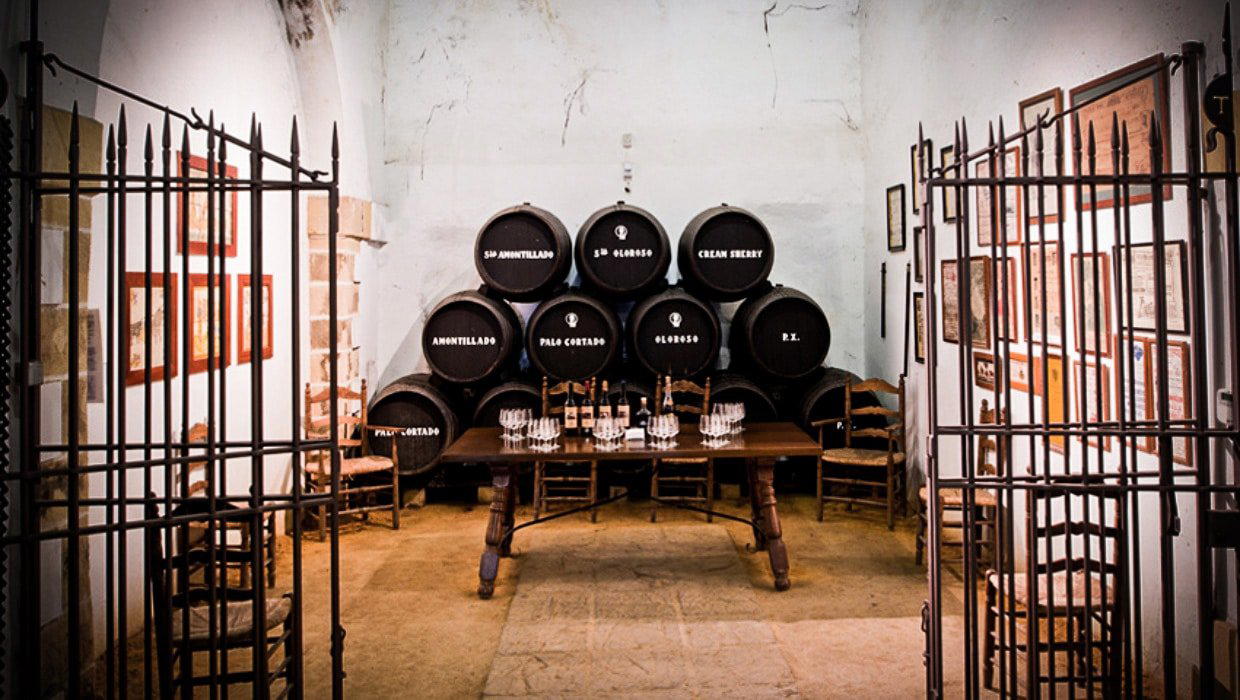
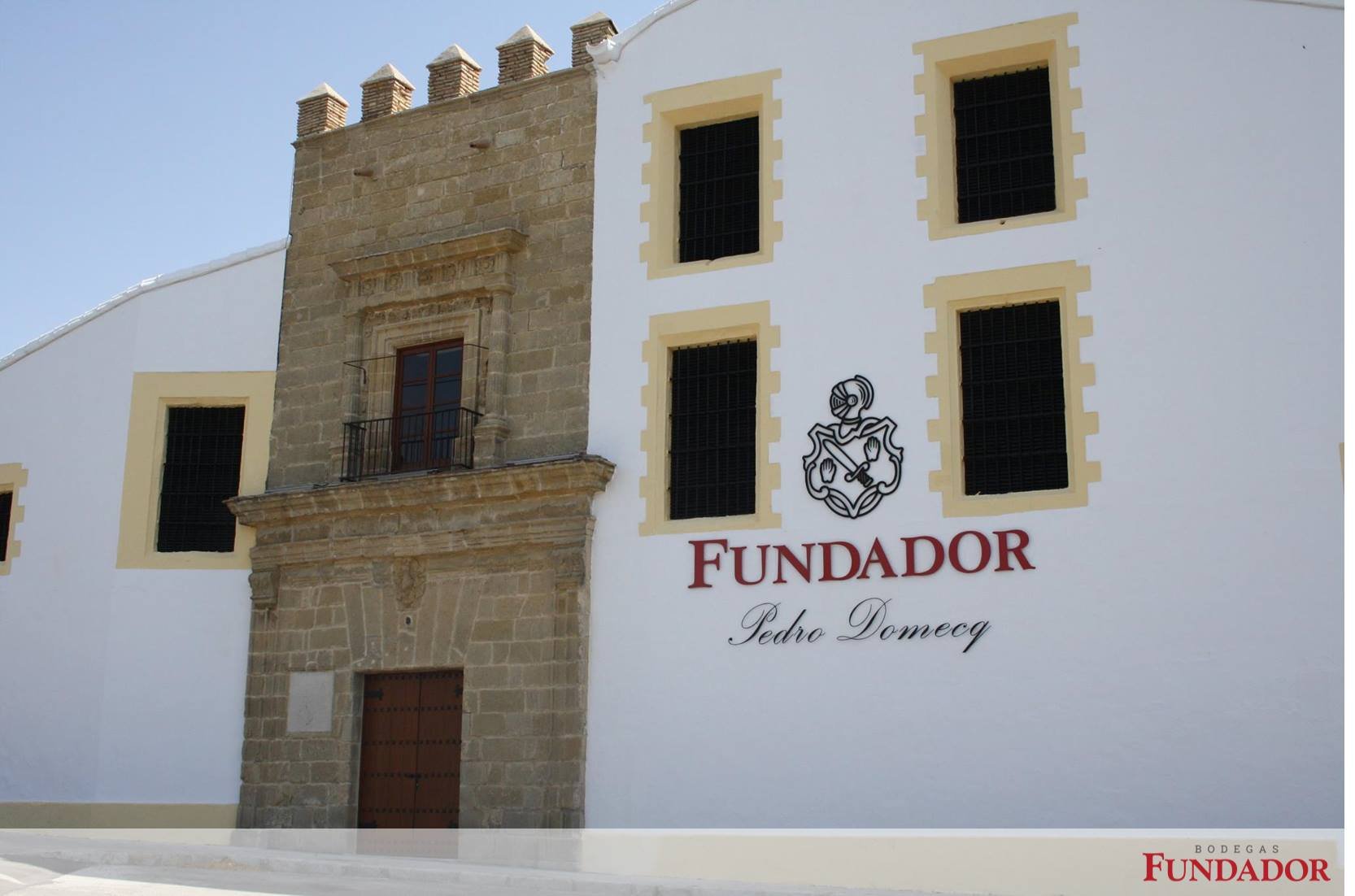
Sherry production remains the defining industry, and the bodegas, González Byass, Domecq, Lustau and others, are among the few working industrial heritage sites in Europe where the architecture, the process, and the product are all worth the visit on their own terms. The timing question for any Jerez trip is direct: the vendimia, or grape harvest, runs through September, when the city hosts its annual Harvest Festival and the bodegas are most active. February brings the Carnival, one of the most musically sophisticated in Spain. Both periods mean higher demand for accommodation in the historic centre, so Casa Palacio María Luisa and comparable properties book ahead during those windows.
For guests combining Jerez with the wider region, the positioning is useful. Seville is roughly an hour north by car or train; Cádiz, with its extraordinary Baroque old city, is 35 kilometres southwest. The Sherry Triangle, Jerez, Sanlúcar de Barrameda, and El Puerto de Santa María, is entirely accessible as a day circuit. For broader Andalusian context, Hotel Mercer Sevilla covers the Seville end of that triangle with comparable architectural credentials. Further afield along the southern coast, Marbella Club Hotel represents a different register of Andalusian hospitality, rooted in the mid-century resort tradition rather than urban heritage.
Palacio and casa-palacio conversions have become a recognised format across Spain and Portugal, with quality varying considerably between properties that have maintained architectural integrity and those that have treated the original building as little more than a shell. Among the better examples in the Michelin Selected tier, Atrio Restaurante Hotel in Cáceres combines Roman-era city walls with a contemporary interior insertion, a different approach but one that takes the same position on architectural seriousness. Terra Dominicata in Escaladei and Abadía Retuerta LeDomaine apply similar principles to former monastic buildings in wine-producing regions, where the heritage structure and the landscape are jointly the product.
What connects these properties is a shared editorial logic: the building's history is not a marketing narrative, it is the physical experience on offer. Guests choose them because they want to sleep inside a particular kind of architecture, not because they want a hotel that happens to occupy an old building while otherwise delivering a standard hospitality programme. Casa Palacio María Luisa belongs to that cohort by virtue of its Michelin recognition and its typological identity, even if the specific details of its conversion and room configuration remain leading assessed on booking inquiry or on arrival.
Planning a Stay
Casa Palacio María Luisa is located at Calle Tornería, 22, in central Jerez de la Frontera. Jerez Airport (XRY) connects to several European cities, including London Gatwick and Frankfurt, making it a viable direct-access destination rather than a Seville overflow. Booking directly through the property or via Michelin's hotel platform is the most reliable route to current availability and room-category detail. Given the irregular room configurations typical of palacio conversions, it is worth corresponding with the property about specific room characteristics before confirming. For the wider context of eating and drinking in Jerez, see our full Jerez de la Frontera restaurants guide.
At-a-Glance Comparison
Comparable venues nearby, for context on price, style, and recognition.
| Venue | Cuisine | Price | Awards | Notes |
|---|---|---|---|---|
| Casa Palacio María LuisaThis venue — the venue you are viewing | Grand Luxury palace hotel combining 19th-century palatial architecture with contemporary design, featuring oriental touches and curated artworks throughout. | $300–500 | Michelin Selected | Not listed |
| Mirlo Barcelona | Restored 20th-century modernist villa with romantic garden and wellness suites. | $200–300 | 1 Michelin Key | Sarrià-Sant Gervasi |
| Palacio de Sancti Petri, Gran Meliá | Andalusian palace resort | $300–500 | Michelin Selected · Leading Hotels of World Member | Novo Sancti Petri |
| Bulgari Hotel Madrid | Ultra‑luxury city palace hotel positioned within Madrid’s new ‘milla de oro’ of five‑star grand luxe properties. | Not listed | Not listed | Sevilla / Plaza de Canalejas area |
| Castell Son Claret | Historic castle estate with modern luxury renovations | $300–500 | 1 Michelin Key · La Liste Top Hotels | Es Capdellà |
| Torre Vella - Fontenille Collection | Restored 18th-century watchtower finca with elegant rustic decor amid olive groves and cliffs. | Not listed | Michelin Selected | Alaior |
Recognition history
Dated appearances from independent guides and award organizations, with the underlying list record or original source where available.
Michelin Selected
Michelin
Continue exploring
More in Jerez de la Frontera
Hotels in Jerez de la Frontera
Browse all →
Bars in Jerez de la Frontera
Browse all →
Restaurants in Jerez de la Frontera
Browse all →
Details
- Romantic
- Elegant
- Sophisticated
- Classic
- Romantic Getaway
- Anniversary
- Weekend Escape
- Celebration
- Historic Building
- Garden
- Terrace
- Private Dining
- Wi Fi
- Pool
- Spa
- Fitness Center
- Room Service
- Concierge
- Valet Parking
- Restaurant
- Bar
- Massage
- Garden
- Street Scene
- Elevator
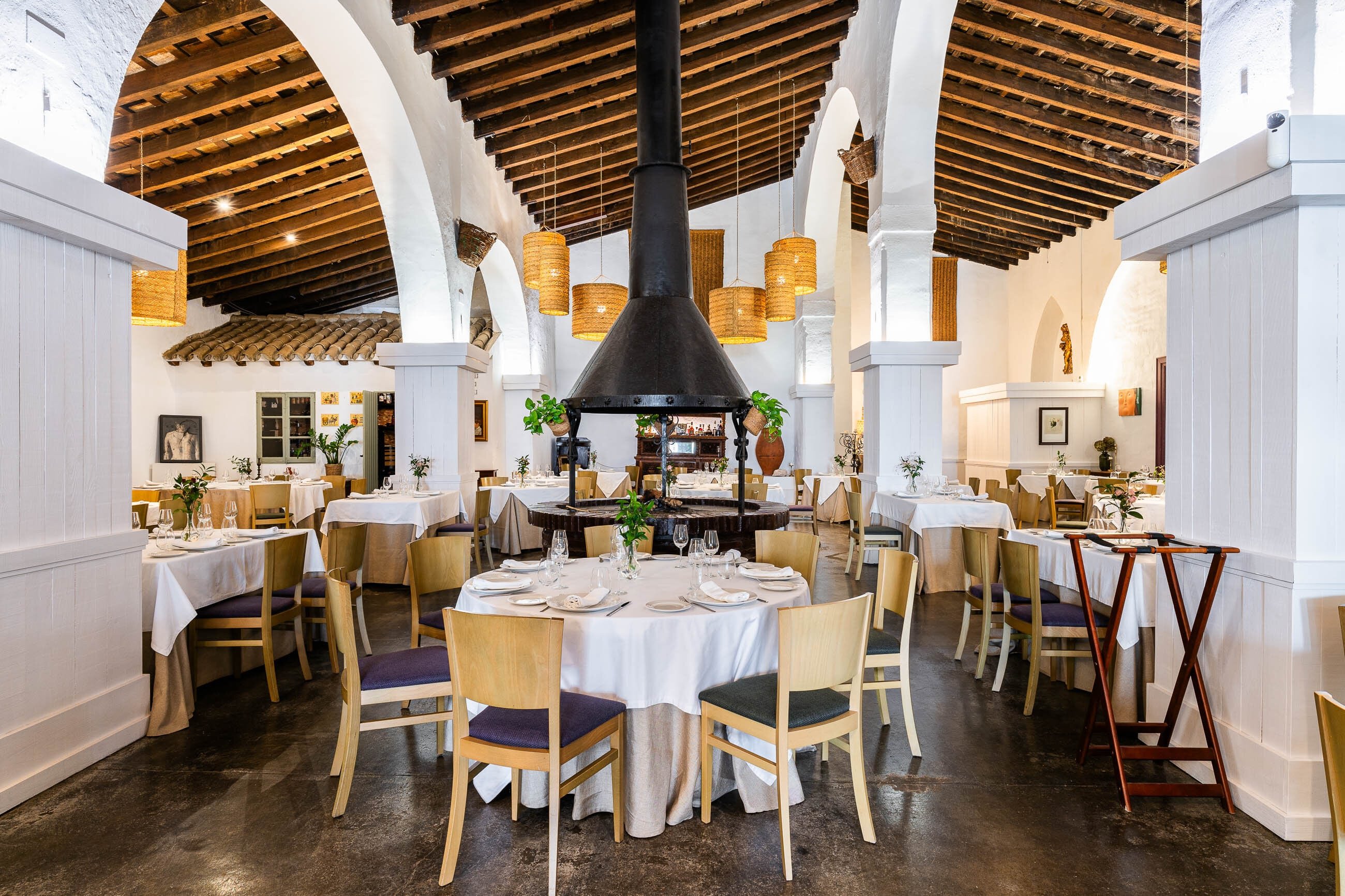
Luxurious and beautifully decorated with classic Spanish flair, elegant touches, and sophisticated ambience; peaceful yet refined with art installations throughout the palace corridors.