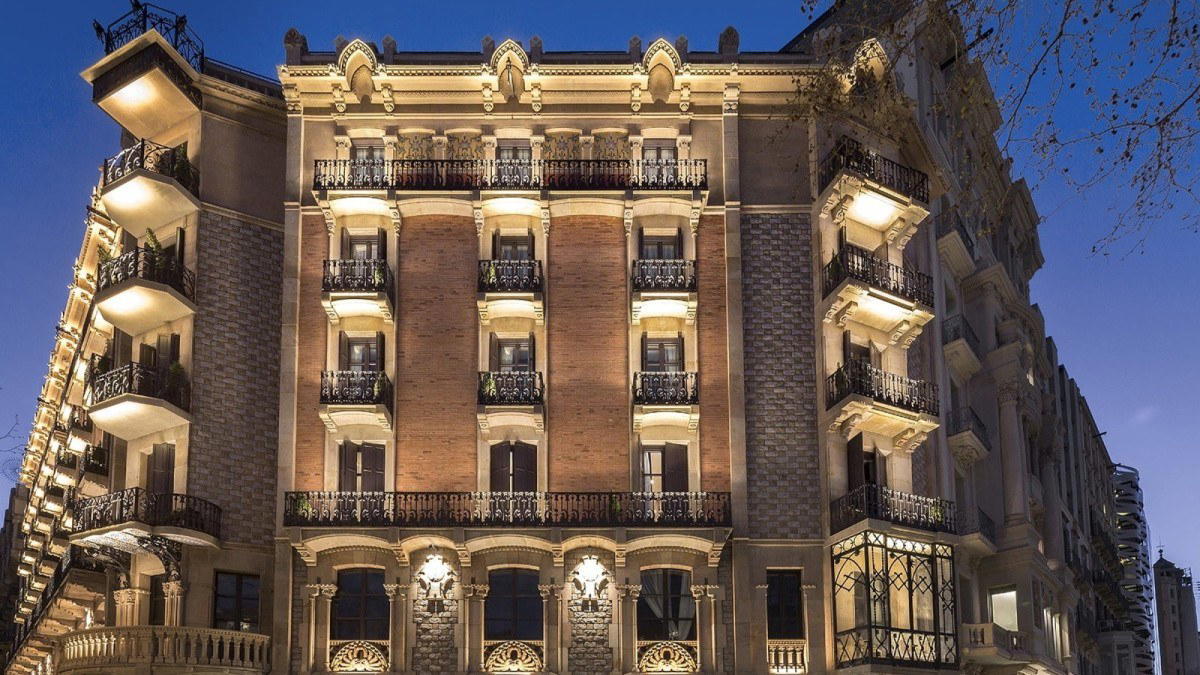
On Carrer de Roger de Llúria in Barcelona's Eixample, Casa Mathilda occupies a building whose architectural bones speak directly to the neighbourhood's late-nineteenth-century ambitions. For travellers drawn to properties where the structure itself carries historical weight, this address in one of Barcelona's most carefully gridded districts offers a different entry point into the city than the larger international hotels along the waterfront.
Pearl is the En Primeur Club membership app — saves, bookings, and concierge access live there. Same editors, same standards.
- Address
- Carrer de Roger de Llúria, 125, 127, Eixample, 08037 Barcelona, Spain
- Phone
- +34 935 32 16 00
- Website
- casamathilda.com
- Directions
- Get directions
 Saves & bookings on Pearl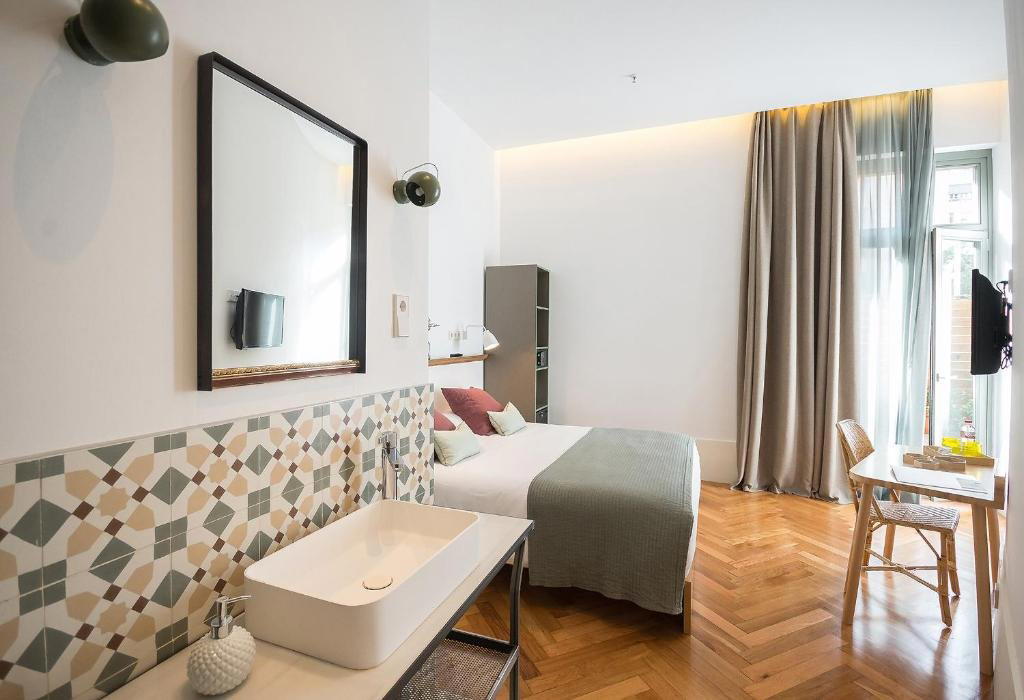
A Building That Predates the Postcard Version of Barcelona
Carrer de Roger de Llúria runs north through the Eixample in a straight line that Ildefons Cerdà would have approved of, and the address at numbers 125 and 127 sits near the upper end of that grid, where the neighbourhood's residential character asserts itself more quietly than it does closer to Passeig de Gràcia. Approaching from street level, the Eixample's signature chamfered corners and the rhythm of wrought-iron balconies frame the building before you reach the entrance. This is not an area of Barcelona built for spectacle. The district's late-nineteenth and early-twentieth-century bourgeois architecture was designed for permanence and legible social status, and whatever has happened inside properties along this stretch since then has operated under that structural inheritance.
Among Barcelona's accommodation options, properties that occupy genuinely old residential buildings occupy a distinct tier from purpose-built hotels and from design conversions that treat heritage as backdrop. The Eixample's building stock, much of it dating from the Modernista and post-Modernista periods, gives properties here a material specificity that newer construction cannot replicate. High ceilings, thick masonry walls, tiled entrance galleries, and the particular proportions of rooms designed for a specific way of living: these are the conditions that distinguish a stay at an address like Casa Mathilda from the more controlled environments of properties such as the Almanac Barcelona or the Mandarin Oriental Barcelona, both of which operate at a different scale and with a different relationship to their buildings.
The Eixample Context: What the Grid Determines
The Eixample was not an organic neighbourhood. Cerdà's 1860 plan imposed a rational order on what had been fields and market gardens outside the old city walls, and the ambition embedded in that plan, wide avenues, interior courtyards, balanced light, shaped everything built here for the following century. By the time properties along Carrer de Roger de Llúria were finished, the neighbourhood had settled into a pattern of middle and upper-middle-class residential life that left a specific architectural vocabulary behind. Understanding that vocabulary is useful context for any stay in the area: the buildings were not designed as public-facing institutions, and properties that occupy them carry a domestic scale that differs meaningfully from hotel architecture.
This places Casa Mathilda in a comparable set closer to Antiga Casa Buenavista and Alma Barcelona than to the larger international footprints. Barcelona's accommodation market has stratified in recent years between high-capacity international brands and smaller, building-led properties where the structure itself is the primary credential. Casa Mathilda sits toward that second category, in an address where the Eixample's grid and its nineteenth-century civic ambitions are more present than in properties closer to the waterfront, such as Hotel Arts Barcelona.
Getting to the Address and Working Around It
The Diagonal metro station lies within reasonable walking distance, as does Passeig de Gràcia, which connects to the L2, L3, and L4 lines and gives access to most of the city without requiring a taxi. For arrivals from El Prat airport, the Aerobus service terminates at Plaça de Catalunya, from which the Eixample is navigable on foot or by metro in under fifteen minutes. The neighbourhood's grid logic makes orientation direct: blocks are consistently sized, street numbering follows predictable patterns, and the Eixample's walking infrastructure, wide pavements, shaded arcades on some stretches, makes moving between the property and the city's central attractions a practical matter rather than a logistical challenge.
The density of Barcelona's restaurant and bar culture in the upper Eixample means that the block radius around Carrer de Roger de Llúria 125-127 holds significant independent dining, wine bar, and vermouth culture without requiring transport. Travellers oriented toward that kind of neighbourhood-level engagement will find the location productive in a way that waterfront or Barceloneta addresses are not. For those planning excursions further afield, to the Priorat wine country, to Tarragona, or to the Costa Brava, Sants station is one efficient rail connection, and it is accessible directly by metro from the Eixample. Properties further outside the city grid, such as Terra Dominicata in Escaladei or Mas de Torrent Hotel & Spa in Torrent, make useful day-trip or extension anchors for those spending longer in Catalonia.
Where Casa Mathilda Fits in Barcelona's Wider Accommodation Picture
Barcelona's premium accommodation has undergone considerable development since the city's late-1990s reorientation toward international tourism. The result is a market with clearly defined tiers: global luxury brands, design-led independents, and heritage residential conversions. The latter group, of which Casa Mathilda is a representative, tends to attract guests whose interest in the city runs deeper than the standard Gaudí circuit. That does not mean the property competes on the same terms as the ABaC Restaurant & Hotel or the Mercer Hotel Barcelona, both of which bring significant food and heritage credentials respectively. It means the frame of reference is different: the building's history and neighbourhood integration carry weight that awards and restaurant programming carry elsewhere.
For comparison outside Catalonia, this tier of heritage residential property appears across Spain in varying formats: Hotel Can Cera in Palma occupies a seventeenth-century palace, Atrio Restaurante Hotel in Cáceres operates within a UNESCO-listed medieval context, and Casa Beatnik Hotel in A Coruña works from a different kind of regional building tradition. Each represents a distinct approach to the question of how much a property's physical history should determine its guest experience. In the Eixample, that history is bourgeois modernist rather than aristocratic or medieval, which sets a particular tone: civic, restrained, and shaped by a specific moment in Catalan urban ambition.
Planning a Stay: Practical Notes
Direct outreach to the property or a specialist travel agent is one reliable route to confirming rates, availability, and room configuration. Barcelona's accommodation demand peaks in spring (April to June) and early autumn (September to October), when the city's trade fair and festival calendar adds pressure on availability across all tiers. Summer stays in the Eixample carry the specific character of the neighbourhood's interior courtyard climate: mornings are cooler and quieter than the tourist-dense Barri Gòtic, and the city's evening culture begins later and runs longer than northern European visitors typically expect.
Akelarre in San Sebastián anchors a Basque stay with three-Michelin-star credentials, while Abadía Retuerta LeDomaine places guests inside a working wine estate. The Hotel Boutique Mirlo offers another smaller-scale Barcelona option for those comparing properties at this scale before committing. International travellers moving between Spain and other destinations may find reference points in Aman Venice or The Fifth Avenue Hotel in New York City, both of which occupy historic structures with a comparable emphasis on building provenance over brand engineering.
Peers You’d Cross-Shop
Comparable venues nearby, for context on price, style, and recognition.
| Venue | Cuisine | Price | Notes |
|---|---|---|---|
| Casa Mathilda | BarcelonaThis venue — the venue you are viewing | Restored historic Eixample building blending vintage Catalan elegance with contemporary comfort. | $$ | Not listed |
| The Social Hub Barcelona Poblenou | Hybrid hotel, coworking, and community space | $$ | Poblenou |
| H10 Casa Mimosa | 19th-century Modernist building with contemporary updates | $$$ | la Dreta de l'Eixample |
| Casa Bonay | Restored 19th-century neoclassical mansion with contemporary creative interventions. | $$ | la Dreta de l'Eixample |
| Arai Aparthotel Barcelona | Luxury boutique aparthotel in restored 18th-century palace | $$$ | Barri Gotic |
| Catalonia Passeig de Gracia | Modernist facade with contemporary interiors | $$$ | la Dreta de l'Eixample |
Continue exploring
More in Barcelona
Hotels in Barcelona
Browse all →
Bars in Barcelona
Browse all →
Restaurants in Barcelona
Browse all →
At a Glance
- Elegant
- Cozy
- Intimate
- Sophisticated
- Modern
- Romantic Getaway
- Weekend Escape
- Terrace
- Historic Building
- Wi Fi
- Bicycle Rental
- Concierge
- Street Scene
- Wi Fi
- Bicycle Rental
- Concierge
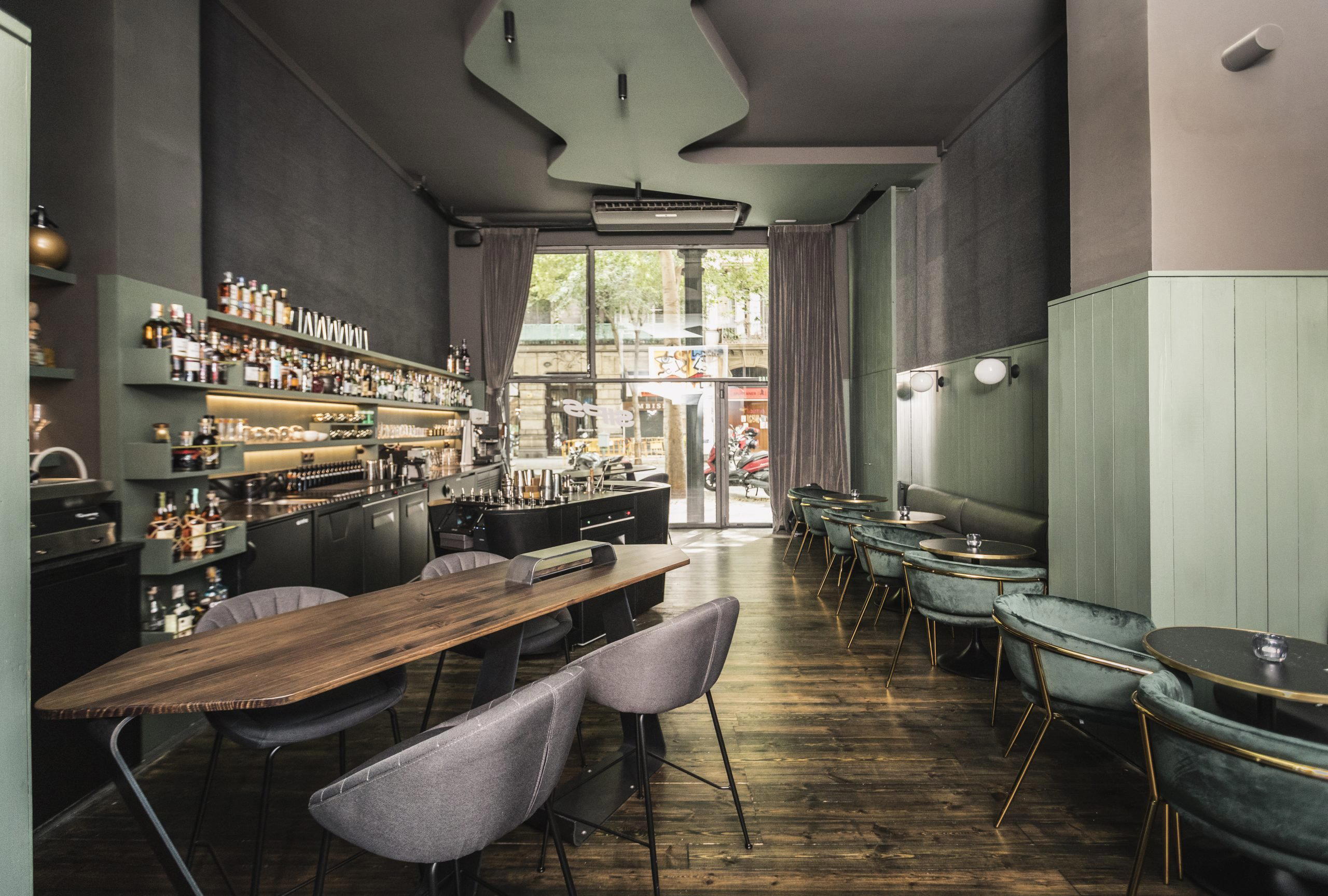
Tranquil and welcoming with soft green walls, pastel tiles, high ceilings, and vintage touches creating an intimate, homely atmosphere.