

Michelin Guide New Hotels New Hotel · Michelin Selected · Mr & Mrs Smith Seal of Approval
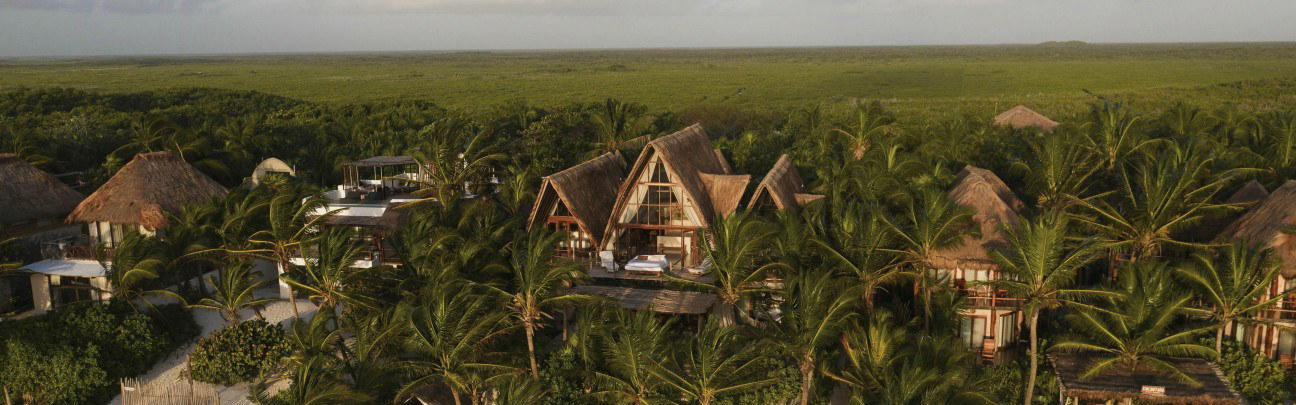
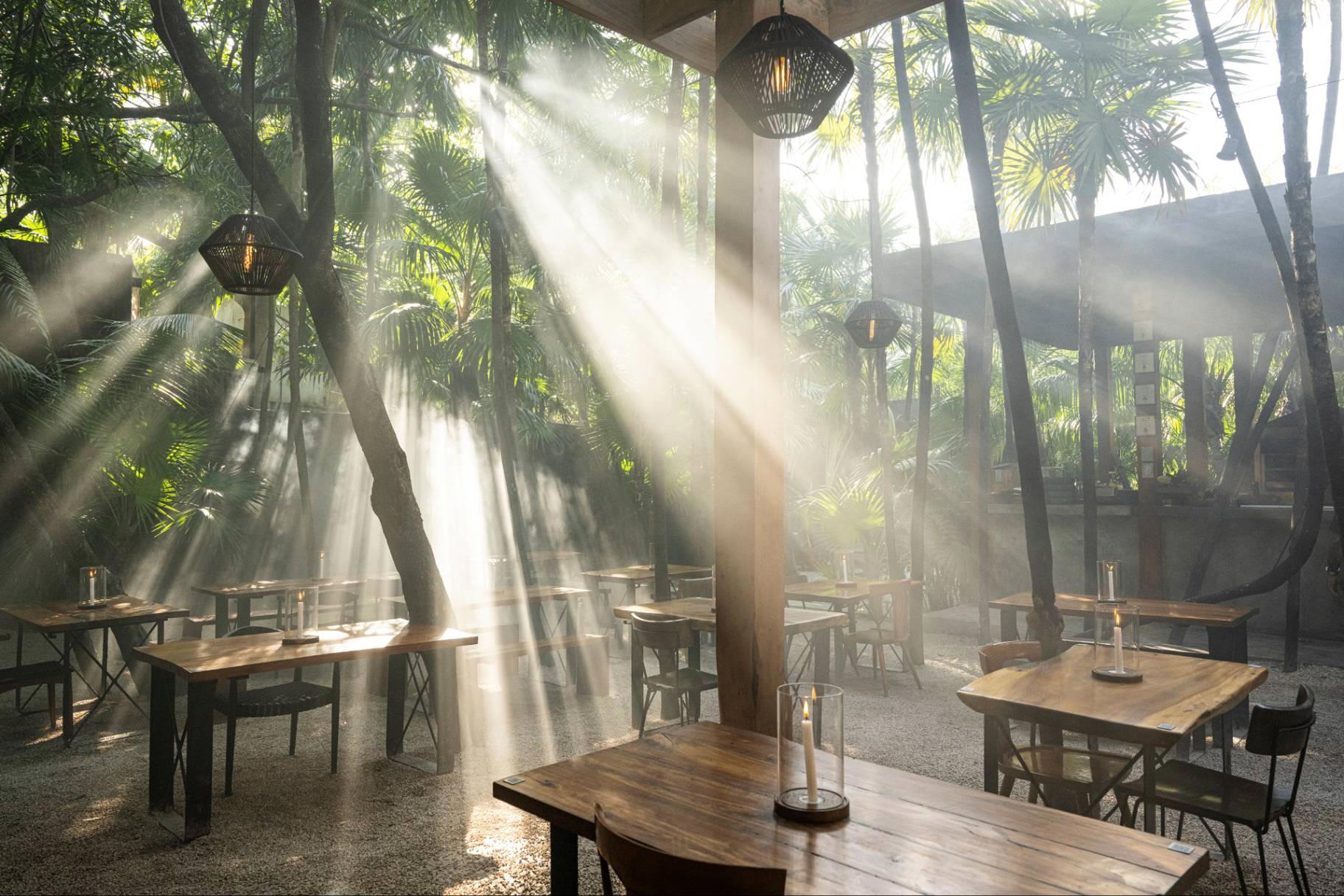
A Michelin Selected property on Tulum's Boca Paila corridor, Aldea Canzul sits at KM 7 on the hotel zone road, where the jungle presses close and the Caribbean is steps away.

Pearl is the En Primeur Club membership app — saves, bookings, and concierge access live there. Same editors, same standards.
- Address
- Carr. Tulum-Boca Paila km 7.5, Tulum Beach, Zona Hotelera, 77780 Tulum, Q.R., Mexico
- Phone
- (786) 684-6824
- Website
- canzul.mx
- Directions
- Get directions
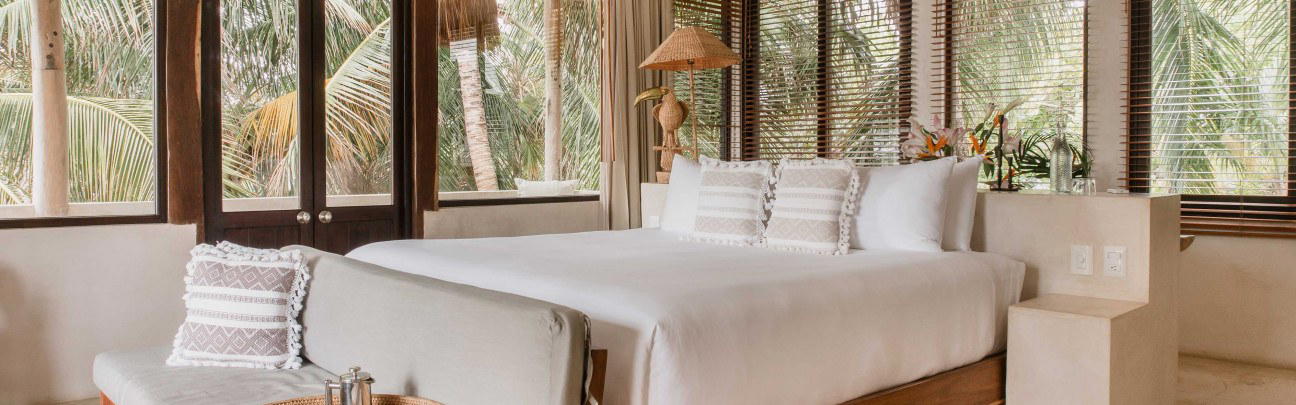
Where Tulum's Hotel Zone Thins Out
By the time the Carretera Tulum-Boca Paila reaches KM 7, the density of the hotel zone has begun to ease. The road narrows, the jungle on the inland side grows thicker, and the properties spaced along it operate at a different register than those clustered closer to the Tulum pueblo. This is the stretch where the zone's original ecological pitch — low-impact, low-volume, high-immersion — still has room to function. Aldea Canzul sits within this corridor, earning MICHELIN Selected recognition in the 2025 guide to hotels and stays, a designation that places it among properties the guide's editors consider worth a specific detour rather than simply a convenient choice.
The MICHELIN Selected tier, distinct from the star system applied to restaurants, identifies hotels on the basis of welcome, comfort, and the coherence of the guest experience. In Tulum's context, that coherence is largely a function of what a property refuses rather than what it adds: no convention-center scale, no lobby bar engineered for social-media throughput, no design vocabulary imported wholesale from another market. The properties that earn this recognition along the Boca Paila road tend to share an investment in material authenticity and a guest-to-space ratio that keeps the experience from feeling transactional.
The Hotel Zone's Two Tiers
Tulum's hotel zone has split more sharply in recent years. One cohort has moved toward volume and visibility, building out beach clubs, installing internationally recognized DJs on weekends, and pricing to capture the broader luxury-travel market that has arrived in force since the pandemic. A second cohort has held its position at lower capacity and higher ecological intentionality, treating the jungle-to-sea setting as the program rather than a backdrop for something noisier. Aldea Canzul belongs to the latter group.
Azulik represents a more theatrical interpretation of the same ecological premise, while Casa Malca anchors the beach road's art-inflected segment closer to the ruins. Amansala Resort and Bespoke Tulum represent the wellness-first variant of the same low-density formula. Aldea Canzul's KM 7 address puts it physically and philosophically toward the quieter end of this spectrum.
Dining and the Culinary Identity of the Zone
The editorial angle on any Tulum hotel's food program requires accounting for where the zone sits in Mexico's broader dining conversation. Tulum is not a city with a rooted culinary tradition in the way that Oaxaca or Mexico City functions as a base for deep, ingredient-driven regional cooking. What has developed here instead is a resort-adjacent food culture with strong international influences, an emphasis on plant-forward menus shaped partly by the wellness community that colonized the zone early, and increasing ambition from kitchens looking to hold the attention of guests who arrive from cities with serious restaurant scenes.
For guests who want to explore beyond the immediate property, the hotel zone road connects to a broader Tulum restaurant circuit. See our full Tulum restaurants guide for a mapped overview of where the dining scene concentrates and which kitchens are currently producing work worth a specific visit. The guide covers the pueblo-side options as well as the beach road, which is a useful distinction: the two areas operate differently in terms of price, crowd, and culinary ambition.
Within Mexico's wider luxury-hotel food context, the properties setting the current standard for hotel dining programs include Chablé Yucatán in Mérida, where the kitchen has built a serious identity around regional Yucatecan ingredients, and Maroma in Riviera Maya, which operates a more classical resort-luxury model. On the Pacific coast, One&Only; Mandarina in Riviera Nayarit and Las Ventanas al Paraíso in Los Cabos represent the scale-and-ambition end of the hotel dining spectrum. Etéreo, Auberge Resorts Collection in Punta Maroma is the closest geographically, operating with greater room count and a more structured culinary program than most of the Tulum boutique tier.
Placing KM 7 in the Broader Mexico Context
Montage Los Cabos and Zadun, A Ritz-Carlton Reserve represent the Baja peninsula's dominant model: polished, brand-anchored, and oriented toward a guest who prioritizes facility depth over ecological immersion. Xinalani in Quimixto and Playa Viva on the Pacific coast offer closer analogues to the Tulum boutique model in terms of scale and environmental ambition, though both operate with less surrounding infrastructure. Las Alamandas in Costalegre remains the benchmark for genuine remoteness on Mexico's west coast. For inland alternatives, Casa de Sierra Nevada in San Miguel de Allende and Casa Polanco in Mexico City represent the urban end of Mexico's boutique-luxury spectrum, where cultural programming and culinary access rather than beach proximity define the stay.
Planning a Stay at Aldea Canzul
The property is located at KM 7 on the Carretera Tulum-Boca Paila, which means access requires either a rental car, a taxi from the Tulum pueblo, or coordination through the property itself. This is standard for the Boca Paila stretch: the further south from the ruins, the more a car becomes a practical necessity rather than a convenience. The Tulum ADO bus station and the Tulum train station (now operational as part of the Tren Maya network) are the main arrival points from further afield, with Cancún's international airport serving as the primary air gateway for the region, approximately two hours north by road. Booking via the MICHELIN guide's partner network or directly through the property is advisable, particularly for travel in the November-through-April high season, when occupancy across the hotel zone compresses and smaller properties with limited room counts fill earliest.
For context across comparable properties elsewhere: Hotel Bardo and Copal Tulum Hotel operate within the same zone and offer useful reference points on format and pricing. Internationally, the MICHELIN Selected tier that Aldea Canzul occupies appears alongside properties as varied as The Fifth Avenue Hotel in New York City, Badrutt's Palace Hotel in St. Moritz, and Hôtel de Paris Monte-Carlo, a reminder that the designation covers a wide range of formats and that what connects them is editorial confidence in the guest experience rather than a common price point or hotel category. Casa Silencio in San Pablo Villa de Mitla represents the most remote end of Mexico's MICHELIN-recognized hotel set, useful context for understanding the range the guide covers within a single country.
Frequently Asked Questions
- Which room offers the leading experience at Aldea Canzul? What the MICHELIN Selected designation does confirm is that the overall guest experience meets a standard of welcome and comfort that the guide's editors considered noteworthy. For properties of this type on the Boca Paila corridor, rooms with direct or close beach access and jungle-facing orientation tend to deliver the most coherent version of what the zone offers. Confirming specific room options directly with the property before booking is the practical step.
- What is Aldea Canzul leading at? Based on its MICHELIN Selected recognition in 2025 and its KM 7 address on the Tulum hotel zone road, the property's strongest suit is atmospheric coherence: a position in the quieter, lower-density section of the corridor, away from the beach-club congestion of the zone's northern reaches, in a city context where that kind of separation has become increasingly difficult to find at a recognized standard of quality. For travelers comparing options in Tulum, see our full Tulum restaurants and hotels guide for broader placement.
Booking and Cost Snapshot
Comparable venues nearby, for context on price, style, and recognition.
| Venue | Cuisine | Price | Awards | Notes |
|---|---|---|---|---|
| Aldea CanzulThis venue — the venue you are viewing | Not listed | $2,500+ | Michelin Guide New Hotels New Hotel · Michelin Selected | Not listed |
| Muaré Tulum Hotel | Not listed | $200–300 | Michelin Selected | Tulum, Boutique jungle retreat merging Mayan architecture with contemporary design |
| Encantada Tulum | Tulum, rustic-chic beachfront boutique | Not listed | Michelin Selected · Mr & Mrs Smith Seal of Approval | Not listed |
| Olas Tulum | Not listed | $200–300 | Michelin Selected · Mr & Mrs Smith Seal of Approval | Tulum, Eco-friendly boutique beach retreat |
| TAGOO | Not listed | $300–500 | Michelin Selected · Small Luxury Hotels of the World Member | Zona Costera, Back-to-nature luxury eco-friendly boutique |
| Jashita Hotel | Not listed | Not listed | Michelin Selected | Soliman Bay, Eco-chic barefoot luxury boutique |
Recognition history
Dated appearances from independent guides and award organizations, with the underlying list record or original source where available.
Michelin Guide New Hotels New Hotel
Michelin Guide New Hotels
Michelin Selected
Michelin
Mr & Mrs Smith Seal of Approval
Mr & Mrs Smith
Continue exploring
More in Tulum
Hotels in Tulum
Browse all →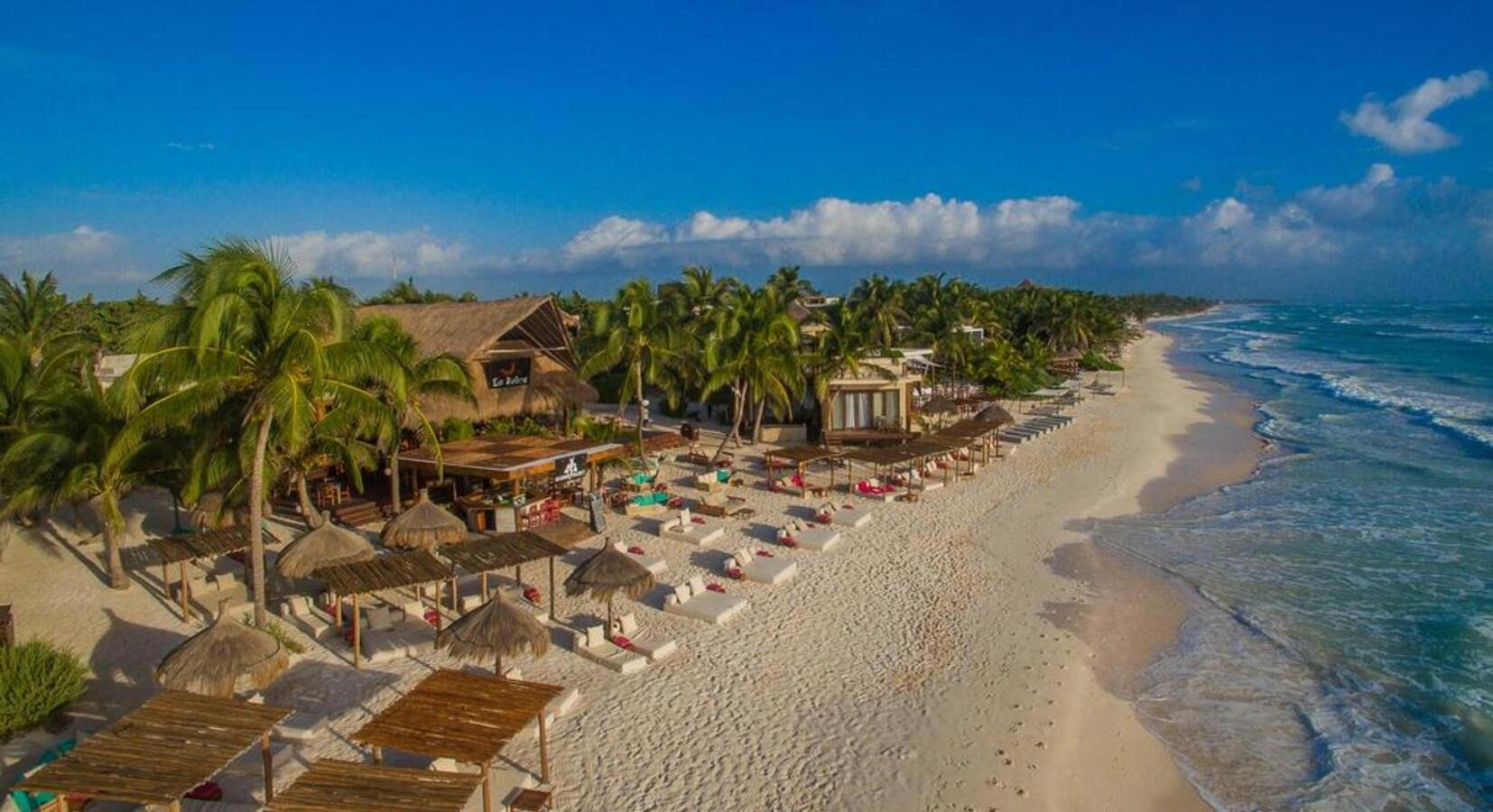
Details
- Romantic
- Quiet
- Rustic
- Elegant
- Bohemian
- Honeymoon
- Romantic Getaway
- Family Vacation
- Group Retreat
- Destination Wedding
- Beachfront
- Private Villa
- Rooftop Pool
- Panoramic View
- Pool
- Beach Access
- Concierge
- Wi Fi
- Waterfront
- Garden
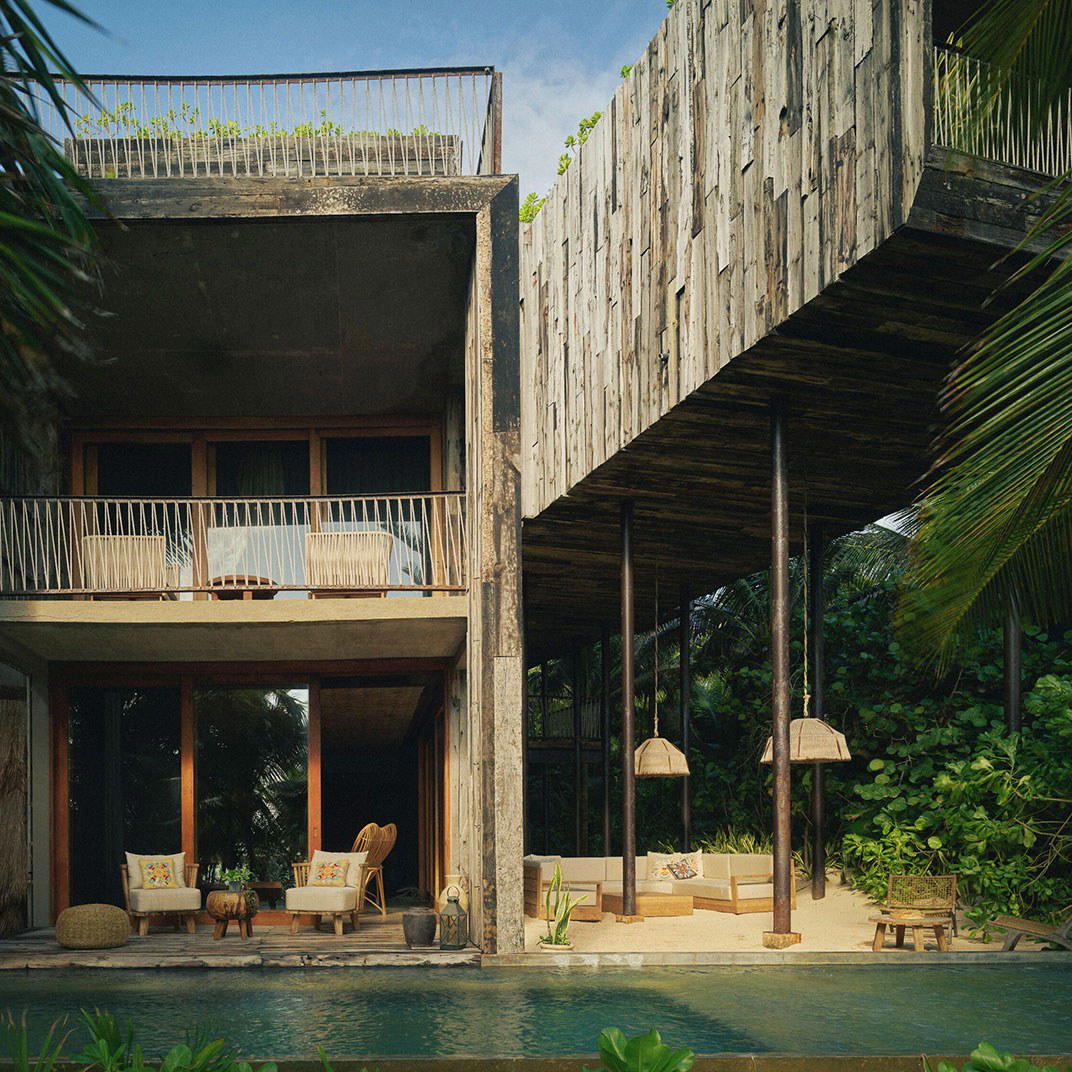
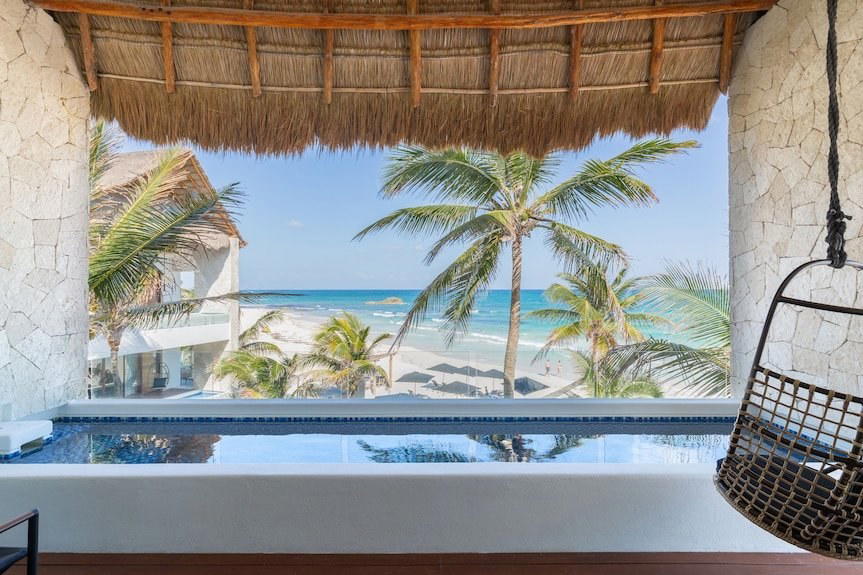
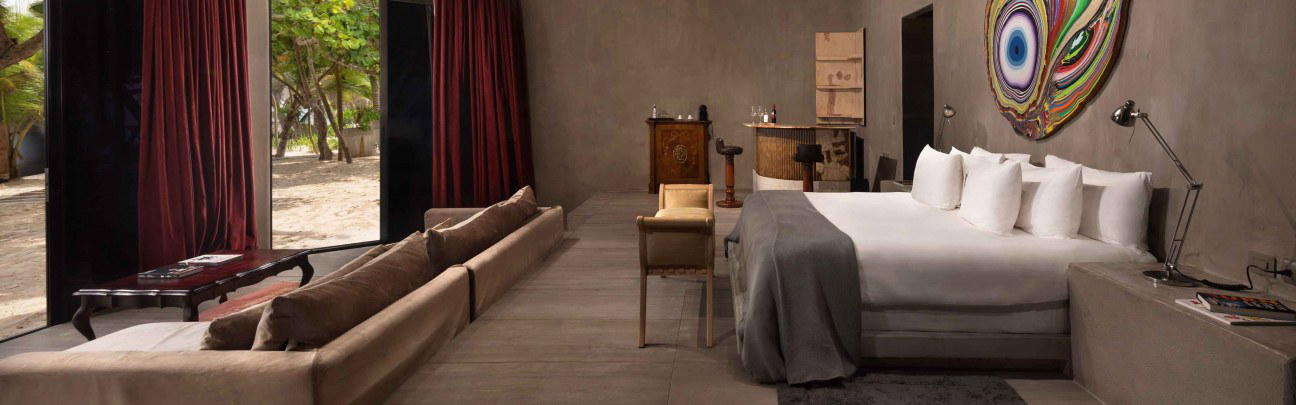
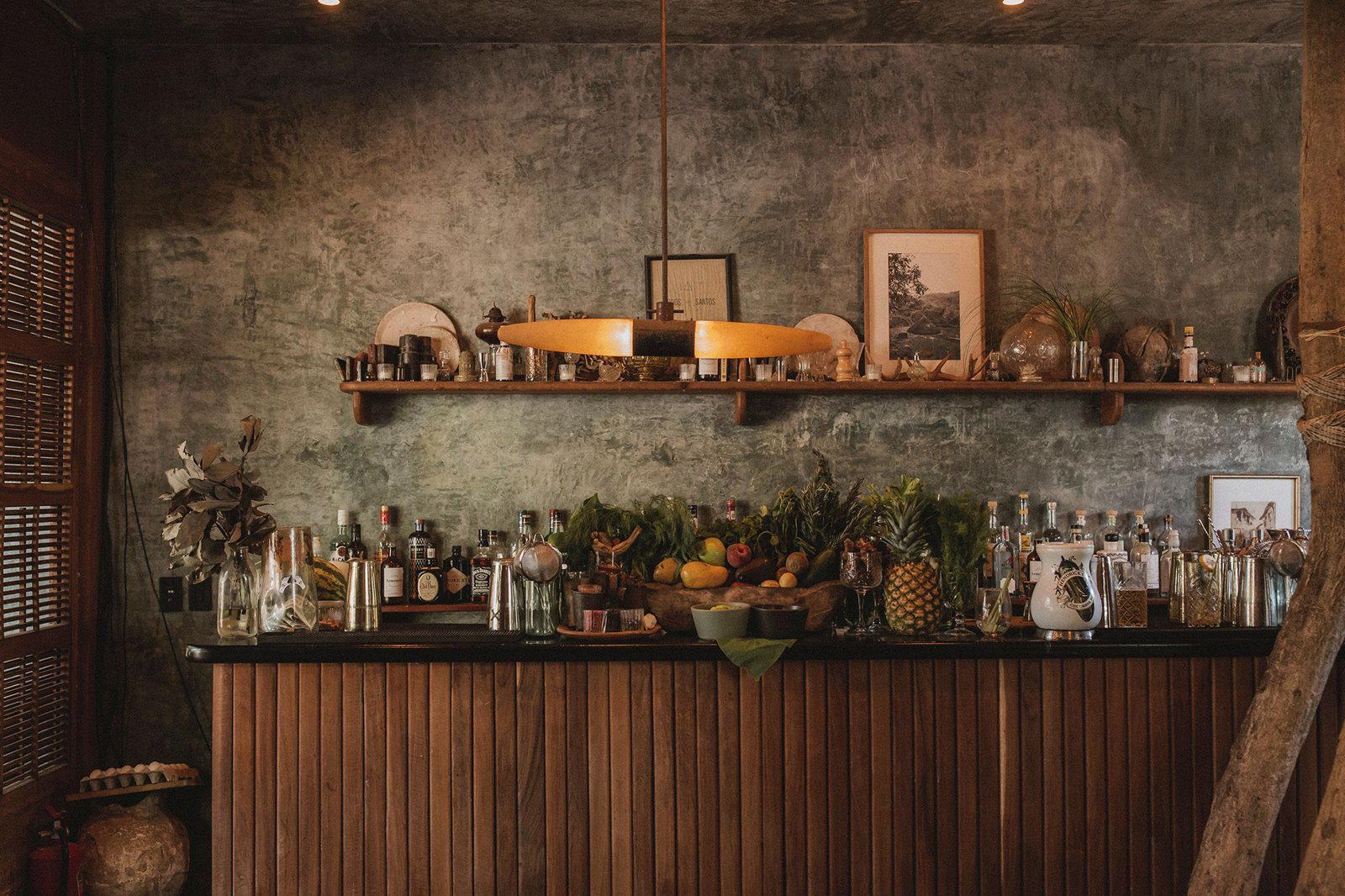
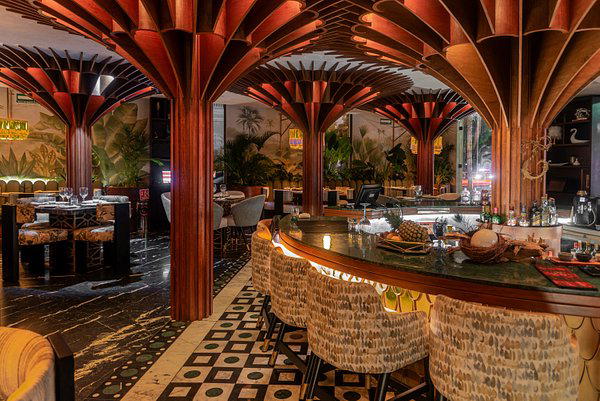
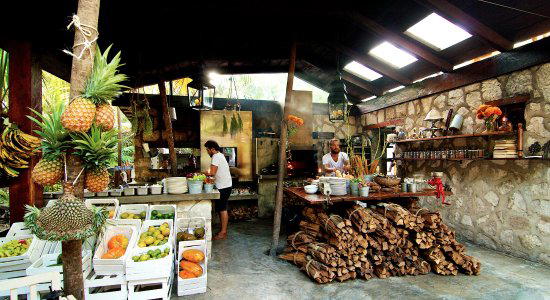
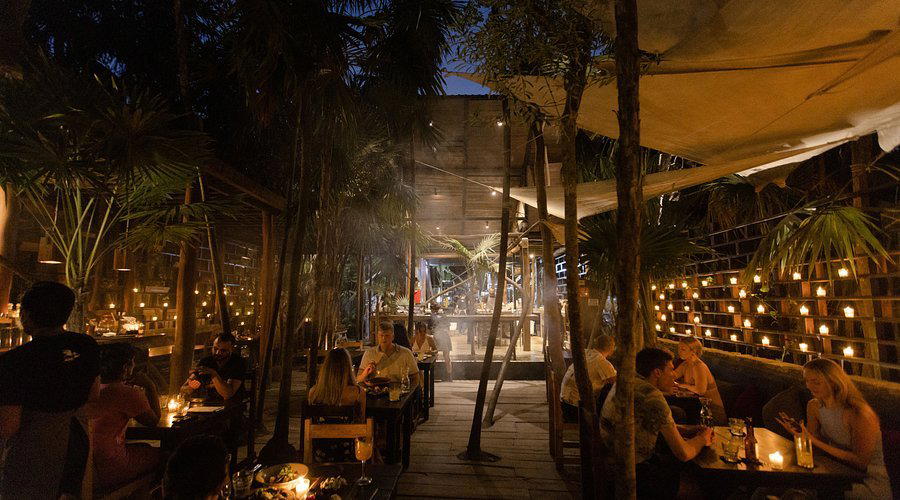
Tranquil and sophisticated with natural light-filled spaces, earthy materials, and dramatic ocean-jungle views.