
Twenty thatched-roof casitas on protected coastline thirty-five minutes from Zihuatanejo, Playa Viva earns its 2024 Michelin 2 Keys recognition by doing the opposite of what most Mexican Pacific coast resorts attempt. Walls are largely absent, letting the sea move through rather than be framed by it. At $320 per night, it occupies a specific niche: low-impact, low-capacity, and deliberately removed from the resort corridor.
Pearl is the En Primeur Club membership app — saves, bookings, and concierge access live there. Same editors, same standards.
- Address
- Zihuatanejo - Acapulco, Playa Icacos, 40834 Juluchuca, Gro.
- Phone
- +52 755 140 3366
- Website
- playaviva.com
- Directions
- Get directions
 Saves & bookings on Pearl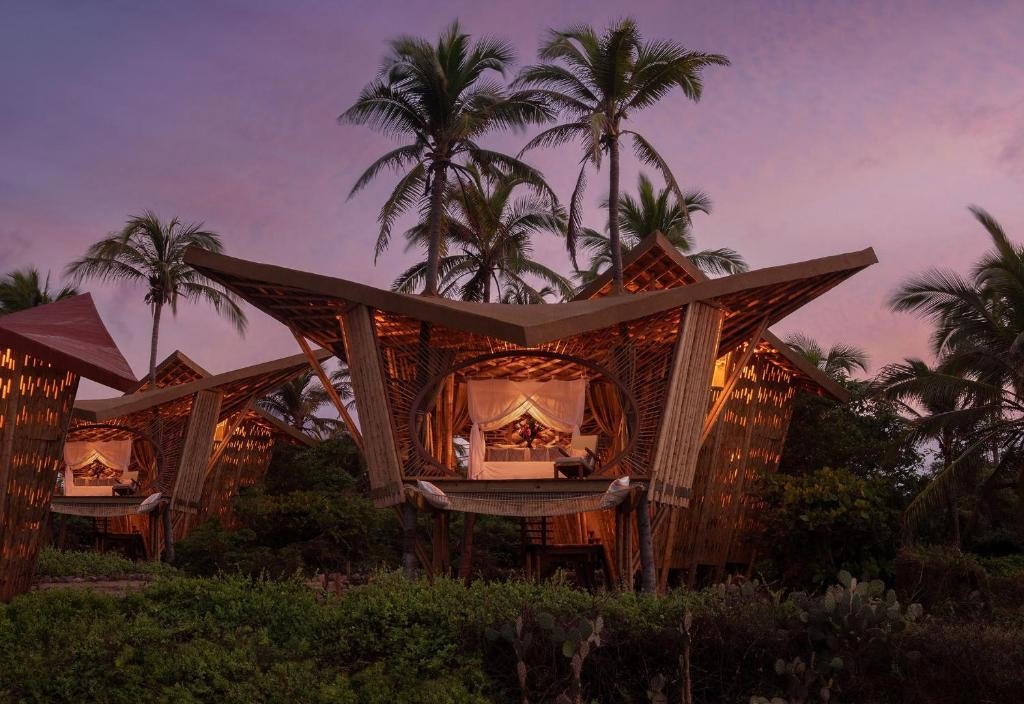
Where the Pacific Coast Goes Quiet
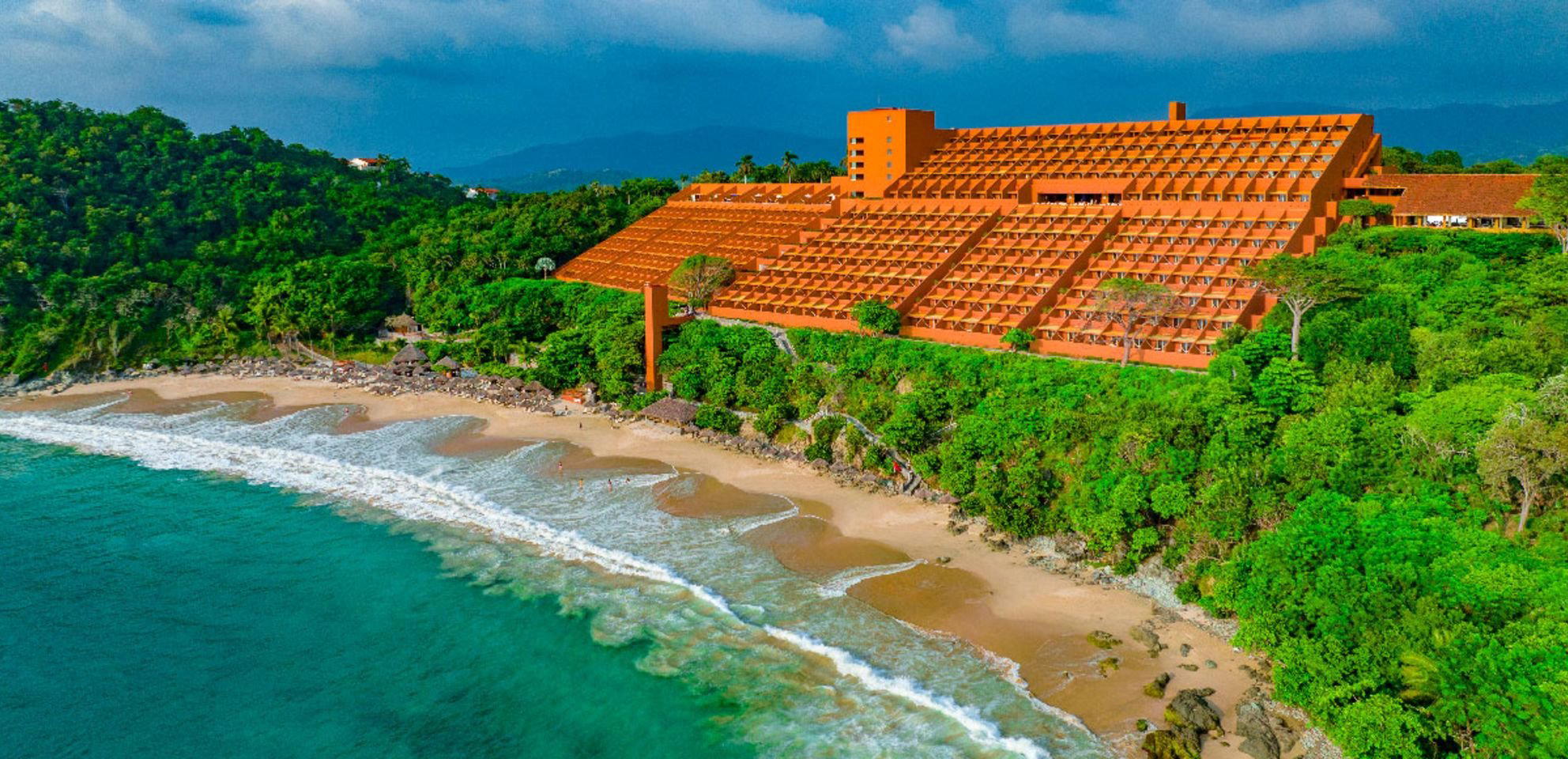
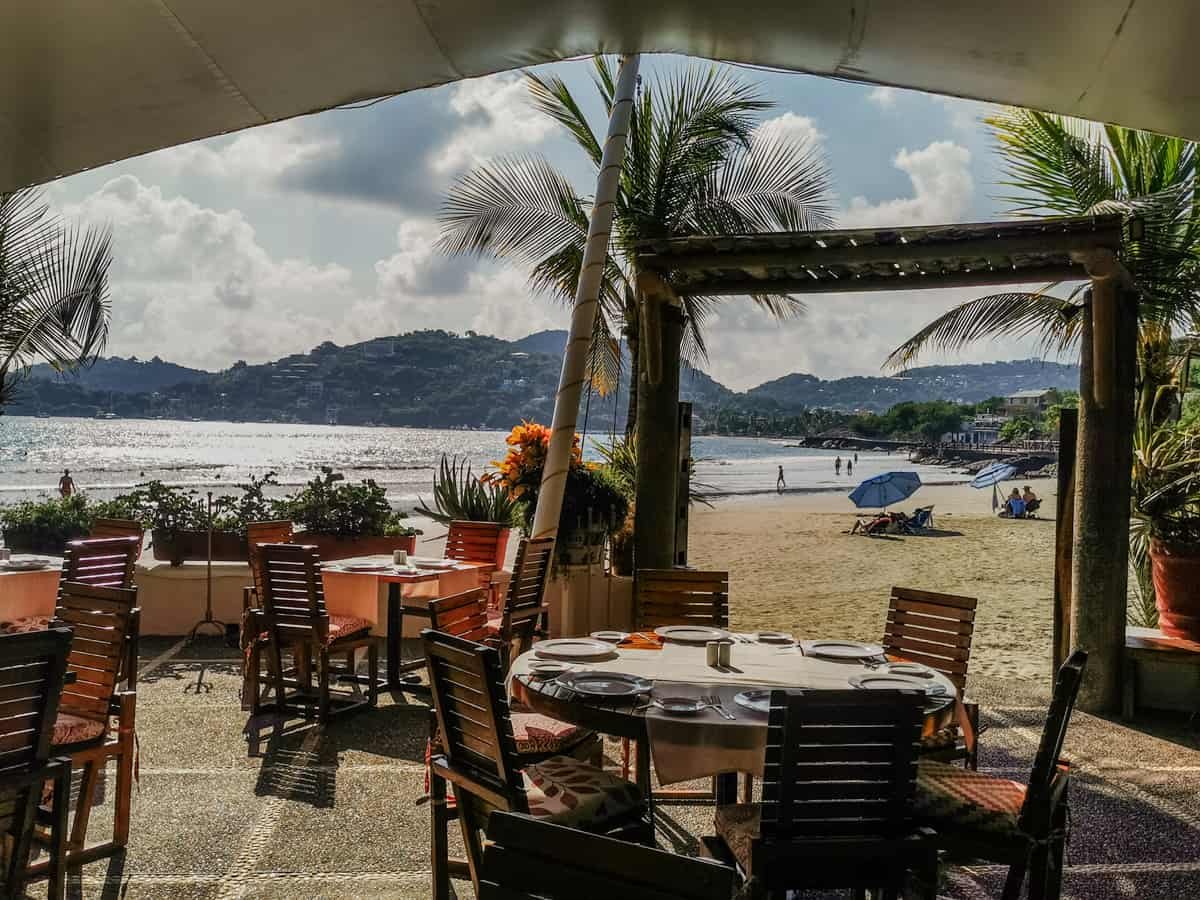
The Guerrero coast south of Zihuatanejo is not undiscovered, but it is largely undeveloped in the way that matters to a certain kind of traveller. The highway runs close to the water, resort infrastructure thins out quickly once you leave Ixtapa's hotel zone, and the landscape beyond that point is protected land, ejido territory, and stretches of beach that see far more nesting sea turtles than sunbeds.
Playa Viva sits inside that protected stretch, about 35 minutes from the Zihuatanejo/Ixtapa International Airport, on a section of coastline where the design mandate was clearly to intervene as little as possible. The 20 casitas are spread across the property with enough distance between them that the 20-room count rarely registers as a crowd. That figure places the property in a different category from most other named resorts on the Mexican Pacific coast. For context, One&Only; Mandarina in Riviera Nayarit and Montage Los Cabos in Cabo San Lucas operate at a scale that makes capacity management a logistics exercise rather than an intrinsic characteristic. At Playa Viva, 20 rooms define the scale.
The Architecture of Absence
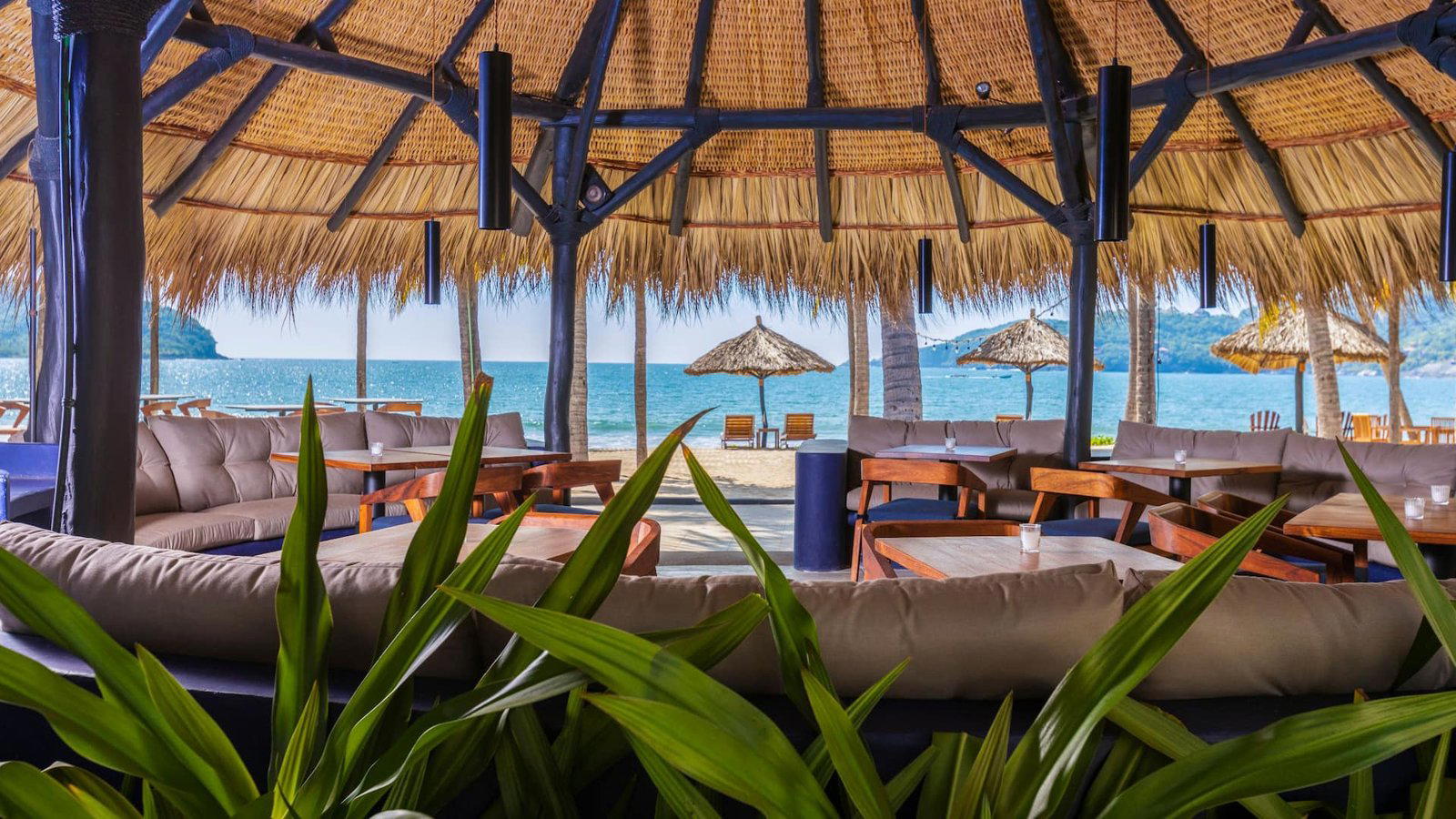
The design strategy here is less about what was built and more about what was left out. The casitas are thatched-roof structures, open to the coastal air where walls would conventionally close things off. This is a choice with consequences, not a rustic compromise: it means the sound of the ocean is constant, the breeze moves through sleeping areas, and the boundary between interior and exterior is deliberately ambiguous. In a region where many properties compete on the quality of their ocean views, the architecture at Playa Viva removes the frame entirely.
Across Mexico's premium coastal properties, the dominant design language in recent years has leaned toward poured concrete, infinity-edge geometry, and climate-controlled interiors with expansive glazing. Zadun, A Ritz-Carlton Reserve in Los Cabos and Las Ventanas al Paraíso, A Rosewood Resort in San José del Cabo represent that pole: considered, material-heavy, architecturally resolved in a conventional luxury sense. Playa Viva belongs to a counter-current that runs through properties like Xinalani in Quimixto and, further down the coast, Cuixmala in La Huerta: vernacular materials, open structures, and a low-impact footprint that reads as a design statement rather than a budget constraint.
Thatched-roof construction in this part of Guerrero is not aesthetic nostalgia. It is the local building tradition adapted for coastal climate conditions, and it performs well in that role: natural ventilation, thermal mass through the palapa, and a material cycle that integrates with the surrounding vegetation in ways that synthetic roofing does not. At a property where environmental positioning is central to its identity, the architecture and the sustainability programme reinforce each other structurally rather than just rhetorically.
What Low-Impact Actually Means Here
Mexican coastal hotels have adopted the language of sustainability broadly enough that it has become nearly meaningless as a differentiator. The question worth asking is what the low-impact approach constrains, not just what it enables. At a property with no walls in the conventional sense, no large-scale infrastructure, and a location on protected land, the constraints are real: this is not where you go for a spa complex with twelve treatment rooms, a five-outlet food and beverage programme, or a beach club with a DJ set. Morning yoga, meditation classes, spa services, and outdoor activities on land and water define the programming, and that list is intentional in what it excludes as much as what it includes.
Properties like Palmaïa-The House of AïA in Playa del Carmen have built wellness into an all-inclusive format with scale and programming depth. Chablé Yucatán in Merida has a cenote-anchored spa that represents significant infrastructure investment. The hotel's wellness offer is simpler and site-specific: the outdoor environment is the primary amenity, and the programming exists to direct attention toward it rather than replace it.
For anyone who wants the kind of evening energy that resort corridors generate, Zihuatanejo is 35 minutes away and offers what the property does not. That is intentional.
Where It Sits in the Market
At $320 per night, the hotel prices below the upper bracket of Mexican luxury coastal properties without positioning itself as a budget play. Maroma in Riviera Maya and Hotel Esencia in Tulum occupy a similar register of small-scale, design-conscious properties, though both operate in more developed tourism corridors. The Guerrero coast's relative remove from those corridors is part of what the rate reflects.
The 2024 Michelin 2 Keys recognition matters here as a trust signal in a specific way. Michelin's hotel programme assesses the quality of the experience rather than scale or brand affiliation, and a 2 Keys designation at a 20-room property on protected land in a remote coastal stretch communicates something precise: the experience is coherent and well-executed at its stated level, not merely earnest. That credential places the hotel in conversation with properties that hold Michelin recognition across Mexico, including Casa de Sierra Nevada, A Belmond Hotel in San Miguel de Allende and Etéreo, Auberge Resorts Collection in Punta Maroma, despite operating at a fraction of their infrastructure scale.
Transfers from the airport are included for stays of three nights or more.
The Reader's Decision
Spring is when this stretch of the Guerrero coast performs at its most consistent: the dry season holds through March, sea conditions are stable for water activities, and the property is far enough south of the Riviera Nayarit and Los Cabos corridors to avoid the high-season compression that affects properties like Four Seasons Resort Punta Mita. March occupies the peak window before the Pacific coast's rainy season begins to build.
The comparison set worth considering before booking is not Los Cabos or the Riviera Maya. It is the smaller cohort of low-capacity, low-impact properties on Mexico's less-trafficked coastlines: Las Alamandas in Costalegre and Hotel Punta Caliza in Lazaro Cardenas belong to that same niche and share the underlying logic of protected land, limited keys, and a programme built around the site rather than imported entertainment formats.
How It Stacks Up
Comparable venues nearby, for context on price, style, and recognition.
| Venue | Cuisine | Price | Awards | Notes |
|---|---|---|---|---|
| Playa VivaThis venue — the venue you are viewing | Eco-luxury open-air resort with treehouses and casitas immersed in nature. | $$$$ | Michelin 2 Key | Not listed |
| Four Seasons Resort Tamarindo | Contemporary luxury resort blending modern design with pre-Hispanic architectural elements and Mexican artisan craftsmanship, set within an untouched nature sanctuary. | $$$$ | World's 50 Best #55, 5-Star | Costalegre |
| Cala de Mar Resort & Spa Ixtapa | Contemporary luxury resort blending modern amenities with traditional Mexican architectural and design elements, positioned as an ultra-premium destination for informed travelers. | $$$$ | Michelin 1 Key | Ixtapa Zihuatanejo |
| Casa Polanco | Converted historic mansion with modern luxury positioning | $$$$ | Michelin 2 Key | Polanco Chapultepec |
| Casa Silencio | Luxury eco-retreat boutique hotel with artisanal mezcal distillery integration and contemporary design philosophy emphasizing local craftsmanship. | $$$$ | Michelin 2 Key | San Pablo Villa de Mitla |
| Brick Hotel | Restored Belle Époque mansion with modern luxury updates | $$$$ | Michelin 1 Key | Roma Norte |
Recognition history
Dated appearances from independent guides and award organizations, with the underlying list record or original source where available.
Michelin 2 Keys
Michelin
Michelin 2 Keys
Michelin
Continue exploring
More in Juluchuca
Hotels in Juluchuca
Browse all →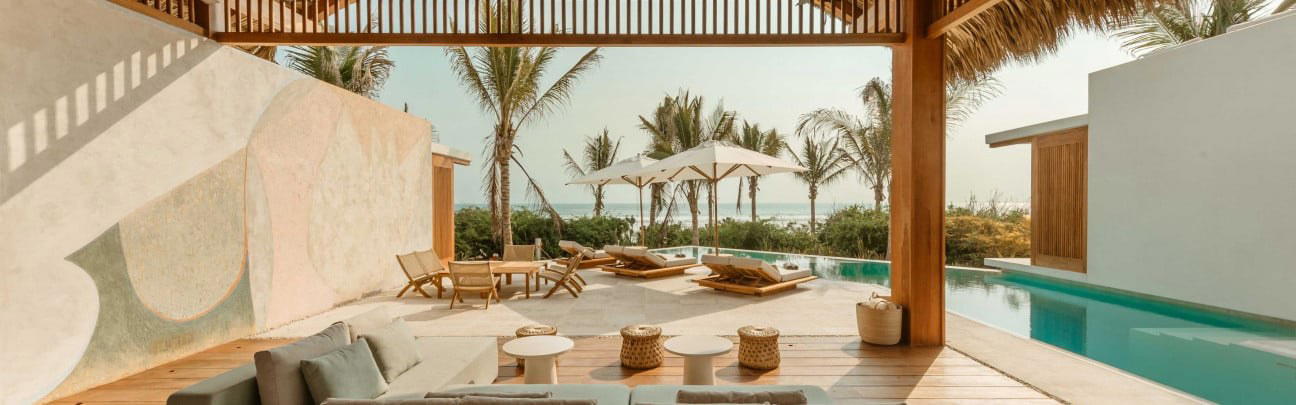
At a Glance
- Romantic
- Scenic
- Rustic
- Intimate
- Whimsical
- Honeymoon
- Romantic Getaway
- Wellness Retreat
- Weekend Escape
- Beachfront
- Infinity Pool
- Private Villa
- Destination Spa
- Pool
- Spa
- Beach Access
- Wi Fi
- Airport Transfer
- Waterfront
- Pool
- Spa
- Beach Access
- Wi Fi
- Airport Transfer
Open-air, breezy treehouse-like spaces with natural textures, ocean sounds, and immersive jungle-beach tranquility fostering deep relaxation and connection to nature.