

Michelin Plate
Our verdict
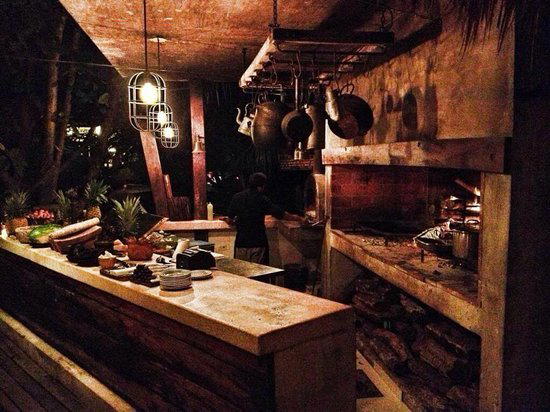
Set on the jungle-edged beach road south of Tulum's hotel zone, Hartwood operates without electricity, cooking everything over live fire in an open-air kitchen. Chef Eric Werner's approach draws from the taco and market-stall traditions of the Yucatán while operating at the price point and recognition level of Mexico's serious restaurant tier, earning consecutive Michelin Plate recognition and a top-200 ranking on Opinionated About Dining's North America list.

Pearl is the En Primeur Club membership app — saves, bookings, and concierge access live there. Same editors, same standards.
- Address
- Carr. Tulum-Boca Paila 7-6Km, Tulum Beach, 77780 Tulum, Q.R., Mexico
- Hours
- Mon ClosedTue–Sun 6–10 PM
- Website
- hartwoodtulum.com
- Directions
- Get directions
- Booking
- Book on the venue's website
The menu
What to order
- Agave sweetened pork ribs
- Grilled octopus
- Ceviche Yucatan
Where the Jungle Meets the Grill
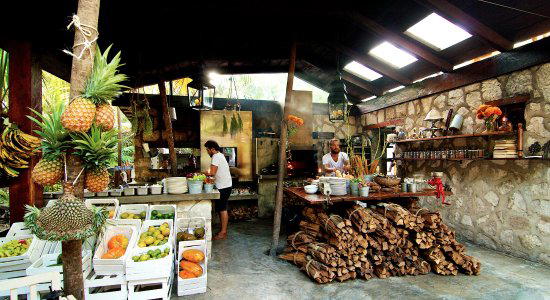
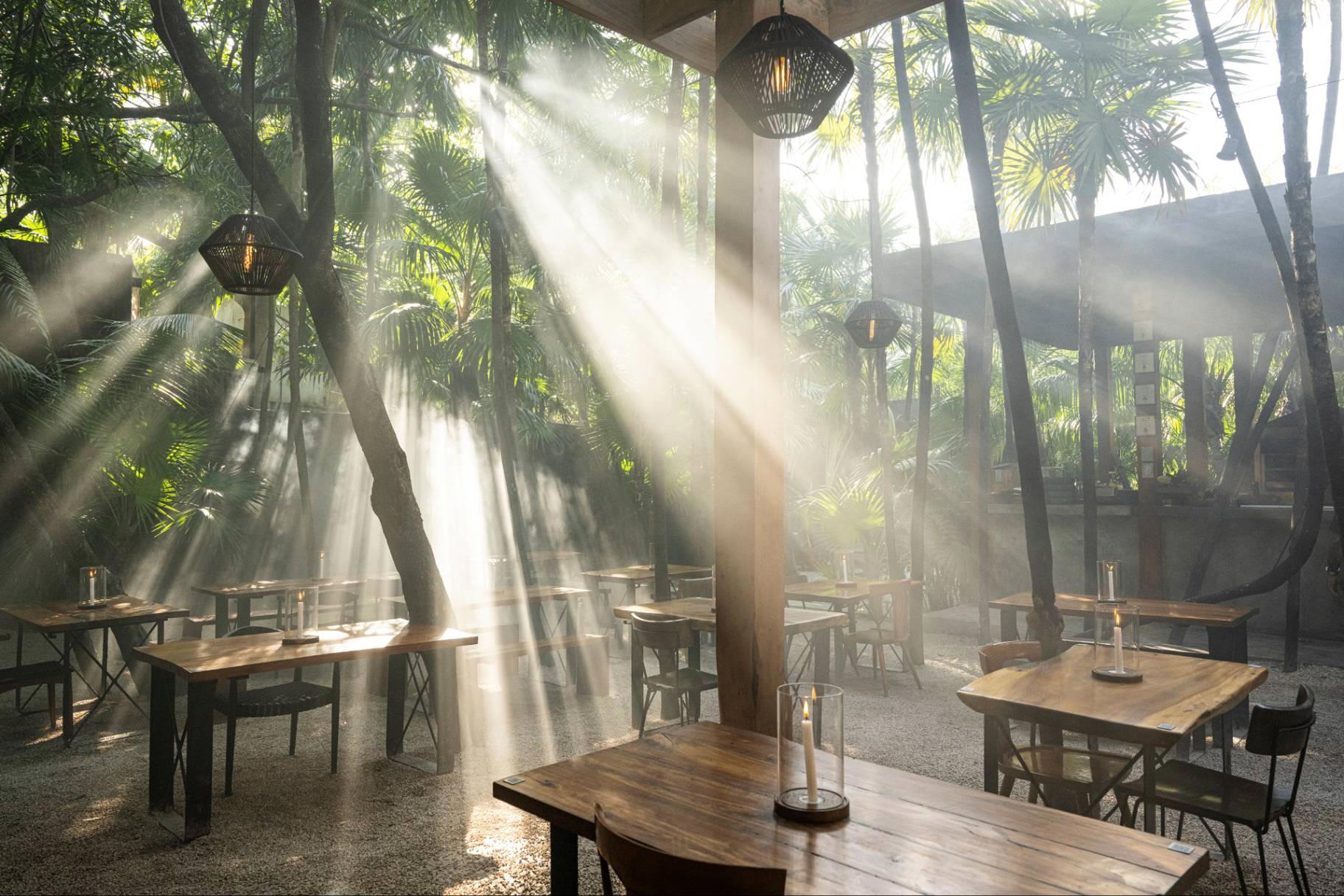
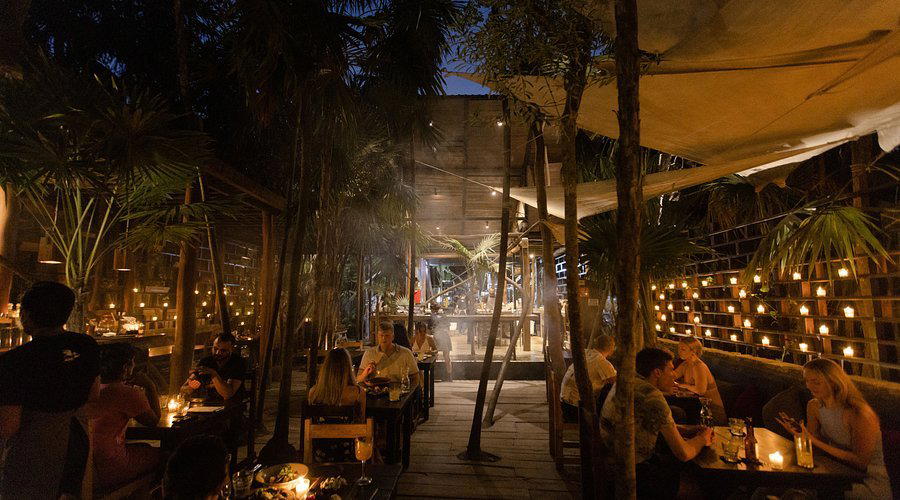
Arriving at Hartwood means passing through the kind of soft darkness that Tulum's beachside road enforces after sundown: no streetlights, the canopy close overhead, the smell of salt and vegetation mixing before you reach the open gate. What greets you is not a formal dining room but something closer to a well-ordered clearing, lit by fire, with the kitchen's wood smoke threading through tables arranged in the open air. The absence of electricity is not an affectation — it sets the conditions for everything that follows.
Mexico's open-air restaurant tradition runs from market fondas to seaside palapa kitchens, where cooking over wood or charcoal was never a technique choice but simply how things were done. Hartwood operates in that lineage but at a different register, applying the logic of the live-fire kitchen to a format that sits in Tulum's leading price tier alongside contemporaries like Arca and Autor. The result is a dining room where the atmosphere is inseparable from the cooking method, not layered over it.
The Taco and Market-Stall Tradition, Reconsidered
Mexico's taco and tostada traditions have a specific grammar: fresh tortilla as the structural base, protein from the grill or the braise, acid and heat from salsa, everything assembled quickly and eaten faster. The market stall asks nothing of you except hunger. What happens when that grammar is imported into a dinner restaurant with a serious wine list and a three-hour reservation window is a question that a certain tier of modern Mexican cooking has been working through for a decade — from Pujol in Mexico City to Levadura de Olla in Oaxaca.
At Hartwood, the answer runs through the fire. Chef Eric Werner, who came to Tulum from New York's restaurant industry and has built the kitchen around sourcing from local farmers and the Yucatán's abundant coastline, applies live-fire cooking to the same categories of ingredient that underpin market-stall cooking: fresh fish, tropical produce, locally grown chiles, masa in various forms. The connection to the taco tradition is not nostalgic or ironic, it is structural. The grill is the prep station, the flavor source, and the plate at once.
This places Hartwood in a specific conversation within modern Mexican restaurants: not the technical-tasting-menu format represented by Le Chique in Puerto Morelos or KOLI Cocina de Origen in Monterrey, and not the neighborhood simplicity of Cetli down the road. Hartwood occupies a middle position, ingredient-forward, fire-driven, with a sourcing philosophy that treats Yucatán producers as the kitchen's primary collaborators.
Recognition and Competitive Context
The awards record positions Hartwood clearly within Mexico's recognized dining tier. Consecutive Michelin Plate recognition in 2024 and 2025 places it inside the Michelin Mexico selection, which began only in 2024 and brought Tulum into the guide alongside Mexico City and Oaxaca. The Plate designation, awarded to restaurants the inspectors consider worth visiting without reaching the star threshold, is the guide's baseline endorsement and a meaningful signal in a city where the restaurant offering is wide and the quality range is significant.
The Opinionated About Dining ranking provides more granular positioning. Moving from Highly Recommended in 2023 to #238 in North America in 2024, then to #188 in 2025, Hartwood has tracked upward through a ranking system that weights critic frequency and opinion quality. At #188 across all of North America, it sits in a competitive peer group that includes serious addresses in New York, Los Angeles, Mexico City, and Toronto.
In the Tulum context specifically, Arca and Autor operate in the same price bracket. Kin Toh occupies a different format, suspended over the jungle canopy with a theatrical presentation that prioritizes setting.
The Broader Mexican Fine Dining Conversation
The Riviera Maya's restaurant development over the past decade has moved it from a hotel-buffet economy toward a recognized position in Mexico's serious dining geography. HA' in Playa del Carmen works in the same regional frame, drawing on cenote culture and coastal ingredients. Animalón in Valle de Guadalupe applies a similar live-fire-and-local-sourcing approach in Baja's wine country. The model, open-air, fire-centered, ingredient-sourcing as editorial position, has proven exportable, appearing in various forms across Mexico's tourist-anchored cities.
What the Yucatán adds specifically is a distinct pantry: achiote, habanero, citrus in its sour-orange form, seafood from the Caribbean coast, corn varieties that don't appear in central Mexican cooking. The taco and tostada traditions of this region are genuinely different from those of Mexico City or Oaxaca, shaped by Mayan cooking methods and the peninsula's isolation from the central highlands. When Hartwood draws on Yucatán sourcing, it is working with a regional culinary vocabulary that has its own internal logic, not simply adapting a generic Mexican template to tropical ingredients.
For coverage of the wider Mexican modern restaurant scene, Lorea in Mexico City and COME by Paco Méndez in Barcelona each represent how Mexican culinary frameworks translate into different urban contexts.
Planning Your Visit
Hartwood sits on the Tulum-Boca Paila road at kilometer 7.6, in the hotel-and-jungle strip south of the town center. Getting there after dark typically requires a taxi or rental vehicle, as the road has no reliable public transport and limited lighting. Reservations are strongly advised, the restaurant's consistent recognition across three consecutive years on OAD and two years in the Michelin guide has sustained demand that exceeds its open-air capacity. The price range sits at the top of Tulum's market, consistent with the $$$$-tier restaurants that define the beach road's dining character. For a wider view of the Tulum dining scene, see our full Tulum restaurants guide, and for accommodation context, our Tulum hotels guide covers the properties closest to this stretch of coast. Planning around drinks before or after? Our Tulum bars guide and experiences guide cover the broader area. If you're interested in regional wine to accompany the meal, our Tulum wineries guide has the relevant context.
For a different angle on Tulum's mid-range Mexican offer, Casa Banana covers the Argentinian-influenced end of the beach road, while Cetli handles the more traditional Yucatecan register at a fraction of Hartwood's price point.
Frequently asked questions
What's the pricing like at Hartwood?
Pricing at Hartwood is listed as $$$$.
What's the must-try dish at Hartwood?
Hartwood's menu rotates with what its network of Yucatán farmers and local fishermen supply, so no single dish holds a permanent position on the menu. The kitchen's open-fire approach means most preparations involve the wood grill or wood-burning oven, making anything off those two heat sources the structural signature of the meal. Arriving without a fixed target is effectively the point: the Michelin Plate recognition in both 2024 and 2025 speaks to consistency of execution across a shifting menu rather than a single standout plate.
How do I find Hartwood?
Hartwood is located at Carr. Tulum-Boca Paila 7-6Km, Tulum Beach, 77780 Tulum, Q.R. Mexico, Tulum.
Standing Among Peers
| Venue | Cuisine | Price | Awards | Notes |
|---|---|---|---|---|
| HartwoodThis venue — the venue you are viewing | Wood-Fired Mexican Seafood | $50–100 | Michelin Plate | Not listed |
| Arca | Modern Yucatan Fire-Cooked Small Plates | $100–150 | Michelin Plate · World's 50 Best #61 | Mexican, Contemporary |
| Cetli | Authentic Oaxacan Mexican Fine Dining | Not listed | Michelin Bib Gourmand | Not listed |
| Mestixa | Asian-Mexican Fusion | Not listed | Michelin Bib Gourmand | Not listed |
| Taqueria Honorio | Authentic Yucatecan Taqueria | $10–20 | Not listed | Not listed |
| Autor | Contemporary Mexican Fine Dining | $150–200 | Michelin Plate · Wine Spectator Award of Excellence | Not listed |
Recognition history
Dated appearances from independent guides and award organizations, with the underlying list record or original source where available.
Michelin Plate
Michelin
Opinionated About Dining Top Restaurants in North America Highly Recommended
Opinionated About Dining
Full recognition history (7 entries)
Michelin Plate
Michelin
Opinionated About Dining Top Restaurants in North America Ranked #188
Opinionated About Dining
Michelin Plate
Michelin
Opinionated About Dining Top Restaurants in North America Ranked #238
Opinionated About Dining
Opinionated About Dining Top Restaurants in North America Highly Recommended
Opinionated About Dining
Continue exploring
More in Tulum
Restaurants in Tulum
Browse all →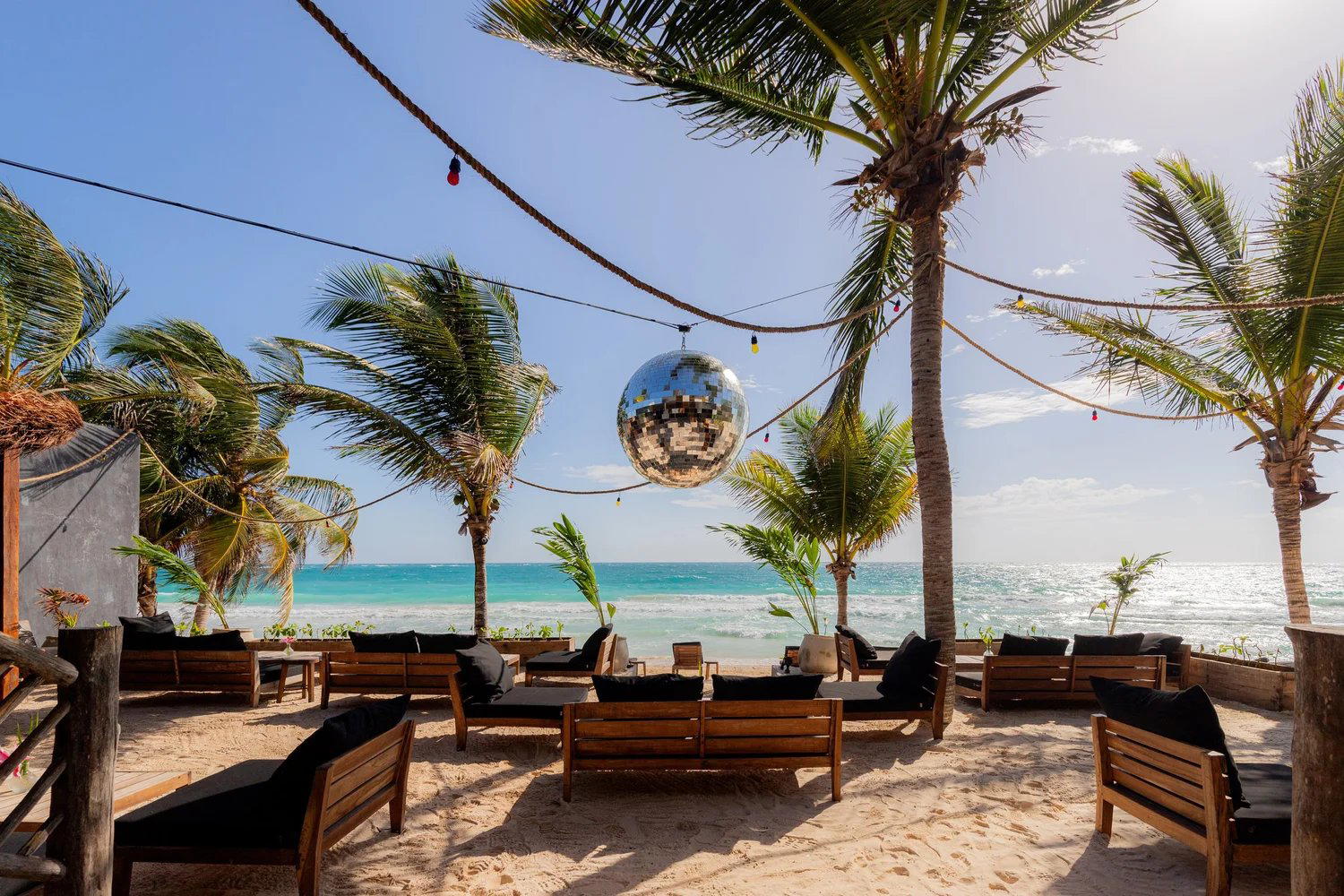
Details
- Rustic
- Scenic
- Intimate
- Bohemian
- Date Night
- Special Occasion
- Celebration
- Open Kitchen
- Standalone
- Craft Cocktails
- Farm To Table
- Local Sourcing
- Sustainable Seafood
- Garden
- A La Carte
- Small Plates
- Craft Cocktails
- Vegetarian Friendly
- Vegan Options
- Gluten Free Options
Current opening hours
- Monday
- Closed
- Tuesday
- 6–10 PM
- Wednesday
- 6–10 PM
- Thursday
- 6–10 PM
- Friday
- 6–10 PM
- Saturday
- 6–10 PM
- Sunday
- 6–10 PM
Hours can change for holidays and private events. Last verified .
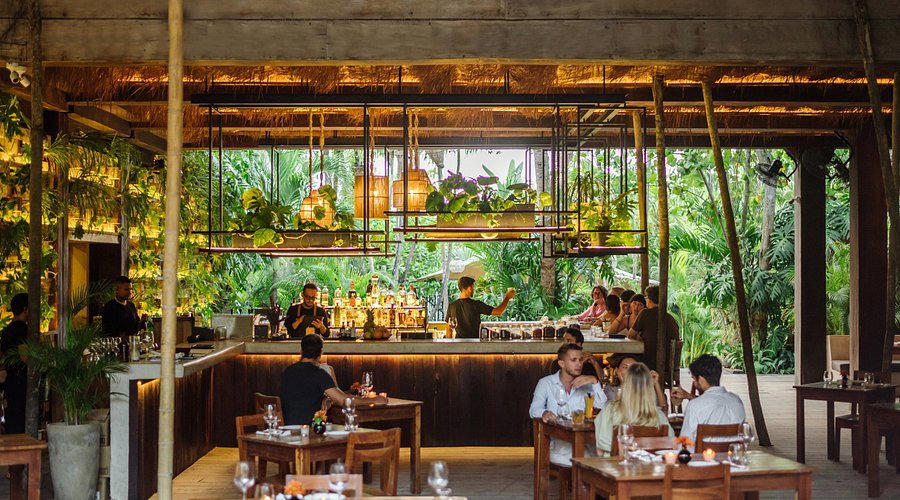
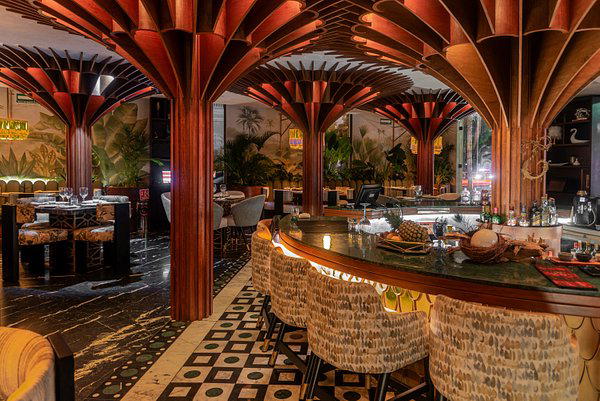
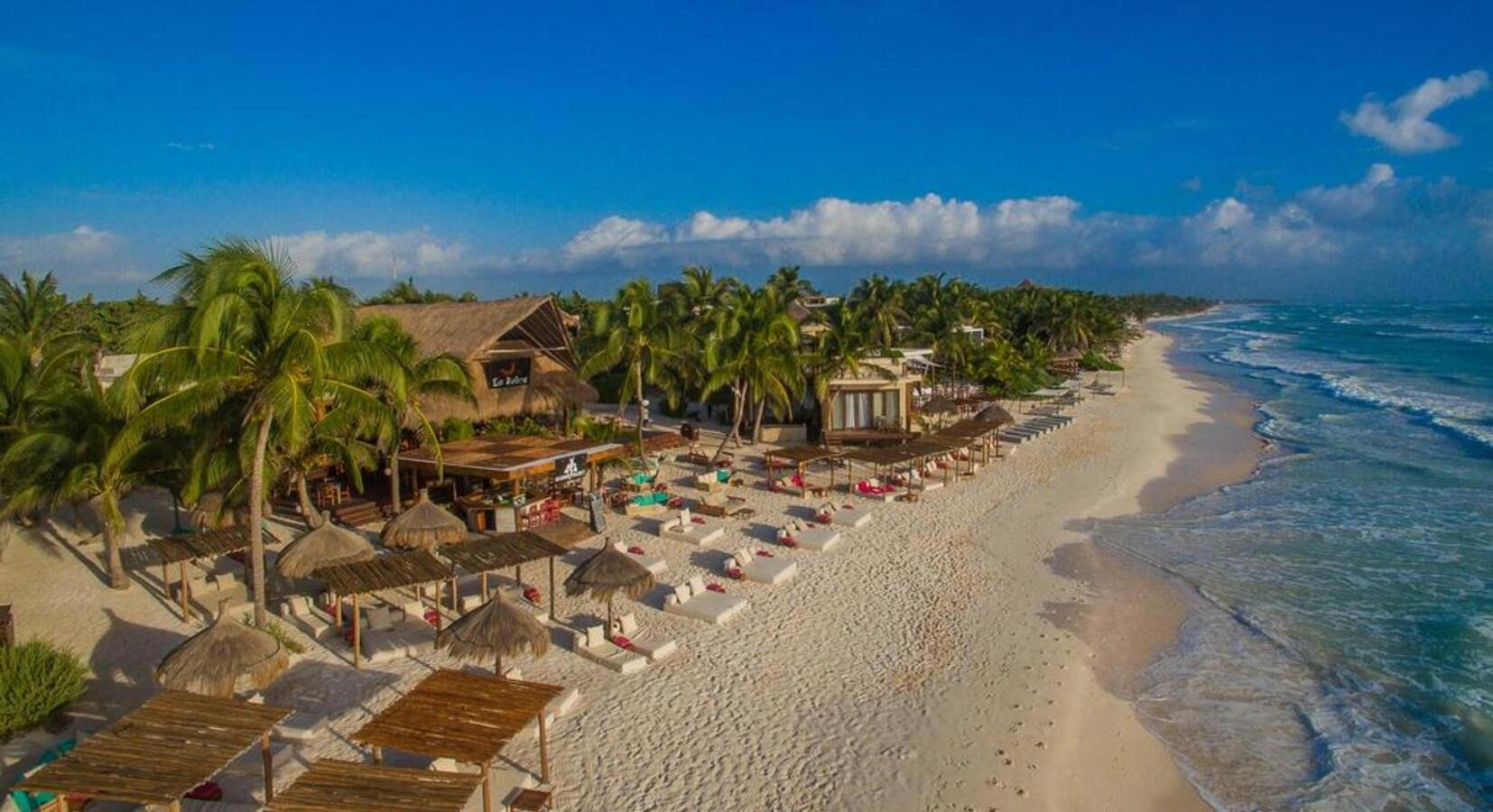
Open-air al fresco dining under the night sky amid palm trees, lit by candlelight and oil lamps, with a relaxed rustic vibe enhanced by the visible roaring wood-fired kitchen.