Las Alamandas



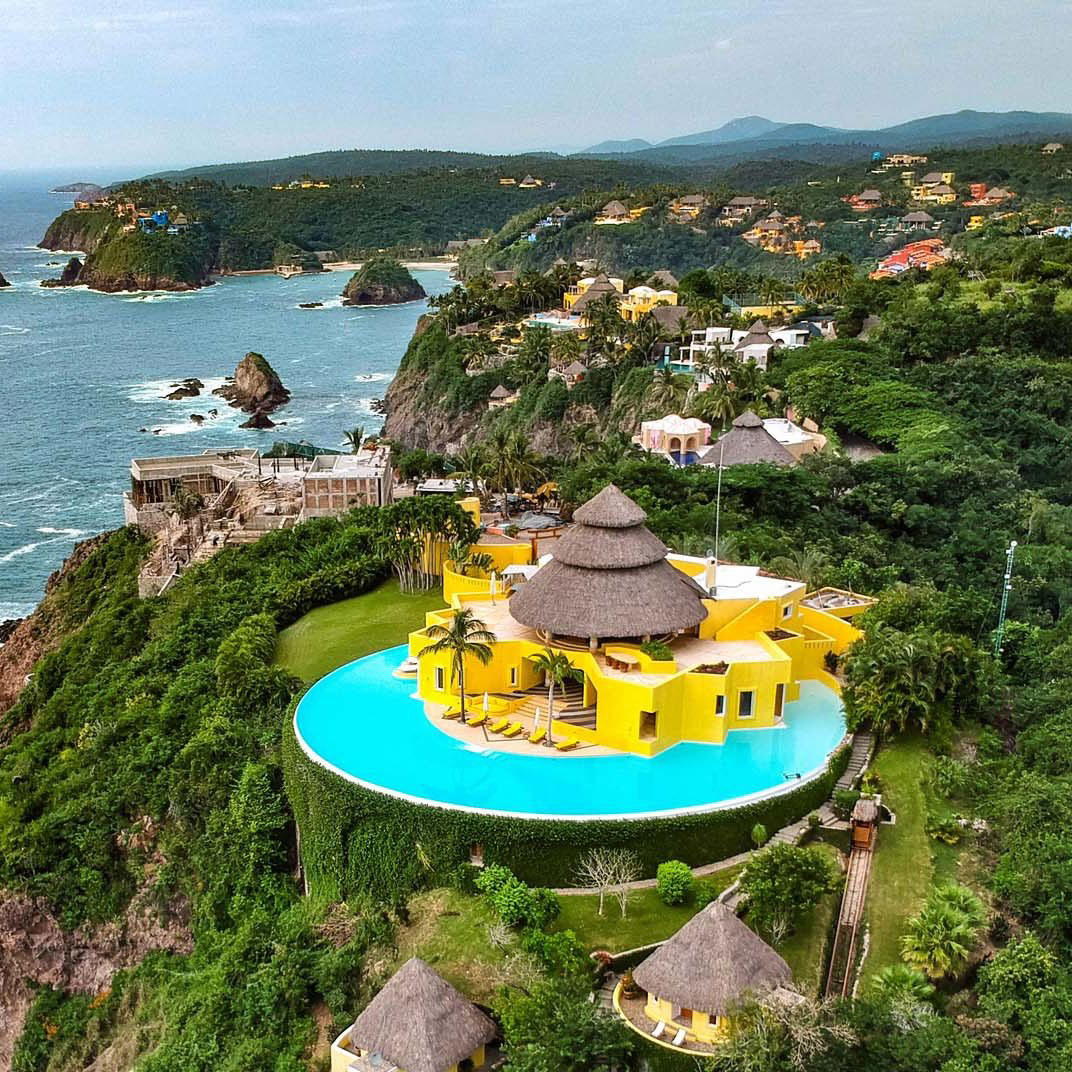
Las Alamandas occupies over 2,000 acres of Pacific coastline between Puerto Vallarta and Manzanillo, housing just 18 suites across eight villas for a maximum of 45 guests. Winner of the 2025 World Travel Awards for Mexico and Central America's Leading Boutique Resort and recognised with a Michelin 2 Keys distinction in 2024, it operates at a scale and density ratio that places it in a different tier from any conventional luxury resort on Mexico's Pacific coast.
Pearl is the En Primeur Club membership app — saves, bookings, and concierge access live there. Same editors, same standards.
- Address
- Carretera Federal 200 Km 82, Las Alamandas, 48850 Jal.
- Phone
- +52 322 205 8054
- Website
- alamandas.com
- Directions
- Get directions
 Saves & bookings on Pearl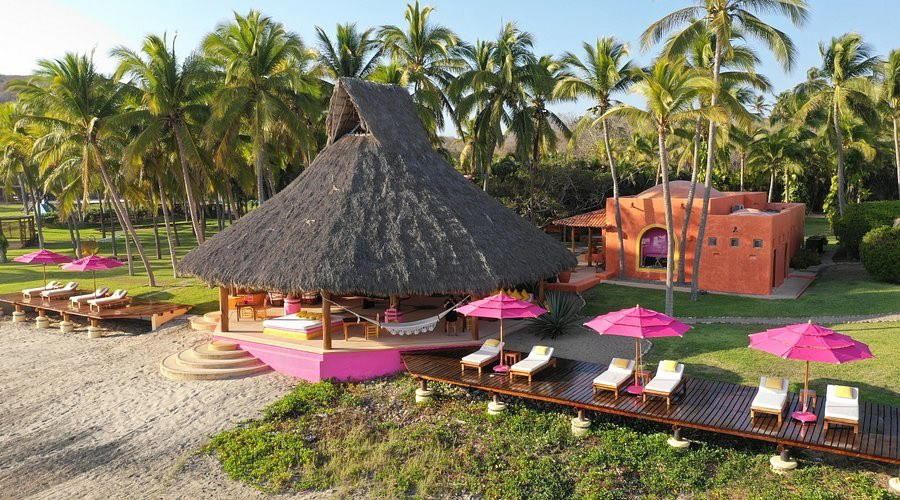
Where the Grounds Do Most of the Work
The approach to Las Alamandas prepares you for what follows. Carretera Federal 200 runs along Mexico's Costalegre coast through a corridor of hills and coastal scrub with minimal signage and fewer other cars than you might expect. That sense of deliberate distance from the resort corridor is not incidental, it is the architectural premise of the whole property. When the gates open, the scale of the land becomes immediately legible: over 1,500 acres of tropical terrain, eight villas dispersed across it, and 16 rooms accommodating a maximum of 28 guests at any one time. The mathematics alone separate Las Alamandas from the broader category of Mexican Pacific luxury.
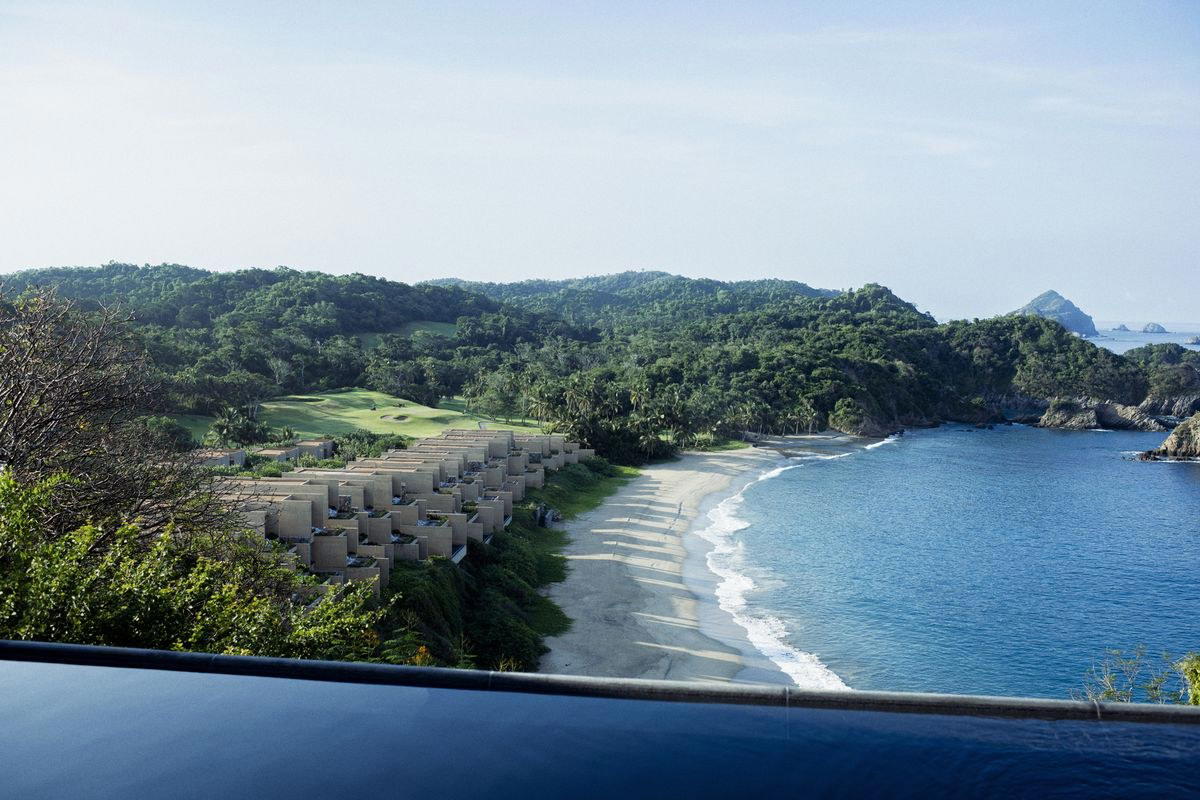
Mexico's Pacific resort market has long operated on two poles: large integrated developments concentrated around Puerto Vallarta and the Bay of Banderas to the north, and the Cabo corridor to the south. The Costalegre stretch between them, roughly 200 kilometres of Jalisco coastline, has remained deliberately thin on infrastructure, which is precisely why properties here compete on land and privacy rather than amenity density. Four Seasons Resort Tamarindo operates in the same stretch and represents the branded institutional version of that positioning. Las Alamandas represents the privately-held counter-argument: fewer keys, no group affiliation, and a design vocabulary that reads closer to an estate than a hotel.
Design as Territorial Logic
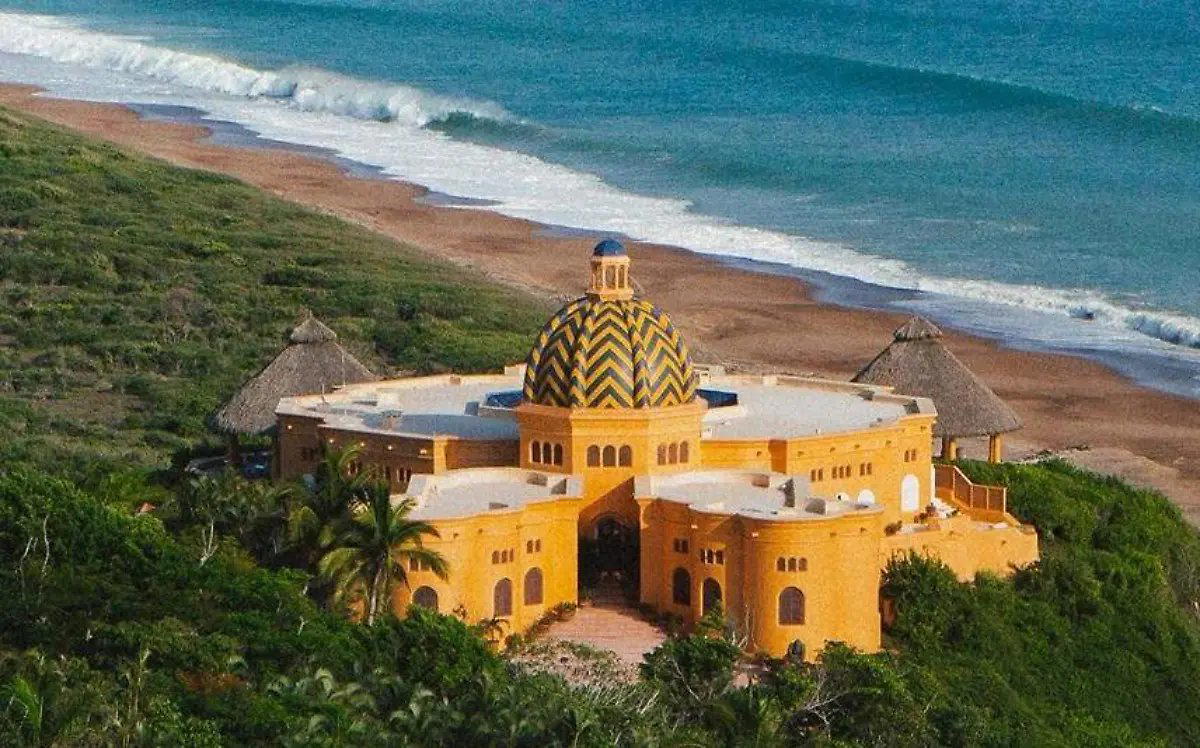
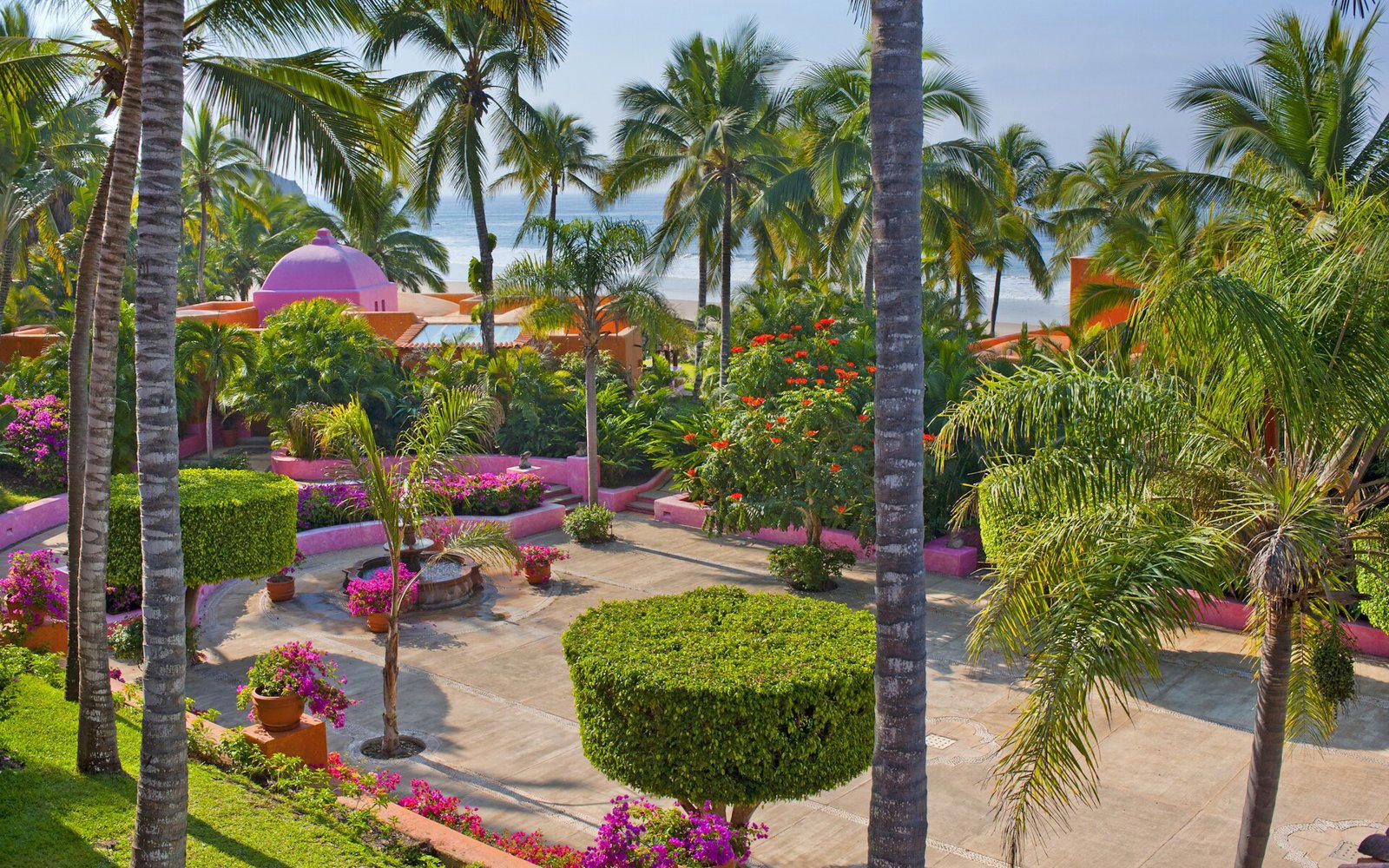
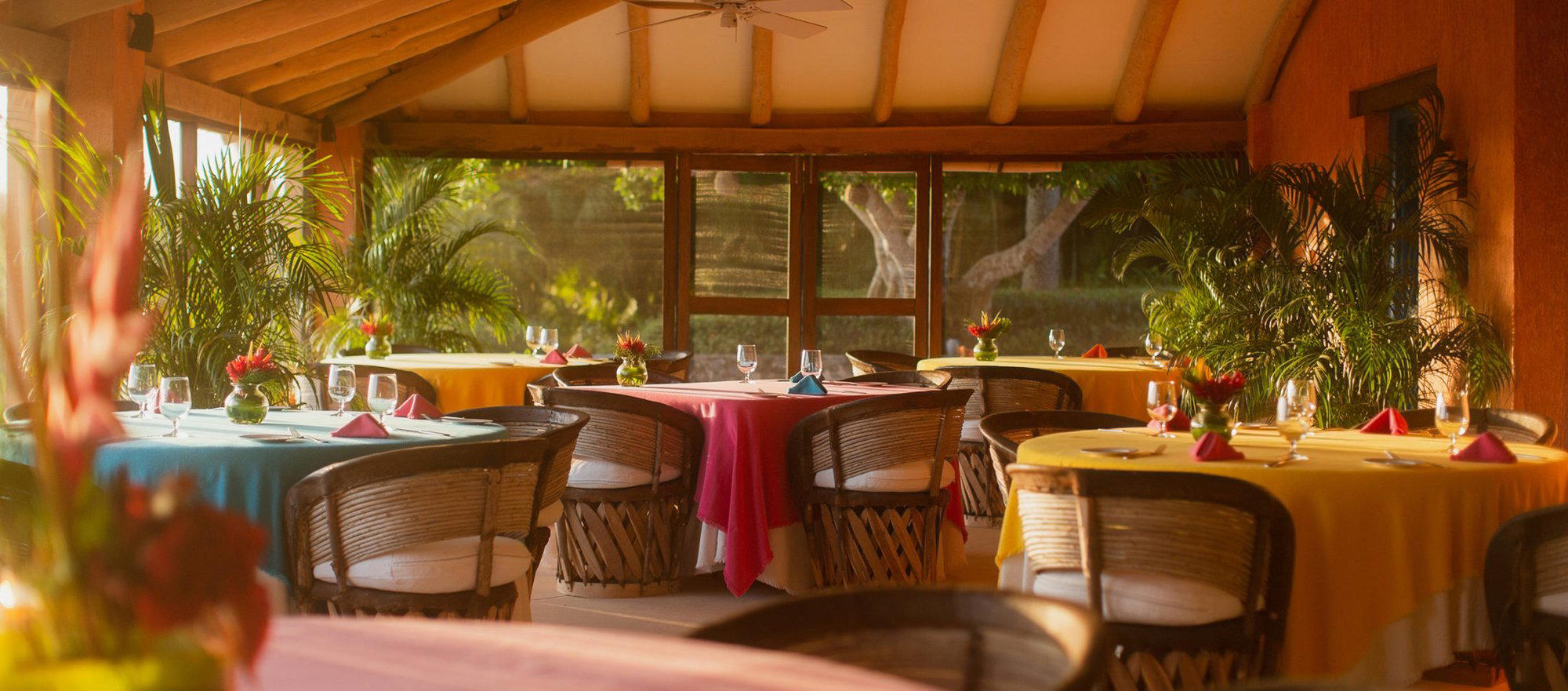
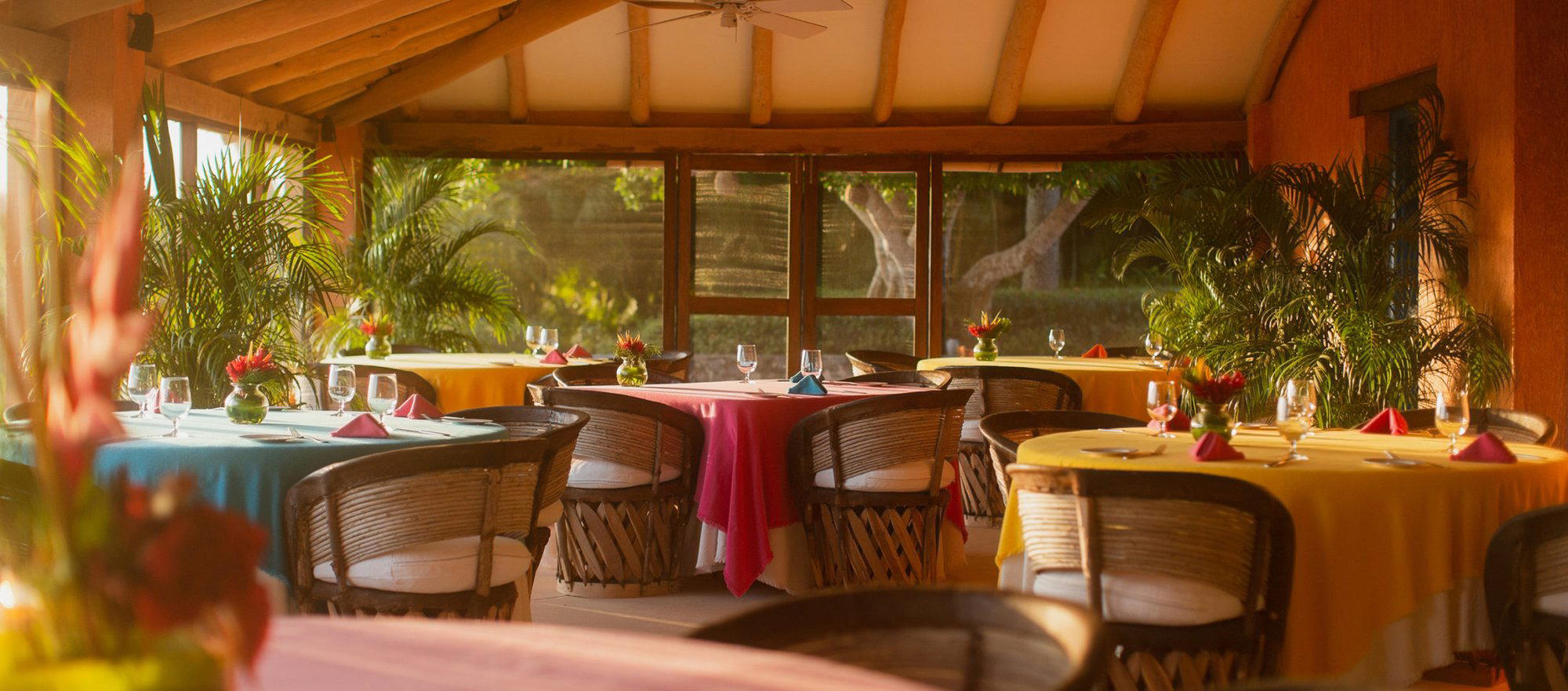
The physical language of the villas draws directly from Mexican vernacular building: high-pitched tile roofs, white ceramic floors, shaded terraces, and walkways laid with stone mosaic that wind through tropical garden plantings. There is nothing minimalist about the interiors. The palette is the palette of Mexican folk craft, canary yellow, shocking pink, jewel tones that hold their ground against the light off the Pacific. Rattan sofas carry embroidered cushions; walls hold hand-painted artifacts and folk-art pieces sourced across Mexico. The aesthetic decision is explicit: this is not the neutral, sand-and-linen register that dominates much of Caribbean and Mexican luxury accommodation. It reads as a specific place with a specific visual argument.
Owner Isabel Goldsmith, granddaughter of Bolivian mining magnate Don Antenor Patino who had originally planned a large-scale resort on this land, made the counter-decision to build small and preserve the surrounding ecology. That history explains the scale: the 2,000-acre holding was the canvas for a mega-resort that never came. What replaced it is eight villas, each positioned for maximum privacy within the grounds, with the staff-to-guest ratio that implies, close to 100 staff members serving fewer than 50 guests at capacity.
The design of the baths functions as its own editorial statement within each suite: oversized tubs and showers, bidets, double sinks, large open shelving, and hand-painted Mexican tile that gives each room a distinct character rather than a standardised finish. Most suites include private terraces and full living and dining areas. Only two configurations, the Casa del Sol Presidential Suite and the Casa del Domo Master Suite, include full kitchens, which positions those two as the property's highest-tier accommodation even within an already-restricted supply.
The Food and Bar Program in Context
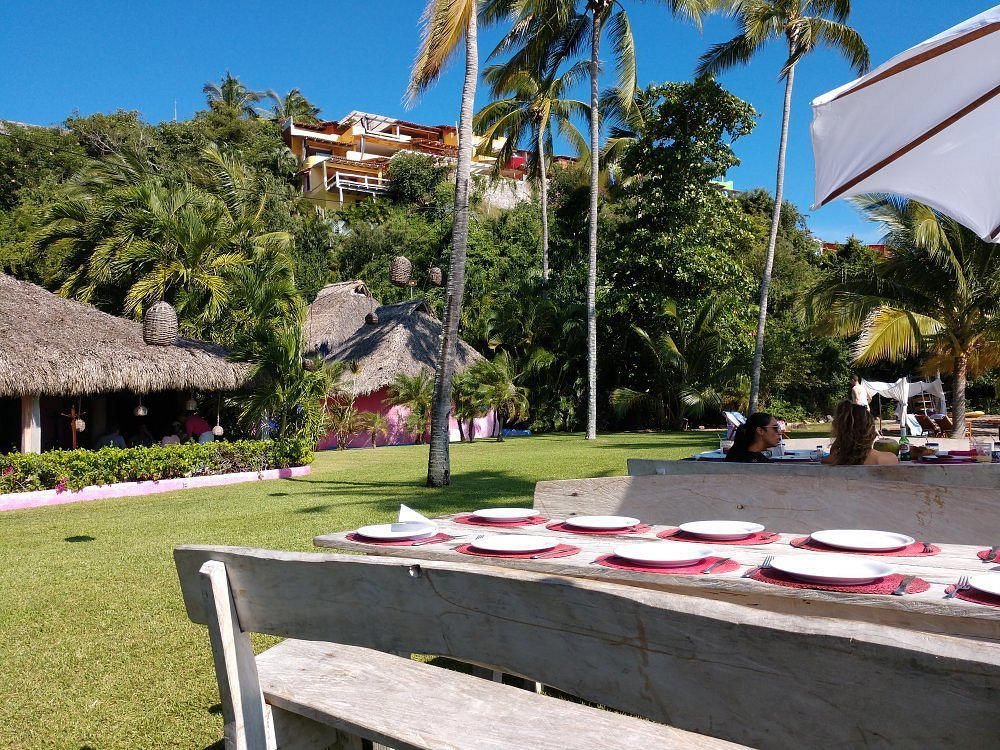
The Oasis Restaurant operates within the design logic of the broader property: surrounded by palms, looking out over the Pacific, serving on a terrace with evening candlelight and, on occasion, live mariachi. Executive Chef Alejandro Aguilar Morales runs a menu that spans sushi, Mexican regional cooking, Continental, and American fusion formats, with the majority of produce sourced from organic cultivation on the property itself. At a property of this scale and guest count, the kitchen operates more like a private house kitchen than a resort dining room, the number of covers is structurally small, and the sourcing arrangement with the property's own land gives the kitchen a production loop that larger operations cannot replicate.
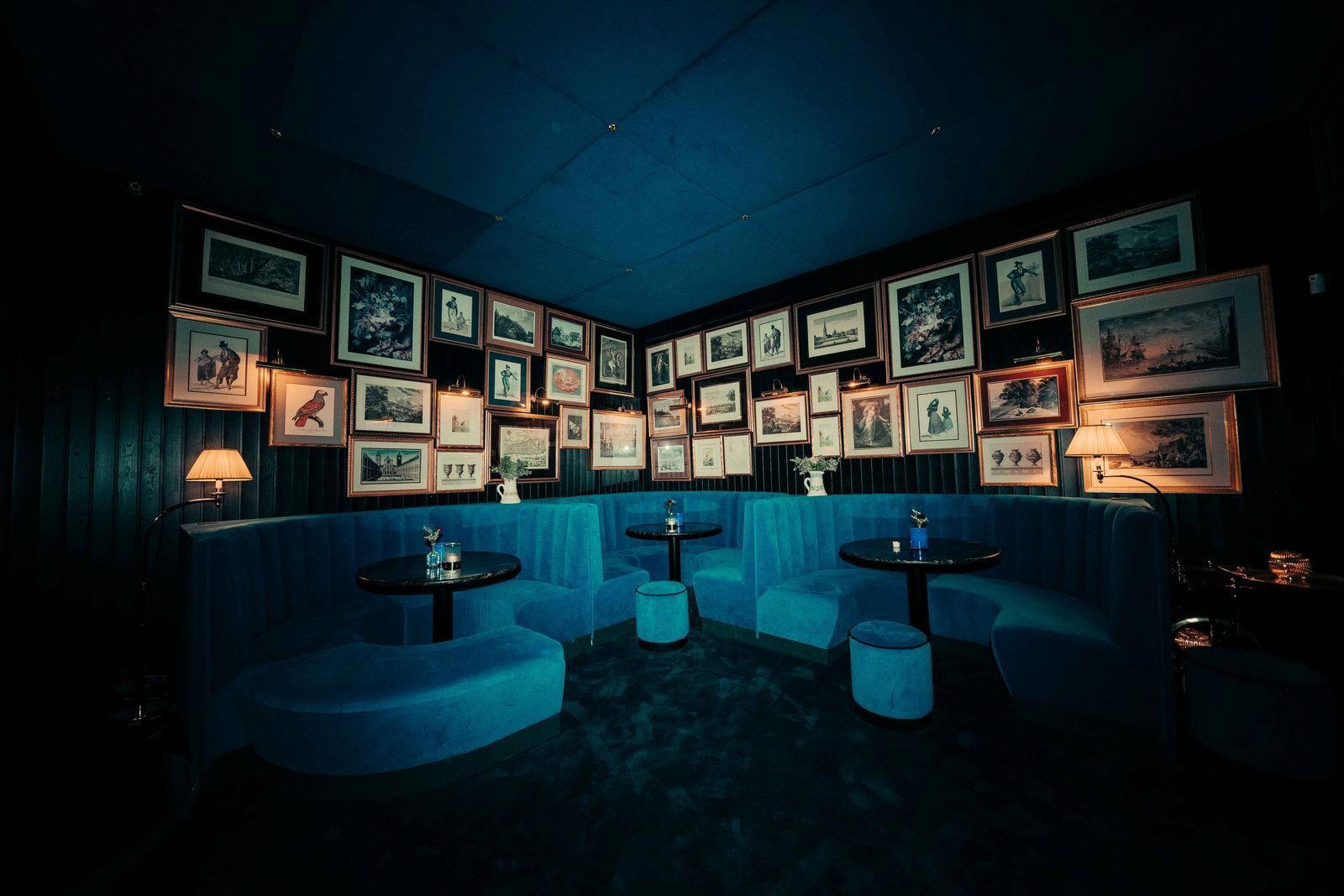
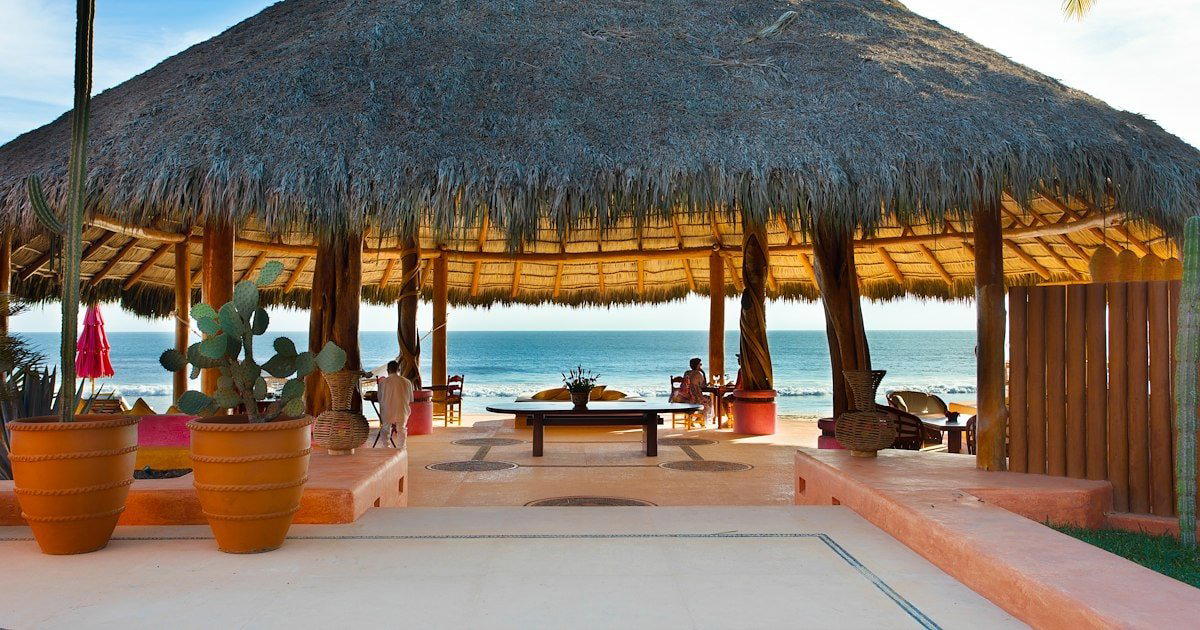
La Palapa Beach Club handles daytime dining in a thatched structure adjacent to the 60-foot freshwater pool and the beach, functioning as both a retreat from the sun and an informal lunch venue. Bar Estrella Azul operates as an open-air rooftop lounge in shades of blue, the name is not decorative, where the view of the Pacific sunset and the star field above it become the dominant feature. These three food and beverage spaces operate across different hours and registers without overlap, which is the correct approach for a property where guests expect a degree of choreography across the day.
Recognition and Where It Places the Property
Las Alamandas holds two significant current credentials: the 2025 World Travel Awards designation as Mexico and Central America's Leading Boutique Resort, and a Michelin 2 Keys recognition from 2024. The latter is notable because Michelin's hotel key system, distinct from its restaurant stars, evaluates the overall hospitality experience. A 2 Keys rating places the hotel in a tier that, across Mexico, includes properties competing on a different set of standards than amenity count or pool square footage. For comparison, the Michelin Keys program in Mexico has recognised properties across the scale spectrum, but the boutique tier, sub-50 keys, privately held, design-specific, is a narrower cohort.
Within the broader Mexican luxury hotel conversation, the properties that occupy a comparable positioning on privacy and land scale include Cuixmala in La Huerta, which sits on the same Costalegre coast and operates under a similarly conservation-adjacent premise. Further afield on Mexico's Pacific side, One&Only; Mandarina in Riviera Nayarit and Four Seasons Resort Punta Mita operate at larger key counts with branded infrastructure. On the Caribbean side, Hotel Esencia in Tulum and Maroma in Riviera Maya offer instructive comparisons: both operate with restricted key counts and estate-like design identities, though within a different coastal ecosystem. Etéreo, Auberge Resorts Collection in Punta Maroma and Chablé Yucatán occupy the design-led boutique tier in the Yucatán market, where a different but related set of privacy-forward tropes apply.
For the Los Cabos bracket, Las Ventanas al Paraíso, A Rosewood Resort, Montage Los Cabos, and Zadun, A Ritz-Carlton Reserve represent the branded premium end; the hotel operates outside that branded system entirely, which is both its competitive constraint and its primary appeal to a specific type of guest.
Getting There and Planning Your Stay
The property sits at Kilometre 82 on Carretera Federal 200 in the state of Jalisco, approximately two hours from Puerto Vallarta International Airport (PVR) and roughly one hour and 35 minutes from Manzanillo Airport (ZLO) by ground. The hotel provides ground transfers from both airports with an airport greeter and personal staff assistance included in the arrangement. For guests arriving by private aircraft, the resort maintains its own 3,300-foot asphalt runway, which accommodates small aircraft and removes the road transfer entirely. The entire resort can be taken on an exclusive-use basis, at 18 suites across eight villas, the capacity ceiling of 45 guests means whole-property buyouts are operationally achievable, and the property has accommodated them. Advance planning is advisable regardless of travel period.
Other properties in Mexico's broader design-hotel conversation include Xinalani in Quimixto, Playa Viva in Juluchuca, and Hotel Punta Caliza in Lazaro Cardenas for Pacific coast alternatives at different price and scale points. For interior Mexico at a comparable design register, Casa de Sierra Nevada, A Belmond Hotel and Casa Silencio in San Pablo Villa de Mitla offer instructive comparisons on what Mexican vernacular design can do within a small-key framework.
Quick Comparison
Comparable venues nearby, for context on price, style, and recognition.
| Venue | Cuisine | Price | Awards | Notes |
|---|---|---|---|---|
| Las AlamandasThis venue — the venue you are viewing | Secluded luxury beachfront estate with private beaches and expansive nature preserve | $$$$ | Michelin 2 Key | Not listed |
| Four Seasons Resort Tamarindo | Contemporary luxury resort blending modern design with pre-Hispanic architectural elements and Mexican artisan craftsmanship, set within an untouched nature sanctuary. | $$$$ | World's 50 Best #55, 5-Star | Costalegre |
| Las Alamandas | Secluded private estate-like beach retreat with contemporary Mexican architecture. | $$$$ | 5-Star | Costalegre |
| Susurros del Corazón, Auberge Resorts Collection | Contemporary beachfront luxury resort with nature-inspired design integrating organic materials and Mexican artisan elements into a sophisticated coastal hideaway. | $$$$ | Michelin 2 Key | Punta de Mita |
| Playa Viva | Eco-luxury open-air resort with treehouses and casitas immersed in nature. | $$$$ | Michelin 2 Key | Juluchuca |
| Xinalani | Eco-chic wellness retreat perched on cliffs | $$$$ | Michelin 3 Key | Quimixto |
Recognition history
Dated appearances from independent guides and award organizations, with the underlying list record or original source where available.
Virtuoso Luxury Hotel Partner
Virtuoso
Michelin 2 Keys
Michelin
World Travel Awards
World Travel Awards
Michelin 2 Keys
Michelin
At a Glance
- Romantic
- Quiet
- Elegant
- Scenic
- Intimate
- Sophisticated
- Rustic
- Honeymoon
- Romantic Getaway
- Family Vacation
- Wellness Retreat
- Anniversary
- Weekend Escape
- Beachfront
- Infinity Pool
- Private Villa
- Panoramic View
- Private Dining
- Pool
- Spa
- Fitness Center
- Room Service
- Concierge
- Valet Parking
- Beach Access
- Tennis
- Wi Fi
- Waterfront
- Garden
- Pool
- Spa
- Fitness Center
- Room Service
- Concierge
- Valet Parking
- Beach Access
- Tennis
- Wi Fi
Serene and luxurious with ocean sounds, colorful Mexican decor, beautiful gardens, and attentive hands-off service creating a paradise-like family estate atmosphere.