Hannekes Boom
On a former industrial quay at Dijksgracht 4, Hannekes Boom occupies the kind of waterfront position that Amsterdam's canal-belt bars rarely offer: open sky, direct water views, and a pace that slows the moment you arrive. The bar draws a broad cross-section of the city, from post-work locals to visitors who've wandered east from Centraal Station, all gravitating toward the same unhurried outdoor ritual.
Pearl is the En Primeur Club membership app — saves, bookings, and concierge access live there. Same editors, same standards.
- Address
- Dijksgracht 4, 1019 BS Amsterdam, Netherlands
- Phone
- +31 20 419 9820
- Website
- hannekesboom.nl
- Directions
- Get directions
 Saves & bookings on Pearl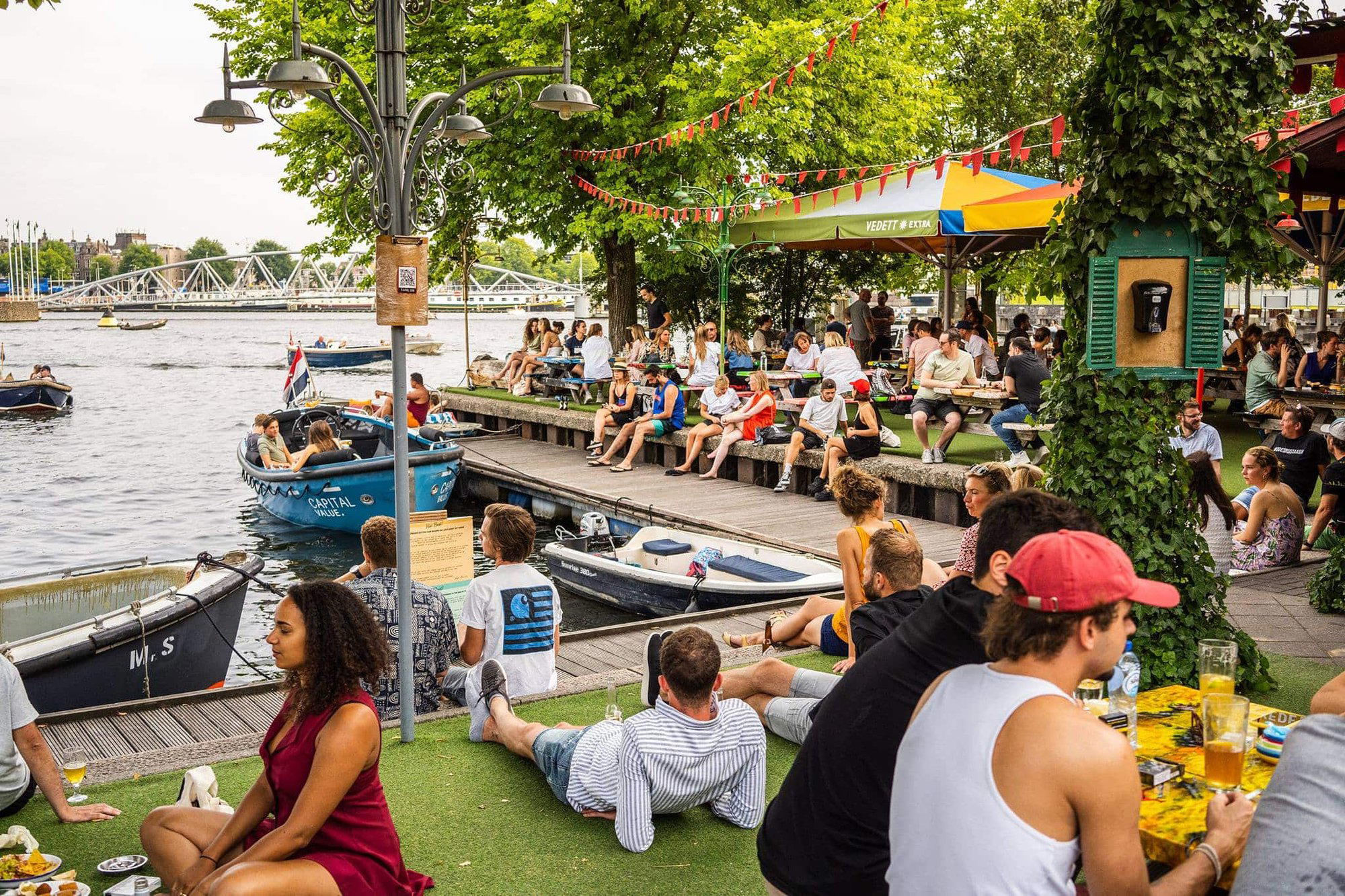
Where the City Meets the Water's Edge
Amsterdam's relationship with its waterways is older than its streets, and nowhere does that relationship feel more present than along the eastern harbour fringe. Dijksgracht, the quay that runs parallel to the IJ, sits at a point where the city's canal-belt geometry gives way to something rawer: industrial heritage, open water, and sky unbroken by the tall narrow facades of the grachtengordel. The address alone signals something different from the bar scene concentrated around Leidseplein or the cocktail programs of the Jordaan.
The bar belongs to a category of Amsterdam drinking spot that has grown in cultural weight over the past decade: the waterfront terrace that functions as a neighbourhood institution rather than a tourist checkpoint. These places earn their status not through awards lists or chef pedigree, but through the particular rhythm they impose on a visit. You arrive, you locate a seat facing the water, and the city's usual forward momentum simply stops. That ritual, repeated across warm afternoons and long summer evenings, is what Hannekes Boom has built its reputation on.
The Ritual of Drinking at the Water
The dining and drinking customs of Amsterdam's waterfront venues differ from those of the city's interior bars in one important respect: the terrace is the experience, not an appendage to it. At Hannekes Boom, the outdoor space facing the water defines the visit. This is not a venue where you pass through the terrace on your way to something else. The pacing is slow by design. Orders accumulate over hours rather than courses, conversation fills the gaps, and the light over the IJ does the rest.
This approach places Hannekes Boom in a distinct behavioural tier within Amsterdam's bar scene. The city's cocktail bars, including the precisely constructed programs at Door 74 and Tales & Spirits, reward attention to what's in the glass. Hannekes Boom rewards attention to what's around you. Neither approach is inferior; they serve different hours and different moods, and Amsterdam has enough depth to support both.
For a close comparison in format, Amsterdam Roest operates on similar logic further east, with a repurposed industrial aesthetic and a terrace that functions as the main event. The difference is scale and register: Roest leans into its event-space identity, while Hannekes Boom maintains the feel of a bar that happens to have discovered a particularly good piece of real estate and decided to make the most of it.
The Neighbourhood That Surrounds It
The eastern harbour district, running from the NEMO science museum eastward past the Java and KNSM islands, has been one of Amsterdam's more deliberate urban transformations of the last thirty years. Former shipyard land and docking infrastructure have been converted into residential neighbourhoods, cultural institutions, and the kind of open public space that the historic centre rarely provides. Hannekes Boom sits at the western edge of this zone, close enough to Centraal Station to attract visitors who have extended their walk beyond the obvious tourist circuit, but far enough east to feel like a different city entirely.
This position, between the known and the overlooked, is precisely what gives the bar its social character. The crowd at any given afternoon session is a cross-section that few Amsterdam venues achieve: local residents from the new eastern districts, office workers from the surrounding area, and travellers who made a deliberate choice to walk past the canal-belt concentration of the city centre. The bar earns its place in Amsterdam's eating and drinking scene..
Eating Alongside Drinking
Amsterdam's informal waterfront venues have, over time, developed a food offer that keeps pace with longer sessions. The expectation at a bar like Hannekes Boom is not the structured service sequence of a restaurant, where courses arrive at defined intervals and the kitchen sets the pace. Instead, food functions as sustenance and anchor: things to eat while the afternoon extends, ordered when needed rather than when prompted. This matches the Dutch habit of treating a drink-led occasion as something that can organically absorb food without becoming a dinner reservation by another name.
For morning and mid-morning visits, the energy shifts toward coffee and lighter food, a register well served by the broader Amsterdam café tradition. The brunch and daytime food culture of venues like Bakers & Roasters shows how seriously the city takes eating-adjacent-to-drinking in daylight hours. At Hannekes Boom, the same logic applies at a later hour: the food offer supports the drinking ritual rather than competing with it for the guest's primary attention.
Planning a Visit
Hannekes Boom is located at Dijksgracht 4, a ten-to-fifteen minute walk east from Amsterdam Centraal Station, or accessible by tram to the Kadijksplein area followed by a short walk along the waterfront. The venue is primarily a warm-weather destination; the terrace facing the water is the reason most people make the trip, and the experience shifts considerably when the outdoor space is closed. Late spring through early autumn represents the window when the bar operates at its characteristic register. Summer weekends draw the largest crowds, and arriving earlier in the afternoon secures better positioning on the terrace. No advance booking is standard practice for a bar of this type; arrival and securing your own space is part of the format.
For those building a broader itinerary across the Netherlands, the bar fits naturally alongside explorations of the Dutch café and terrace tradition in other cities. Bowie in The Hague, Brasserie Lalou in Delft, Florin Utrecht in Utrecht, and Café Barolo in Eindhoven each offer distinct local takes on the same broad tradition of sitting down somewhere good and staying longer than planned. Further afield, Espressobar Kopi Soesoe in Rotterdam and Boode Foodbar in Bathmen round out the picture for those moving through the region. For a contrast in approach on the international scale, Bar Leather Apron in Honolulu represents the technically precise end of the spectrum that Hannekes Boom deliberately sidesteps.
Cuisine Lens
A short peer table to compare basics side-by-side.
| Venue | Awards |
|---|---|
| Hannekes BoomThis venue — the venue you are viewing | Not listed |
| Door 74 | World's 50 Best |
| Tales & Spirits | World's 50 Best |
Continue exploring
More in Amsterdam
Bars in Amsterdam
Browse all →
Restaurants in Amsterdam
Browse all →
Hotels in Amsterdam
Browse all →
Wineries in Amsterdam
Browse all →
At a Glance
- Bohemian
- Lively
- Scenic
- Rustic
- Whimsical
- Casual Hangout
- Group Outing
- After Work
- Late Night
- Waterfront
- Beer Garden
- Live Music
- Terrace
- Rooftop
- Outdoor Terrace
- Lounge Seating
- Communal Tables
- Standing Room
- Craft Beer
- Craft Cocktails
- Conventional Wine
- Waterfront
- Skyline
Current opening hours
- Monday
- 11 AM–1 AM
- Tuesday
- 11 AM–1 AM
- Wednesday
- 11 AM–1 AM
- Thursday
- 11 AM–1 AM
- Friday
- 11 AM–3 AM
- Saturday
- 11 AM–3 AM
- Sunday
- 11 AM–1 AM
Hours can change for holidays and private events. Last verified .
Bohemian and relaxed with rustic furnishings, colorful flags, fairy lights, plants, and artistic picnic tables painted by local artists; transforms from daytime hangout to lively nightlife destination.
Know Before You Go
- Getting there
- Dijksgracht 4, 1019 BS Amsterdam, Netherlands