The estate sits within a region where elevation and volcanic soils produce whites and reds of genuine structural tension. It belongs to a small tier of Orange producers whose work rewards serious attention.
Pearl is the En Primeur Club membership app — saves, bookings, and concierge access live there. Same editors, same standards.
- Address
- Orange, France
- Directions
- Get directions
 Saves & bookings on Pearl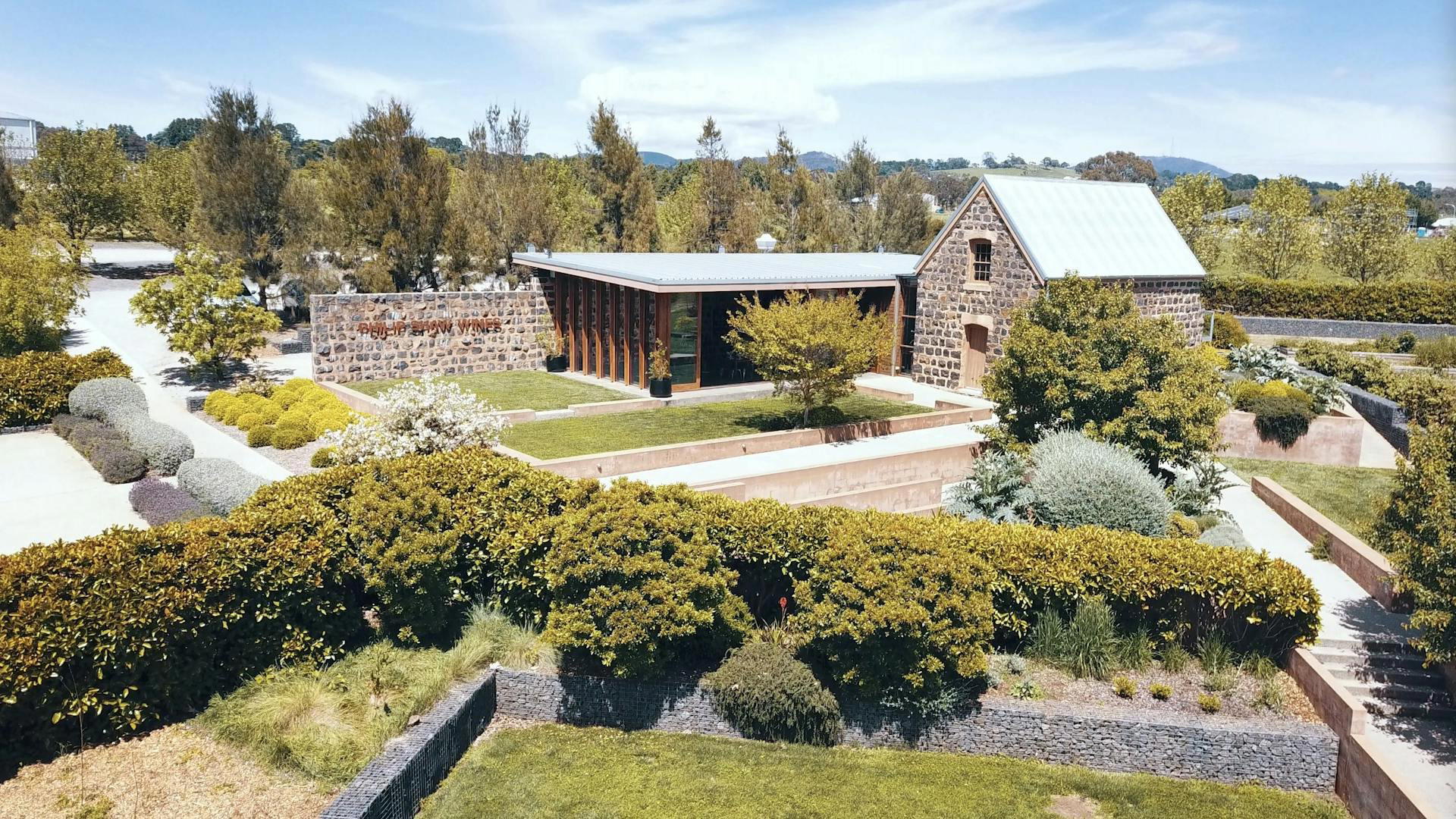
Orange's High Country, on the Vine
The road into Orange's wine country rises steadily from the flat plains of New South Wales, and by the time the volcanic tablelands open out around you, the air has changed. At elevations above 600 metres, the diurnal temperature shifts are wide enough to slow ripening considerably, giving fruit time to develop the acid structure that lower-altitude Australian wine regions routinely trade away for approachability. This is the physical argument for Orange as a serious wine address, and Philip Shaw Wines.
Orange sits within a broader southern hemisphere cool-climate conversation that includes parts of New Zealand's Central Otago and Tasmania, but it occupies a distinct position: old volcanic soils, continental rather than maritime, with a growing season that can extend well into autumn. The leading producers here work that calendar deliberately, harvesting later than peers at lower altitudes and accepting the yield consequences. The resulting wines tend to carry more restraint in their fruit profile and more length through the palate than the warmer-region alternatives that dominate export shelves.
The Sense of Place at the Estate
Approaching a well-established Orange estate in the warmer months, the visual grammar is consistent: rows ordered against a backdrop of distant ranges, the sky large and unbroken, the vine canopy dense enough to hold morning shadow well into mid-morning. Philip Shaw Wines operates within this high-country idiom. The estate occupies land shaped by volcanic activity and centuries of exposure, which shows in the rust and grey tones of the soil between vine rows, the kind of ground that drains fast and forces root systems downward in search of moisture and mineral exchange.
Within Orange's producer community, a distinction has emerged between operations that maintain cellar-door hospitality as a serious part of their offering and those that function primarily as production sites with limited visitor access. Philip Shaw Wines belongs to the former category, where the cellar-door experience is designed to communicate the estate's specific site character rather than simply move volume. That matters in a region where the quality argument depends on terroir specificity: visitors who taste with context, guided through the relationship between elevation, soil type, and what ends up in the bottle, leave with a more grounded understanding than any tasting note can provide.
Where Philip Shaw Wines Sits in the Orange Hierarchy
Orange's premium tier is smaller than its reputation might suggest. While the region has attracted considerable attention in Australian wine media over the past two decades, the number of producers working at a level that commands serious collector interest remains limited. Peers on the EP Club platform in adjacent French wine regions include Domaine de la Vieille Julienne, Domaine de Marcoux, and Domaine Grand Veneur, estates whose recognition signals a comparable level of production seriousness, even if the varieties and soils differ entirely.
The comparison is not about stylistic similarity but about the tier of attention and craft that awards like the Pearl Prestige are designed to identify. Across the EP Club network, similarly credentialed producers range from Albert Boxler in Niedermorschwihr to Château Batailley in Pauillac and Château Bélair-Monange in Saint-Emilion, producers whose awards reflect sustained quality rather than a single strong vintage. The winery earns its place in that company.
The Orange Wine Region: What the Setting Demands of Its Makers
At its core, Orange's claim on serious wine attention rests on geography doing work that warmer regions can only approximate with intervention. The Mount Canobolas influence, the extinct volcano that gives the region its distinctive soils and elevation, creates conditions where Chardonnay, Pinot Noir, Sauvignon Blanc, and Shiraz can each express genuine varietal tension rather than the soft generosity that characterises much Australian wine at lower altitudes.
Producers across the region navigate frost risk in spring, narrow vintage windows, and the logistical complications of high-altitude farming that add cost without always adding to the bottle price. What survives those constraints is generally wine that has been made with a clear point of view about what the site can do, which is why the gap between Orange's leading producers and its more casual operators is wider than you might expect given the region's modest size. Among the French estates that offer useful stylistic contrasts, Château Branaire Ducru in St-Julien and Château Cantemerle in Haut-Médoc demonstrate how elevation and drainage shape structure across entirely different hemispheres and grape varieties. The underlying principle, that site specificity, where taken seriously, produces wines that read as place rather than process, is consistent.
Planning a Visit
Orange is roughly three and a half hours by road from Sydney, making it viable as a long weekend destination rather than a day trip from the coast. The town itself carries enough infrastructure, accommodation, restaurants, and a concentrated producer community, to justify two or three days, with the winery sitting within the cluster of estates accessible from the main wine trail. Cellar doors in Orange generally operate on weekend-focused schedules, with weekday access more variable across the region, so confirming availability before arrival is the sensible approach. The harvest period, typically running from late February through May depending on the variety and vintage conditions, brings greater activity to the region and offers the leading opportunity to see winery operations in progress.
Other wineries worth cross-referencing for stylistic range include Château Clinet in Pomerol, Château Boyd-Cantenac in Cantenac, Château Bastor-Lamontagne in Preignac, Chartreuse in Voiron, Aberlour in Aberlour, and Accendo Cellars in St. Helena, each illustrating how producers at comparable recognition tiers approach terroir in their own contexts.
Compact Comparison
Comparable venues nearby, for context on price, style, and recognition.
| Venue | Cuisine | Price |
|---|---|---|
| Philip Shaw WinesThis venue — the venue you are viewing | Winery | Not listed |
| Domaine de la Vieille Julienne | Orange, Grenache, Syrah | $$$ |
| Domaine Grand Veneur | Orange, Grenache, Syrah | $$$ |
| Domaine de Marcoux | Châteauneuf-du-Pape, Grenache, Mourvèdre | $$$ |
| Domaine M&S Ogier D'Ampuis | Winery | Not listed |
| Domaine de la Sanglière | Bormes-les-Mimosas, Grenache, Cinsault | $$ |
At a Glance
- Scenic
- Rustic
- Sophisticated
- Quiet
- Wine Education
- Special Occasion
- Group Outing
- Estate Grounds
- Garden
- Historic Building
- Organic
- Garden
- Vineyard
- Orange
- Shiraz
- Merlot
- Pinot Noir
- Sauvignon Blanc
- Cabernet Franc
- Cabernet Sauvignon
- Still Red
- Still White
- Sparkling
- Cellar Door Tasting
- Curated Flight
Scenic, rustic, and quietly sophisticated, with an old bluestone-barn cellar-door setting, landscaped gardens, and a terroir-focused atmosphere.