


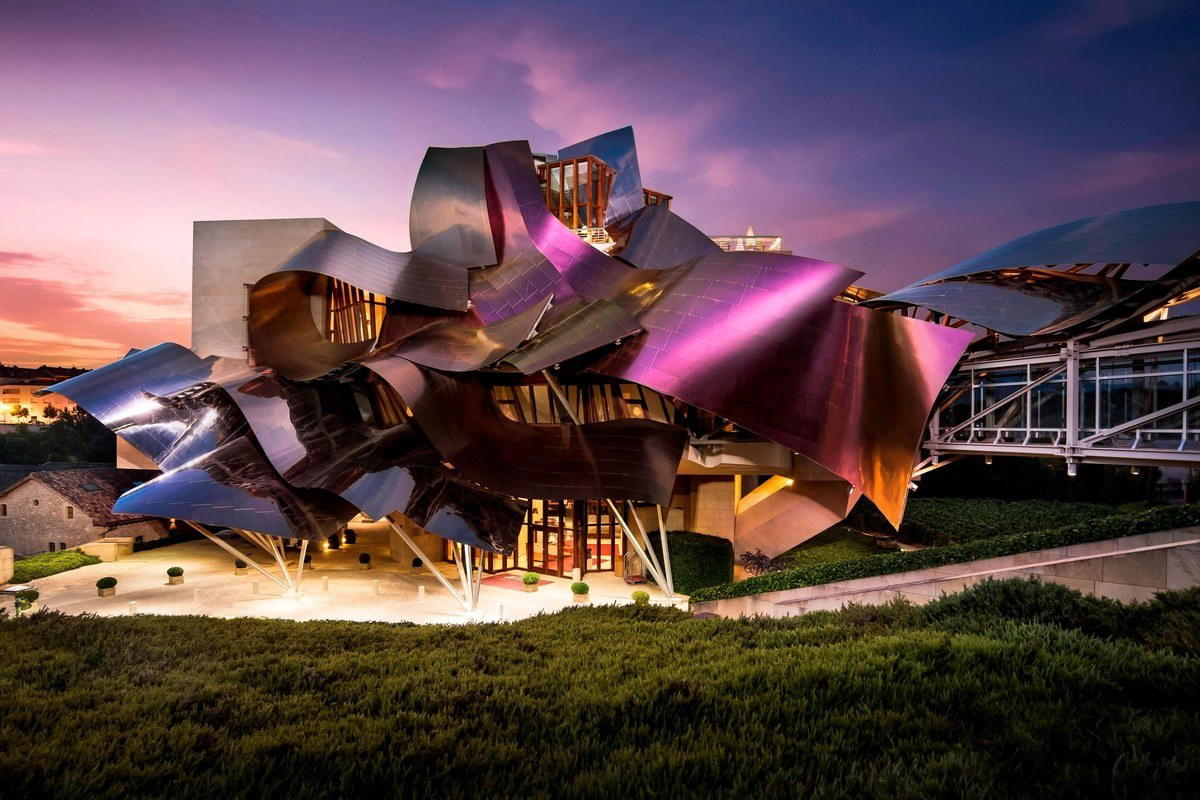
Frank Gehry's rippling titanium canopy above Elciego signals something significant before you even reach the cellar door. The architecture is the spectacle; the Tempranillo in the glass is the argument.
Pearl is the En Primeur Club membership app — saves, bookings, and concierge access live there. Same editors, same standards.
- Address
- Calle Torrea, 1, 01340 Elciego, Álava, Spain
- Phone
- +34945180880
- Website
- marquesderiscal.com
- Directions
- Get directions
 Saves & bookings on Pearl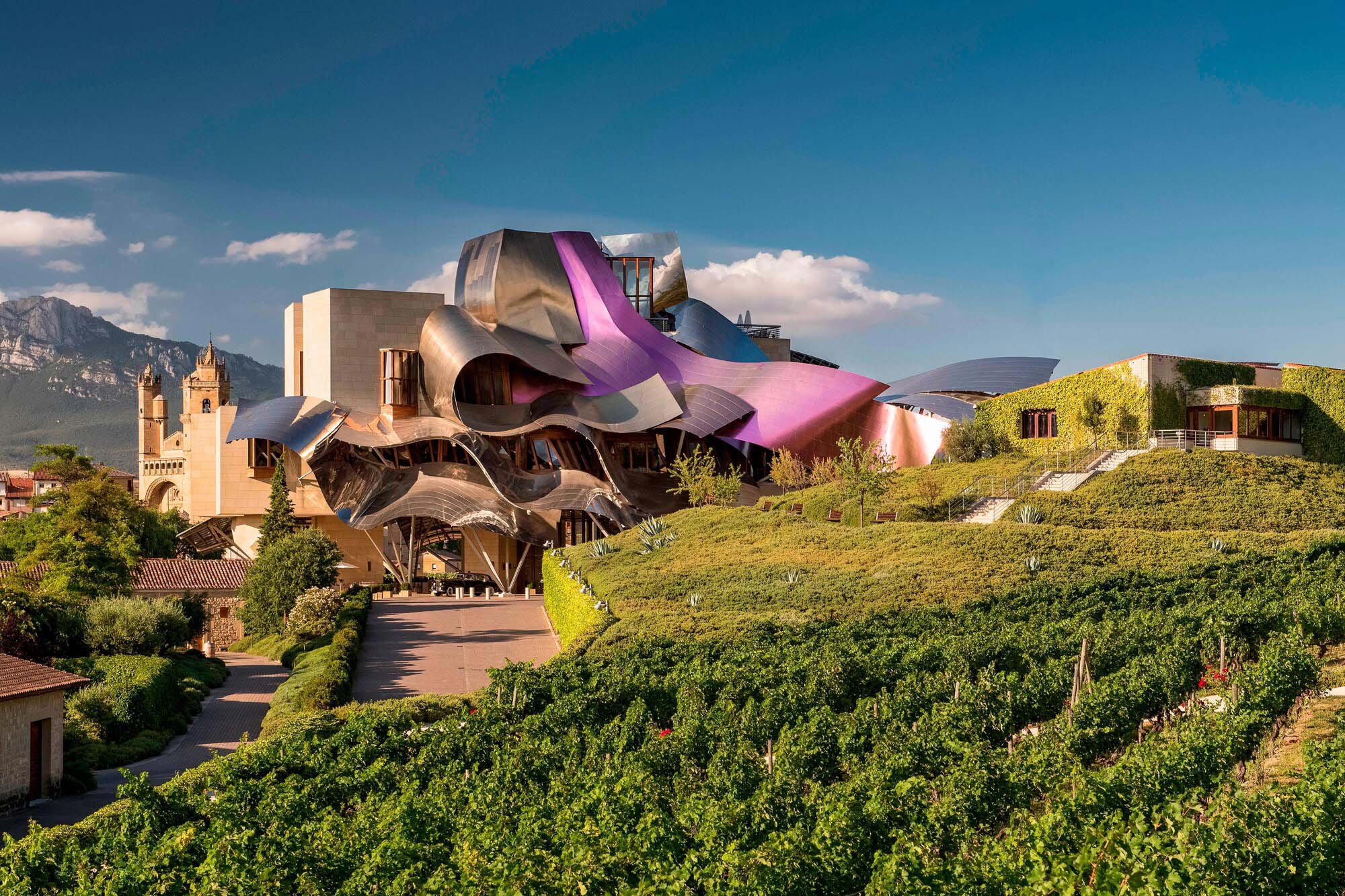
Where Architecture and Terroir Make the Same Argument
Approaching Elciego from the main road, the building announces itself before the village does. Frank Gehry's rippled titanium roof catches afternoon light across the Álava plain in panels of silver, gold, and pink, a postmodernist provocation dropped into a range of limestone ridges and low-trained vines. It is one of the more photographed structures in Spanish wine country, yet the building is not the point, or rather, it is only half of it. Below and behind the Gehry canopy sit cellars that have been producing Rioja continuously since the mid-nineteenth century, and the tension between that longevity and the spectacle above it is exactly what makes Marqués de Riscal worth understanding as a destination rather than merely a stop.
Rioja's Álava subzone, often marked on bottles as Rioja Alavesa, occupies a particular position in Spanish wine geography. The Cantabrian mountains to the north interrupt Atlantic weather systems, producing a climate cooler and wetter than the broader Rioja designation suggests. Soils here trend toward clay-limestone, which retains water through dry summers and contributes to wines with firmer structure and slower aromatic development than those grown on the sandier, more sun-exposed soils further south. Marqués de Riscal draws from this context directly: the Tempranillo-dominant wines made here reflect the Álava tendency toward tighter grain and longer cellaring potential, not the fuller, more immediately approachable profile that defines warmer Rioja zones.
Rioja Alavesa and the Logic of the Land
The Rioja appellation spans three administrative regions, La Rioja, Navarra, and the Basque province of Álava, and the distinctions between them are increasingly legible in the glass. Álava producers have long argued, with some justification, that their cooler, higher-altitude conditions produce wines better suited to extended ageing. That argument is now formalized through the single-village classification system that Rioja has been developing, which mirrors the Burgundian logic of specific-origin labelling. Marqués de Riscal sits directly inside that tradition: the winery's historical roots in Elciego give it a geographic specificity that fewer large Rioja producers can claim with the same credibility.
The Tempranillo grape that dominates production here responds to clay-limestone soils with acidity that reads as precision in youth and integration over time. At altitude, the growing season extends just enough to develop phenolic complexity without losing that acid backbone. Garnacha, Graciano, and Mazuelo appear as blending components in various formats, each contributing something the single variety cannot, Graciano's aromatic intensity, Garnacha's texture, but the structural signature remains Álava's: firm, mineral, built for the long term. For producers elsewhere in Spain taking a similar terroir-focused approach, see Clos Mogador in Gratallops in the Priorat, where slate soils produce a similarly site-specific argument, or Abadía Retuerta in Sardón de Duero, which applies comparable rigour to the Duero valley.
The comparable set and Where Riscal Sits Within It
Large historic Rioja houses occupy a distinct tier in Spanish wine. They carry institutional credibility, decades of production records, established international distribution, cellars deep enough to hold significant vertical stocks, but they also contend with the perception that scale dilutes expression. The more compelling among them counter this by maintaining estate holdings with clear geographic identity and by preserving older vine material that connects current releases to a deeper root system, literally and figuratively.
Compare this with CVNE (Cune) in Haro, another historic Rioja house operating at a similar institutional scale, or Marqués de Cáceres in Cenicero, which approaches the same appellation from a different stylistic register. In the Duero valley, Bodegas Protos in Peñafiel and Emilio Moro in Pesquera de Duero represent the alternative geographic argument, that Spain's other great red wine region produces a structurally distinct, equally serious case for terroir expression.
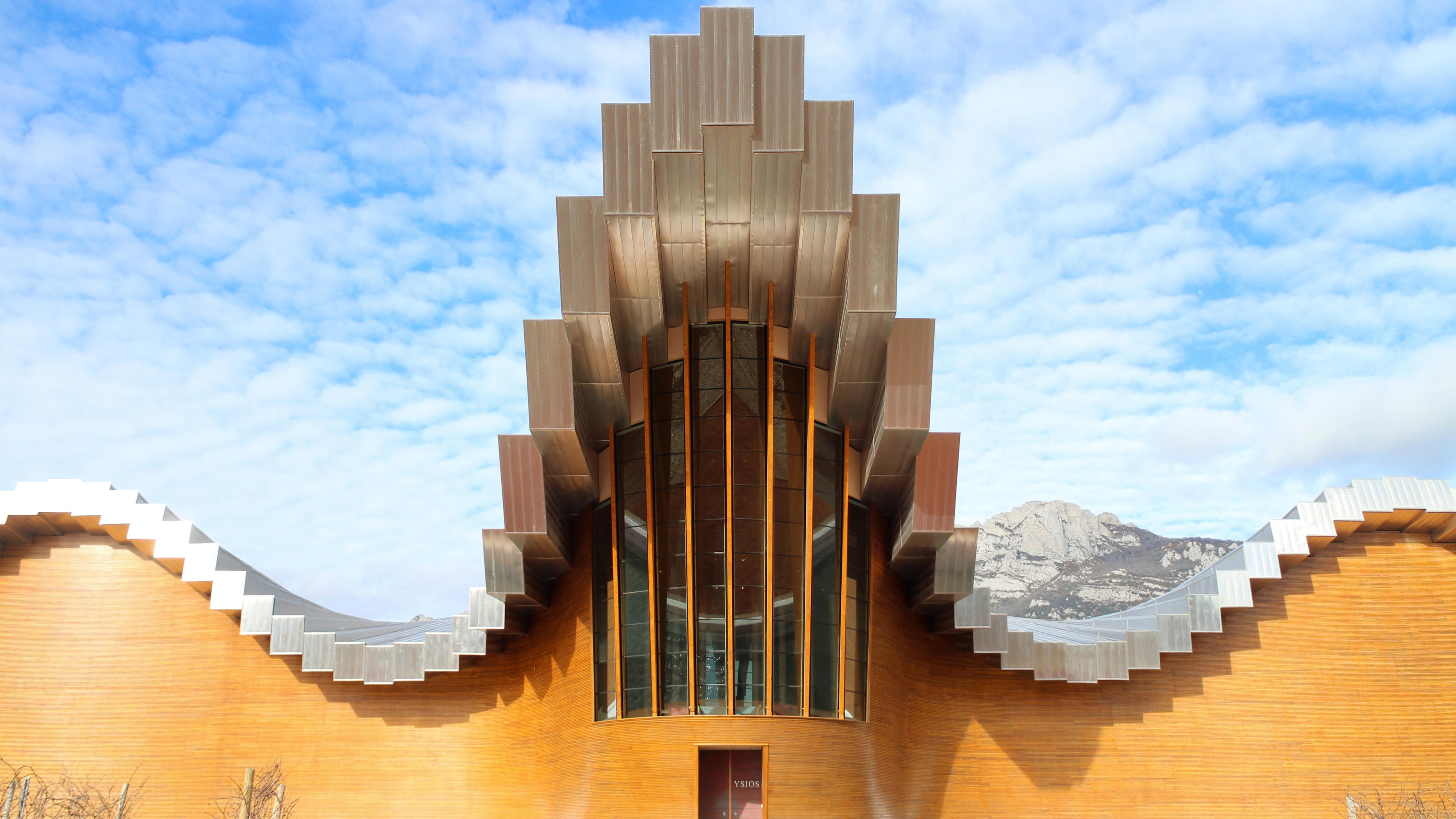
What separates Riscal from most of its Rioja contemporaries is the Gehry building, which functions as more than architecture. It has repositioned the estate as a hospitality destination in a way that few wine properties in Spain have managed with equivalent international visibility. The hotel within the structure places visitors inside the winery complex, compressing the distance between accommodation and cellar in a way that changes the visit from a day trip into an immersive stay. For the Álava region more broadly, Bodegas Ysios in Laguardia represents a comparable architectural ambition applied to a smaller, more focused producer, the same impulse toward wine tourism as a primary rather than supplementary activity.
The Atmosphere and What to Expect Arriving
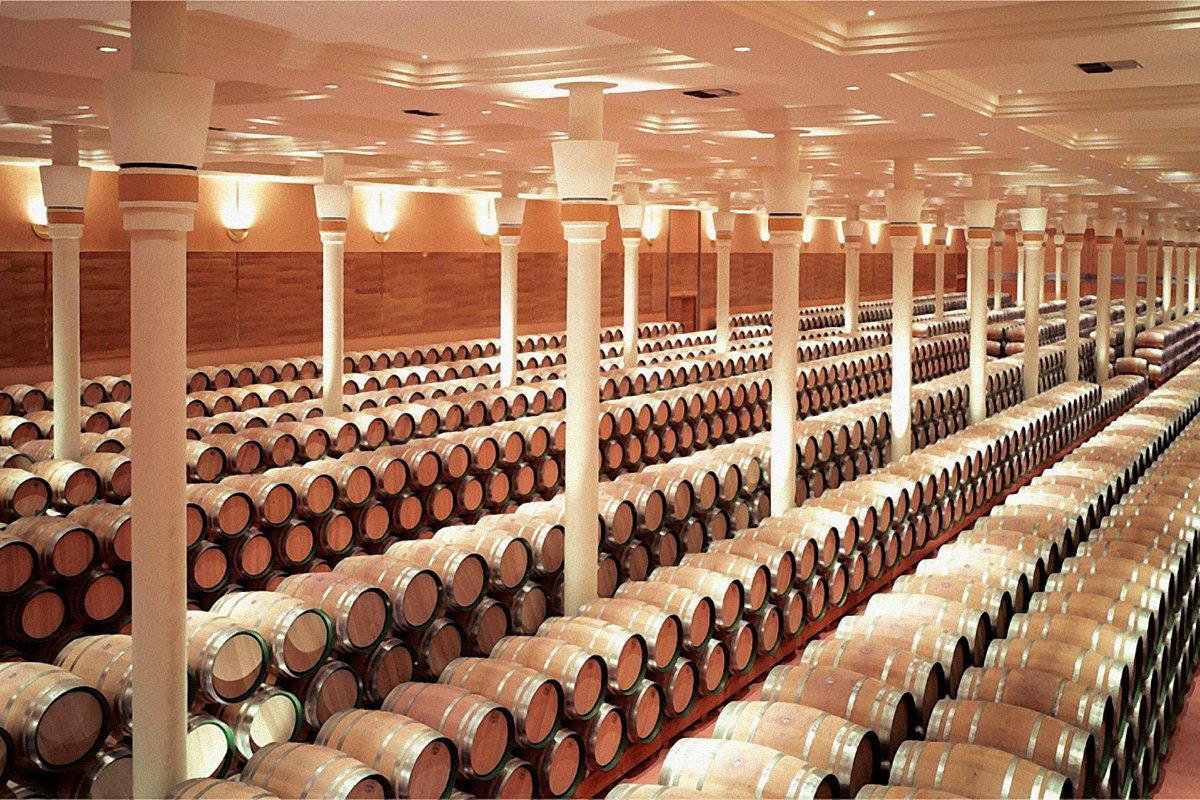
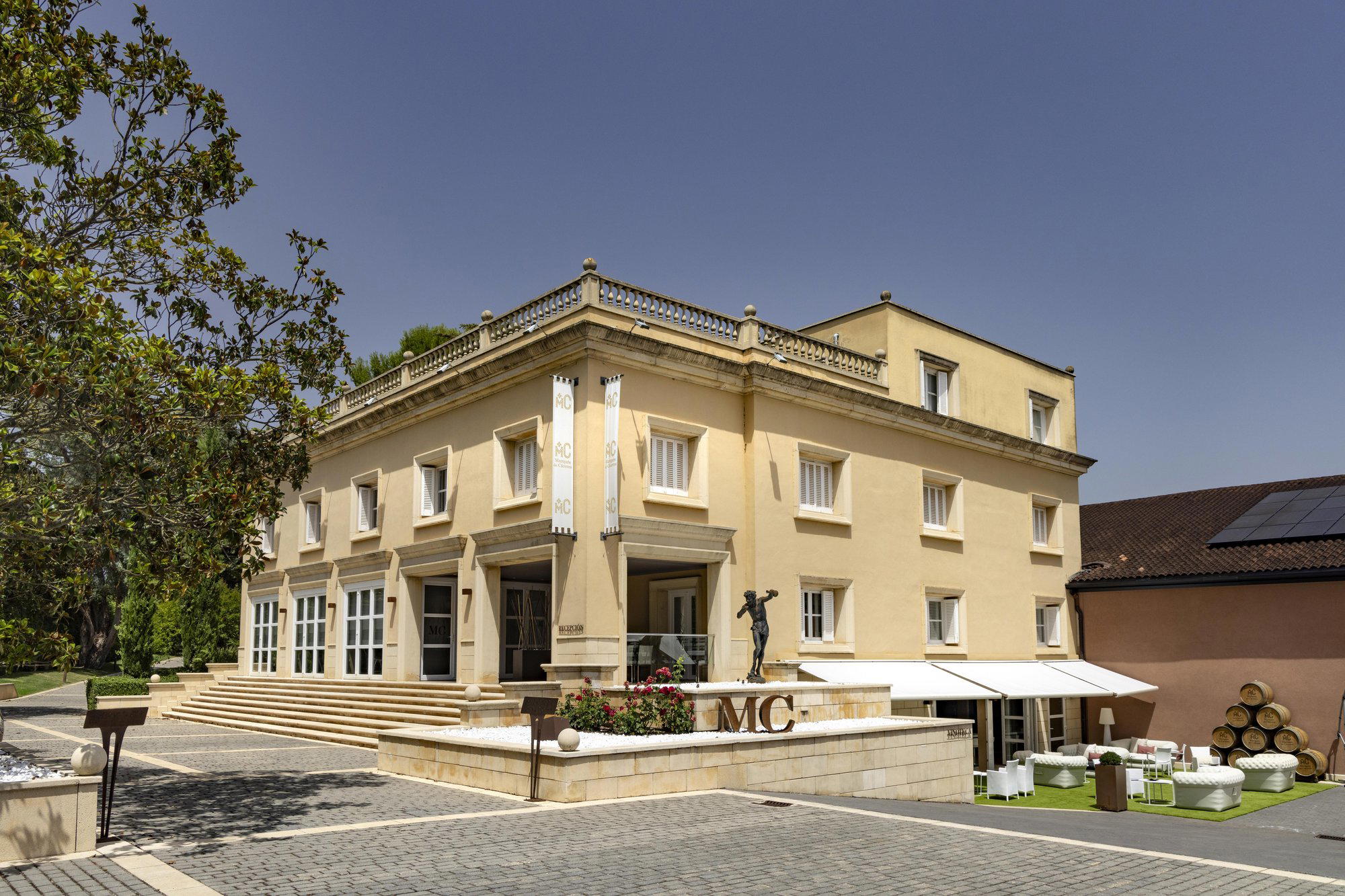
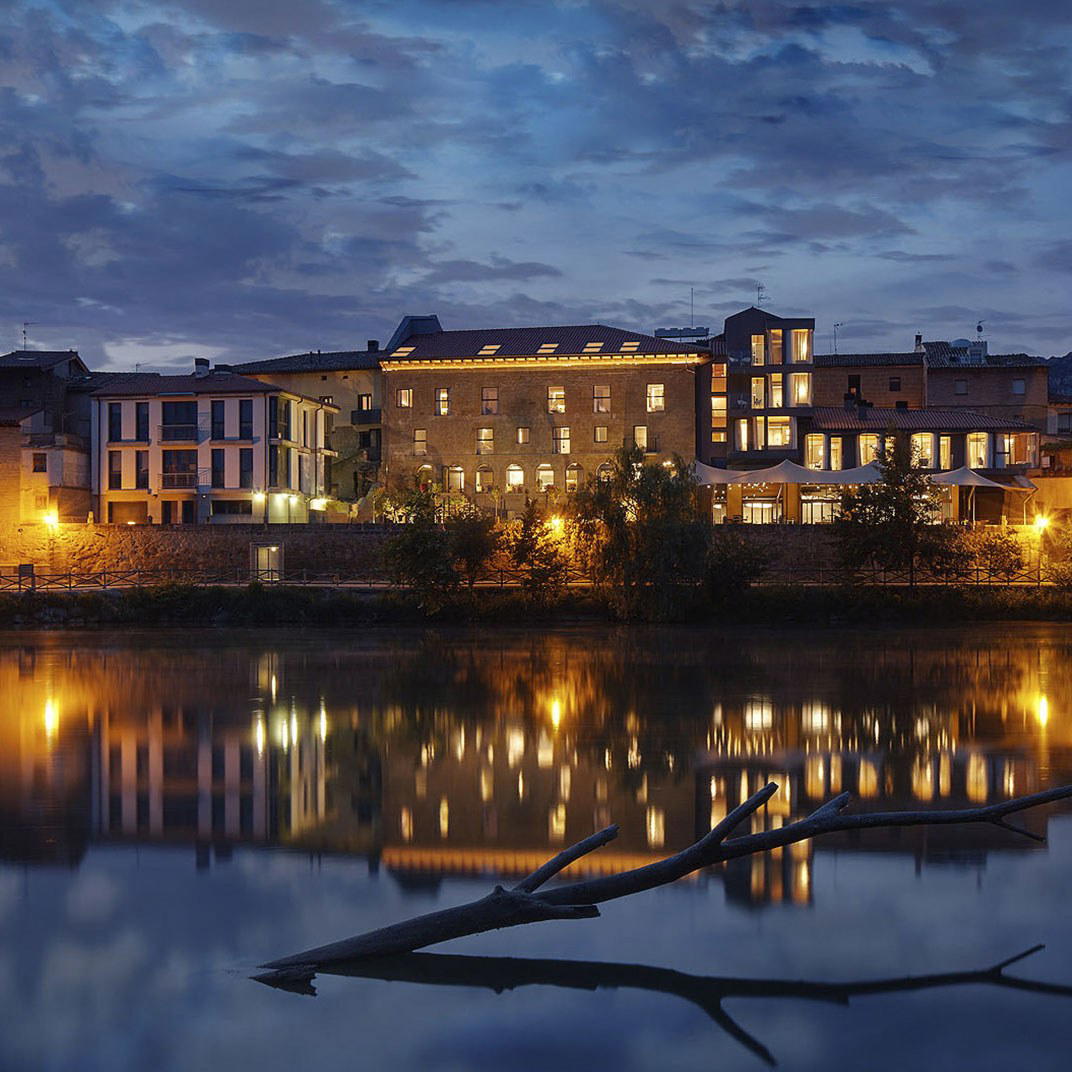
The village of Elciego itself is small and quiet, and the contrast between its medieval street scale and the Gehry structure at its edge is sharp. Arriving on foot from the village centre takes a few minutes along Calle Torrea; arriving by car, the building is visible from the approach road well before you reach it. The hotel and winery complex occupies a self-contained zone that includes formal gardens, the historic bodega buildings, and the Gehry hotel tower. The effect is layered: old stone cellars with the smell of oak and age directly adjacent to polished contemporary surfaces.
Visitor experiences at Riscal are structured around the cellar and tasting programme, with the hotel providing a base for guests wanting to extend time in the region. Elciego's position in Álava puts it within easy reach of Laguardia, the medieval walled town that functions as the informal capital of Rioja Alavesa, and the broader wine route that connects producers across the subzone. For those planning a longer circuit of Spain's wine regions, the range is considerable: Bodegas Vivanco in Valle de Mena to the north, Codorníu in Sant Sadurní d'Anoia in Catalonia for sparkling, or Lustau in Jerez de la Frontera for an entirely different southern register.
Planning a visit requires advance arrangement, particularly for hotel accommodation and formal tasting programmes, which tend to book well ahead during the spring and autumn harvest periods. Neither is Riscal a walk-in operation at the cellar level, the estate operates structured visits rather than open-door tastings, and the combination of hotel, restaurant, and winery experience functions most effectively when planned as a cohesive itinerary rather than assembled on the day. Our full Elciego restaurants guide covers the broader village and regional options for those building a multi-day stay.
The Wider Context in Spanish Wine Tourism
Spain has produced a distinct category of winery-as-destination over the past two decades, partly driven by appellation prestige and partly by deliberate investment in hospitality infrastructure. The model that Marqués de Riscal represents, with a signature building by a named architect and integrated hotel-cellar experience, has influenced how other producers frame their visitor programmes. Arzuaga Navarro in Quintanilla de Onésimo applies a comparable full-stay logic in the Ribera del Duero, while Marqués de Griñón (Dominio de Valdepusa) in Malpica de Tajo has built a destination identity around varietal experimentation and estate specificity. The comparison with Accendo Cellars in St. Helena in Napa or Aberlour in Aberlour in Speyside is instructive: producers at this tier use architecture, landscape, and hospitality as extensions of the wine argument, not decoration around it.
At the winery, the Gehry building makes a claim that the wine inside is worth this level of investment in place. Whether you are there for the architecture, the Álava terroir, or the historic cellar depth, the estate functions as one of the more complete arguments for why Rioja Alavesa deserves attention on its own terms, distinct from the broader appellation it officially belongs to.
Comparison Snapshot
Comparable venues nearby, for context on price, style, and recognition.
| Venue | Cuisine | Price | Awards | Notes |
|---|---|---|---|---|
| Marqués de RiscalThis venue — the venue you are viewing | Tempranillo, Graciano | $$$ | World's 50 Best #9 | Not listed |
| López de Heredia (Viña Tondonia) | Tempranillo, Garnacha | $$$ | World's 50 Best #3 | Barrio de la Estación |
| Bodegas Muga | Tempranillo, Garnacha | $$$ | World's 50 Best #23 | Barrio de la Estación |
| Pago de Carraovejas | Tinto Fino, Cabernet Sauvignon | $$$ | World's 50 Best #18 | Peñafiel |
| Bodegas Vivanco | Tempranillo, Graciano | $$$ | World's 50 Best #24 | Briones |
| Bodegas Ysios | Tempranillo, Viura | $$$ | World's 50 Best #3 | Rioja Alavesa |
Recognition history
Dated appearances from independent guides and award organizations, with the underlying list record or original source where available.
Falstaff Winery - 2 Stars
Falstaff
Guía Repsol 1 Sol
Guía Repsol
World's 50 Best Best Vineyards #9
World's 50 Best
Continue exploring
More in Elciego
Wineries in Elciego
Browse all →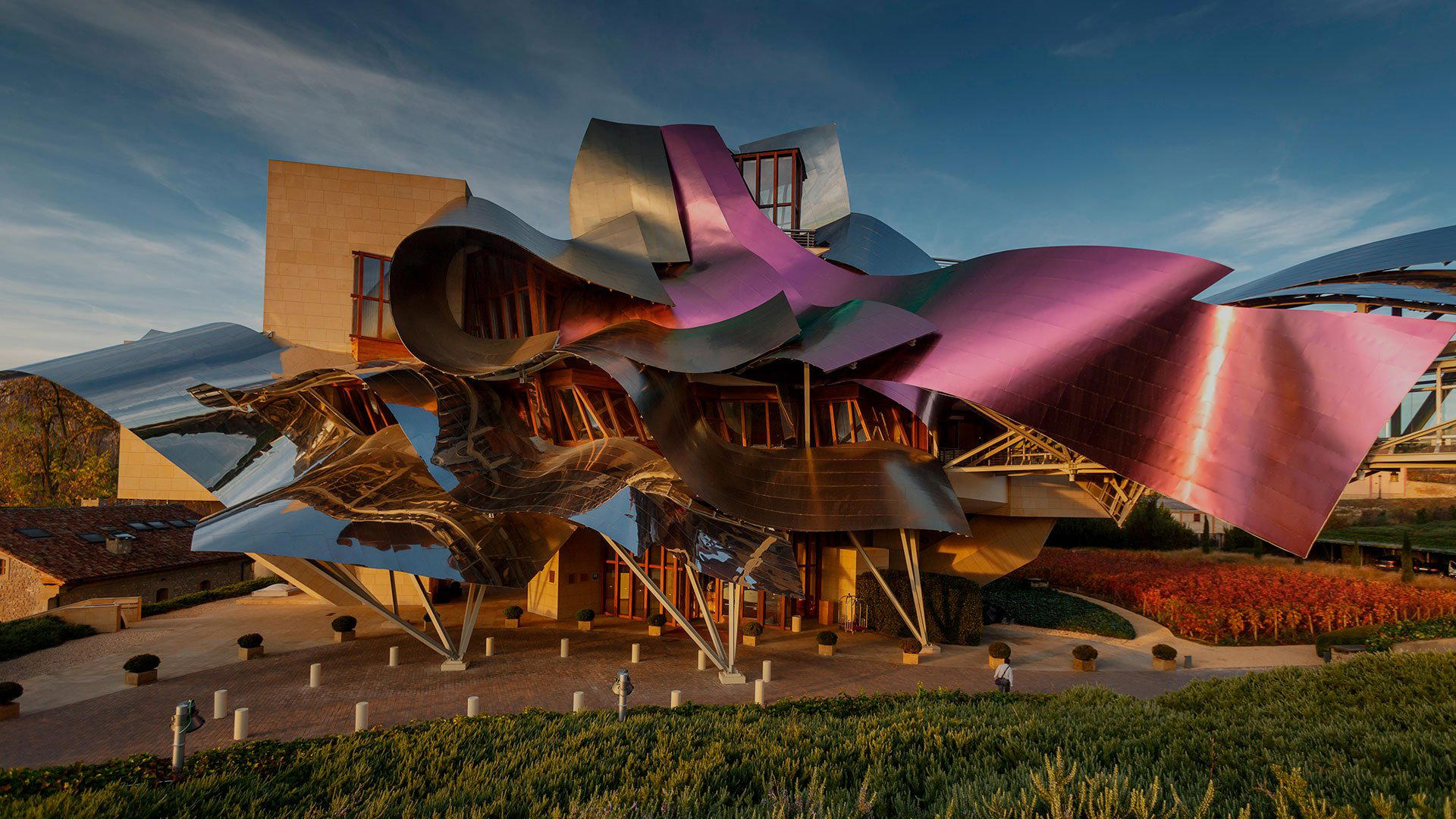
Bars in Elciego
Browse all →
Restaurants in Elciego
Browse all →
At a Glance
- Well Known
- Elegant
- Sophisticated
- Classic
- Wine Education
- Romantic Getaway
- Special Occasion
- Group Outing
- Celebration
- Cave Tasting
- Barrel Room
- Vineyard Tour
- Estate Grounds
- Historic Building
- Design Destination
- Private Tasting
- Terrace
- Organic
- Sustainable
- Vineyard
- Mountain
- Rioja Alavesa Doca
- Tempranillo
- Graciano
- Cabernet Sauvignon
- Verdejo
- Sauvignon Blanc
- Viura
- Still Red
- Still White
- Still Rosé
- Cave Tasting
- Barrel Room Tasting
- Vineyard Tour With Tasting
- Private Tasting
Current opening hours
- Monday
- Closed
- Tuesday
- 7–9:30 PM
- Wednesday
- 7–9:30 PM
- Thursday
- 7–9:30 PM
- Friday
- 7–9:30 PM
- Saturday
- 1:30–2:30 PM, 7–9:30 PM
- Sunday
- Closed
Hours can change for holidays and private events. Last verified .
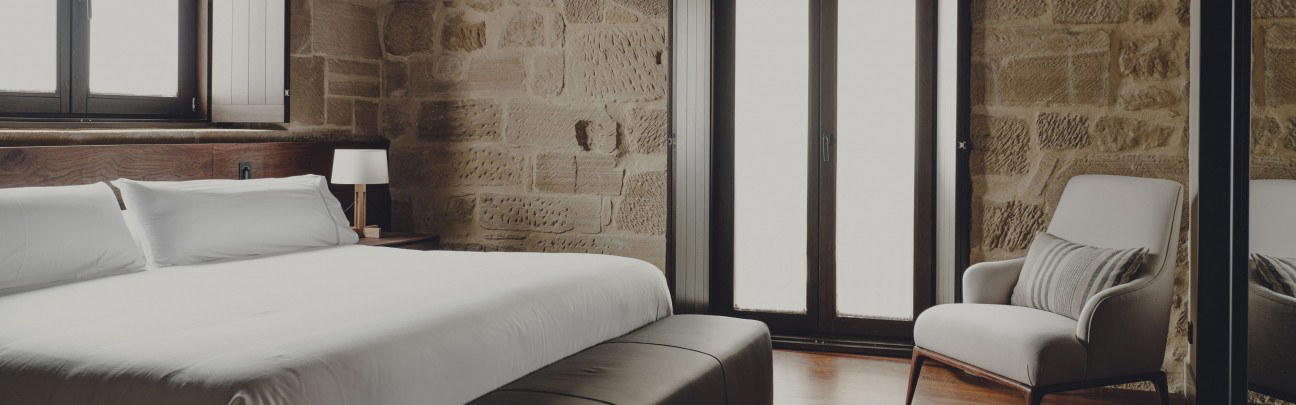
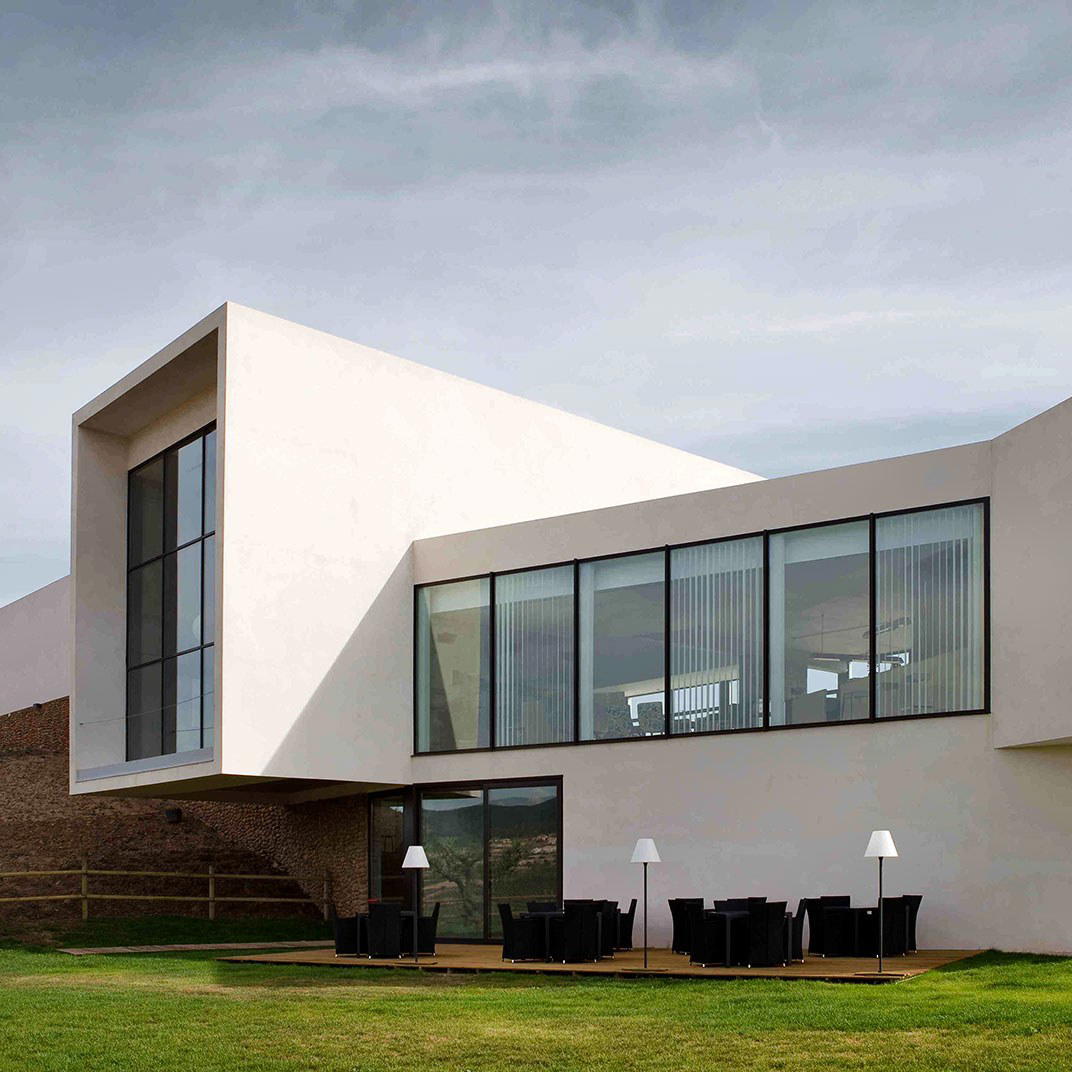
Modern architectural landmark blending historic cellars with contemporary design; elegant and refined atmosphere reflecting 160+ years of winemaking tradition.