Grand Tokaj sits on Petőfi Sándor út in Tolcsva, a village woven through the volcanic hillsides of Hungary's Tokaj wine region. For those tracing how Tokaj's volcanic soils and fog-laden autumns translate into the glass, this address warrants close attention.

Pearl is the En Primeur Club membership app — saves, bookings, and concierge access live there. Same editors, same standards.
- Address
- Tolcsva, Petőfi Sándor út 36, 3934
- Phone
- +36 47 384 164
- Website
- grandtokaj.com
- Directions
- Get directions
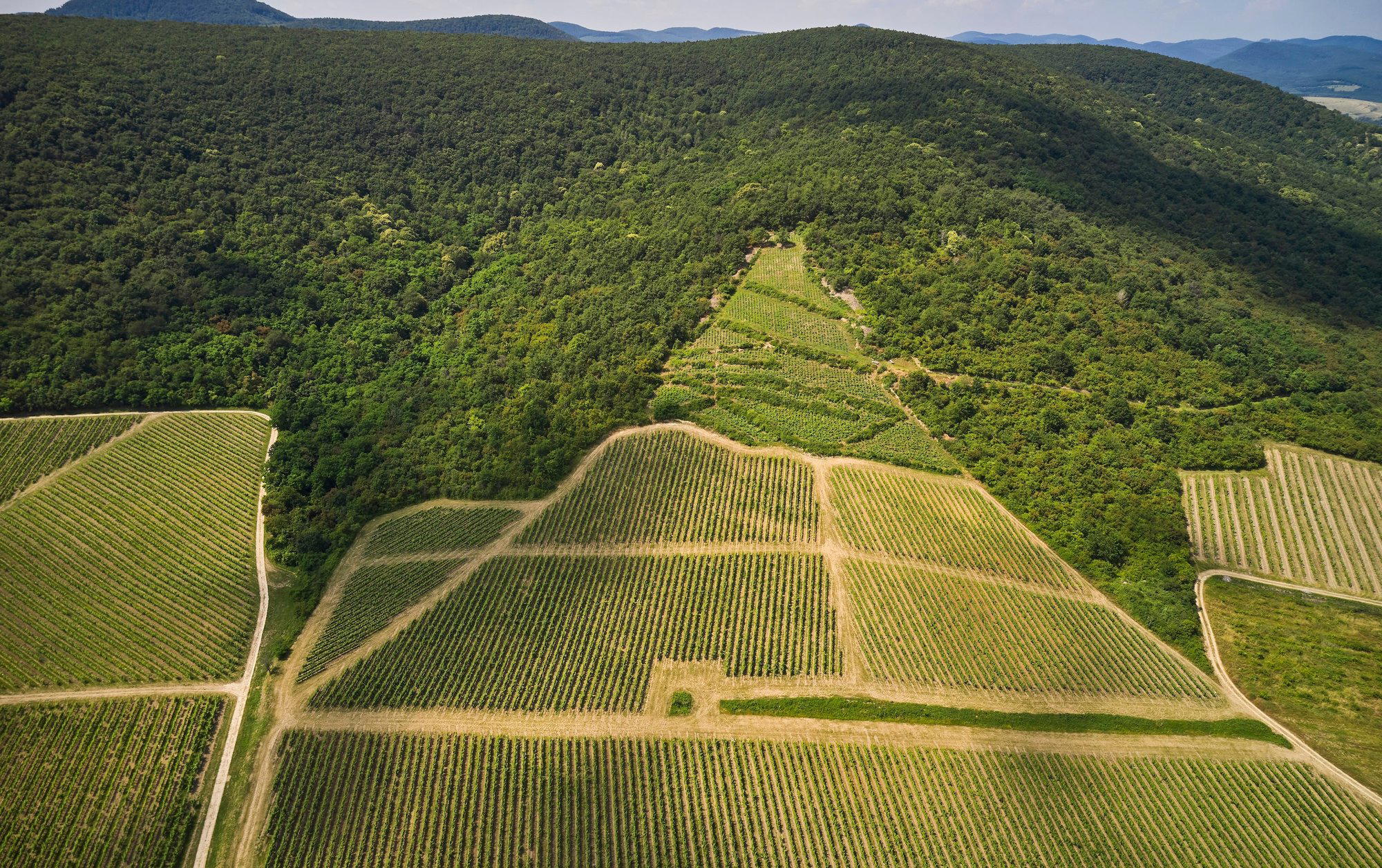
Tolcsva and the Geology Beneath the Vines
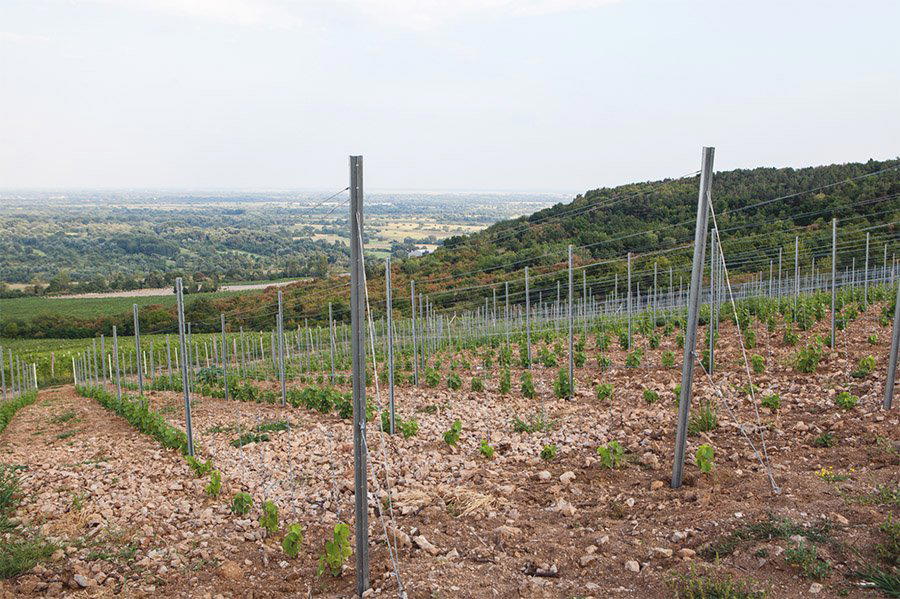
To understand why Tolcsva matters to serious Tokaj drinkers, it helps to start with what lies under the hillsides. The Tokaj wine region sits on a foundation of rhyolite and dacite tuffs, volcanic rock formed by ancient eruptions that left behind a porous, mineral-rich substrate. Water moves through it freely, keeping vine roots under controlled stress. The overlying loess adds a creamier texture to the mineral base, and the specific aspect of each slope determines how much of Tokaj's famous autumn fog settles and lingers. That fog is the mechanism behind Aszú: it promotes the growth of Botrytis cinerea, the noble rot that concentrates sugars and acids in Furmint and Hárslevelű grapes to levels that would be impossible in dryer climates.
Tolcsva is one of the villages inside the UNESCO-listed region where that combination of soil, exposure, and microclimate converges with particular regularity. The Bodrog and Tisza rivers meet nearby, generating the moisture patterns that sustain botrytis development through October and into November in strong vintages. This is not incidental geography — it is the engine behind what makes the wines produced here categorically different from Tokaj produced further from the river valleys or at less favourable aspects.
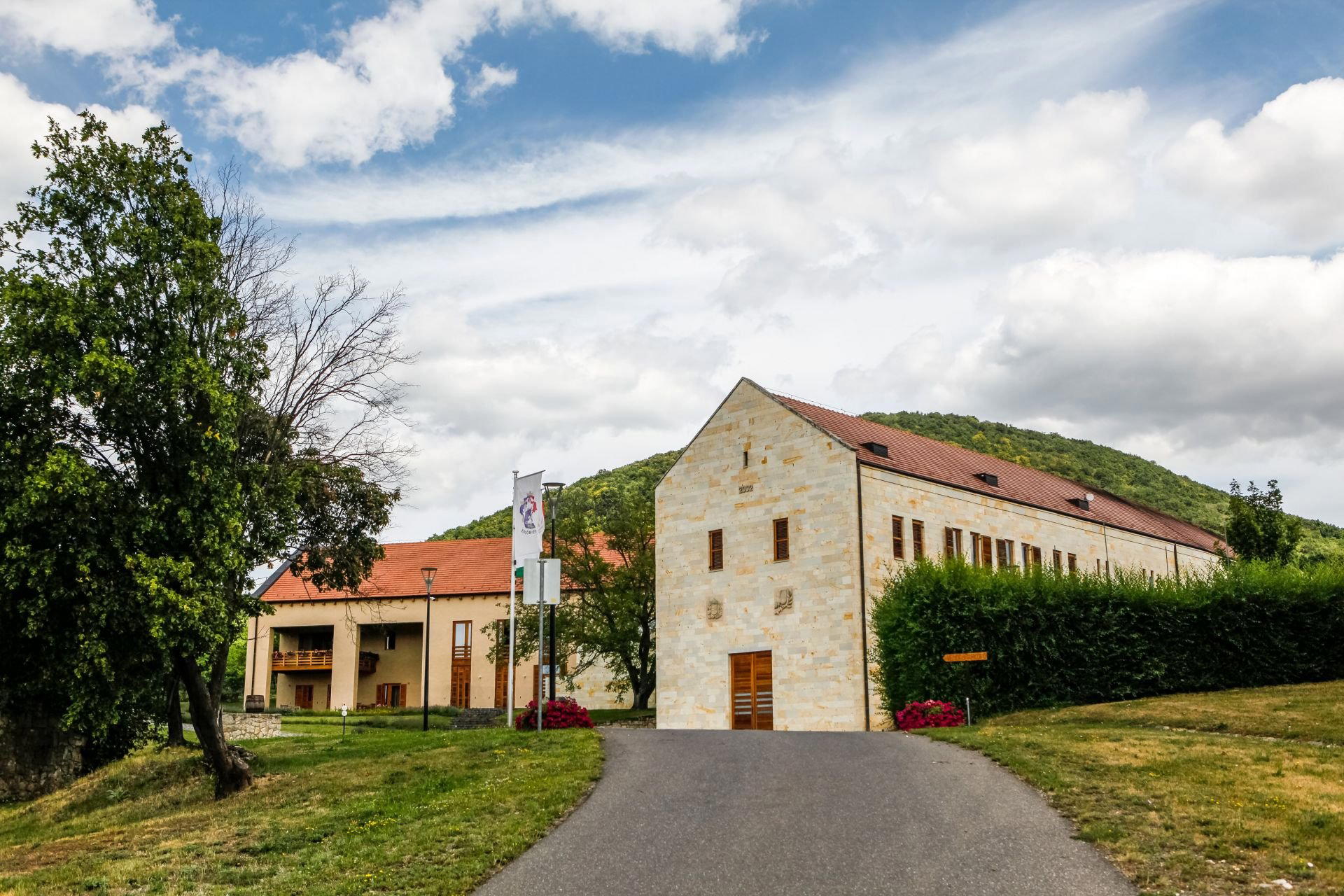
Grand Tokaj, at Petőfi Sándor út 36 in Tolcsva, operates within this context..
What Terroir Expression Means in Practice Here
The editorial angle on Tokaj terroir is often flattened into discussions of sweetness levels, which misses what makes individual sites within the region legible to careful tasters. Classified vineyard sites, the dűlő, have been mapped and ranked for centuries — Tokaj's formal classification predates Bordeaux's 1855 system by roughly a century. The leading sites, the Grand Cru equivalents known as első osztályú or first-class vineyards, tend to sit on south-facing volcanic slopes at elevations where fog drains away more reliably during daytime, reducing disease pressure while still enabling botrytis development at night. The wines from these sites carry a tension between concentration and acidity that separates them from the broader regional character.
Within this framework, the specific parcels a producer controls determine the ceiling of what they can achieve in any given vintage. A producer working first-class dűlő sites in Tolcsva has access to raw material that, by historical and agronomic consensus, ranks among the appellation's most expressive.
The Tokaj Appellation and Its Internal Hierarchy
Tokaj is one of the most internally differentiated wine regions in central Europe, with a legal framework that distinguishes between dry Furmint, late-harvest styles, Szamorodni, and the iconic Aszú wines measured in puttonyos. The shift toward dry Furmint over the past two decades has been one of the appellation's defining modern developments: producers discovered that the same volcanic minerality and acid structure that supports botrytised wines also produces dry whites of real structural intensity. Dry Furmint from leading sites now occupies its own commercial and critical tier, sought by buyers who approach it as a serious alternative to white Burgundy or leading Alsatian Riesling.
Within Tolcsva and the villages in its orbit, the range of producers spans from large négociant-style operations to small growers focused on single-site expression. The 2025 award tier for Grand Tokaj places it in the latter competitive conversation, among producers whose credibility rests on precision rather than volume. Comparable operations across Hungary's other wine regions, from Árvay Winery in Rátka to Béres Winery in Erdőbénye, occupy analogous positions within their own appellations, credentialled, allocation-conscious, and better understood through their site work than through their marketing.
Visiting Tolcsva: Practical Considerations
Tolcsva sits in the Zemplén hills of northeastern Hungary, roughly three hours by car from Budapest. The village is small, oriented around wine production and rural Hungarian life rather than tourist infrastructure, which shapes the visiting experience considerably. This is not a wine route designed for casual day-trippers. Producers here tend to receive visitors on a structured basis, and booking ahead is the expected approach rather than the exception. The area around Grand Tokaj at Petőfi Sándor út 36 is walkable in the immediate vicinity of the village, but reaching the wider set of classified vineyards and neighbouring producers requires a vehicle.
For those building a broader itinerary around Tokaj, the appellation rewards a multi-day approach that allows time across several villages. Mád to the south is the other anchor village for serious visitors, with Royal Tokaji as its best-known address. The full Tolcsva guide on EP Club maps the village's broader offer in detail. Hungary's wider wine scene extends well beyond the Tokaj appellation, with distinct regional characters across Eger (Bolyki Winery), Villány (Bock Winery), Szekszárd (Bodri Winery), and lesser-known corners such as Carpinus Winery in Bodrogkisfalud, Babarczi Winery in Gyor, and Bussay Pince in Csörnyeföld.
For visitors whose wine travel extends beyond Hungary, the EP Club also covers producers in other premium regions, including Aberlour in Aberlour and Accendo Cellars in St. Helena, offering a useful point of reference for calibrating style and ambition across different wine cultures.
Quick Comparison
Comparable venues nearby, for context on price, style, and recognition.
| Venue | Cuisine | Price | Awards | Notes |
|---|---|---|---|---|
| Grand TokajThis venue — the venue you are viewing | Furmint, Hárslevelű | Not listed | Not listed | Not listed |
| Tokaj Oremus | Furmint, Hárslevelű | $20–30 | Falstaff Winery - Listed | Tolcsva |
| Royal Tokaji | Furmint, Sárgamuskotály | Not listed | Falstaff Winery - Listed | Mád |
| Harsányi Winery | Furmint, Hárslevelű | Not listed | Not listed | Sárospatak |
| Zsirai Winery | Furmint, Hárslevelű | Not listed | Not listed | Mád |
| Thummerer Winery | Kékfrankos, Cabernet Sauvignon | Not listed | Not listed | Noszvaj |
Continue exploring
More in Tolcsva
Wineries in Tolcsva
Browse all →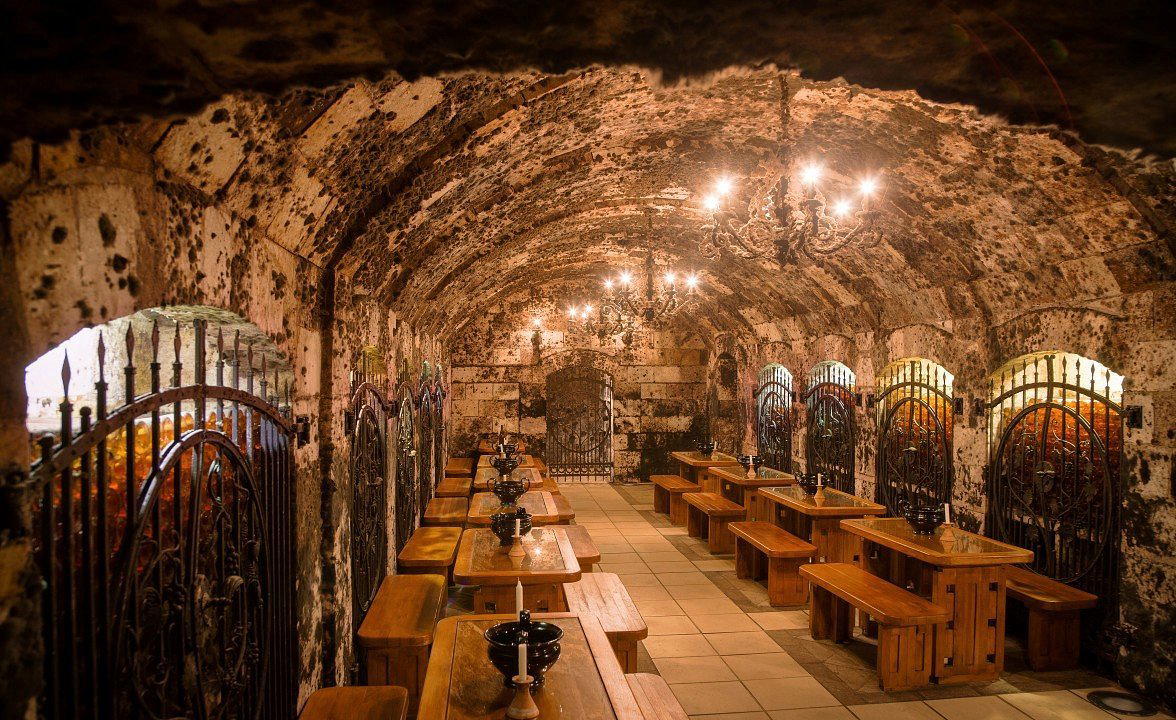
Bars in Tolcsva
Browse all →
Restaurants in Tolcsva
Browse all →
Hotels in Tolcsva
Browse all →
Details
- Classic
- Rustic
- Elegant
- Scenic
- Wine Education
- Special Occasion
- Group Outing
- Cave Tasting
- Barrel Room
- Vineyard Tour
- Historic Building
- Vineyard
- Furmint
- Hárslevelű
- Sárga Muskotály
- Kabar
- Zéta
- Kövérszőlő
- Still White
- Dessert
- Fortified
- Cave Tasting
- Barrel Tasting
- English
- Hungarian
Historic and atmospheric underground cellars with cool, stable temperatures ideal for barrel aging, evoking timeless winemaking tradition.