
Domaine A. & P. de Villaine sits at the heart of Bouzeron, the only Burgundy appellation built entirely around Aligoté. Holder of a Pearl 3 Star Prestige award in 2025, the domaine occupies a singular position in the Côte Chalonnaise: a reference address for a grape variety most of Burgundy still treats as secondary. For anyone serious about white Burgundy outside the Côte de Beaune, it belongs on the itinerary.
 Discover on Pearl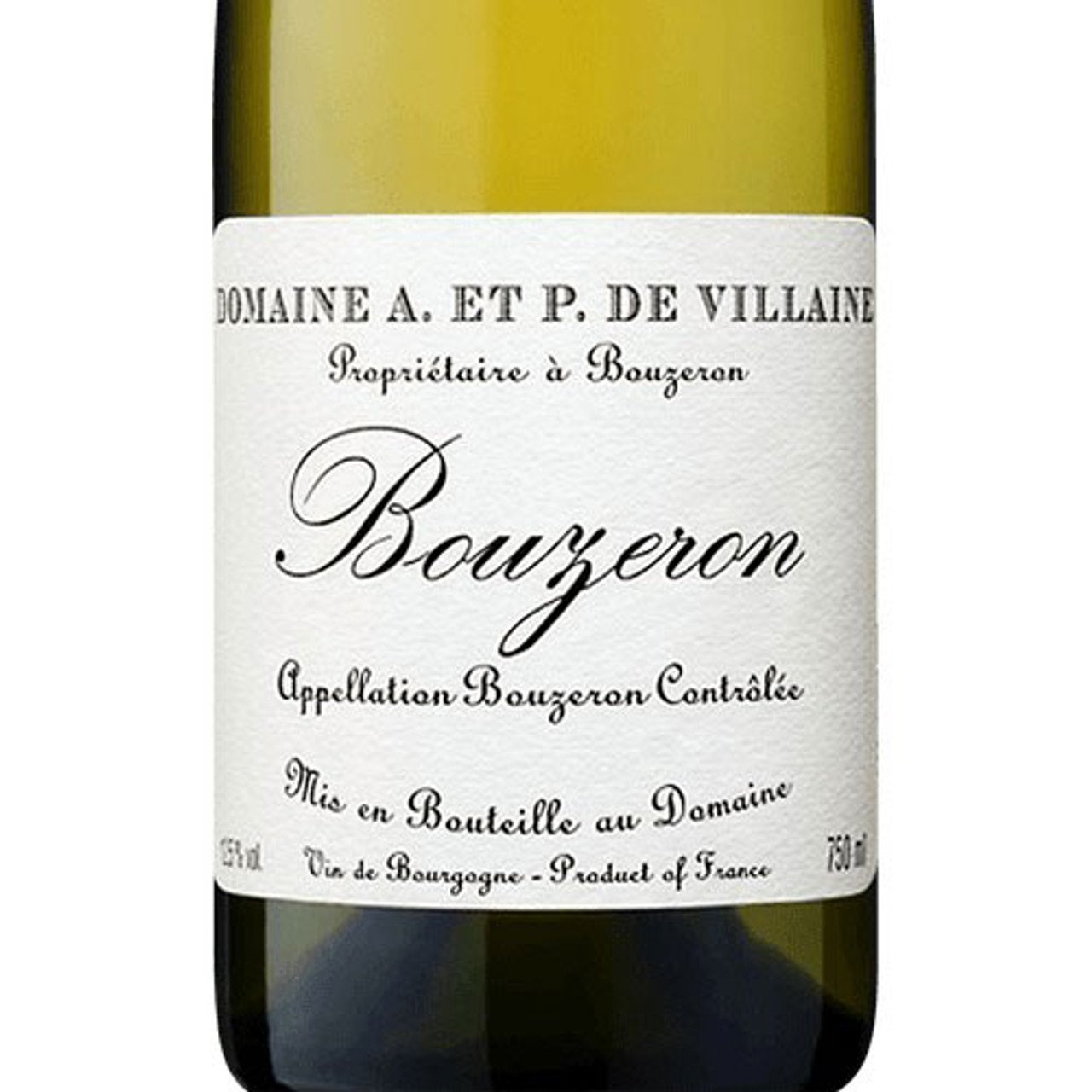
Bouzeron and the Case for Aligoté
Most of Burgundy's prestige conversation moves along a well-worn axis: Gevrey-Chambertin to Meursault, Pinot Noir and Chardonnay, premier and grand cru. Bouzeron sits off that axis deliberately. The village holds the only appellation contrôlée in Burgundy awarded exclusively to Aligoté, a grape that elsewhere in the region typically fills the carafe wine category rather than the cellar. That distinction matters when reading Domaine A. & P. de Villaine in any serious context. This is not a domaine producing a secondary wine in a secondary appellation. It is the reference producer in an appellation that exists, in large part, because of its sustained argument that Aligoté, grown in the right soils on the right slopes, expresses terroir with the same precision as its more celebrated neighbours. For a broader view of what Bouzeron produces, see our full Bouzeron wineries guide.
What the Land Brings to the Glass
Bouzeron's geology is the starting point for understanding why Aligoté performs differently here than in the broader Bourgogne Aligoté category. The village sits in a narrow valley in the northern Côte Chalonnaise, where the soils shift between limestone and marl across relatively short distances. The elevation and slope orientation moderate the region's continental temperature swings more than the flatter terrain to the south. The result, in climatic and pedological terms, is a site that suits a grape naturally prone to high acidity: the slower ripening preserves aromatic precision while the calcium-rich subsoils add texture and length that cheaper Aligoté from the wider appellation rarely achieves.
Domaine A. & P. de Villaine's holdings across these slopes sit at the intersection of those conditions. The domaine's approach reflects a longstanding conviction that Aligoté's reputation problem is partly a viticulture problem: overcropped vines on indifferent land produce thin, sharp wine. Old vines, low yields, and careful site selection produce something considerably more serious. That conviction is embedded in the appellation's own regulatory requirements, which are stricter for Bouzeron AC than for generic Bourgogne Aligoté, including lower permitted yields and a minimum vine age requirement. Comparable thinking on terroir-led viticulture distinguishes other serious French producers, including Albert Boxler in Niedermorschwihr, where old-vine Alsatian whites make a similar case for appellation-specific depth over volume.
The Côte Chalonnaise in the Wider Burgundy Picture
Positioning Domaine A. & P. de Villaine within the broader Burgundy hierarchy requires acknowledging the structural inequity baked into how the region is priced and discussed. The Côte Chalonnaise — covering Rully, Mercurey, Givry, Montagny, and Bouzeron — has long served as Burgundy's value tier for buyers priced out of the Côte d'Or. That framing sells the region short. The Côte Chalonnaise includes genuinely distinctive terroirs, and Bouzeron's appellation status for Aligoté represents a serious regulatory acknowledgment of that distinctiveness.
The domaine's 2025 Pearl 3 Star Prestige award places it in the upper tier of recognised European wine estates at the EP Club level, a designation that signals consistent quality and cultural significance rather than mere commercial volume. At that recognition level, the comparison set shifts away from generic Côte Chalonnaise producers and toward serious smaller domaines across France's wine regions, including estates like Château Bélair-Monange in Saint-Emilion and Château Branaire Ducru in St-Julien, both operating within tightly defined appellation constraints with strong reputational floors. What distinguishes the Villaine domaine within that peer group is the specificity of its focus: one appellation, one primary grape, one argument about terroir.
Approaching the Domaine
The address , 2 Rue de la Fontaine, 71150 Bouzeron , places the domaine inside the village itself, characteristic of Burgundy's tradition of winemakers living and working within the communities whose names appear on their labels. Bouzeron is a small village without significant tourist infrastructure. There are no major hotels in the village, and the nearest substantial accommodation options are in Chagny, roughly six kilometres to the northeast, or in Beaune further north on the A6 corridor. Visitors planning a day around the domaine would do well to combine it with the broader Côte Chalonnaise circuit rather than treating it as a standalone destination. See our full Bouzeron hotels guide and our full Bouzeron restaurants guide for accommodation and dining options in the area.
Village's size means the approach is unhurried by definition. There is no queue of tour buses and no tasting room designed for high-volume throughput. This is Burgundy in the mode of working domaine rather than tourist facility, a distinction that shapes the experience from the moment you arrive on the narrow village street. For context on other activities around the Côte Chalonnaise and surrounding region, our full Bouzeron experiences guide and our full Bouzeron bars guide cover what else the area offers.
Why the Aligoté Question Still Matters
Broader European fine wine conversation has moved steadily toward indigenous and underdog varieties over the past decade. Producers in regions as far apart as the Jura, coastal Croatia, and the Canary Islands have made the case that less-celebrated grapes, when grown in their native or best-suited soils, can produce wines with greater specificity than internationally standardised varieties. Aligoté fits this pattern precisely. Outside Bouzeron, it remains largely a blending or early-drinking grape. Inside Bouzeron, and most specifically at this domaine, it becomes a vehicle for terroir expression in the fullest Burgundian sense.
That argument has gained traction among sommeliers and collectors who have grown skeptical of Côte d'Or Chardonnay at current price levels. A serious Bouzeron from a domaine of this calibre offers a point of entry into Burgundy's most rigorous viticultural thinking without the allocation pressure or secondary-market pricing that now surrounds village and premier cru white Burgundy from the Côte de Beaune. Whether that position holds as broader attention moves toward the Côte Chalonnaise is an open question, but the window of relative accessibility remains. For reference on how other prestige wine estates in France are positioned, see profiles of Château Bastor-Lamontagne in Preignac, Château Batailley in Pauillac, and Château Boyd-Cantenac in Cantenac, each making a different regional case within France's prestige tier. For producers outside France worth comparing in terms of terroir-focused philosophy, Abadía Retuerta in Sardón de Duero and Château Cantemerle in Haut-Médoc offer useful contrast points. Entirely different in category but operating within a similarly methodical production tradition is Chartreuse in Voiron, where geography and process are inseparable from the product. And for a malt whisky perspective on single-origin production logic, Aberlour in Aberlour applies comparable site-specific reasoning in a different category entirely.
Planning Your Visit
Domaine A. & P. de Villaine is a working estate in a small Burgundian village. Visits are not walk-in affairs: contacting the domaine directly before travelling is standard practice for all serious domaine visits in Burgundy, and Bouzeron's lack of independent hospitality infrastructure makes advance coordination particularly important. The harvest period in September and October, and the quiet months of January and February, are typically harder for cellar visits across the Côte Chalonnaise; late spring and early autumn outside harvest tend to offer the most productive visit windows. The domaine sits on Rue de la Fontaine in the centre of the village and is reachable by car from Chagny or Beaune. No specific hours or booking channels are publicly confirmed in our current data, so direct contact through the domaine is the only reliable path to securing a visit.
Frequently Asked Questions
- What should I expect atmosphere-wise at Domaine A. & P. de Villaine?
- Bouzeron is a small working village without tourist facilities at scale. The domaine sits on a village street rather than behind gates or in a purpose-built visitor complex. The atmosphere is that of a serious Burgundian estate: functional, quiet, and focused on the wines rather than on hospitality theatre. Visitors holding the 2025 Pearl 3 Star Prestige context should expect substance over staging. If the domaine's awards and appellation position matter to you, the experience will be proportionate to that seriousness. If you are looking for a polished tasting-room format, the Côte d'Or offers more visitor-oriented options.
- What wines should I try at Domaine A. & P. de Villaine?
- The Bouzeron AC Aligoté is the primary reference wine and the appellation's defining expression. The domaine's holdings across the village's limestone and marl slopes produce Aligoté at a level rarely achieved elsewhere in Burgundy. The 2025 Pearl 3 Star Prestige award signals that this is not a secondary or introductory wine in the domaine's range. Beyond Bouzeron, the domaine produces wines from other Côte Chalonnaise appellations, but the Aligoté is the wine most directly aligned with the domaine's singular argument about terroir and variety.
- What's the defining thing about Domaine A. & P. de Villaine?
- The domaine is the central figure in an appellation that exists, in regulatory terms, because of the argument it has sustained about Aligoté's potential in this specific village. Bouzeron AC is the only Burgundy appellation dedicated to the variety, and the domaine's role in securing and defending that status is well-documented in French wine history. The 2025 Pearl 3 Star Prestige award places it within a recognisable prestige tier. What makes the position notable is its narrowness: one village, one grape, one long-form argument about what Burgundian terroir expression actually means outside the grand cru corridor.
- Should I book Domaine A. & P. de Villaine in advance?
- Yes, and without exception. This is a working Burgundian domaine in a village with no walk-in visitor infrastructure. No public booking platform, website link, or phone number is confirmed in our current data, so the practical step is to research current contact details independently and write ahead of travel. Given the domaine's 2025 Pearl 3 Star Prestige recognition, demand for visits is not casual, and arriving unannounced in a small village estate is unlikely to produce a useful result. Plan at least several weeks ahead for any serious visit.
Peer Set Snapshot
These are the closest comparables we have in our database for quick context.
| Venue | Awards | Notes |
|---|---|---|
| Domaine A. & P. de Villaine | Pearl 3 Star Prestige | This venue |
| Château Smith Haut Lafitte | 50 Best Vineyards #5 (2025); Pearl 4 Star Prestige | Fabien Teitgen, Est. 1365, 8,000 cases, Cru Classes de Graves |
| Ruinart | 50 Best Vineyards #8 (2025); Pearl 4 Star Prestige | Frédéric Panaïotis, Est. 1729, 1.7 million bottles, Premier Cru |
| Château d'Yquem | 50 Best Vineyards #9 (2025); Pearl 5 Star Prestige | Sandrine Garbay, 5,000 cases, Premier Cru |
| Château Pape Clement | 50 Best Vineyards #27 (2025); Pearl 4 Star Prestige | Jean-Philippe Fort (consultant), 7,500 cases, Cru Classes de Graves |
| Bollinger | 50 Best Vineyards #15 (2025); Pearl 4 Star Prestige | Gilles Descôtes, Est. 1829, 2.5 million bottles, Premier Cru |
Access the Cellar?
Our members enjoy exclusive access to private tastings and priority allocations from the world's most sought-after producers.
Get Exclusive Access